
In an era defined by digital transformation and consumer-centric entertainment, traditional television broadcasting has undergone a profound metamorphosis. At the forefront of this revolution stands YouTube TV, a subscription-based streaming service from Google that has redefined how millions access live television and on-demand content. Far from being merely an extension of the ubiquitous YouTube video platform, YouTube TV is a sophisticated technological solution designed to replace conventional cable and satellite subscriptions, offering a flexible, internet-delivered alternative. This article delves into the core identity of YouTube TV, exploring its technological underpinnings, key features, and its pivotal role in the modern streaming ecosystem.

The Evolution of Television Consumption: Why YouTube TV Emerged
The landscape of media consumption has shifted dramatically over the past two decades. The monolithic reign of traditional cable and satellite providers, once unchallenged, began to crumble under the weight of technological innovation and changing consumer preferences. YouTube TV’s emergence is a direct response to these seismic shifts, positioning itself as a modern answer to an evolving demand.
The Decline of Traditional Cable and Satellite
For decades, the dominant model for television consumption involved bundling hundreds of channels into often expensive, long-term contracts. This model, however, presented several growing frustrations for consumers: escalating costs, rigid channel packages that included many unwanted networks, restrictive hardware (set-top boxes), and a lack of flexibility regarding viewing times and locations. The advent of high-speed internet laid the groundwork for a different approach. As internet infrastructure improved, the concept of “cord-cutting”—the act of canceling traditional pay-TV subscriptions in favor of streaming services—gained significant momentum. This trend highlighted a clear market demand for more agile, personalized, and cost-effective entertainment solutions.
The Rise of Streaming and On-Demand Content
Parallel to the decline of traditional pay-TV, the streaming industry exploded. Services like Netflix, Hulu, and Amazon Prime Video demonstrated the immense appetite for on-demand content, allowing viewers to watch what they want, when they want, without adherence to a linear broadcast schedule. While these services excelled in offering vast libraries of movies and TV shows, they primarily focused on pre-recorded content. A gap remained for those who still desired the immediacy of live television—news, sports, award shows, and primetime events—but wished to experience it through the flexibility and digital advantages of streaming. This critical juncture created the perfect opportunity for an innovative platform to merge the best of both worlds.
Google’s Strategic Entry into Live TV Streaming
Google, through its powerful YouTube brand, was uniquely positioned to capitalize on this evolving market. Having mastered the art of video streaming and content delivery with its free YouTube platform, the company possessed the technological infrastructure, expertise, and a vast user base to launch a premium live TV service. YouTube TV was conceived not just as another streaming app, but as a comprehensive virtual multichannel video programming distributor (vMVPD). By leveraging Google’s cloud infrastructure, data analytics capabilities, and user experience design principles, YouTube TV aimed to provide a robust, scalable, and intuitive live TV experience that could rival, and in many ways surpass, traditional cable offerings. Its entry marked a significant strategic move by Google to expand its dominance beyond user-generated content into premium, linear television distribution.
Core Features and Functionality: A Deep Dive into the YouTube TV Experience
At its heart, YouTube TV is an advanced software application designed for content delivery, offering a suite of features that enhance the traditional TV viewing experience through digital innovation. Its functionality is built around flexibility, personalization, and accessibility across a multitude of devices.
Live TV Channels and Network Coverage
The primary appeal of YouTube TV lies in its extensive lineup of live television channels. Subscribers gain access to a broad spectrum of major broadcast networks—such as ABC, CBS, FOX, NBC, and The CW—crucial for local news and primetime programming. Beyond these, the service includes popular cable channels spanning various genres: sports (ESPN, Fox Sports, CBS Sports Network), news (CNN, Fox News, MSNBC), entertainment (FX, TNT, TBS, AMC), and family-friendly content. The availability of regional sports networks (RSNs) and local affiliates ensures a comprehensive experience tailored to geographical locations, a complex technological feat involving geo-IP targeting and content rights management. This robust channel offering effectively replicates and often exceeds the utility of a basic cable package, all delivered over an internet connection.
Cloud DVR: Unlimited Recording and Storage Capabilities
One of YouTube TV’s most lauded technological advancements is its unlimited cloud DVR (Digital Video Recorder). Unlike traditional DVRs that rely on physical storage capacity within a set-top box, YouTube TV stores recordings in the cloud. This means users don’t have to worry about running out of space, deleting old shows to make room for new ones, or managing hardware. Every program recorded is saved for nine months, accessible from any compatible device. The cloud DVR also offers sophisticated management features, allowing users to easily browse, fast-forward, rewind, and skip commercials on recorded content (though some networks enforce unskippable ads on certain VOD content). This feature liberates viewers from broadcast schedules, transforming live TV into an on-demand library managed by the user, a significant technological leap in convenience.
User Interface and Device Compatibility
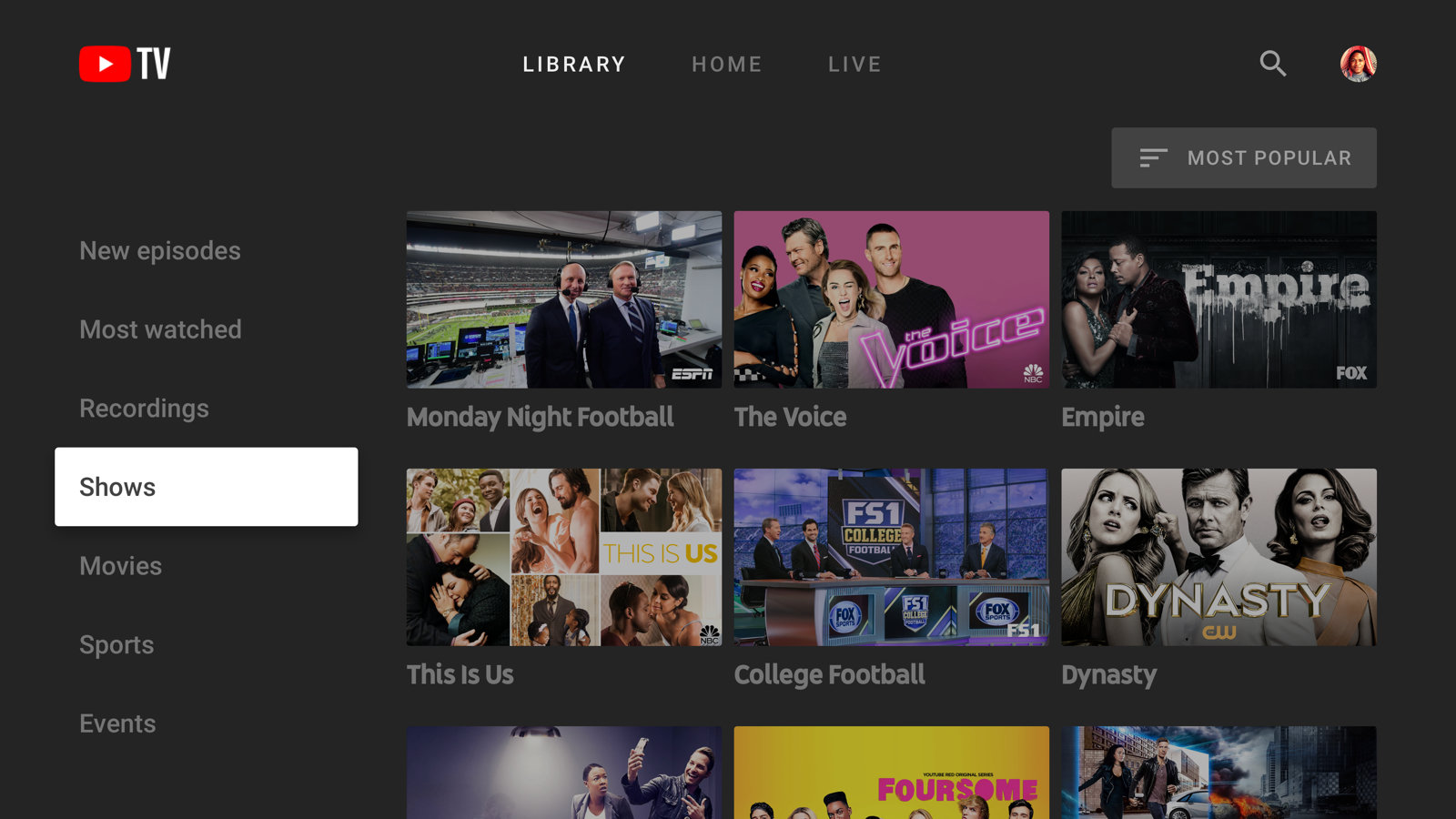
The user interface (UI) of YouTube TV is meticulously designed for intuitive navigation, leveraging Google’s expertise in clean, accessible digital interfaces. It mirrors the familiar design principles of the standard YouTube platform, making it easy for existing YouTube users to adapt. The home screen typically features recommendations, recently watched channels, and a “Live” guide that displays current and upcoming programming in a traditional grid format.
Furthermore, YouTube TV boasts exceptional device compatibility, ensuring a seamless experience across a wide ecosystem of hardware. It’s available on:
- Smart TVs (Samsung, LG, Vizio, Sony, etc.)
- Streaming Media Players (Roku, Apple TV, Amazon Fire TV, Chromecast)
- Gaming Consoles (Xbox, PlayStation)
- Mobile Devices (iOS and Android smartphones and tablets)
- Web Browsers (Chrome, Safari, Firefox, Edge)
This broad compatibility is a significant technological achievement, requiring robust cross-platform development and optimization to ensure consistent performance and quality regardless of the viewing device.
Profiles, Parental Controls, and Simultaneous Streams
Recognizing that households often have diverse viewing preferences, YouTube TV incorporates multi-user functionality. Subscribers can create up to six individual user profiles, each with its own personalized viewing history, DVR recordings, and recommendations. This personalization is powered by sophisticated algorithms that learn individual viewing habits. Each profile can also be configured with robust parental controls, allowing adult users to restrict access to mature content for younger viewers, an essential feature for family households. Moreover, the service typically allows for three simultaneous streams per account, enabling multiple family members to watch different content on different devices concurrently, optimizing the utility of a single subscription.
The Technology Behind the Stream: How YouTube TV Delivers Your Entertainment
Beneath its user-friendly interface, YouTube TV relies on a complex and robust technological infrastructure to deliver high-quality, real-time video content over the internet. This intricate system ensures reliability, performance, and a consistent viewing experience.
Adaptive Bitrate Streaming and Video Quality
At the core of YouTube TV’s delivery mechanism is adaptive bitrate (ABR) streaming. This advanced technology dynamically adjusts the video quality (resolution and bitrate) based on the viewer’s internet connection speed and network conditions in real-time. If bandwidth is plentiful, YouTube TV delivers video in high definition (HD) or even 4K for supported content and devices. If bandwidth fluctuates or drops, the system intelligently scales down the quality to prevent buffering and ensure a continuous playback, albeit at a lower resolution. This seamless adaptation is crucial for maintaining a smooth streaming experience in varying network environments, a hallmark of modern video delivery. The platform supports resolutions up to 1080p, with a growing library of 4K Plus content available via an add-on, pushing the boundaries of internet-delivered broadcast quality.
Server Infrastructure and Content Delivery Networks (CDNs)
To handle the immense volume of data and concurrent users, YouTube TV leverages Google’s unparalleled global server infrastructure and Content Delivery Networks (CDNs). When a user requests a stream, the video data is not necessarily pulled from a single central server. Instead, it’s delivered from the geographically closest server within Google’s extensive CDN, minimizing latency and improving delivery speed. This distributed architecture is critical for scalability, ensuring that millions of users can simultaneously access live streams and DVR content without experiencing slowdowns or service interruptions, even during peak events like major sporting matches or breaking news. The sheer scale and resilience of Google’s network are fundamental to YouTube TV’s operational stability.
Integration with Google’s Ecosystem
YouTube TV benefits significantly from its deep integration within the broader Google ecosystem. This synergy enhances the user experience and expands functionality. Users can cast content from their mobile devices to larger screens using Google Chromecast technology. Voice commands via Google Assistant on smart speakers, smart displays, and Android devices allow for hands-free control, channel changing, and content search. The service also leverages Google’s search algorithms and user data to refine content recommendations, offering a highly personalized discovery experience. This interwoven technological fabric ensures that YouTube TV is not an isolated application but a seamlessly integrated component of a connected digital lifestyle.
Personalization Algorithms and Content Discovery
Beyond basic recommendations, YouTube TV employs sophisticated machine learning algorithms to personalize the viewing experience. These algorithms analyze individual viewing habits, search queries, DVR recordings, and even general YouTube activity to suggest new shows, movies, and channels that align with user interests. This extends to the organization of the “Live Guide” and the “Home” tab, which prioritize content most relevant to the user. This level of algorithmic personalization transforms the passive act of channel surfing into an active, tailored content discovery journey, helping users cut through the vast amount of available content to find what they genuinely want to watch.
Differentiating Factors and Competitive Landscape
YouTube TV operates in a highly competitive market, vying for subscribers against a range of vMVPDs and traditional streaming services. Its technological strengths and weaknesses shape its position within this dynamic landscape.
Key Advantages Over Competitors
YouTube TV distinguishes itself with several technological and feature-driven advantages. Its unlimited cloud DVR, with its generous nine-month retention period, is often cited as a significant differentiator against competitors like Hulu + Live TV or Sling TV, which typically impose storage limits or shorter retention windows. The seamless integration with Google’s robust ecosystem, including Chromecast and Google Assistant, offers a user experience that feels more connected and intuitive for those already invested in Google products. Furthermore, its reliable streaming performance, backed by Google’s massive infrastructure, often leads to fewer buffering issues and higher consistent video quality, a critical factor for live content. The user-friendly interface, familiar to many from standard YouTube, also contributes to a lower barrier to entry for new users.
Challenges and Criticisms
Despite its strengths, YouTube TV faces its share of technological and market-driven challenges. One recurring criticism revolves around its pricing, which has steadily increased since its launch. While arguably justifiable given content acquisition costs and feature enhancements, it can make cord-cutting less financially appealing for some, especially as other streaming services emerge with lower price points or more niche content. Another challenge involves regional blackouts for specific sporting events or local network disputes, which are often dictated by complex broadcasting rights and technological geo-restrictions that affect all vMVPDs. The occasional missing channel from its lineup compared to traditional cable, due to ongoing content negotiations, can also be a point of frustration for specific user segments. The reliance on a stable, high-speed internet connection is also a fundamental prerequisite and potential limitation, as performance can degrade in areas with poor broadband infrastructure.
The Future of Live TV Streaming and YouTube TV’s Position
The future of live TV streaming is likely to involve continued innovation in areas such as 4K HDR content, interactive features, and even more personalized viewing experiences powered by AI. YouTube TV, backed by Google’s R&D capabilities, is well-positioned to lead or at least keep pace with these advancements. As bandwidth improves and consumer expectations evolve, the service will likely explore deeper integration of augmented reality (AR) or virtual reality (VR) elements, more sophisticated sports statistics overlays, and advanced content recommendation engines. Its existing infrastructure and technological prowess provide a strong foundation for adapting to emerging trends, ensuring its continued relevance as a premier choice for digitally delivered live television.

Conclusion
YouTube TV represents a significant technological leap in how we consume live television. By marrying the immediacy of traditional broadcast with the flexibility, personalization, and advanced features of modern streaming, Google has crafted a service that effectively addresses the pain points of an outdated model. From its unlimited cloud DVR and intuitive user interface to its adaptive bitrate streaming and seamless integration within the Google ecosystem, YouTube TV stands as a testament to the power of cloud-based infrastructure and sophisticated software engineering. As the technological landscape of entertainment continues to evolve, YouTube TV is poised to remain a pivotal player, continually refining the digital viewing experience and shaping the future of television consumption.
aViewFromTheCave is a participant in the Amazon Services LLC Associates Program, an affiliate advertising program designed to provide a means for sites to earn advertising fees by advertising and linking to Amazon.com. Amazon, the Amazon logo, AmazonSupply, and the AmazonSupply logo are trademarks of Amazon.com, Inc. or its affiliates. As an Amazon Associate we earn affiliate commissions from qualifying purchases.