
Navigating the landscape of personal finance requires a delicate balance between wealth accumulation and risk mitigation. Among the most significant monthly expenditures for any household—often rivaling mortgage payments or rent—is health insurance. Understanding the monthly cost of health insurance is not merely a matter of checking a price tag; it is a complex calculation involving demographics, plan design, and strategic financial trade-offs.
In the modern financial environment, health insurance serves as a critical pillar of asset protection. One major medical emergency without coverage can derail a decade of disciplined saving and investing. Therefore, determining how much you should pay per month requires a deep dive into the factors that drive premiums and the secondary costs that impact your overall net worth.

1. Key Determinants of Monthly Premiums
The “sticker price” of a health insurance policy—the monthly premium—is determined by several regulated factors. While the Affordable Care Act (ACA) limited the variables that insurance companies can use to set prices, several key drivers remain that dictate why one person may pay $300 a month while another pays $900.
Age and Demographics
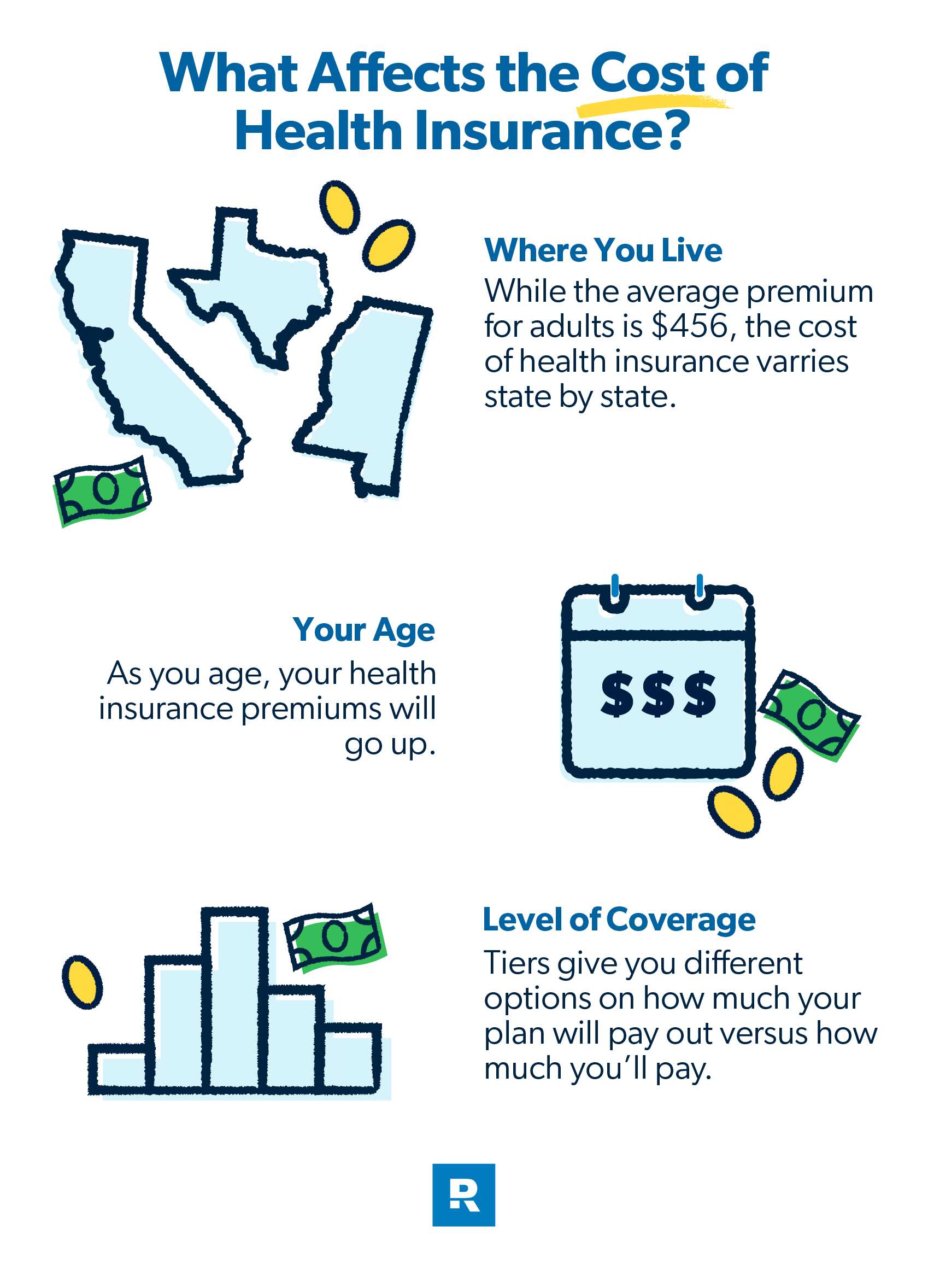
Age is the most influential factor in premium pricing. Under current regulations, insurers can charge older individuals up to three times more than younger individuals for the same coverage. From a financial planning perspective, this means your “healthcare inflation” is often higher than general CPI because as you age, you naturally move into more expensive premium brackets. Younger professionals in their 20s may see premiums as low as $250–$350, while those in their late 50s should budget significantly more.
Geographic Location
Where you live significantly impacts your monthly outlay. Competition between insurers varies by state and even by county. Rural areas with fewer hospital networks often see higher premiums due to a lack of competition, whereas major metropolitan areas may offer more competitive rates. Furthermore, state-level regulations and the local cost of living play a role in how insurers price their products within a specific “rating area.”
The “Metal Level” System
Plans on the individual marketplace are categorized into Bronze, Silver, Gold, and Platinum tiers. These tiers do not reflect the quality of medical care but rather the cost-sharing structure.
- Bronze Plans: Lowest monthly premiums but highest out-of-pocket costs when you receive care.
- Silver Plans: Moderate premiums and moderate out-of-pocket costs. These are often the “benchmark” plans for financial subsidies.
- Gold and Platinum Plans: High monthly premiums but very low costs at the point of service.
Choosing a tier is a mathematical exercise: if you are healthy and have a robust emergency fund, a Bronze plan saves monthly cash flow. If you have chronic conditions, a Gold plan protects your monthly budget from volatile medical bills.
2. Analyzing Total Cost of Ownership: Beyond the Premium
In personal finance, the “price” of an asset or service is rarely the total cost. Health insurance is no different. To accurately answer how much health insurance costs per month, you must factor in the “effective cost,” which includes deductibles, copayments, and out-of-pocket maximums.
Deductibles and Monthly Cash Flow
A deductible is the amount you pay out-of-pocket for covered services before your insurance starts to pay. When selecting a plan, there is an inverse relationship between the deductible and the premium. High-Deductible Health Plans (HDHPs) offer the lowest monthly premiums, which can be enticing for those looking to maximize their monthly investment capital. However, a $7,000 deductible means that a single accident could require an immediate liquidity event, potentially forcing you to sell stocks or dip into high-interest credit.
Copayments vs. Coinsurance
Even after the deductible is met, most plans require copayments (fixed dollar amounts) or coinsurance (a percentage of the bill). When calculating your monthly budget, you should estimate your “utilization cost.” If you see a specialist once a month with a $60 copay, your real monthly cost of insurance is your premium plus that $60. Professional financial planning involves looking at the “Maximum Out-of-Pocket” (MOOP) limit. This is the absolute ceiling on what you will pay in a year; dividing this number by 12 gives you your “worst-case scenario” monthly cost.
Network Restrictions (HMO vs. PPO)
The structure of the provider network also dictates cost. Health Maintenance Organizations (HMOs) generally have lower monthly premiums but require you to stay within a strict network and get referrals for specialists. Preferred Provider Organizations (PPOs) offer more flexibility but command a premium price. From a business finance perspective, the PPO is often viewed as a “convenience tax”—you pay more per month for the autonomy to choose your providers without administrative hurdles.

3. Employer-Sponsored vs. Individual Marketplace Costs
The source of your insurance is perhaps the greatest variable in your monthly net expenditure. The “average” cost of health insurance varies wildly depending on whether you are an employee, a freelancer, or a business owner.
The Value of the Employer Subsidy
For those in the corporate world, the monthly cost of health insurance is often heavily subsidized. According to recent data from the Kaiser Family Foundation, employers typically cover roughly 70% to 80% of the premium cost for individuals. While the total premium for a mid-level plan might be $700 per month, the employee might only see a $150 deduction from their paycheck. This is a form of non-cash compensation that is often overlooked when comparing job offers or considering a transition to self-employment.
The Individual Marketplace and COBRA
For entrepreneurs and freelancers, the full weight of the premium falls on the individual. Without an employer subsidy, monthly costs can be a shock. However, the ACA provides “Premium Tax Credits” (subsidies) based on household income. If your income falls between 100% and 400% of the federal poverty level, your monthly cost may be significantly reduced. For those leaving a job, COBRA allows you to keep your employer’s plan, but you must pay 102% of the total premium (both your share and the employer’s share), which often results in monthly costs exceeding $1,500 for families.
Government-Assisted Options
Medicaid and the Children’s Health Insurance Program (CHIP) provide low-cost or free coverage for those with limited income. From a financial tool perspective, these programs act as a safety net during periods of unemployment or business pivots, ensuring that healthcare costs do not deplete remaining assets.
4. Strategic Financial Optimization of Healthcare Costs
To truly master the “Money” aspect of health insurance, one must look at it as a tax-advantaged investment vehicle rather than just an expense.
Leveraging the Health Savings Account (HSA)
The HSA is arguably the most powerful financial tool in the U.S. tax code. Available only to those on High-Deductible Health Plans, the HSA offers a “triple tax advantage”:
- Tax-Deductible Contributions: Money goes in pre-tax, reducing your taxable income.
- Tax-Free Growth: You can invest the funds in the market, and capital gains are not taxed.
- Tax-Free Withdrawals: If used for qualified medical expenses, the money comes out tax-free.
If you can afford the higher deductible, opting for an HDHP can lower your monthly premium and allow you to divert those savings into an HSA. Over 20 or 30 years, this “expense” becomes a significant retirement asset.
Tax Deductibility for the Self-Employed
For business owners and freelancers, health insurance premiums are generally 100% tax-deductible. This “above-the-line” deduction reduces your adjusted gross income (AGI), which can potentially qualify you for other tax breaks or lower your overall tax bracket. When calculating your monthly cost, you must look at the “after-tax cost.” If you are in a 25% tax bracket and pay $400 for insurance, your effective monthly cost is actually $300 after accounting for tax savings.
Annual Open Enrollment Audits
Market dynamics change every year. New insurers enter the market, drug formularies shift, and your own health needs evolve. A key financial habit is the “Annual Enrollment Audit.” By comparing your current plan against new offerings during the open enrollment period, you can often find identical coverage for a lower monthly premium. Inertia is a hidden cost in personal finance; staying on the same plan for five years without reviewing the market can cost thousands of dollars in cumulative premiums.
Conclusion: Health Insurance as a Pillar of Financial Stability
So, how much does health insurance cost per month? While the national average for an individual on the marketplace hovers around $450 to $550, the “real” answer is specific to your financial ecosystem. It is a combination of the raw premium, the potential tax savings, and the risk you are willing to carry on your balance sheet.
In the context of wealth management, health insurance should not be viewed as an annoying monthly bill to be minimized at all costs. Instead, it should be viewed as a strategic hedge against catastrophic loss. By understanding the levers of premiums, utilizing tax-advantaged accounts like HSAs, and carefully choosing between employer-sponsored and marketplace options, you can transform health insurance from a financial burden into a sophisticated tool for long-term economic security. Managing your healthcare spend is just as vital as managing your investment portfolio—both are essential for a healthy, stable financial future.
aViewFromTheCave is a participant in the Amazon Services LLC Associates Program, an affiliate advertising program designed to provide a means for sites to earn advertising fees by advertising and linking to Amazon.com. Amazon, the Amazon logo, AmazonSupply, and the AmazonSupply logo are trademarks of Amazon.com, Inc. or its affiliates. As an Amazon Associate we earn affiliate commissions from qualifying purchases.