
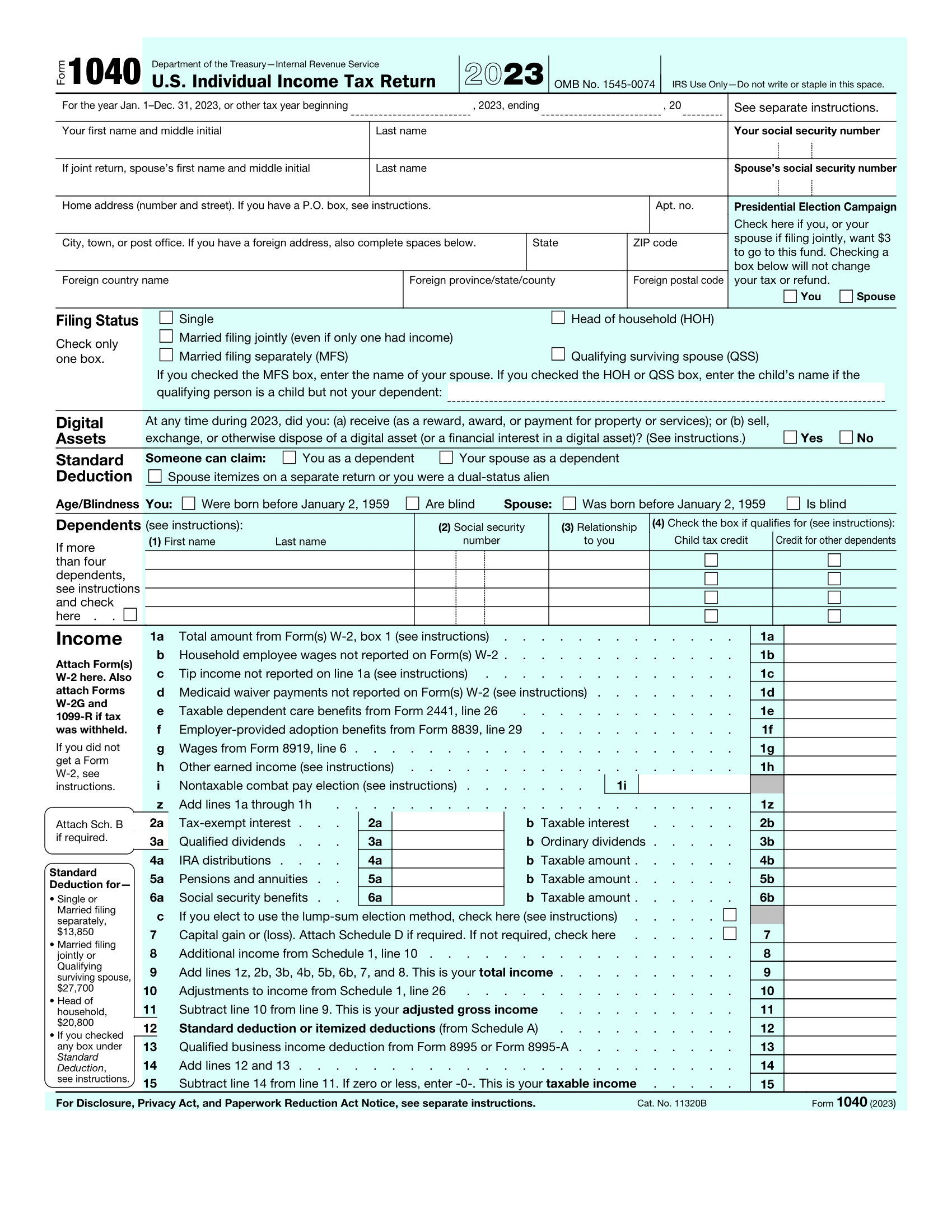
Navigating the annual tax season can feel like a daunting task for many, but it’s an essential component of responsible personal finance. Far from being just a chore, filing your 2023 tax return is an opportunity to ensure compliance, claim rightful deductions and credits, and potentially receive a valuable refund. This guide aims to demystify the process, providing you with professional, insightful, and engaging advice to confidently prepare and submit your tax return, maximizing your financial well-being.
The tax landscape, while seemingly complex, is designed to be manageable with the right information and preparation. Whether you’re a seasoned filer or approaching your first tax season, understanding the steps, deadlines, and resources available is key to a smooth and successful experience. Our focus here is squarely on the practicalities and strategies within the realm of personal finance, empowering you to take control of your 2023 tax obligations and opportunities.

Understanding Your 2023 Tax Obligation and Opportunity
Before diving into the mechanics of filing, it’s crucial to grasp the fundamental concepts of what a tax return entails and why it holds such significance in your financial life. This foundational understanding sets the stage for a more informed and proactive approach to your tax responsibilities.
What is a Tax Return and Why Does it Matter?
At its core, a tax return is a formal declaration of your income, expenses, and other relevant financial information to the government (e.g., the IRS in the United States). Based on this information, the government determines how much tax you owe or whether you are due a refund. It’s a reconciliation process: throughout the year, taxes are typically withheld from your paychecks or paid via estimated taxes. Your tax return determines if you’ve paid too much, too little, or just the right amount.
Filing your tax return is not just a legal requirement; it’s a critical financial check-up. Beyond avoiding penalties for non-filing, it allows you to:
- Claim Refunds: If you’ve overpaid throughout the year, filing is the only way to get your money back. For many, a tax refund is a significant financial event, often used for savings, debt reduction, or essential purchases.
- Access Credits and Deductions: Tax laws are replete with provisions designed to reduce your taxable income or your actual tax bill. These include credits for education, child care, energy-efficient home improvements, and deductions for student loan interest, health savings account contributions, and more. Missing out on these can cost you hundreds or even thousands of dollars.
- Maintain Financial Records: The filing process itself encourages meticulous record-keeping, a healthy habit for overall financial management.
- Qualify for Loans and Financial Aid: Lenders and educational institutions often require copies of your tax returns to assess your income and financial stability.
- Secure Social Security Benefits: Your earnings reported on your tax return contribute to your Social Security benefits calculation in retirement.
Key Changes and Considerations for the 2023 Tax Year
While major overhauls are less frequent, tax laws are subject to annual adjustments, and the 2023 tax year is no exception. It’s vital to be aware of any relevant updates that might impact your filing. These often include:
- Inflation Adjustments: Many tax provisions, such as standard deductions, tax brackets, and various credit amounts, are annually adjusted for inflation. For 2023, these adjustments generally mean higher thresholds, potentially leading to a lower tax liability or a higher refund for some taxpayers.
- Credit and Deduction Modifications: While many pandemic-era expansions have expired, some credits may have different income thresholds or benefit amounts for 2023. For instance, the Child Tax Credit, Earned Income Tax Credit, and education credits often see minor tweaks. Keep an eye out for any changes to energy efficiency credits or clean vehicle credits, as these areas have seen legislative focus.
- Remote Work Implications: If you worked remotely across state lines, understand the potential implications for state tax filings. While not a new change for 2023, it remains a relevant consideration for many taxpayers.
- Digital Asset Reporting: The IRS continues to scrutinize digital asset (cryptocurrency) transactions. Ensure you accurately report all buy, sell, and exchange activities if applicable.
Staying informed about these nuances can help you strategically approach your return, ensuring you don’t overlook any opportunities or misinterpret new rules. Reliable tax software and professional preparers are typically up-to-date on all the latest changes.
Essential Preparations: Gathering Your Documents and Information
The cornerstone of an accurate and stress-free tax filing experience is thorough preparation. This primarily involves systematically gathering all the necessary documents and information before you even begin the filing process. Procrastination here often leads to errors and frustration.
Income Documentation: W-2s, 1099s, and More
Your primary goal is to report all sources of income accurately. This typically includes:
- Form W-2 (Wage and Tax Statement): Issued by your employer(s), this form details your wages, tips, other compensation, and withheld federal, state, and local taxes. You should receive this by January 31st.
- Form 1099-NEC (Nonemployee Compensation): If you worked as an independent contractor or freelancer, clients who paid you $600 or more will issue this form.
- Form 1099-INT (Interest Income): Received from banks, credit unions, and other financial institutions reporting interest earned.
- Form 1099-DIV (Dividends and Distributions): Issued by investment firms for dividends and capital gains distributions.
- Form 1099-B (Proceeds From Broker and Barter Exchange Transactions): Reports sales of stocks, bonds, and other securities.
- Form 1099-R (Distributions From Pensions, Annuities, Retirement or Profit-Sharing Plans, IRAs, Insurance Contracts, etc.): If you received distributions from retirement accounts.
- Form 1099-G (Certain Government Payments): This might report unemployment compensation or state/local tax refunds received.
- Social Security Benefit Statement (Form SSA-1099): If you received Social Security benefits.
Make sure you have all these forms in hand. If you’re missing any, contact the issuer immediately.
Deduction and Credit Documentation: Maximizing Your Benefits
This is where you can significantly reduce your tax liability or increase your refund. Keep meticulous records for anything that could qualify as a deduction or credit:
- Itemized Deductions: If you plan to itemize (rather than take the standard deduction), you’ll need documentation for:
- Medical and Dental Expenses: Receipts for co-pays, prescriptions, mileage to appointments.
- State and Local Taxes (SALT): Property tax statements, state income tax paid. (Note the $10,000 SALT cap).
- Home Mortgage Interest: Form 1098 from your mortgage lender.
- Charitable Contributions: Receipts for cash donations, appraisals for non-cash donations.
- Education Credits: Form 1098-T (Tuition Statement) from educational institutions, receipts for books and supplies.
- Child and Dependent Care Credit: Information on care providers, including their name, address, and Taxpayer Identification Number (TIN).
- Retirement Contributions: Records of contributions to IRAs or other retirement accounts.
- Student Loan Interest: Form 1098-E from your student loan servicer.
- Health Savings Account (HSA) Contributions: Form 5498-SA and records of qualified medical expenses paid from your HSA.
- Energy-Efficient Home Improvements: Receipts and documentation for qualifying home upgrades.
It’s often beneficial to organize these documents throughout the year in a dedicated folder or digital file. This makes tax season infinitely smoother.
Personal Information and Prior Year Records
You’ll also need basic personal information for everyone on your return:
- Social Security Numbers (SSNs): For yourself, your spouse, and any dependents.
- Dates of Birth: For all individuals listed.
- Current Address.
- Bank Account Information: For direct deposit of your refund (routing and account numbers).
- Prior Year’s Adjusted Gross Income (AGI): This is often required for identity verification if you’re e-filing.
Having your previous year’s tax return handy can serve as a useful reference for what forms you typically receive and what information you’ll need.
Choosing Your Filing Method: Options for Every Taxpayer
Once your documents are in order, the next critical step is deciding how you will file your return. The best method depends on your tax situation’s complexity, your comfort with financial software, and your budget.
DIY Tax Software: Convenience and Control
For many taxpayers, especially those with relatively straightforward returns, do-it-yourself (DIY) tax software is a popular and cost-effective choice.
- Pros:
- Convenience: File from home, on your own schedule.
- Cost-Effective: Generally cheaper than professional preparers, with free options available for simple returns.
- Step-by-Step Guidance: Software walks you through the process, asking questions to ensure you claim eligible deductions and credits.
- Accuracy Checks: Built-in error checking helps prevent mistakes.
- Direct E-filing: Most software integrates directly with the IRS for quick and secure electronic submission.
- Cons:
- Requires Self-Motivation: You’re responsible for entering all data correctly.
- Limited Human Support: While some offer chat or phone support, it’s not the same as a dedicated tax professional.
- Complexity: Can become challenging for very complex tax situations (e.g., extensive self-employment, foreign income, multiple rental properties).
- Popular Options: TurboTax, H&R Block Tax Software, TaxAct, TaxSlayer.
Professional Tax Preparers: Expert Guidance and Peace of Mind
If your tax situation is complex, you own a business, or you simply prefer the peace of mind that comes with expert assistance, a professional tax preparer is an excellent investment.
- Pros:
- Expert Knowledge: Professionals stay current with complex tax laws and can identify less obvious deductions or credits.
- Error Reduction: Minimizes the risk of mistakes and potential audits.
- Time Savings: Frees up your time and reduces stress.
- Audit Support: Many preparers offer audit assistance or representation.
- Complex Scenarios: Ideal for self-employment, investments, rental properties, international income, or significant life changes.
- Cons:
- Cost: Generally the most expensive option, with fees varying based on complexity.
- Less Direct Control: You hand over the process, though you still need to provide all documentation.
- How to Choose: Look for preparers with relevant certifications (e.g., Certified Public Accountant (CPA), Enrolled Agent (EA)), check their reputation, and inquire about their fees upfront.
Free Tax Filing Options: Eligibility and Resources
For many low-to-moderate income taxpayers, free filing options are available, ensuring that everyone can meet their tax obligations without financial burden.
- IRS Free File Program: This partnership between the IRS and leading tax software companies offers free online tax preparation and e-filing for taxpayers whose Adjusted Gross Income (AGI) is below a certain threshold (which changes annually, often around $79,000 for 2023). If your AGI is above the threshold, you can still use Free File Fillable Forms, which is essentially electronic versions of IRS paper forms.
- Volunteer Income Tax Assistance (VITA): This IRS-sponsored program offers free tax help to people who generally make $64,000 or less, persons with disabilities, and limited English-speaking taxpayers. Certified volunteers provide free basic income tax return preparation with electronic filing.
- Tax Counseling for the Elderly (TCE): Similar to VITA, the TCE program provides free tax help to individuals aged 60 and older, specializing in pension and retirement-related issues.
These free options are invaluable resources and should be explored by eligible taxpayers. They combine the benefit of professional assistance with no cost, making tax filing accessible to a broader population.
Navigating the Filing Process: Step-by-Step Guidance
Once you’ve chosen your method and gathered your documents, the actual filing process involves several critical steps to ensure accuracy and timely submission. Attention to detail here can prevent future headaches.
Accuracy is Paramount: Double-Checking Your Information
Regardless of whether you use software or a preparer, the ultimate responsibility for the accuracy of your return lies with you. Before submitting:
- Review All Entries: Carefully compare the data entered into your software or provided to your preparer against your original documents (W-2s, 1099s, receipts).
- Check for Typos: A misplaced digit in an SSN or income figure can trigger delays or IRS inquiries.
- Verify Deductions and Credits: Ensure you’ve claimed all eligible deductions and credits but only those you legitimately qualify for and can document.
- Confirm Bank Details: If you’re expecting a refund via direct deposit, double-check your bank account and routing numbers. An error here can lead to significant delays in receiving your money.
- Sign and Date: Ensure all required signatures are present, especially if filing paper.
Mistakes, even innocent ones, can lead to processing delays, reduced refunds, or even an audit. Taking a few extra minutes to review can save hours of frustration later.
E-filing vs. Paper Filing: Pros and Cons
The vast majority of taxpayers now opt for electronic filing (e-filing), and for good reason.
- E-filing (Electronic Filing):
- Pros: Faster processing, quicker refunds (especially with direct deposit), immediate confirmation of receipt, reduced errors due to software checks. It’s generally the IRS’s preferred method.
- Cons: Requires access to a computer/internet; some complex situations might still necessitate paper filing or specialized software.
- Paper Filing:
- Pros: No internet required; suitable for highly unusual or complex returns that software can’t handle.
- Cons: Slower processing, longer refund times (if applicable), no immediate confirmation of receipt, higher chance of manual errors.
For most people, e-filing is the clear winner for its efficiency and reliability. The IRS typically processes e-filed returns within 21 days for refunds.
What to Do If You Owe Taxes or Expect a Refund
The outcome of your tax return will be either a refund or a tax liability. Knowing how to handle each scenario is crucial.
- If You Expect a Refund:
- Direct Deposit is Best: Opt for direct deposit. It’s the fastest and safest way to receive your refund.
- Consider What to Do With It: A refund is often an unexpected windfall. Plan how to use it wisely – pay down debt, boost savings, invest, or make a necessary purchase.
- Adjust Withholding for Next Year: If your refund is substantial, it means you overpaid taxes throughout the year. Consider adjusting your W-4 form with your employer to have less tax withheld, putting more money in your pocket throughout the year instead of waiting for a large refund.
- If You Owe Taxes:
- Pay by the Deadline: The payment deadline (typically April 15th for most taxpayers) is crucial. Failure to pay on time can result in penalties and interest.
- Payment Options: The IRS offers several payment methods:
- Direct Pay: Free direct debit from your checking or savings account.
- Credit/Debit Card: Through approved third-party processors (fees apply).
- Electronic Federal Tax Payment System (EFTPS): Requires enrollment.
- Check or Money Order: Mailed with Form 1040-V (Payment Voucher).
- Payment Plans: If you can’t pay the full amount by the deadline, don’t ignore it. Contact the IRS to discuss payment options, such as a short-term payment plan or an Offer in Compromise. Paying something, even if not the full amount, can reduce penalties.
- Adjust Withholding/Estimated Taxes for Next Year: If you owed a significant amount, review your W-4 or estimated tax payments to avoid a similar situation next year.
Post-Filing Considerations and Future Planning
Filing your return isn’t the absolute end of the tax season. A few final steps and some forward-looking planning can further enhance your financial readiness.
Tracking Your Refund Status
Once you’ve e-filed, you can track the status of your federal refund using the IRS’s “Where’s My Refund?” tool on their website (IRS.gov). You’ll need your Social Security Number, your filing status, and the exact refund amount shown on your return. State tax agencies typically have similar tools. While the IRS states most e-filed refunds are issued within 21 days, some may take longer due to additional review.
Record Keeping for Future Reference
After filing, don’t discard your documents. Proper record-keeping is vital:
- Keep Copies: Save copies of your filed return and all supporting documentation (W-2s, 1099s, receipts) for at least three years from the date you filed your original return or two years from the date you paid the tax, whichever is later. This is the general statute of limitations for the IRS to audit your return.
- Digital vs. Physical: Whether you keep digital scans or physical folders, ensure they are stored securely and are easily accessible if needed.
- Protect Your Data: If storing digitally, ensure strong passwords and secure cloud storage.

Planning for Next Year: Withholding and Estimated Taxes
The end of one tax season is the perfect time to start planning for the next. This proactive approach can prevent surprises and optimize your cash flow.
- Review Withholding (W-4): If you received a large refund, consider adjusting your W-4 with your employer to have less tax withheld. This puts more money in your paychecks throughout the year. Conversely, if you owed a lot, you might need to increase your withholding. Use the IRS Tax Withholding Estimator tool to help.
- Estimated Taxes: If you’re self-employed, have significant investment income, or other income not subject to withholding, you may need to pay estimated taxes quarterly. Failure to do so can result in penalties.
- Financial Goals Alignment: Use your tax return as a financial health check. Are there new deductions or credits you could qualify for next year? Could you contribute more to a tax-advantaged retirement account (like a 401(k) or IRA) or a Health Savings Account (HSA) to reduce your taxable income?
By taking these steps, you not only ensure compliance with tax laws but also leverage your tax obligations as a tool for sound personal financial management. The 2023 tax return is more than just a form; it’s an annual financial snapshot that, when handled correctly, can significantly contribute to your overall economic well-being.
aViewFromTheCave is a participant in the Amazon Services LLC Associates Program, an affiliate advertising program designed to provide a means for sites to earn advertising fees by advertising and linking to Amazon.com. Amazon, the Amazon logo, AmazonSupply, and the AmazonSupply logo are trademarks of Amazon.com, Inc. or its affiliates. As an Amazon Associate we earn affiliate commissions from qualifying purchases.