
The Dow Jones Industrial Average (DJIA), often simply referred to as “the Dow,” stands as one of the most widely watched and oldest stock market indices in the world. For well over a century, it has served as a critical barometer for the health of the American economy and the broader market sentiment. Investors, economists, and the general public alike frequently track its movements, particularly when it breaches new all-time highs. Understanding the highest points the Dow has reached is not merely a matter of historical record; it offers profound insights into economic cycles, technological revolutions, and the enduring power of market growth.
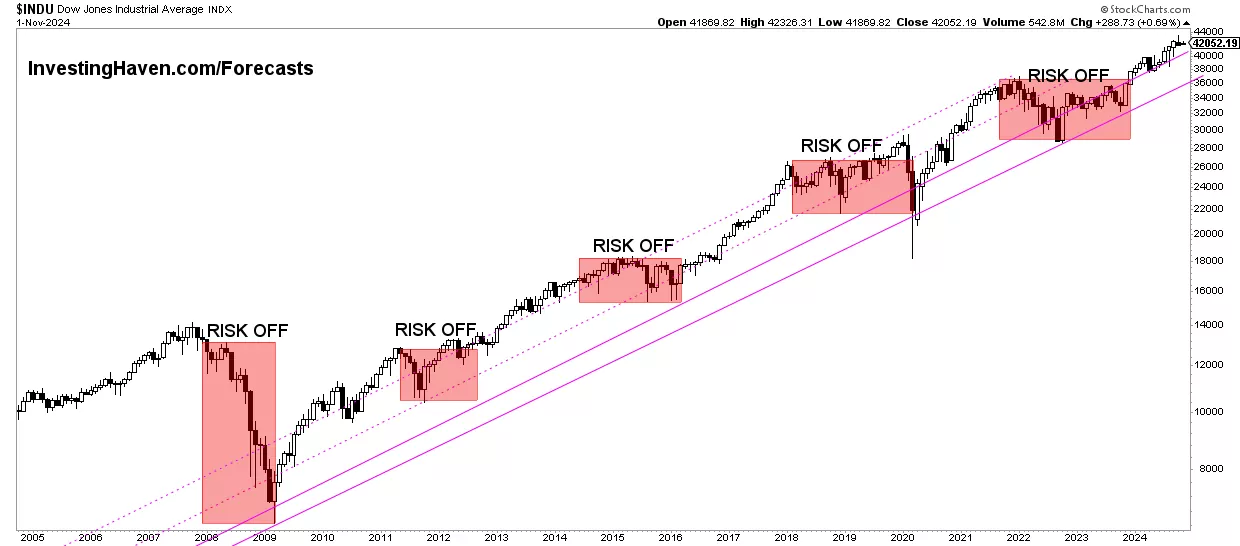
As a dynamic index, the Dow Jones Industrial Average consistently sets and re-sets its record highs, reflecting ongoing economic activity, corporate performance, and investor confidence. As of early 2024, the Dow Jones Industrial Average has sailed past the 39,000-point mark, establishing new unprecedented peaks. This latest milestone underscores a remarkable journey of growth, resilience, and transformation that the index has undergone since its inception. While specific figures are ever-changing, this article delves into the historical context, the drivers behind these record-breaking achievements, and what these milestones mean for investors navigating the complex world of finance.
A Historical Perspective on the Dow Jones Industrial Average (DJIA)
To truly appreciate the significance of the Dow’s highest points, one must first understand its origins and how it has evolved from a nascent indicator to a global financial benchmark.
The Dow’s Genesis and Evolution
The Dow Jones Industrial Average was first calculated by Charles Dow in 1896, initially comprising just 12 industrial companies. Its purpose was to track the performance of the most prominent industrial enterprises in the nascent American economy, providing a straightforward measure of market trends. Over the decades, the index expanded to 30 companies, reflecting a broader array of sectors beyond traditional heavy industry, including technology, finance, retail, and healthcare. This expansion was crucial, as it allowed the Dow to remain relevant as the U.S. economy diversified and evolved.
From its modest beginnings, when its value was in the double digits, the Dow has weathered countless economic storms—including world wars, the Great Depression, the Dot-com bubble, the 2008 financial crisis, and global pandemics. Each challenge has tested its resilience, yet the long-term trajectory has consistently pointed upwards, illustrating the enduring capacity for innovation and growth inherent in the American economic system. The journey from a few dozen points to tens of thousands reflects not just inflation, but genuine wealth creation and productivity gains.
Understanding the DJIA: More Than Just a Number
While often cited as the market indicator, it’s important to remember that the DJIA is a price-weighted index, meaning companies with higher stock prices have a greater influence on the index’s value, regardless of their market capitalization. This contrasts with market-capitalization-weighted indices like the S&P 500, which gives more weight to larger companies. This weighting method has implications for how the Dow behaves and why certain company movements can have a disproportionate impact.
Despite its methodological quirks, the Dow’s psychological significance remains immense. It represents a tangible, easily digestible benchmark for the performance of large, established U.S. companies. When the Dow hits a new high, it often signals broad investor confidence, strong corporate earnings, and a generally optimistic economic outlook. Conversely, sharp declines can trigger anxiety and reflect underlying economic concerns. For many, “the Dow” is synonymous with “the market,” making its performance a daily headline and a touchstone for financial discussions.
Charting the Peaks: The DJIA’s Record Highs
The path to new record highs is rarely linear. It is often a story of gradual ascent punctuated by periods of rapid growth and occasional, sometimes sharp, pullbacks. Each new peak tells a story of the prevailing economic climate and the forces shaping it.
Key Milestones and Economic Context
Throughout its history, the Dow has celebrated numerous significant milestones. Surpassing 1,000 points in 1972, then 10,000 in 1999, and more recently clearing 20,000 in 2017, 30,000 in 2020, and 39,000 in early 2024. Each of these thresholds represented not just a numerical achievement but often coincided with—or signaled—major shifts in the economy or periods of robust growth.
For instance, the run-up to 10,000 points in the late 1990s was fueled by the dot-com boom, an era of unprecedented technological optimism. The surge past 20,000 and 30,000 points reflected a prolonged bull market following the 2008 financial crisis, driven by corporate innovation, low interest rates, and robust consumer spending, which remarkably accelerated even amidst the initial recovery from the COVID-19 pandemic. These highs are not isolated events but rather culminations of various economic and corporate forces converging over time.
Notable Bull Markets and Their Drivers
Bull markets—periods of sustained stock price increases—are the engine behind the Dow reaching new highs. Several periods stand out:
- The Roaring Twenties (1920s): Fueled by industrial expansion, technological innovation (radio, automobiles), and speculative fervor, leading to a peak before the 1929 crash.
- Post-WWII Boom (1950s-1960s): Driven by rebuilding, consumerism, and the baby boom generation.
- The Reagan Era and Beyond (1980s-1990s): Characterized by deregulation, globalization, and the early stages of the tech revolution.
- The Post-2008 Recovery (2009-2020): A decade-long bull run aided by quantitative easing, corporate deleveraging, and resurgent consumer confidence.
- The Post-Pandemic Bounce (2020-Present): An astonishingly rapid recovery and subsequent growth, propelled by massive fiscal stimulus, accommodative monetary policy, and rapid adaptation to digital technologies.
Each bull market has its unique set of catalysts, but common threads include strong corporate earnings, favorable economic conditions, and often, transformative technological advancements.
The Psychology Behind Market Peaks
Reaching a new all-time high often generates significant media attention and can create a sense of euphoria among investors. This optimism can become self-reinforcing, attracting more capital into the market and pushing prices even higher. However, this also carries risks. Peaks can sometimes be followed by periods of correction or consolidation as the market digests its gains or responds to emerging economic headwinds. Understanding this psychological dynamic is crucial for investors, who must distinguish between sustainable growth and speculative bubbles. A new high should be viewed as a point on a long journey, not necessarily the end destination or an indicator of impending doom.
Factors Driving the Dow’s Ascent to New Heights
The journey to new record highs is a complex interplay of numerous economic, corporate, and even psychological factors. Pinpointing the precise drivers helps investors understand market dynamics and make more informed decisions.
Corporate Earnings and Economic Growth
At its core, the Dow Jones Industrial Average reflects the performance of 30 large, publicly traded companies. Therefore, strong corporate earnings are arguably the most fundamental driver of its ascent. When these companies report robust profits, increasing revenues, and positive outlooks, it signals health in the underlying economy. This translates into higher stock prices as investors anticipate future growth and dividends. Economic growth, characterized by rising GDP, low unemployment, and healthy consumer spending, provides the fertile ground for these companies to thrive and expand. Innovation, efficiency gains, and market expansion by these industrial giants directly contribute to the Dow’s upward trajectory.
Technological Innovation and Sector Shifts
The composition of the Dow has changed significantly over the years, reflecting the evolving nature of the American economy. Companies from once-dominant industries have been replaced by those representing new growth sectors. Today, the Dow includes major technology firms, healthcare giants, and financial powerhouses, alongside traditional industrials. Disruptive technological innovations—from the internet and mobile computing to artificial intelligence and biotechnology—have repeatedly fueled new waves of productivity and economic expansion. Companies that successfully adapt, innovate, and lead in these new frontiers become the engines for the Dow’s growth, propelling it to new records. The ongoing digital transformation across industries is a prime example of such a driving force in recent years.
Monetary Policy and Investor Sentiment
Monetary policy, primarily set by the Federal Reserve, plays a crucial role. Low interest rates, for instance, make borrowing cheaper for companies, encouraging investment and expansion. They also make stocks more attractive relative to bonds, driving capital into equities. Conversely, rising interest rates can make borrowing more expensive and bonds more appealing, potentially dampening stock market enthusiasm. Fiscal policy, such as government spending or tax cuts, can also stimulate economic activity and boost corporate performance. Beyond these tangible policies, investor sentiment—a collective mood of optimism or pessimism—can amplify or mitigate the impact of economic fundamentals. Positive sentiment, often spurred by a sense of stability or exciting new developments, can create a powerful upward momentum, leading to new highs.
The Significance of Highs and Lows for Investors
While record highs are exciting, savvy investors understand that they are part of a larger, cyclical market movement. The true significance lies not just in the numbers themselves, but in what they teach us about market behavior and prudent investment strategies.
Avoiding Emotional Investing
One of the greatest challenges for investors is to avoid emotional decision-making, especially during periods of extreme market performance. When the Dow hits new highs, there’s a temptation to jump in, fearing one might miss out on further gains (FOMO – Fear Of Missing Out). Conversely, sharp declines can trigger panic selling. Successful investing requires a disciplined approach, sticking to a predetermined strategy rather than reacting impulsively to daily headlines. Understanding that market cycles are normal, and that both highs and lows are integral parts of the investment landscape, helps in maintaining a long-term perspective.
Long-Term Perspective vs. Short-Term Fluctuations
The history of the Dow Jones Industrial Average is a testament to the power of long-term investing. Despite numerous corrections, bear markets, and economic crises, the index has consistently trended upwards over decades. This emphasizes that while short-term fluctuations are inevitable, a diversified portfolio held for the long term has historically been a reliable path to wealth creation. Investors focused on building wealth for retirement or other long-term goals should view record highs as confirmation of this long-term growth trend, rather than a signal to drastically alter their strategy.
Diversification and Risk Management
While the Dow’s impressive growth is appealing, investing solely in the 30 companies it tracks is not a comprehensive investment strategy. Prudent investors understand the importance of diversification—spreading investments across various asset classes, industries, and geographies—to mitigate risk. Even during periods of market exuberance, maintaining a diversified portfolio ensures that an investor is not overly exposed to the fortunes of a single index or sector. Record highs in the Dow can offer a sense of security, but they should never lead to complacency regarding risk management.
Looking Ahead: The Future Trajectory of the Dow
The Dow Jones Industrial Average will undoubtedly continue to make headlines, setting new highs and navigating future challenges. Its trajectory will remain a crucial indicator for understanding economic trends and market sentiment.
Enduring Relevance in a Changing Market
Despite the rise of other comprehensive indices like the S&P 500 and the Nasdaq Composite, the Dow retains a unique cultural and historical significance. It remains a quick, often quoted benchmark that provides an accessible snapshot of the U.S. industrial and corporate landscape. Its enduring relevance is a testament to its adaptive nature, periodically updating its components to reflect the current economic leaders. As economies evolve, so too will the Dow, continuing its journey toward new, as-yet-unimagined heights.

The Impact of Global Events and Emerging Trends
The future performance of the Dow will, as always, be influenced by a myriad of factors: geopolitical stability, technological breakthroughs (like quantum computing or advanced biotech), climate change initiatives, evolving consumer behaviors, and global trade dynamics. While past performance is never a guarantee of future results, the historical resilience and growth of the Dow suggest that innovation, corporate adaptability, and the underlying strength of the American economy will continue to drive it forward. Investors should remain informed, analytical, and forward-looking, recognizing that each new high is a chapter in an ongoing story of economic evolution and financial opportunity.
In conclusion, the highest the Dow Jones Industrial Average has been is a constantly moving target, representing the pinnacle of its journey at any given moment. Each time it sets a new record, it reflects a complex interplay of corporate success, economic expansion, and investor confidence. For the astute investor, these milestones are not just numbers to be celebrated, but opportunities to reinforce disciplined strategies, understand market dynamics, and maintain a long-term, diversified approach to wealth building.
aViewFromTheCave is a participant in the Amazon Services LLC Associates Program, an affiliate advertising program designed to provide a means for sites to earn advertising fees by advertising and linking to Amazon.com. Amazon, the Amazon logo, AmazonSupply, and the AmazonSupply logo are trademarks of Amazon.com, Inc. or its affiliates. As an Amazon Associate we earn affiliate commissions from qualifying purchases.