
Car ownership, while offering unparalleled freedom and convenience, comes with a significant financial commitment. Beyond the initial purchase price, fuel, maintenance, and depreciation, one of the most substantial ongoing expenses is car insurance. For many, the prospect of finding an affordable car insurance premium feels like navigating a complex maze, often prompting the fundamental question: “What car has the cheapest insurance?”
The answer isn’t as simple as naming a single make and model. While certain vehicles statistically command lower premiums, the true cost of car insurance is a confluence of factors related to the car itself, the driver, the policy details, and even the geographic location. Understanding these interwoven elements is crucial for any financially savvy individual looking to minimize their annual car expenses. This article delves deep into the economic drivers behind insurance rates, identifies vehicle characteristics that lead to lower costs, and provides actionable strategies for saving money, all within the overarching framework of personal finance and prudent money management.
Understanding the Core Factors Influencing Insurance Premiums
To truly identify what car has the cheapest insurance, one must first grasp the underlying methodology insurance companies employ to calculate premiums. It’s a sophisticated risk assessment exercise, where myriad data points converge to predict the likelihood and potential cost of a future claim. Far from being arbitrary, these calculations are rooted in extensive actuarial science aimed at balancing the insurer’s risk exposure with a competitive market offering.
The Vehicle Itself: Risk Assessment & Replacement Costs
The car you drive is, unsurprisingly, a primary determinant of your insurance premium. Insurers evaluate several characteristics of a vehicle to gauge its inherent risk profile:
- Safety Ratings: Cars with superior safety features and excellent crash test ratings often result in lower premiums. A vehicle that better protects its occupants means fewer injury claims, which are typically very costly for insurers. Look for cars with high ratings from organizations like the Insurance Institute for Highway Safety (IIHS) and the National Highway Traffic Safety Administration (NHTSA).
- Repair Costs: The expense and availability of parts, as well as the complexity of repairs, directly impact insurance costs. Vehicles with specialized, expensive components or those requiring highly skilled labor for repairs will naturally incur higher collision and comprehensive premiums. Common, mass-produced cars with widely available and affordable parts tend to be cheaper to insure.
- Theft Rates: Certain car models are statistically more attractive to thieves. If a car is frequently stolen, insurers face a higher risk of total loss claims, leading to elevated comprehensive coverage costs. Data from organizations like the National Insurance Crime Bureau (NICB) can offer insights into these trends.
- Performance & Power: High-performance vehicles, sports cars, and luxury models with powerful engines are generally more expensive to insure. The assumption is that these cars are driven more aggressively, increasing the likelihood of accidents. Furthermore, their higher market value means greater replacement or repair costs after an incident.
- Value & Age: The market value of your car directly influences the cost of collision and comprehensive coverage. A brand-new, expensive car will cost more to replace or repair than an older, less valuable one. As a car ages and depreciates, the cost-effectiveness of full coverage might diminish, prompting some owners to switch to liability-only policies.
Driver Demographics and Driving History
While the car is significant, the person behind the wheel is arguably an even greater factor in premium calculation. Your personal profile and driving habits provide a crucial context for risk assessment:
- Age & Experience: Younger, less experienced drivers, especially teenagers, face the highest premiums due to their statistically higher accident rates. As drivers mature and gain experience, their rates typically decrease, assuming a clean driving record.
- Driving Record: This is paramount. A history of accidents, traffic violations (speeding tickets, DUIs), or other infractions will significantly increase your premiums. Insurers view these as strong indicators of future risk. Conversely, a clean driving record for several years often qualifies drivers for good driver discounts.
- Location: Where you live and park your car profoundly impacts your rates. Urban areas with higher traffic density, crime rates, and greater incidence of accidents or vandalism tend to have higher premiums than rural areas. Specific zip codes within the same city can even have different rates based on local claim statistics.
- Credit Score (where permissible): In many states, insurance companies use a credit-based insurance score (which differs from a standard credit score but is derived from credit report data) as a predictor of claim likelihood. Studies have shown a correlation between higher credit scores and a lower likelihood of filing claims, resulting in lower premiums for those with good credit.
Policy Details and Deductibles
The specifics of your insurance policy itself also play a critical role in your premium. This is where your financial decisions directly impact your outlay:
- Coverage Limits: The amount of liability coverage you choose (e.g., $100,000/$300,000 for bodily injury, $50,000 for property damage) directly affects your premium. Higher limits offer greater financial protection but come at a higher cost.
- Deductibles: Your deductible is the amount you agree to pay out-of-pocket before your insurance coverage kicks in for collision or comprehensive claims. Choosing a higher deductible (e.g., $1,000 instead of $500) will lower your premium, as you’re taking on more of the initial risk yourself. This is a strategic financial decision that requires having an adequate emergency fund to cover the deductible if an incident occurs.
- Add-ons: Optional coverages such as rental car reimbursement, roadside assistance, gap insurance, or new car replacement will add to your premium. While some can be valuable, it’s essential to assess if they align with your financial needs and existing resources.
Identifying Car Types Typically Associated with Lower Insurance Costs
Given the complex interplay of factors, certain car characteristics consistently emerge as indicators of lower insurance premiums. The “cheapest to insure” cars are generally those that present the lowest risk profile to insurers across all categories.
The “Sweet Spot” – Practical, Safe, and Common Sedans/Hatchbacks
These vehicles represent the best balance of safety, affordability, and low risk, making them perennial favorites for budget-conscious drivers. They are often:
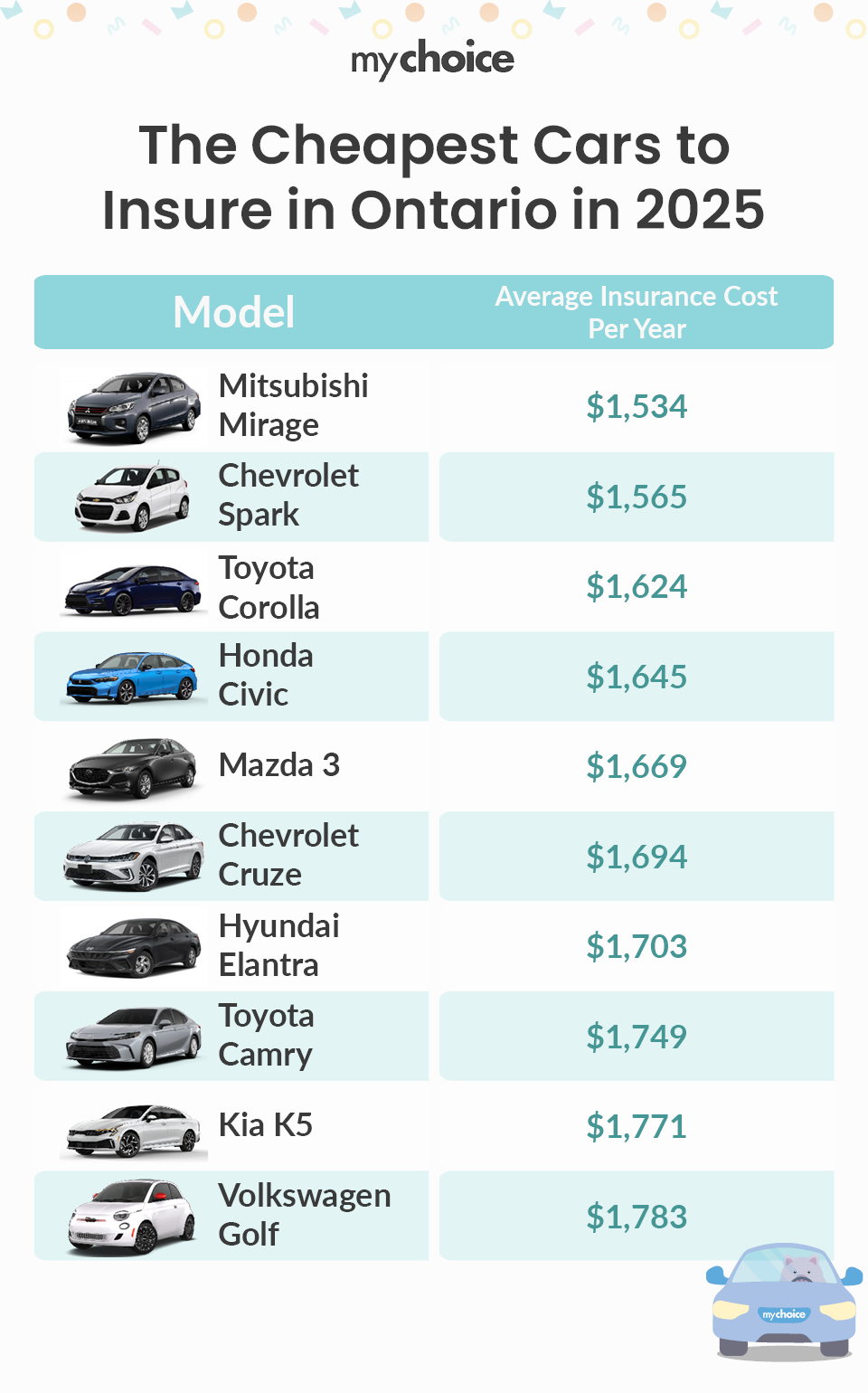
- Examples: Honda Civic, Toyota Corolla, Subaru Impreza, Mazda 3, Hyundai Elantra, Ford Focus (models still available). These are mainstream vehicles, widely produced, and popular among a broad demographic.
- Reasons:
- High Safety Ratings: Manufacturers prioritize safety in these mass-market models, equipping them with advanced airbags, stability control, and often a suite of driver-assistance features (like automatic emergency braking) that reduce accident severity.
- Readily Available and Affordable Parts: Their widespread popularity means parts are easy to source and repair costs are generally lower. This significantly reduces the cost of collision and comprehensive claims.
- Lower Theft Rates: While popular, they are often less targeted by professional theft rings compared to luxury or performance vehicles.
- Not High-Performance: Their engines are typically efficient rather than powerful, reducing the perception of risky driving behavior.
Minivans and Family-Oriented SUVs
While larger, these vehicles also tend to have favorable insurance rates, largely due to the demographic that typically drives them and their inherent safety features.
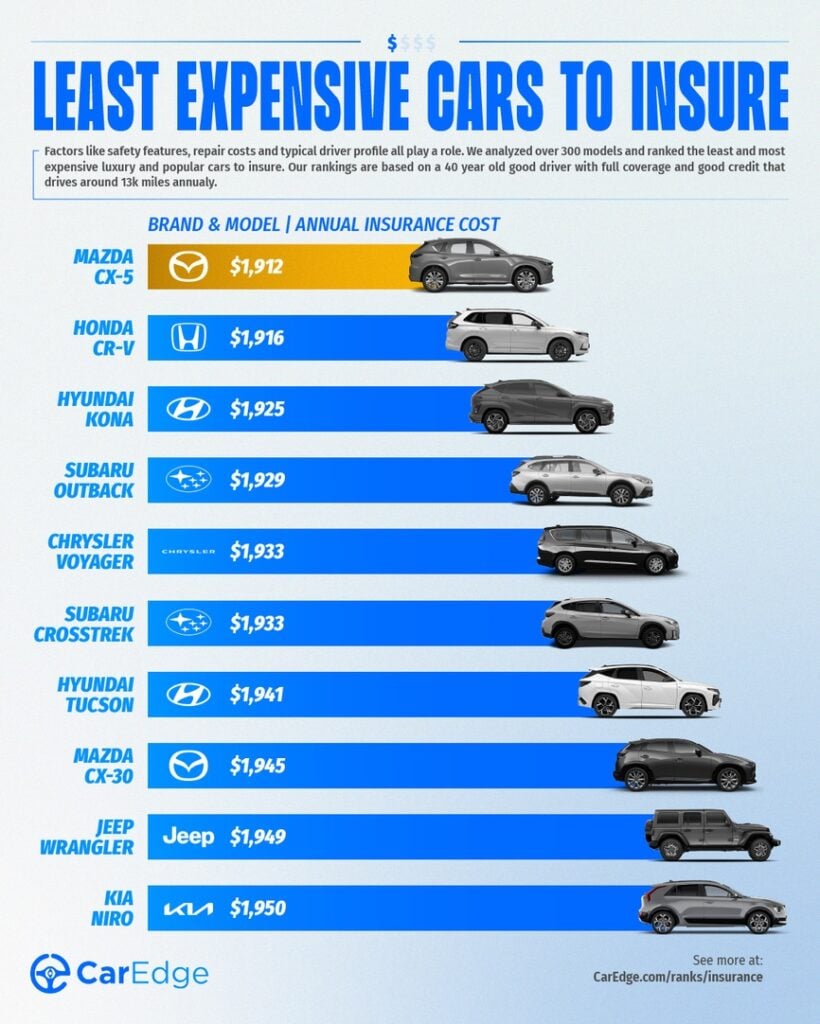
- Examples: Honda Odyssey, Toyota Sienna, Chrysler Pacifica, Subaru Forester, Toyota RAV4, Honda CR-V, Hyundai Santa Fe.
- Reasons:
- Driven by Safer Demographics: Minivans and family SUVs are overwhelmingly driven by families, who statistically tend to be more cautious drivers, prioritizing safety over speed.
- Excellent Safety Features: These vehicles are designed with family safety as a priority, often boasting robust crash structures, multiple airbags, and a comprehensive suite of active safety technologies.
- Perceived Lower Risk: Insurers associate these vehicles with responsible, conservative driving habits, leading to lower accident frequency and severity.
Older, Reliable Models (with caveats)
For drivers seeking truly minimal insurance costs, older, reliable vehicles can be an option, but this strategy requires careful financial consideration.
- Focus on Liability-Only: The primary saving comes from dropping collision and comprehensive coverage once the vehicle’s market value is low enough that the cost of these coverages outweighs the potential payout after a total loss. This is a purely financial decision. If your car is worth $3,000 and full coverage costs $800/year, it might not be a wise investment if you can absorb the loss of the car.
- Maintenance is Key: Opting for an older car means prioritizing reliability to avoid frequent repair bills. Models known for longevity, such as older Toyota Camrys or Honda Accords, are good candidates. Financial prudence dictates setting aside funds for unexpected repairs if you forgo comprehensive coverage.
Strategies Beyond the Car Choice to Further Reduce Premiums
Even if you choose a car that’s traditionally cheap to insure, a significant portion of your financial savings on car insurance comes from proactive management of your policy and driving habits. These strategies are all about maximizing your money and making informed financial decisions.
Maximizing Discounts

Insurance companies offer a plethora of discounts; it’s your financial responsibility to inquire about and qualify for as many as possible.
- Bundling: Combining your auto insurance with home, renters, or other insurance policies from the same provider often yields a substantial discount. This simplifies your financial management and rewards your loyalty.
- Good Driver/Student: Maintaining a clean driving record for a certain period (e.g., 3-5 years) often qualifies you for a “good driver” discount. Similarly, good students (often with a B average or higher) under a certain age can receive discounts.
- Safety Features: Vehicles equipped with advanced safety features (anti-lock brakes, airbags, daytime running lights, anti-theft devices, advanced driver-assist systems like lane keeping assist or adaptive cruise control) can earn discounts.
- Low Mileage: If you don’t drive frequently, or if you commute short distances, you might qualify for a low-mileage discount. This directly reflects lower exposure to risk.
- Telematics Programs: Many insurers offer programs where a device or app tracks your driving habits (speed, braking, mileage). Safe drivers participating in these “usage-based insurance” programs can see significant savings.
Optimizing Your Policy
Regularly reviewing your policy is a crucial financial habit that can prevent you from overpaying.
- Review Coverage Annually: Your insurance needs change over time. Marriage, moving, a new job, or simply your car’s depreciation might mean your current coverage is no longer optimal. Don’t set it and forget it.
- Increase Deductibles: As discussed, choosing a higher deductible can lower your premium. This is a sound financial strategy if you have a robust emergency fund specifically earmarked for potential car repair or replacement costs.
- Drop Unnecessary Coverage: If your car is very old and its market value is minimal, the cost of collision and comprehensive coverage might outweigh any potential payout. Carefully calculate if it’s financially prudent to keep these coverages, especially if you have the funds to replace the car outright.
Shopping Around and Building a Strong Financial Profile
Comparing options and strengthening your overall financial health are powerful tools in reducing insurance costs.
- Compare Quotes Regularly: Never assume your current insurer offers the best rate. Get quotes from multiple insurance providers every year or two, or whenever a significant life event occurs. Independent insurance agents can be invaluable here, as they can shop various carriers on your behalf.
- Improve Credit Score: Since credit-based insurance scores can impact premiums, improving your overall credit score through responsible financial habits (paying bills on time, reducing debt) can indirectly lead to lower insurance rates over time.
- Consider Independent Agents: These professionals work with multiple insurance companies and can help you find the best balance of coverage and cost without you having to contact numerous providers individually. They are a valuable financial resource.
Common Misconceptions and What to Avoid
In the pursuit of cheaper insurance, it’s easy to fall prey to common misconceptions or make financially detrimental decisions. Understanding these pitfalls is as important as knowing what to do.
The Myth of “Dirt Cheap” Car Insurance
While it’s possible to find affordable insurance, truly “dirt cheap” often comes with hidden costs or insufficient coverage.
- Emphasize Value vs. Lowest Price: The goal isn’t just the absolute lowest premium, but the best value—adequate financial protection for a reasonable cost. Skimping on liability coverage, for instance, could leave you financially vulnerable in a serious accident.
- Be Wary of Policies That Seem Too Good to Be True: If a quote is drastically lower than others, scrutinize the coverage limits, deductibles, and the reputation of the insurer. Ensuring you have sufficient financial protection is paramount.
Ignoring Your Driving Record
Your driving behavior is the most controllable factor in your insurance costs. Neglecting it is a financial oversight.
- Driving Safely is the Single Biggest Long-Term Cost Reducer: Consistent safe driving over many years is rewarded with lower premiums and better discount eligibility. Each accident or ticket can significantly increase your rates for years.
- Failing to Address Traffic Violations: Sometimes it’s possible to attend traffic school to mitigate points on your license, which can help keep rates from skyrocketing. Consult a legal professional if needed to understand your options.
Not Re-evaluating Your Policy
Life is dynamic, and your insurance policy should reflect that. Stagnation in policy review is a missed financial opportunity.
- Life Changes: Getting married, having children, moving to a new neighborhood, or reaching certain age milestones (e.g., turning 25) can all positively impact your rates. Inform your insurer about these changes.
- Car Depreciation: As your car loses value, the necessity and cost-effectiveness of comprehensive and collision coverage might change. Regularly reassess if these coverages still make financial sense for your vehicle’s current market value.
The Financial Long Game: Total Cost of Ownership
Focusing solely on insurance premiums, while vital, only provides a partial picture of the financial commitment of car ownership. For truly astute money management, it’s crucial to consider the total cost of ownership (TCO).
Beyond Premiums: Fuel, Maintenance, and Depreciation
The “cheapest to insure” car might not be the “cheapest to own” if it’s a gas-guzzler, prone to expensive repairs, or depreciates rapidly.
- Fuel Efficiency: A car with excellent MPG will save you significantly at the pump over its lifespan, offsetting a slightly higher insurance premium, potentially. This is a direct impact on your monthly budget.
- Reliability and Common Repair Costs: Research the long-term reliability of any car you consider. Models known for frequent breakdowns or expensive parts can quickly erode any insurance savings.
- Resale Value Retention: Cars that hold their value well minimize the financial hit from depreciation, making them a better long-term investment.
Budgeting for Car Ownership
Effective personal finance involves comprehensive budgeting. Your car budget should encompass all related expenses:
- Allocate Funds for Insurance, Fuel, Maintenance, and an Emergency Fund: Create a realistic monthly budget that includes these categories. Don’t forget to factor in an emergency fund specifically for unexpected car repairs or a higher deductible if an incident occurs.
- The Importance of Financial Planning for Car Expenses: Understanding the full financial picture before purchasing a vehicle can prevent future stress and ensure your car remains a convenience, not a burden.
In conclusion, the question “what car has the cheapest insurance?” is best answered not by a single model, but by a thoughtful financial strategy. It involves choosing a vehicle that aligns with a low-risk profile – typically a safe, reliable, and common sedan, hatchback, or family SUV. More importantly, it requires the driver to be a proactive financial manager: maintaining a pristine driving record, diligently comparing quotes, maximizing all available discounts, and regularly adjusting their policy to reflect changing life circumstances and vehicle value. By adopting this holistic approach, individuals can significantly reduce their car insurance burden and optimize their personal finance portfolio, ensuring long-term savings and peace of mind on the road.
aViewFromTheCave is a participant in the Amazon Services LLC Associates Program, an affiliate advertising program designed to provide a means for sites to earn advertising fees by advertising and linking to Amazon.com. Amazon, the Amazon logo, AmazonSupply, and the AmazonSupply logo are trademarks of Amazon.com, Inc. or its affiliates. As an Amazon Associate we earn affiliate commissions from qualifying purchases.