
Deciding to close a credit card account is a significant financial move that requires more than just a simple phone call. Whether you are looking to trim your wallet of high annual fees, simplify your financial life, or move toward a different rewards ecosystem, canceling a Chase credit card involves a series of strategic steps to ensure your credit score remains intact and your earned rewards are preserved.
In the realm of personal finance, your credit cards are tools. Sometimes, those tools no longer serve your evolving financial strategy. This guide provides a professional, deep-dive analysis of how to cancel your Chase credit card while safeguarding your financial health.
1. Understanding the Financial Impact of Closing a Credit Account
Before you pick up the phone or log into the Chase portal, it is vital to understand the “why” and “how” of credit scoring. Closing an account is not a neutral event; it has ripples that affect your overall financial profile.
The Credit Utilization Ratio
One of the most significant factors in your FICO score is your credit utilization ratio—the amount of credit you are using compared to your total available limit across all cards. When you close a Chase card, you instantly reduce your total available credit. If you carry balances on other cards, your utilization percentage will spike, which can lead to a sudden drop in your credit score. Financial experts generally recommend keeping utilization below 30%, and ideally below 10%.
Length of Credit History
The age of your accounts accounts for 15% of your credit score. If the Chase card you are canceling is one of your oldest accounts, closing it may eventually shorten your average age of accounts. While FICO continues to include closed accounts in its age calculations for ten years, the loss of that “anchor” account will eventually be felt.
The Impact on Your Credit Mix
Lenders like to see a diverse mix of credit types (revolving accounts like credit cards and installment loans like mortgages). If the Chase card you are closing represents a significant portion of your revolving credit, or if it is one of only a few cards you own, it could slightly diminish the “credit mix” portion of your score.
2. Strategic Preparation: What to Do Before You Cancel
A common mistake in personal finance management is acting impulsively. Before initiating the cancellation process with Chase, you must conduct a “financial audit” of the specific account to ensure you aren’t leaving money on the table.
Redeeming or Transferring Ultimate Rewards
Chase is famous for its Ultimate Rewards (UR) points. If you cancel a card like the Chase Sapphire Preferred or Ink Business Preferred without moving your points, those points will vanish the moment the account is closed.
- Transfer to Other Chase Cards: If you have another UR-earning card (like a Freedom Flex), you can move your points there.
- Transfer to Travel Partners: Move your points to Hyatt, United, or Southwest if you have no other Chase cards.
- Cash Back: At the very least, redeem your points for a statement credit or a direct deposit into your bank account.
Zeroing Out the Balance
Chase will typically not allow you to officially close an account until the balance is addressed, though they can “freeze” it. However, it is much cleaner to pay off the balance in full before calling. Ensure there are no “pending” transactions that might post after you think the account is at zero.
Auditing Recurring Payments
In our modern subscription economy, many of us have “ghost” subscriptions—streaming services, gym memberships, or insurance premiums—billed automatically to our cards. Go through your last three months of statements and migrate these payments to a different card. A missed payment on a subscription after a card is canceled can lead to service interruptions or, worse, a collection notice that damages your credit.
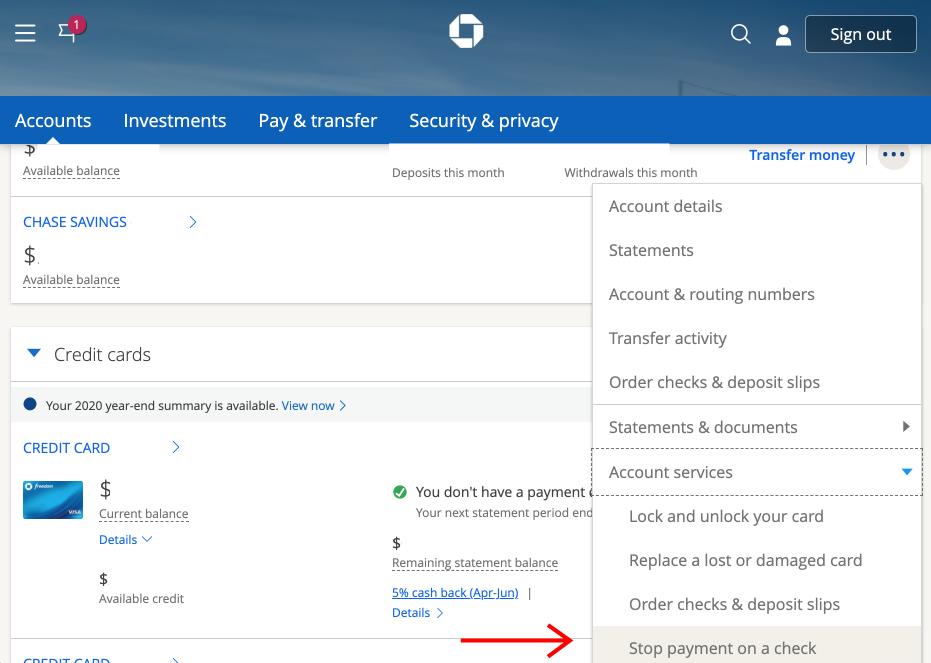
3. The Step-by-Step Process of Canceling Your Chase Card

Chase offers several avenues for account closure. Choosing the right one depends on whether you want to avoid a “retention pitch” or if you prefer the convenience of digital communication.
Method 1: The Phone Call (The Direct Approach)
The most common way to cancel is by calling the number on the back of your card or Chase’s general customer service line at 1-800-432-3117.
- The Retention Department: When you state your intent to cancel, you will likely be transferred to a retention specialist. Their job is to keep you as a customer. They may offer to waive your annual fee or provide a “spend challenge” for bonus points. If your goal is strictly to simplify, be firm but polite.
- Request Confirmation: Once the representative processes the request, ask for a confirmation number and request that a formal letter of closure be sent to your address or digital inbox.
Method 2: The Secure Message Center (The Digital Approach)
If you want to avoid a potentially uncomfortable conversation with a retention agent, you can cancel via the Chase Secure Message Center.
- Log into your Chase Online account.
- Navigate to the “Secure Messages” menu.
- Compose a new message and select the card you wish to close.
- State clearly: “I would like to close my credit card account ending in [last four digits] effective immediately.”
- Chase will usually respond within 24–48 hours confirming the request or asking for a final confirmation.
Method 3: In-Person at a Branch
While less common, you can visit a Chase branch to speak with a personal banker. This is often the best route for business owners with complex “Ink” business accounts who want to ensure all facets of their professional banking remain integrated while closing a specific credit line.
4. Alternatives to Cancellation: Is There a Better Path?
In many cases, canceling a card is a “permanent solution to a temporary problem.” Before you sever the tie, consider if a “Product Change” or a “Downgrade” might be more beneficial for your long-term financial health.
The Power of the Downgrade
If the primary reason for cancellation is a high annual fee (like the $550 fee on the Chase Sapphire Reserve), consider downgrading to a “no-annual-fee” version, such as the Chase Freedom Unlimited.
- Benefit 1: You preserve your credit limit, which helps your utilization ratio.
- Benefit 2: You maintain the age of the account, which helps your credit history.
- Benefit 3: You keep your Ultimate Rewards points active without having to rush a redemption.
Moving Credit Limits
If you decide to proceed with the cancellation, you can ask the Chase representative to “move” your credit limit from the card you are closing to another Chase card you plan to keep. For example, if you are closing a card with a $10,000 limit and you have another card with a $5,000 limit, you can ask to move that $10,000 over. This results in a $15,000 limit on your remaining card, completely neutralizing the negative impact on your credit utilization ratio.
Fee Waivers and Retention Offers
Sometimes, simply expressing your intent to cancel can result in a “retention offer.” If Chase offers you enough points to offset the annual fee, or a direct statement credit, it may be worth keeping the card for another year. This allows you to reap the benefits of the card at zero net cost.
5. Post-Cancellation Checklist: Ensuring a Clean Break
After the card is closed, your work is not quite finished. You must follow through with a few administrative tasks to ensure the account is settled and your credit report accurately reflects the change.
Disposal of the Physical Card
Chase’s premium cards, like the Sapphire series, are made of metal. You cannot simply put these through a standard home paper shredder. You can return the card to a Chase branch for secure disposal, or you can request a prepaid envelope from Chase to mail the card back for destruction. If it is a plastic card, ensure you cut through the chip and the magnetic stripe.
Monitoring Your Final Statement
Even after an account is closed, a “residual interest” charge might appear if you carried a balance during the previous month. Check your account one last time 30 days after cancellation to ensure the balance is exactly $0.00. Unpaid residual interest is a leading cause of accidental late payments on “closed” accounts.
Verifying the Credit Report
Wait approximately 30 to 60 days, then check your credit report from the three major bureaus (Equifax, Experian, and TransUnion). The account should be listed as “Closed by Grantor” or “Closed at Consumer’s Request.” While both are fine, “Closed at Consumer’s Request” is slightly better for your internal banking history as it shows you were the one who initiated the end of the relationship.
In conclusion, canceling a Chase credit card is a maneuver that should be executed with precision. By auditing your rewards, considering a product change, and managing your credit utilization, you can transition your financial portfolio smoothly. Remember, the goal of personal finance is to make your money and your tools work for you—not the other way around. If a card no longer provides value that exceeds its cost, closing it is a valid and professional step toward financial optimization.
aViewFromTheCave is a participant in the Amazon Services LLC Associates Program, an affiliate advertising program designed to provide a means for sites to earn advertising fees by advertising and linking to Amazon.com. Amazon, the Amazon logo, AmazonSupply, and the AmazonSupply logo are trademarks of Amazon.com, Inc. or its affiliates. As an Amazon Associate we earn affiliate commissions from qualifying purchases.