
Investing can often seem like a labyrinth of complex jargon, volatile markets, and bewildering choices. Yet, at its core, building wealth through investment can be remarkably straightforward, especially when leveraging powerful, diversified instruments. Among the most popular and historically effective avenues for long-term growth is investing in “the S,” specifically, the S&P 500. This benchmark index is not just a barometer for the U.S. stock market; it’s a gateway for ordinary investors to own a piece of America’s largest and most successful companies.
This guide aims to demystify investing in the S&P 500, offering a professional, insightful, and engaging roadmap for individuals looking to harness its potential. Whether you’re a novice investor taking your first steps or an experienced one seeking to refine your strategy, understanding how to effectively invest in the S&P 500 can form a robust foundation for your financial future. We’ll explore what makes this index so appealing, the practical methods for gaining exposure, crucial considerations before committing your capital, and common pitfalls to avoid.
Understanding the S&P 500 and Its Enduring Appeal
Before diving into the mechanics of investing, it’s essential to grasp what the S&P 500 represents and why it has become such a cornerstone of investment portfolios worldwide.
What is the S&P 500?
The S&P 500, or Standard & Poor’s 500, is a stock market index that tracks the performance of 500 of the largest publicly traded companies in the United States. It is a market-capitalization-weighted index, meaning companies with larger market values have a greater impact on the index’s performance. These companies span across all major sectors of the U.S. economy, including technology, healthcare, financials, consumer discretionary, and more. Criteria for inclusion in the S&P 500 are stringent, requiring companies to meet specific standards for liquidity, size, and sector representation, ensuring the index remains a relevant and accurate reflection of the broader U.S. economy. Because it represents a significant portion of the total value of the U.S. stock market, the S&P 500 is often considered the best single gauge of large-cap U.S. equities and a proxy for the overall health of the American economy.
Why Invest in the S&P 500?
Investing in the S&P 500 offers a compelling proposition for several reasons, making it an attractive option for a wide spectrum of investors.
- Instant Diversification: By investing in the S&P 500, you are simultaneously investing in 500 different companies across various industries. This inherent diversification significantly reduces the risk associated with investing in individual stocks. If one company or even an entire sector underperforms, its impact on your overall portfolio is mitigated by the performance of hundreds of others.
- Historical Performance: Over the long term, the S&P 500 has delivered impressive average annual returns, historically averaging around 10-12% before inflation, though past performance is not indicative of future results. This robust track record makes it a powerful vehicle for wealth accumulation over decades.
- Simplicity and Accessibility: Unlike trying to pick individual winning stocks, investing in the S&P 500 is straightforward. It’s accessible through various financial products, simplifying the investment process for beginners and busy individuals alike.
- Lower Risk than Individual Stocks: While no investment is without risk, the broad diversification of the S&P 500 generally makes it less volatile than holding a concentrated portfolio of a few individual stocks. Market downturns affect all companies, but the index is designed to recover as the overall economy rebounds.
- Low Cost: Many S&P 500-tracking investment products come with very low expense ratios, meaning more of your money goes towards actual investment and less towards fees.
Practical Pathways to S&P 500 Exposure
Once you understand the benefits, the next logical step is to explore the most common and efficient ways to gain exposure to the S&P 500.
Exchange-Traded Funds (ETFs)
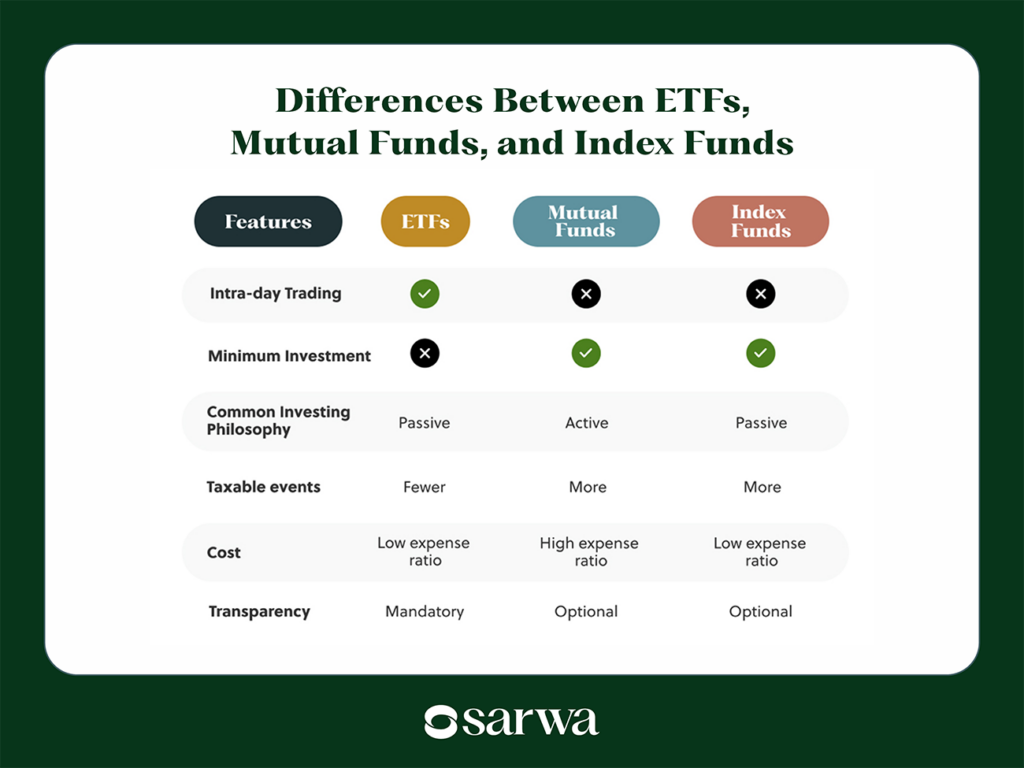
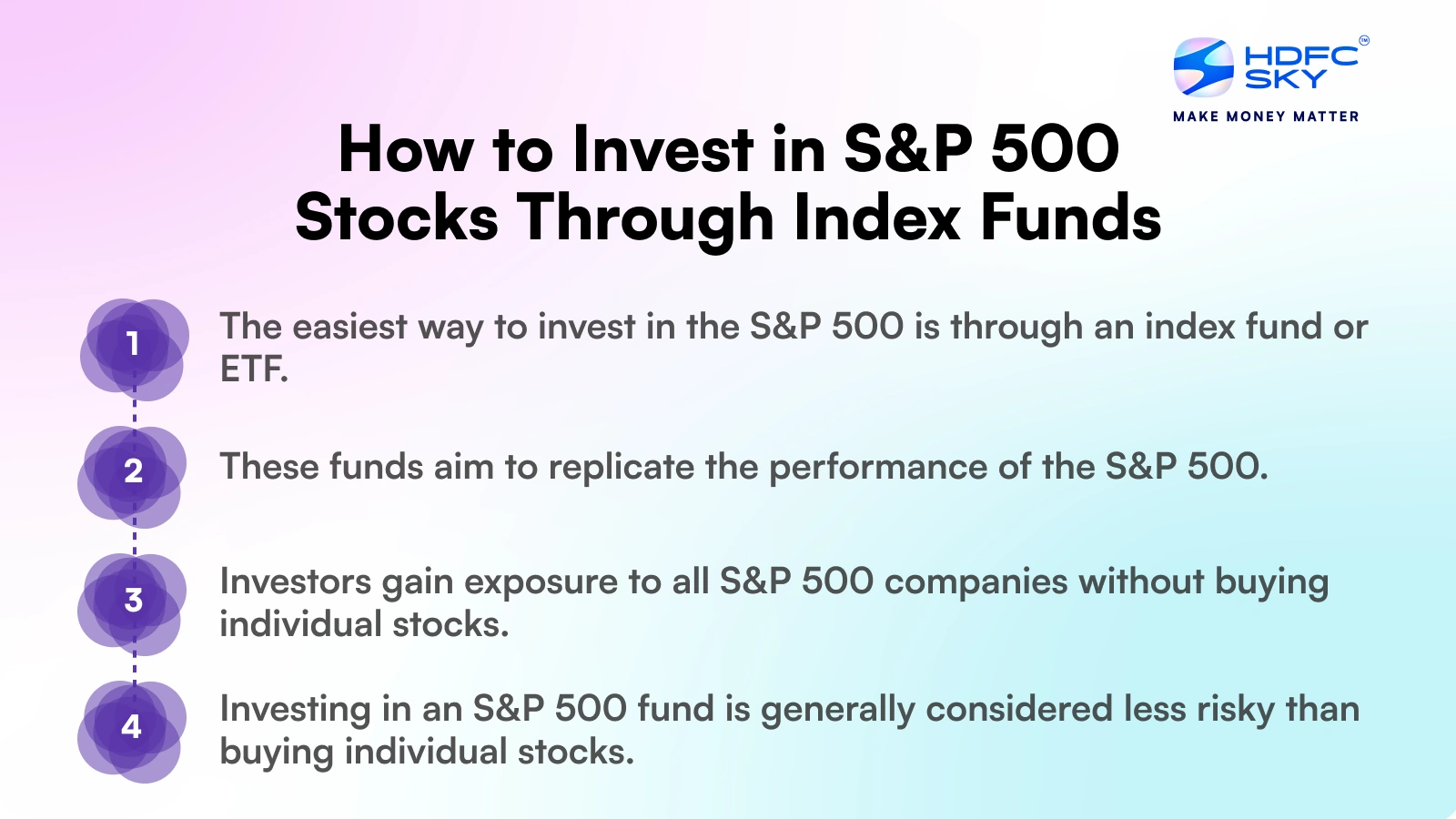
ETFs are arguably the most popular and cost-effective way for individual investors to invest in the S&P 500. An S&P 500 ETF is a type of fund that holds stocks of all the companies in the S&P 500 index (or a representative sample) and aims to mirror its performance.
- How They Work: ETFs trade on stock exchanges throughout the day, much like individual stocks. You can buy and sell shares of an S&P 500 ETF through a brokerage account.
- Advantages: They typically have very low expense ratios (often less than 0.10%), offer excellent liquidity, and provide instant diversification. Popular examples include SPDR S&P 500 ETF Trust (SPY), iShares Core S&P 500 (IVV), and Vanguard S&P 500 ETF (VOO).
- Considerations: While generally low, ensure you understand the expense ratio and any trading commissions your broker might charge, though many brokers now offer commission-free ETF trading.
Mutual Funds
Mutual funds are another viable option, particularly for investors who prefer a more traditional fund structure or wish to invest through a 401(k) or similar retirement plan that might offer S&P 500 index mutual funds.
- How They Work: An S&P 500 index mutual fund pools money from multiple investors to buy the stocks that comprise the S&P 500. Unlike ETFs, mutual funds are typically bought and sold once per day, based on their net asset value (NAV) calculated at market close.
- Advantages: They offer professional management (even if passive, ensuring the fund tracks the index), convenient automatic investment plans, and inherent diversification.
- Considerations: Index mutual funds generally have slightly higher expense ratios than comparable ETFs, although many large fund providers offer highly competitive options. Actively managed mutual funds attempting to beat the S&P 500 often come with significantly higher fees and rarely outperform the index over the long term.
Robo-Advisors and Brokerage Accounts
Both robo-advisors and traditional brokerage accounts serve as platforms through which you can access S&P 500 investments.
- Robo-Advisors: These are automated, algorithm-driven financial advisors that manage your investment portfolio with minimal human intervention. After you answer a series of questions about your financial goals and risk tolerance, a robo-advisor will construct and manage a diversified portfolio for you, often including S&P 500 ETFs or mutual funds. They offer convenience, automated rebalancing, and relatively low management fees, making them ideal for hands-off investors.
- Traditional Brokerage Accounts: For those who prefer a more hands-on approach, opening a self-directed brokerage account with an online broker allows you to personally select and purchase S&P 500 ETFs or mutual funds. This option provides maximum control and flexibility but requires you to make your own investment decisions and portfolio adjustments.
Essential Considerations Before Investing
Successful investing isn’t just about choosing the right vehicle; it’s about adhering to sound principles and understanding the broader financial landscape.
Defining Your Investment Goals and Risk Tolerance
Before investing a single dollar, take the time to define your financial goals. Are you saving for retirement, a down payment on a house, or your child’s education? Your time horizon (how long until you need the money) will significantly influence your investment strategy. Equally important is assessing your risk tolerance – your emotional and financial ability to withstand market fluctuations. While the S&P 500 is diversified, it can still experience significant downturns. Understanding your comfort level with potential losses will help you stay disciplined during volatile periods.
The Power of Dollar-Cost Averaging
Dollar-cost averaging (DCA) is a powerful strategy, especially for long-term S&P 500 investors. It involves investing a fixed amount of money at regular intervals (e.g., $200 every month), regardless of the market’s performance.
- Benefits: DCA removes the temptation to time the market, which is notoriously difficult. When prices are high, your fixed investment buys fewer shares, and when prices are low, it buys more shares. Over time, this strategy can lead to a lower average cost per share and mitigate the risk of investing a large sum at an unfortunate market peak.
Long-Term Horizon and Compounding

The S&P 500’s true potential is realized over the long term. Market corrections and bear markets are inevitable, but historically, the index has always recovered and reached new highs. Patience is paramount. The magic of compounding—where your investment earnings themselves begin to earn returns—works best when given ample time. Starting early, even with small amounts, and consistently investing for decades allows compounding to significantly accelerate your wealth growth. Resist the urge to panic sell during downturns; instead, view them as opportunities to buy more shares at a discount.
Fees, Taxes, and Diversification Beyond the S&P 500
- Fees: Be mindful of expense ratios (for ETFs/mutual funds) and trading commissions. Even small percentages can eat into your returns over decades. Prioritize low-cost index funds.
- Taxes: Understand the tax implications of your investments. Investing in tax-advantaged accounts like a 401(k), IRA, or Roth IRA allows your investments to grow tax-deferred or even tax-free, significantly boosting your long-term returns.
- Broader Diversification: While the S&P 500 provides excellent diversification within U.S. large-cap equities, it’s not the only investment available. For even broader diversification, consider adding international stocks, bonds, or real estate to your portfolio, depending on your risk tolerance and goals. This ensures you’re not solely reliant on the U.S. stock market.
Getting Started: A Step-by-Step Approach
Ready to begin your investment journey with the S&P 500? Here’s a simple guide to help you take the first concrete steps.
Open a Brokerage Account
Your first practical step is to open an investment account. Research different online brokers, considering factors like:
- Fees: Look for commission-free stock and ETF trades, and competitive expense ratios for mutual funds.
- Platform: Ensure the platform is user-friendly, with good research tools and customer support.
- Account Types: Decide if you want a taxable brokerage account or a tax-advantaged retirement account like a Traditional IRA, Roth IRA, or 401(k) (if offered by your employer). For most long-term investors, maxing out tax-advantaged accounts first is generally recommended.
Fund Your Account
Once your account is open, you’ll need to transfer money into it. Most brokers offer various options:
- Electronic Funds Transfer (EFT): Linking your bank account for easy transfers.
- Direct Deposit: Setting up a portion of your paycheck to go directly into your investment account.
- Wire Transfer: For larger sums, though typically incurs a fee.
Start with an amount you’re comfortable investing regularly. Even small, consistent contributions can grow substantially over time.
Choose Your Investment Vehicle
Based on your preferences and the options available through your chosen broker:
- S&P 500 ETFs: If you want flexibility, low costs, and can manage your own purchases. Simply search for symbols like VOO, IVV, or SPY.
- S&P 500 Index Mutual Funds: If you prefer once-a-day pricing, automated investments, or are investing through a 401(k). Look for funds explicitly stating they track the S&P 500.
For most beginners, a single, low-cost S&P 500 ETF or index mutual fund is sufficient to start.
Monitor and Rebalance
While S&P 500 investing is largely passive, it’s wise to periodically monitor your portfolio, perhaps once or twice a year.
- Monitoring: Ensure your investments are performing as expected and that the fund or ETF is still tracking the index efficiently.
- Rebalancing: If you hold other assets (like bonds or international stocks) alongside your S&P 500 investments, market movements can shift your portfolio’s asset allocation away from your target. Rebalancing involves selling small amounts of overperforming assets and buying underperforming ones to bring your portfolio back to your desired allocation. For a portfolio solely focused on the S&P 500, rebalancing primarily involves continuing your regular contributions.
Common Pitfalls and How to Avoid Them
Even with the simplicity of S&P 500 investing, certain behavioral biases and missteps can derail your progress.
Emotional Investing
One of the biggest threats to an investor’s returns is emotional decision-making. Panicking and selling during a market downturn locks in losses, preventing you from participating in the inevitable recovery. Similarly, chasing hot stocks or sectors based on hype can lead to poor choices. Stick to your long-term plan, based on your goals and risk tolerance, and resist the urge to react impulsively to daily market noise.
Neglecting Due Diligence
While S&P 500 index funds are generally straightforward, it’s still crucial to understand what you’re investing in. Read the fund’s prospectus or summary, check its expense ratio, and verify that it truly tracks the S&P 500 index. Don’t invest in something just because someone else recommends it; ensure you understand the investment and how it fits into your personal financial strategy.
Over-complicating or Under-diversifying
Some new investors either get bogged down in trying to pick individual stocks when an S&P 500 index fund would be more effective, or they fail to truly diversify. While the S&P 500 is diversified among 500 companies, a portfolio solely consisting of U.S. large-cap equities might be considered under-diversified for some long-term goals if it lacks exposure to international markets or other asset classes like bonds. Conversely, don’t over-complicate your portfolio with too many different funds that have overlapping holdings or high fees. Simplicity often breeds success in investing.
Conclusion
Investing in the S&P 500 offers a compelling, efficient, and historically proven pathway to long-term wealth accumulation. By providing instant diversification across hundreds of America’s leading companies, it simplifies the investment process while mitigating the risks associated with individual stock picking. For many, it serves as the cornerstone of a robust investment portfolio.
By understanding what the S&P 500 represents, utilizing accessible investment vehicles like ETFs and index mutual funds, and adhering to sound principles such as dollar-cost averaging and a long-term perspective, you can confidently navigate the investment landscape. Remember to define your goals, manage your emotions, and continuously educate yourself. The journey of investing is a marathon, not a sprint, and with discipline and patience, investing in “the S” can lead to significant financial success.
aViewFromTheCave is a participant in the Amazon Services LLC Associates Program, an affiliate advertising program designed to provide a means for sites to earn advertising fees by advertising and linking to Amazon.com. Amazon, the Amazon logo, AmazonSupply, and the AmazonSupply logo are trademarks of Amazon.com, Inc. or its affiliates. As an Amazon Associate we earn affiliate commissions from qualifying purchases.