
For the past several years, the question of when mortgage rates will finally trend downward has dominated dinner table conversations and financial news cycles alike. After a decade of historically low borrowing costs, the rapid ascent of interest rates—pushed by the Federal Reserve’s aggressive battle against inflation—has fundamentally altered the American real estate landscape. For prospective homebuyers and current homeowners looking to refinance, the waiting game has become a test of financial patience.
Understanding when mortgage rates will decrease requires a deep dive into macroeconomic indicators, central bank policy, and the secondary bond market. While no one possesses a crystal ball, the convergence of current economic data suggests a shift is on the horizon. This guide explores the mechanics of rate fluctuations, expert projections for the coming years, and the strategies you should employ while waiting for a more favorable borrowing environment.
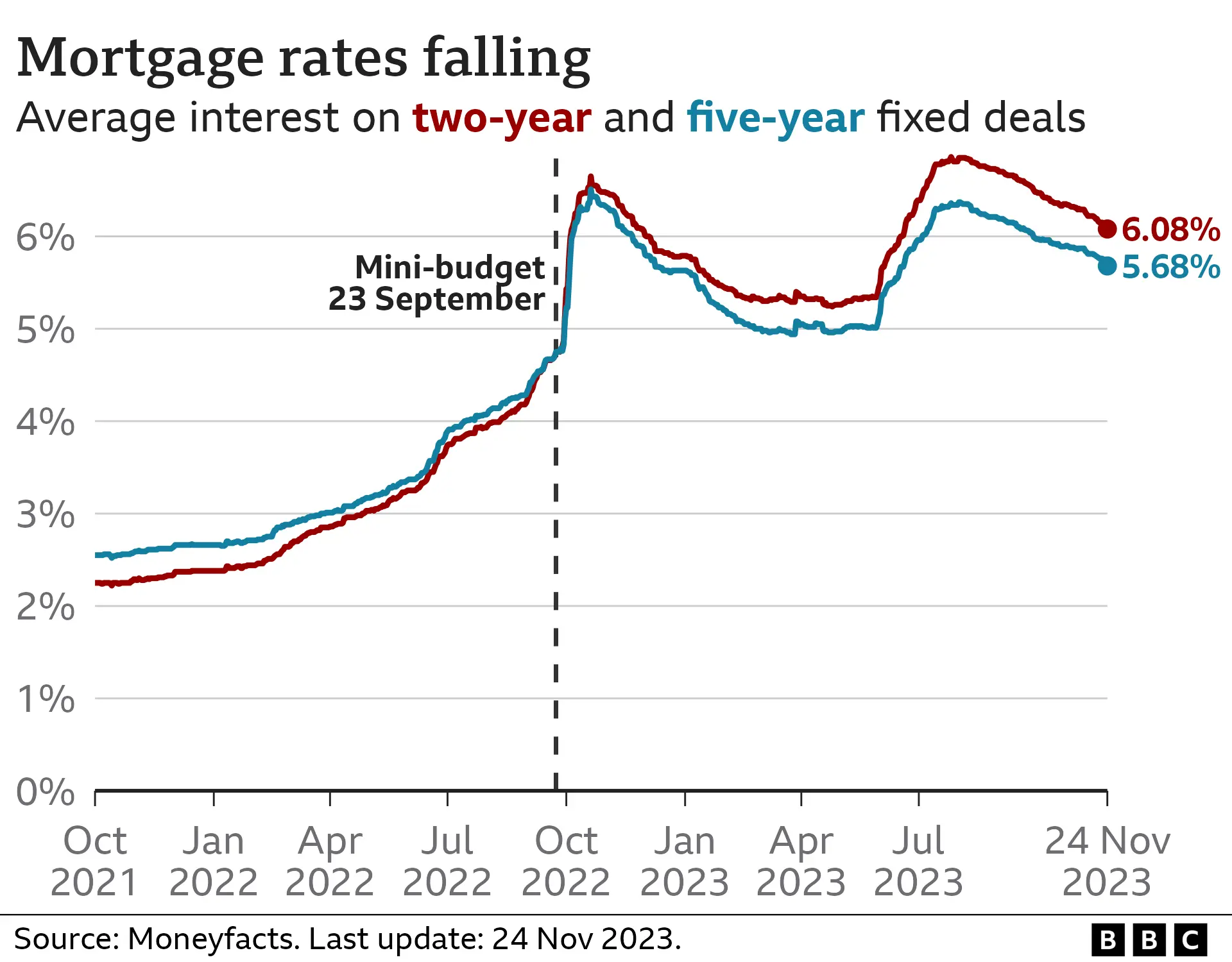
Understanding the Economic Engine: Why Mortgage Rates Are Currently Elevated
To understand when rates will go down, one must first understand why they went up. Mortgage rates are not set directly by the government; rather, they are influenced by a complex interplay of federal policy and investor sentiment.
The Federal Reserve’s Role and Monetary Policy
The Federal Reserve (the Fed) has a dual mandate: to promote maximum employment and maintain stable prices. When inflation skyrocketed post-pandemic, the Fed raised the federal funds rate—the rate at which banks lend to each other overnight—at the fastest pace in decades. While this doesn’t dictate mortgage rates, it sets the floor for borrowing costs across the entire economy. As long as the Fed perceives inflation as a threat, they keep the “cost of money” high, which trickles down to 15-year and 30-year fixed-rate mortgages.
Inflation Targets and the Consumer Price Index (CPI)
The “magic number” for the Federal Reserve is 2%. This is their target for annual inflation. Mortgage rates are highly sensitive to the Consumer Price Index (CPI) reports released monthly. When inflation data comes in “hotter” than expected, the market assumes the Fed will keep rates high for longer, causing mortgage rates to spike. Conversely, when we see cooling inflation, it signals to the market that the Fed may soon pivot to cutting rates, providing the first glimmer of hope for lower mortgage costs.
The Influence of 10-Year Treasury Yields
There is a strong historical correlation between the 30-year fixed mortgage rate and the yield on the 10-year U.S. Treasury note. Investors view mortgages as slightly riskier versions of government bonds. Typically, there is a “spread” of about 1.5 to 2 percentage points between the 10-year Treasury yield and the average mortgage rate. In recent years, this spread has widened due to market volatility. For mortgage rates to drop significantly, we need to see both a decline in Treasury yields and a narrowing of this spread as the market stabilizes.
Forecasts and Timelines: When Can Borrowers Expect Relief?
The timeline for falling mortgage rates is moving target, often shifting based on the latest employment and manufacturing data. However, looking at the trajectory of the 2024–2025 economy, several phases of relief are becoming visible.
Short-Term Expectations (The Next 3 to 6 Months)
In the immediate term, the market is in a phase of “higher for longer” stabilization. While the era of rapid rate hikes is over, the transition to lower rates is proving to be a slow descent rather than a sharp drop. Borrowers should expect volatility; rates may dip for a week on soft economic news only to rebound the next. Most analysts suggest that until there is definitive proof that the labor market is cooling and inflation is staying at or below 3%, mortgage rates will likely hover in a restrictive range, rarely dipping below the mid-6% mark in the very near future.
Long-Term Projections for 2025 and Beyond
By 2025, many economists predict a more meaningful retreat in borrowing costs. As the delayed effects of previous interest rate hikes fully permeate the economy, growth is expected to slow. This “soft landing” or a potential mild recession would likely prompt the Federal Reserve to implement a series of rate cuts to stimulate the economy. Projections from groups like the Mortgage Bankers Association (MBA) and Fannie Mae suggest that rates could settle into the high 5% or low 6% range by the end of 2025, which, while higher than the 3% seen in 2021, represents a significant improvement over the 7% or 8% peaks seen recently.
Expert Predictions from Major Financial Institutions
Financial institutions often differ in their exact timing, but the consensus is downward. Goldman Sachs and Morgan Stanley have pointed toward a “gradual normalization.” The consensus among major brokerage firms is that we are unlikely to see 3% or 4% rates again in the near future. Instead, the “new normal” is expected to be somewhere between 5.5% and 6.2%. This range is historically average but feels high to a generation of buyers accustomed to the rock-bottom rates of the 2010s.
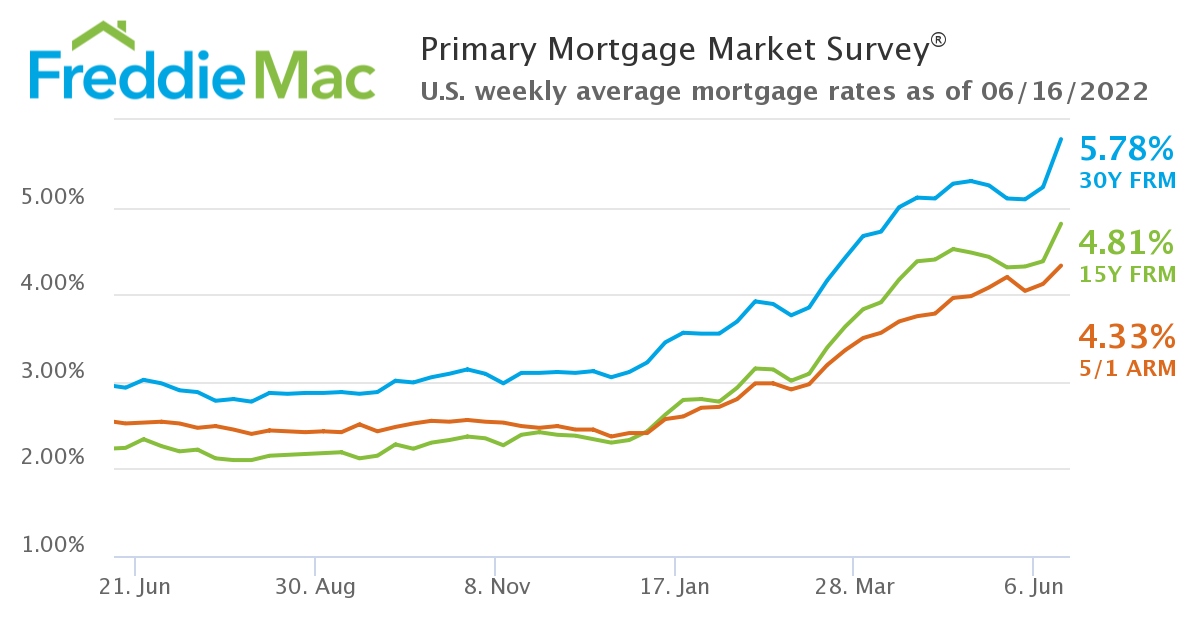
Factors That Could Accelerate or Delay a Rate Drop
The path to lower rates is rarely a straight line. Several “wildcard” factors could either speed up the process or keep rates stubbornly high.
Labor Market Strength and Unemployment Data
The Federal Reserve monitors the jobs report as closely as inflation. If the labor market remains “too strong”—meaning low unemployment and high wage growth—it can fuel inflation. In this scenario, the Fed may delay rate cuts, keeping mortgage rates high. However, if unemployment begins to tick upward significantly, the Fed will be forced to lower rates quickly to prevent a deep recession, which would lead to a rapid decline in mortgage costs.
Geopolitical Stability and Global Supply Chains
Global events have a direct impact on your local mortgage rate. Wars, trade disputes, or disruptions in energy supplies can cause “cost-push” inflation. For example, a spike in oil prices can drive up the cost of goods globally, reigniting inflation fears and forcing central banks to keep interest rates high. Conversely, a period of global stability and healed supply chains allows inflation to settle, paving the way for lower rates.
Housing Inventory and Market Demand
While inventory doesn’t directly set interest rates, it influences the “spread” mentioned earlier. If the housing market remains frozen because homeowners don’t want to trade their 3% rates for 7% rates (the “lock-in effect”), there is less liquidity in the mortgage-backed securities market. Increased inventory and more robust home-buying activity can lead to a more efficient market, potentially narrowing the gap between Treasury yields and mortgage rates.
Strategic Financial Moves While Waiting for Lower Rates
Waiting for the “perfect” rate can be a risky strategy, as home prices often rise when rates fall, potentially offsetting any savings on interest. Here is how to navigate the current environment.
The “Date the Rate, Marry the House” Philosophy
This popular real estate adage suggests that if you find the right home now, you should buy it despite the high rates, with the intention of refinancing later. The logic is that you can change your interest rate in the future, but you cannot change the purchase price of the home. If you wait until rates hit 5%, competition may surge, driving home prices up by 10% or more. However, this strategy requires a financial buffer; you must be able to comfortably afford the current payment today, as a refinance is never guaranteed.
Improving Your Credit Profile to Secure the Best Available Rate
In a high-rate environment, the difference between a “good” credit score and an “excellent” one can save you tens of thousands of dollars. Lenders have become more risk-averse. By focusing on lowering your debt-to-income (DTI) ratio and ensuring your credit score is above 760, you may qualify for “prime” pricing that is significantly lower than the national average.
Exploring Adjustable-Rate Mortgages (ARMs) vs. Fixed-Rate Loans
For buyers who plan to move or refinance within 5 to 7 years, an Adjustable-Rate Mortgage (ARM) can be a savvy financial tool. ARMs typically offer a lower initial interest rate than 30-year fixed loans. If you believe rates will go down in the next few years, taking a 5/1 or 7/1 ARM allows you to enjoy a lower payment now, with the plan to refinance into a fixed-rate loan once the market cools.
Conclusion: Navigating the New Normal in Real Estate Finance
The era of “free money” and 3% mortgage rates was a historical anomaly, fueled by a global crisis. As we look toward the remainder of 2024 and into 2025, the trend for mortgage rates is undeniably downward, but the descent will be measured and data-dependent.
Investors and homebuyers should stop waiting for a return to 2021 levels and instead prepare for a “new normal” in the 5.5% to 6.5% range. By monitoring the Federal Reserve’s stance on inflation, keeping an eye on the 10-year Treasury yield, and maintaining a pristine financial profile, you can position yourself to strike when the timing is right. In the world of personal finance, the goal isn’t necessarily to find the absolute bottom of the market, but to make a move that fits your long-term wealth-building strategy when the numbers finally begin to align in your favor.
aViewFromTheCave is a participant in the Amazon Services LLC Associates Program, an affiliate advertising program designed to provide a means for sites to earn advertising fees by advertising and linking to Amazon.com. Amazon, the Amazon logo, AmazonSupply, and the AmazonSupply logo are trademarks of Amazon.com, Inc. or its affiliates. As an Amazon Associate we earn affiliate commissions from qualifying purchases.