
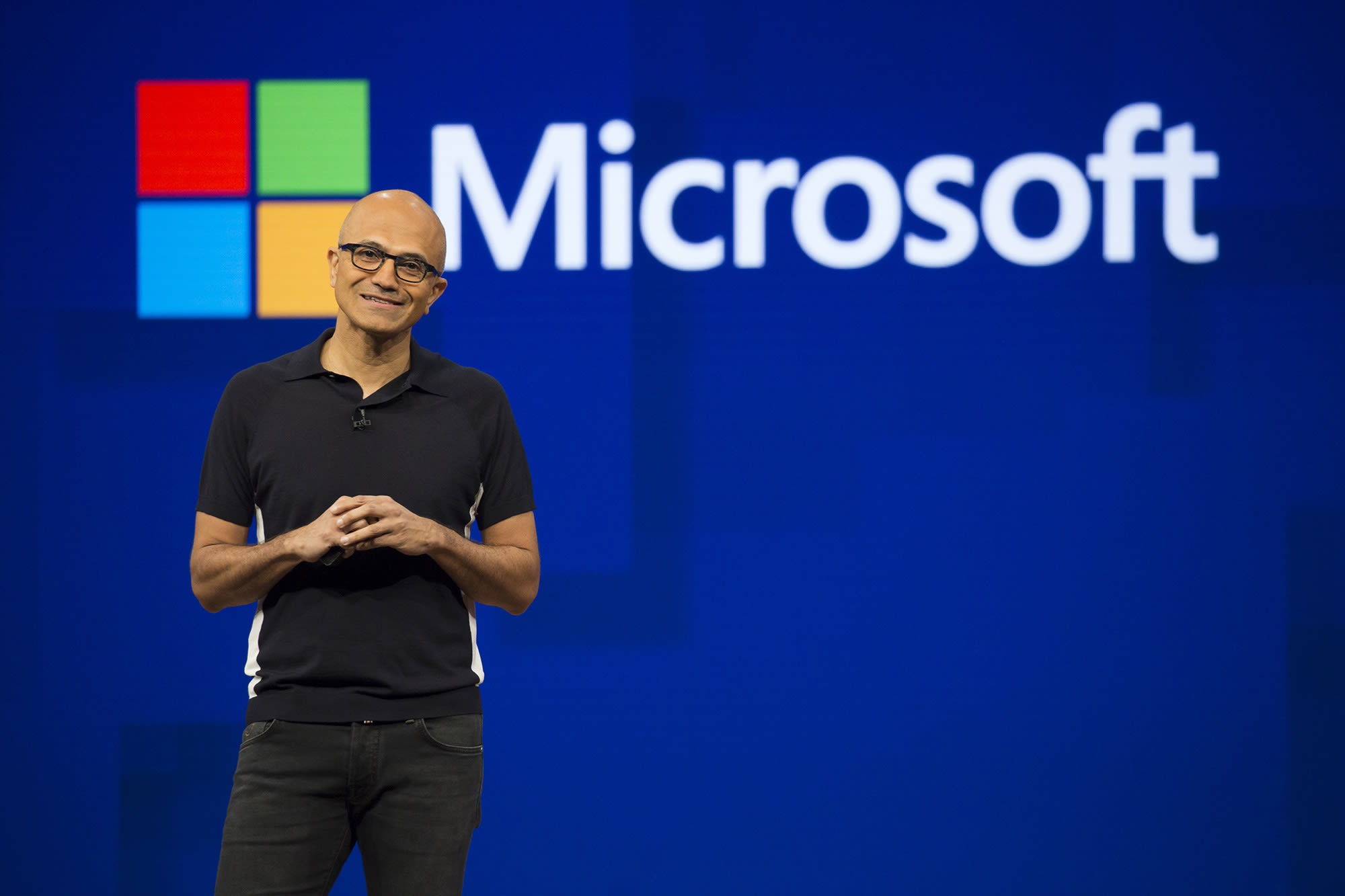
In the dynamic and ever-evolving landscape of global technology, the leadership at the helm of tech giants plays a pivotal role in shaping not only their company’s destiny but also the broader technological future. For a behemoth like Microsoft, understanding its leadership is tantamount to understanding the direction of significant technological trends, software innovations, and strategic shifts in AI. The current Chief Executive Officer (CEO) of Microsoft Company is Satya Nadella, a visionary leader who has been instrumental in orchestrating one of the most remarkable transformations in modern corporate history, steering the company firmly into the age of cloud computing and artificial intelligence.

Nadella’s appointment in February 2014 marked a significant turning point for Microsoft, a company that, despite its immense success with Windows and Office, was perceived by many as having lost some of its innovative edge. Under his guidance, Microsoft has not only regained its position as a technological vanguard but has also redefined its core identity, embracing a more open, cloud-centric, and AI-first philosophy. His tenure is characterized by strategic foresight, a renewed focus on enterprise solutions, and a cultural shift that has fostered a spirit of collaboration and innovation, directly impacting its diverse portfolio of software, services, and emerging technologies.
Satya Nadella: Architect of Microsoft’s Modern Tech Era
Satya Nadella’s journey to the top of Microsoft is a testament to his deep understanding of technology and his nuanced approach to leadership. His background as an engineer, coupled with years of experience across various critical divisions within Microsoft, provided him with a unique perspective on the company’s potential and the challenges it faced in a rapidly changing tech environment.
From Engineer to Visionary Leader
Born in Hyderabad, India, Nadella pursued an electrical engineering degree before moving to the United States to earn a master’s in computer science from the University of Wisconsin–Milwaukee and an MBA from the University of Chicago Booth School of Business. He joined Microsoft in 1992, embarking on a career that saw him lead significant projects and divisions. Prior to becoming CEO, he held leadership roles in key technology areas, including the company’s business solutions division, the R&D division for the Online Services Group, and the Server & Tools Business. It was in this latter role that he truly began to lay the groundwork for Microsoft’s cloud ambitions, overseeing the development and growth of Azure, a platform that would later become central to Microsoft’s resurgence. His technical acumen, combined with a strategic mind for market opportunities, positioned him as a natural successor to Steve Ballmer, capable of guiding Microsoft through its next phase of innovation.
A Legacy of Transformation and Growth
Nadella’s appointment was not merely a change in personnel; it signaled a fundamental shift in Microsoft’s strategic direction and corporate culture. He inherited a company grappling with the decline of PC sales and the rise of mobile computing, where Microsoft had struggled to establish a dominant presence. His leadership catalyzed a profound transformation, moving Microsoft from a Windows-first company to a cloud-first, mobile-first, and eventually, an AI-first company. This strategic pivot involved divesting from underperforming assets (like the Nokia phone business), making bold acquisitions (such as LinkedIn and GitHub), and doubling down on areas of strength like enterprise software and cloud services. Under Nadella, Microsoft’s market capitalization has soared, making it one of the most valuable companies in the world, largely due to its renewed technological prowess and diversified product offerings. His leadership has been praised for its emphasis on empathy, learning, and collaboration, fostering an environment where innovation can truly flourish.
Steering the Cloud Revolution: Microsoft Azure’s Ascendancy
Perhaps the most significant technological pivot under Satya Nadella’s leadership has been Microsoft’s aggressive and successful embrace of cloud computing. This strategic shift not only revitalized the company but also positioned Microsoft Azure as a formidable competitor in the hyperscale cloud market, fundamentally altering the way enterprises consume and deliver technology.
The Strategic Pivot to “Cloud-First, Mobile-First”
Nadella’s famous mantra, “cloud-first, mobile-first,” became the guiding principle for Microsoft’s product development and strategic investments. Recognizing the paradigm shift away from on-premises software to scalable, internet-delivered services, he prioritized Azure, transforming it from a niche offering into a comprehensive cloud platform. This involved massive investments in global data center infrastructure, a relentless focus on developer tools, and an expansion of services ranging from compute and storage to advanced analytics and machine learning. The strategic shift meant breaking down internal silos and ensuring that all new Microsoft products and services were designed with cloud scalability and accessibility in mind, rather than as desktop-centric applications. This shift allowed Microsoft to better serve businesses looking to modernize their infrastructure and digital operations.
Competing in the Hyperscale Cloud Market
Under Nadella, Azure has emerged as the second-largest cloud provider globally, trailing only Amazon Web Services. Its growth has been fueled by a strategy that emphasizes hybrid cloud solutions, catering to enterprises that need to manage both on-premises and cloud-based resources seamlessly. Microsoft’s deep relationships with enterprise customers, built over decades with Windows Server and Office, provided a strong foundation for Azure adoption. Furthermore, Nadella’s push for interoperability and open-source support – a stark contrast to Microsoft’s historical stance – made Azure a more attractive platform for a wider range of developers and businesses. By integrating services like Kubernetes, Linux, and various open-source databases, Microsoft demonstrated a commitment to meeting customers where they are, rather than forcing them into a proprietary ecosystem.
Expanding Azure’s Ecosystem and Offerings
The evolution of Azure under Nadella has been relentless, with a continuous expansion of its services. Beyond foundational infrastructure (IaaS) and platform services (PaaS), Azure now encompasses a vast array of specialized offerings. These include Azure AI for machine learning and cognitive services, Azure IoT for connecting and managing smart devices, Azure Blockchain Service, and numerous industry-specific solutions. This breadth and depth of services allow businesses to build, deploy, and manage highly complex and scalable applications entirely within the Azure ecosystem, leveraging Microsoft’s global infrastructure and security expertise. The ecosystem also includes robust developer tools, extensive documentation, and a thriving partner network, all contributing to Azure’s continued momentum in the competitive cloud market.
Reimagining Productivity and Collaboration with AI
Microsoft’s legacy is deeply intertwined with productivity software, primarily through its ubiquitous Office suite. Under Satya Nadella, this core strength has been reimagined and enhanced, with a significant emphasis on cloud delivery, real-time collaboration, and the transformative power of artificial intelligence.
Evolving the Microsoft 365 Suite

The shift from perpetual licenses to the subscription-based Microsoft 365 (formerly Office 365) was a monumental change that underpinned Nadella’s vision for modern productivity. This transition transformed Office applications from static software packages into dynamic, cloud-connected services that are continually updated with new features and security enhancements. Beyond the traditional Word, Excel, and PowerPoint, Microsoft 365 has expanded to include a suite of complementary tools like SharePoint, OneDrive, and Exchange Online, all designed to facilitate seamless work across devices and locations. The subscription model provided Microsoft with a stable recurring revenue stream and ensured that users always had access to the latest productivity innovations, directly aligning with the “cloud-first” strategy.
Microsoft Teams: The Hub for Hybrid Work
Perhaps no single product better exemplifies Nadella’s vision for modern productivity and collaboration than Microsoft Teams. Launched in 2017, Teams was strategically positioned as a comprehensive hub for communication, collaboration, and productivity, integrating chat, video meetings, file sharing, and app integrations into a single platform. Its rapid adoption, particularly accelerated by the global shift to remote and hybrid work models, has made it an indispensable tool for millions of businesses and educational institutions worldwide. Teams’ success lies in its ability to centralize various aspects of work, reducing the need for users to switch between multiple applications, and fostering a more integrated and efficient workflow. Its extensibility allows for integration with thousands of third-party applications, further solidifying its role as a central nervous system for digital workspaces.
Infusing AI Across the Productivity Stack
A cornerstone of Nadella’s leadership has been the pervasive integration of AI across all Microsoft products and services. In the context of productivity, this means intelligent features that anticipate user needs, automate mundane tasks, and enhance creativity. Examples include AI-powered suggestions in Word and PowerPoint, intelligent data analysis in Excel, real-time translation in Teams meetings, and advanced search capabilities across Microsoft 365. The recent introduction of Microsoft 365 Copilot, a generative AI assistant, represents a significant leap forward. Copilot leverages large language models (LLMs) to understand and respond to natural language commands, assisting users with tasks like drafting emails, summarizing documents, creating presentations, and even generating code. This infusion of AI is transforming how individuals and teams interact with their productivity tools, making them more powerful, intuitive, and efficient.
Forging the Future: AI, Gaming, and Emerging Technologies
Beyond the established pillars of cloud and productivity, Satya Nadella has positioned Microsoft at the forefront of several emerging technological frontiers, strategically investing in areas that promise to define the next generation of computing and user experience.
Leading the Generative AI Frontier
Under Nadella, Microsoft has made significant, early, and sustained investments in artificial intelligence, culminating in its groundbreaking partnership with OpenAI. This collaboration, which includes a multi-billion dollar investment, has granted Microsoft exclusive access to OpenAI’s cutting-edge models like GPT-3, GPT-4, and DALL-E. This strategic move has allowed Microsoft to rapidly integrate generative AI capabilities across its entire product portfolio – from Azure OpenAI Service for developers to Copilot in Microsoft 365, Dynamics 365, and its search engine, Bing. Nadella views AI not just as a feature but as a fundamental platform shift, akin to the internet or mobile. His vision is to democratize AI, making its powerful capabilities accessible to individuals and enterprises alike, thereby driving innovation and efficiency across industries and applications.
Xbox and the Metaverse: Expanding Digital Realms
While sometimes perceived as separate, Microsoft’s Xbox division plays a crucial role in its broader technological vision, especially in the context of immersive digital experiences and the nascent metaverse. Under Nadella, Microsoft has continued to invest heavily in gaming, seeing it as a key driver of consumer engagement and a foundational element for future interactive platforms. Acquisitions like Mojang (Minecraft) and ZeniMax Media (Bethesda) significantly bolstered its content portfolio, while the proposed acquisition of Activision Blizzard aims to make Xbox a dominant player in gaming content. Nadella views gaming as a gateway to broader metaverse concepts, where users can interact in persistent digital worlds. Technologies like cloud gaming (Xbox Cloud Gaming) also align with Microsoft’s cloud-first strategy, extending gaming experiences to a wider range of devices without requiring dedicated hardware.
Hardware Innovation and Ecosystem Integration
While often recognized for software and cloud services, Microsoft under Nadella has also continued its commitment to hardware innovation. The Surface line of devices, including laptops, tablets, and desktops, has evolved into a respected premium brand, showcasing the best of Windows and serving as a reference point for ecosystem partners. Similarly, the HoloLens mixed reality platform, though still niche, represents Microsoft’s long-term bet on spatial computing and augmented reality, technologies that Nadella believes will fundamentally change how we interact with digital information in the physical world. These hardware initiatives are not isolated but are deeply integrated into Microsoft’s broader ecosystem, showcasing the capabilities of Windows, Azure, and Microsoft 365, and providing rich experiences that blend software, cloud, and innovative device form factors.
Cultivating an Open and Inclusive Tech Culture
Beyond specific products and technologies, Satya Nadella’s leadership has been characterized by a profound cultural shift within Microsoft. This transformation has had a direct impact on the company’s approach to technology development, fostering an environment that embraces openness, collaboration, and a strong sense of ethical responsibility.
Embracing Open Source and Cross-Platform Development
Historically, Microsoft was known for its proprietary approach, often clashing with the open-source community. Nadella dramatically reversed this stance, actively embracing open source and promoting cross-platform development. This shift is evident in Microsoft’s acquisition of GitHub, the world’s largest platform for open-source software development, and its deep investments in Linux, Kubernetes, and other open-source technologies across Azure. This strategic change not only made Microsoft a more attractive partner for developers but also allowed it to integrate best-of-breed technologies into its own stack, accelerating innovation. By contributing to open-source projects and making its own tools more open, Microsoft has garnered immense goodwill and fostered a more collaborative ecosystem, which directly benefits its technological offerings and market reach.
Prioritizing Ethical AI and Responsible Innovation
Recognizing the immense power and potential societal impact of artificial intelligence, Nadella has consistently emphasized the importance of developing AI responsibly and ethically. Under his leadership, Microsoft has invested significantly in research and frameworks for ethical AI, focusing on principles like fairness, accountability, transparency, and privacy. The company has established an Office of Responsible AI and published comprehensive guidelines and tools to help developers and customers build AI systems that are trustworthy and beneficial to society. This commitment extends to ensuring that AI technologies are developed with human values in mind, avoiding biases, protecting user data, and promoting explainability. This proactive approach to responsible innovation is crucial for building public trust in emerging technologies and ensuring that Microsoft’s AI advancements contribute positively to humanity.
In conclusion, Satya Nadella’s tenure as CEO of Microsoft Company has been nothing short of transformative. He has masterfully navigated Microsoft through a period of immense technological upheaval, pivoting the company towards a future dominated by cloud computing, artificial intelligence, and intelligent software. His strategic decisions have not only revitalized Microsoft’s market position but have also profoundly influenced the trajectory of the tech industry, solidifying Microsoft’s role as a primary driver of innovation in software, cloud services, AI, and beyond. Under his continued leadership, Microsoft remains a central force shaping the technological landscape for years to come.
aViewFromTheCave is a participant in the Amazon Services LLC Associates Program, an affiliate advertising program designed to provide a means for sites to earn advertising fees by advertising and linking to Amazon.com. Amazon, the Amazon logo, AmazonSupply, and the AmazonSupply logo are trademarks of Amazon.com, Inc. or its affiliates. As an Amazon Associate we earn affiliate commissions from qualifying purchases.