
In the rapidly evolving landscape of digital media, Paramount Plus (Paramount+) represents a significant milestone in the convergence of legacy broadcasting and modern cloud computing. While many consumers view it simply as a repository for movies and television shows, from a technical perspective, Paramount+ is a sophisticated over-the-top (OTT) streaming platform built on a complex stack of software, content delivery networks (CDNs), and data-driven user interfaces.
Owned and operated by Paramount Streaming, a division of Paramount Global, the service is more than just a rebranded version of its predecessor, CBS All Access. It is a global software solution designed to deliver high-bitrate video content to millions of concurrent users across a fragmented ecosystem of hardware devices. To understand what Paramount+ is, one must look beyond the content and examine the technological framework that powers the “Streaming Wars.”

The Evolution of Streaming Software: From CBS All Access to Paramount+
The transition from CBS All Access to Paramount+ in 2021 was not merely a marketing exercise; it was a fundamental overhaul of the platform’s backend architecture. The goal was to move from a domestic-focused software stack to a scalable, global infrastructure capable of handling massive international traffic.
Legacy Migration and Cloud Scalability
The original CBS All Access platform was built primarily to serve a North American audience. As the service transitioned to Paramount+, the engineering teams had to migrate petabytes of data into a more robust cloud environment. Utilizing a multi-cloud strategy—primarily leveraging Amazon Web Services (AWS) and Google Cloud Platform (GCP)—Paramount+ ensures high availability. By distributing server loads across various geographical regions, the platform minimizes latency, ensuring that a user in London experiences the same snappiness in the UI as a user in Los Angeles.
The Unified App Experience
One of the primary technical challenges of the rebrand was the unification of various fragmented apps. Before the global rollout, different regions often used different software versions with varying features. Paramount+ moved toward a “unified code base” approach. This allows developers to push updates, security patches, and new features simultaneously across iOS, Android, and web platforms. This synchronization is critical for maintaining a consistent User Experience (UX) and ensuring that security vulnerabilities are addressed globally in real-time.
Technical Specifications and Performance Metrics
At its core, a streaming service is judged by its ability to deliver high-fidelity audio and video without interruption. Paramount+ utilizes cutting-edge compression algorithms and adaptive bitrate streaming (ABS) to optimize the viewing experience based on the user’s hardware and internet speed.
Resolution, Codecs, and Bitrate Management
Paramount+ supports a range of resolutions, from standard definition (SD) for low-bandwidth mobile connections to 4K Ultra HD for high-end home theaters. To achieve this, the platform employs advanced video codecs like H.264 (AVC) for broad compatibility and H.265 (HEVC) for 4K content. HEVC is particularly important as it offers significantly better data compression than its predecessor, allowing for 4K streaming at lower bitrates without a loss in visual quality.
The platform also utilizes Dynamic Adaptive Streaming over HTTP (DASH) and HTTP Live Streaming (HLS). These protocols allow the Paramount+ player to monitor a user’s bandwidth in real-time. If the connection fluctuates, the player automatically swaps to a lower or higher bitrate “chunk” of video, preventing the dreaded buffering wheel.
Audio Standards: Dolby Atmos and Vision
For the “Premium” tier users, Paramount+ integrates Dolby Vision and Dolby Atmos. From a software perspective, this requires the app to communicate effectively with the hardware’s Digital-to-Analog Converters (DAC) and display processors. Dolby Vision provides dynamic metadata that instructs the TV on how to adjust brightness and color frame-by-frame, while Atmos offers object-based spatial audio. Engineering these features into a streaming app requires rigorous testing across thousands of device profiles to ensure metadata is correctly interpreted by the hardware.
The User Interface (UI) and Experience (UX) Design
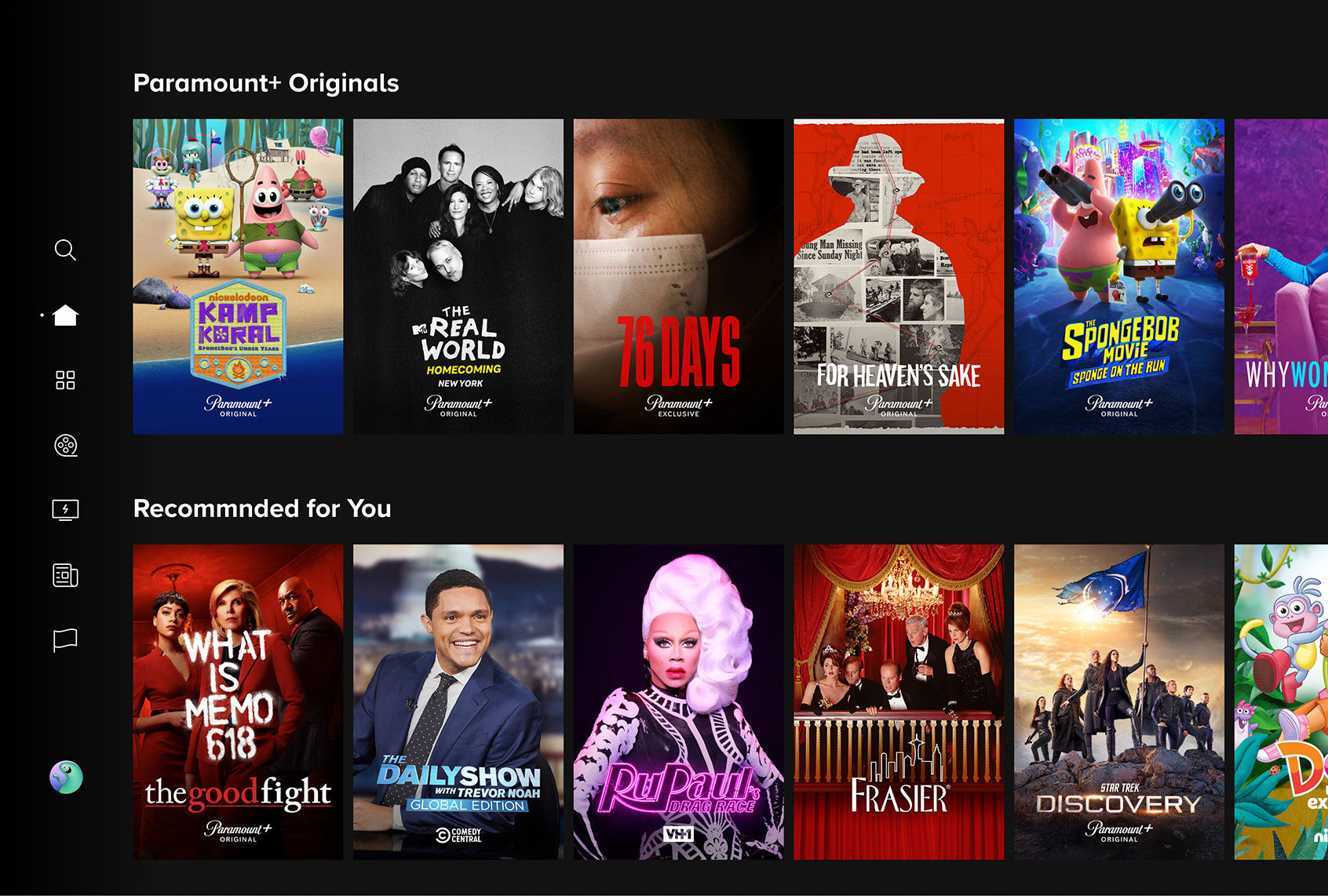
A streaming platform’s success is heavily dependent on its “discoverability”—the ease with which a user can find content. Paramount+ employs a sophisticated front-end design backed by complex machine learning algorithms.
Cross-Platform Consistency and Navigation
The UI of Paramount+ is designed using a modular framework. Whether you are using a Roku stick, an Apple TV, or a web browser, the interface feels familiar. This is achieved through “web-view” components and native wrappers that allow for a consistent visual language while maintaining the performance benefits of native code. The navigation architecture is built on a “rail” system (horizontal scrolling rows), which has become the industry standard for VOD (Video on Demand) services due to its intuitive nature on remote-controlled devices.
Personalization and Recommendation Algorithms
Behind the visible interface lies the recommendation engine. Paramount+ uses “Collaborative Filtering” and “Content-Based Filtering” to analyze user behavior. Every time a user clicks a title, watches a trailer, or finishes a series, the data is fed into a machine learning model. This model analyzes thousands of data points—genre preferences, time of day, and even the “watch-to-completion” rate—to curate a personalized home screen. The tech goal here is to reduce “decision fatigue,” keeping the user engaged within the ecosystem for longer durations.
Device Compatibility and Integration
The modern tech consumer uses a variety of devices, and Paramount+ must be “platform agnostic.” This means the software must perform flawlessly on everything from a high-powered gaming console to a budget smartphone.
The Mobile and Tablet Ecosystem
On mobile devices (iOS and Android), Paramount+ must manage more than just video playback. It handles background downloads for offline viewing, which involves complex Digital Rights Management (DRM) handshakes. The app must ensure that a downloaded file remains encrypted and is automatically “expired” once the license period ends. Furthermore, the mobile app is optimized for power efficiency, ensuring that the heavy lifting of video decoding doesn’t drain the device’s battery excessively.
Smart TV and Gaming Console Integration
Developing for Smart TVs (Tizen, WebOS, Android TV) and gaming consoles (PlayStation, Xbox) presents a unique set of challenges. These devices often have limited processing power or specialized operating systems. Paramount+ developers use specialized Software Development Kits (SDKs) to ensure the app remains responsive. On gaming consoles, the app can leverage the high-performance GPUs to provide a smoother UI experience compared to the built-in software of an older Smart TV.
Digital Security and Content Rights Management (DRM)
In the digital age, protecting intellectual property is a paramount technical concern. Paramount+ employs multi-layered security protocols to prevent piracy and ensure secure user data management.
Security Protocols and Encryption
To protect the video stream itself, Paramount+ utilizes industry-standard DRM solutions such as Google Widevine, Apple FairPlay, and Microsoft PlayReady. These systems encrypt the video data from the server to the screen. When a user presses “play,” a secure “license request” is sent to the DRM server, which verifies the subscription status before providing the decryption key. This process happens in milliseconds, invisible to the user but essential for the business model.
Account Management and Concurrent Stream Throttling
From a security and infrastructure standpoint, managing user sessions is vital. The platform uses OAuth 2.0 and OpenID Connect for secure authentication. To prevent account sharing and system abuse, the backend monitors “concurrent streams.” This requires a real-time database that tracks every active session globally. If a user exceeds their plan’s limit, the system must instantly “handshake” with the device to block further access, a process that requires high-speed data synchronization to avoid false positives.

Conclusion: The Future of Paramount+ Tech
What is Paramount Plus? It is a high-performance software ecosystem designed to bridge the gap between traditional media and the future of digital delivery. Through its use of scalable cloud architecture, advanced video compression, and data-driven personalization, it represents the cutting edge of current streaming technology.
As we look forward, the platform is likely to integrate even more advanced technologies, such as AI-driven upscaling for legacy content and improved low-latency protocols for live sports streaming. For the tech-savvy user, Paramount+ is not just a place to watch “Star Trek” or “Top Gun”; it is a testament to how far streaming software has come and a glimpse into a future where high-definition global broadcasting is accessible on any screen, anywhere, at any time.
aViewFromTheCave is a participant in the Amazon Services LLC Associates Program, an affiliate advertising program designed to provide a means for sites to earn advertising fees by advertising and linking to Amazon.com. Amazon, the Amazon logo, AmazonSupply, and the AmazonSupply logo are trademarks of Amazon.com, Inc. or its affiliates. As an Amazon Associate we earn affiliate commissions from qualifying purchases.