
In the realm of finance, numbers are the primary language of communication. Whether you are tracking the performance of a stock portfolio, evaluating the success of a side hustle, or calculating a year-end bonus, the ability to quantify growth is essential. One of the most fundamental yet powerful tools in a financier’s arsenal is the “percentage increase.”
Understanding how to work out the percentage increase allows you to strip away the noise of raw numbers and focus on the relative velocity of your wealth. A $1,000 profit might sound impressive, but its significance changes drastically depending on whether your initial investment was $5,000 or $500,000. By mastering this calculation, you gain the clarity needed to make informed decisions about where to allocate your capital and how to optimize your financial future.
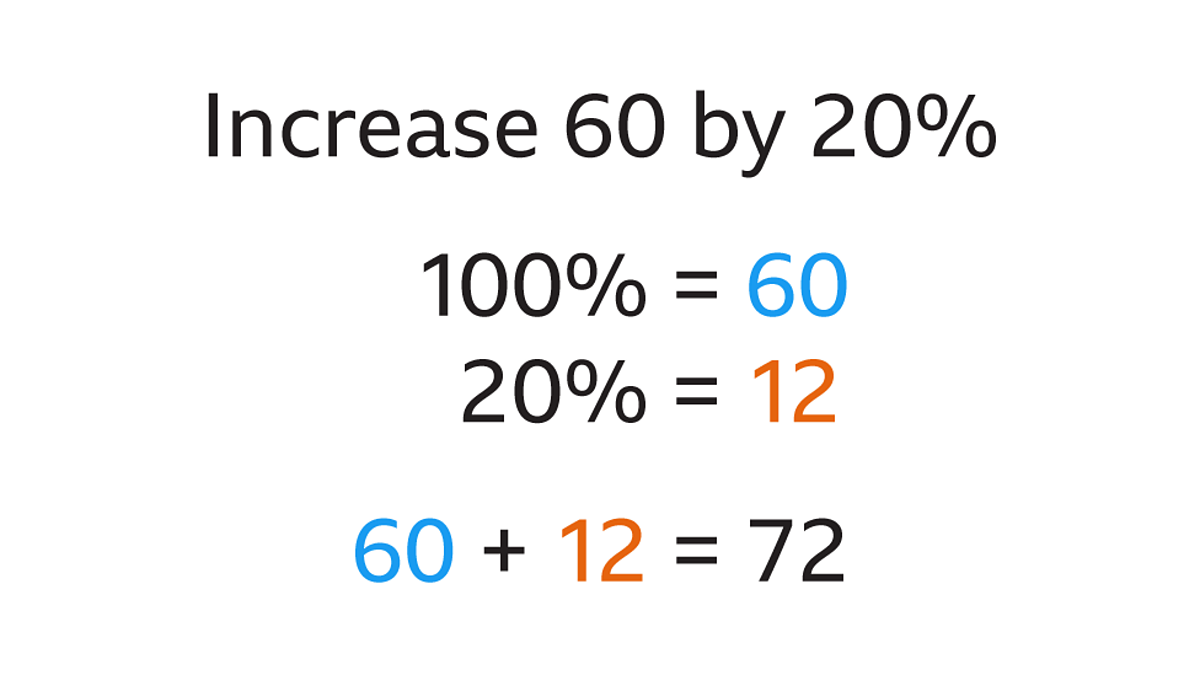
1. The Mathematical Foundation: Calculating Percentage Increase Step-by-Step
Before diving into complex investment strategies, one must master the basic formula. In the context of money, a percentage increase measures how much a value has grown relative to its starting point.
The Core Formula
The formula for calculating percentage increase is straightforward:
[(New Value – Original Value) / Original Value] × 100 = Percentage Increase
To apply this, you first subtract the original amount from the new amount to find the “absolute increase.” Then, you divide that increase by the original amount to determine the “growth factor.” Finally, you multiply by 100 to convert that factor into a percentage that is easy to interpret and compare.
Why the Base Value is Critical
In personal finance, the “original value” (or the base) is the most important part of the equation. This is often referred to as the “cost basis” in investing. If you buy a share of a tech company at $100 and it rises to $150, your percentage increase is 50%. However, if you bought that same share later at $130 and it rose to $150, your percentage increase drops to roughly 15.3%. Even though the final price is the same, your financial growth is determined by your entry point. Understanding this helps investors realize that the timing of an investment often dictates the efficiency of their capital.
Avoiding Common Pitfalls
A common mistake in financial reporting is confusing “percentage points” with “percentage increase.” If a savings account interest rate moves from 1% to 2%, that is a 1 percentage point increase, but it is a 100% increase in the amount of interest you are earning. Distinguishing between these two concepts is vital when reading bank disclosures or economic reports regarding inflation and interest rates.
2. Analyzing Investment Performance and Portfolio Growth
For the modern investor, the percentage increase is the ultimate metric for success. It levels the playing field, allowing you to compare the performance of a high-priced stock with a low-cost index fund or a real estate asset.
Evaluating Stock Market Gains
When you review your quarterly brokerage statement, the raw dollar gain tells you how much richer you are, but the percentage increase tells you how well your strategy is working. If the S&P 500 grew by 10% in a year and your personal portfolio grew by 12%, you have “alpha”—you are outperforming the market. Without calculating the percentage increase, you wouldn’t know if your gains were simply a result of a rising tide lifting all boats or your own savvy selection.
Realized vs. Unrealized Increases
In the world of online income and investing, it is crucial to distinguish between an “unrealized” percentage increase (paper gains) and a “realized” one (cash in hand). If your cryptocurrency holdings increase by 200%, you have a massive percentage increase on paper. However, until you sell that asset, that percentage is subject to market volatility. Savvy money managers use percentage targets to “lock in” profits, deciding to sell once an asset hits a specific percentage increase, such as 25% or 50%, to maintain a disciplined exit strategy.
The Role of Dividends in Total Return
To get a true picture of percentage growth in income-focused investing, one must look at “Total Return.” This includes both the price appreciation of the asset and the dividends paid out. If a stock’s price increases by 5% but it also pays a 3% dividend, your total percentage increase for the year is 8%. For long-term wealth building, calculating the percentage increase inclusive of reinvested dividends is the key to understanding the power of compound growth.
3. Measuring Business Health and Revenue Trends
For entrepreneurs and those managing side hustles, the percentage increase is the pulse of the business. It provides a snapshot of scalability and operational efficiency.

Year-Over-Year (YoY) Growth
Businesses rarely look at month-to-month changes in isolation because of seasonality. Instead, they use the percentage increase formula to compare current performance against the same period in the previous year. If your e-commerce store made $10,000 in December 2023 and $15,000 in December 2024, you have achieved a 50% YoY increase. This metric is the gold standard for proving to lenders or investors that a business is on an upward trajectory.
Profit Margin Expansion
It isn’t just about how much more money is coming in; it’s about how much more you are keeping. If your revenue increases by 10%, but your expenses increase by 15%, your business is actually becoming less efficient despite the “growth.” By calculating the percentage increase in profit margins, business owners can see if they are successfully scaling their operations or if they are simply working harder for a smaller relative return.
Customer Acquisition and Scalability
In the digital economy, tracking the percentage increase in your customer base or subscriber list is essential. If you are running an online newsletter and your subscriber count grows from 1,000 to 1,500, that is a 50% increase. High percentage growth in the early stages of a business is a primary indicator of “Product-Market Fit,” signaling that it may be time to reinvest more capital into marketing to fuel further expansion.
4. Personal Finance: Optimizing Income and Managing Expenses
Beyond the stock market and business ownership, understanding percentage increases is a vital skill for day-to-day financial management and career advancement.
Negotiating Salary Increases
When it comes time for a performance review, most employees think in terms of flat dollar amounts (e.g., “I want a $5,000 raise”). However, employers often think in percentages. Knowing that the average cost-of-living adjustment is 3%, you can better position your request. If you have taken on significantly more responsibility, asking for a 10% or 15% increase is often more justifiable when framed against your increased output and the market rate. Being able to demonstrate that you contributed to a specific percentage increase in company revenue or efficiency makes your case for a raise much stronger.
The Hidden Impact of Inflation
Inflation is essentially a percentage increase in the cost of living. If the inflation rate is 4%, and your bank account is only earning 1% interest, you are effectively losing 3% of your purchasing power every year. To maintain your wealth, your income and investments must achieve a percentage increase that at least matches the rate of inflation. This “Real Rate of Return” is the difference between your nominal percentage gain and the inflation rate.
Managing Debt and Interest Rates
On the flip side of wealth building is debt management. Credit card companies and mortgage lenders use percentage rates to determine how much you owe. If a credit card increases your APR (Annual Percentage Rate) from 15% to 18%, that 3-percentage-point jump represents a 20% increase in the cost of your debt. Understanding this math encourages more aggressive debt repayment strategies, as you can clearly see how much more of your income is being diverted toward interest.
5. Tools and Automation for Financial Calculations
While the manual formula is essential for understanding the logic, modern financial management relies on tools to track percentage increases across hundreds of data points.
Leveraging Excel and Google Sheets
For anyone serious about their money, spreadsheets are the ultimate playground. Using the formula =(New_Value - Old_Value) / Old_Value and formatting the cell as a percentage allows you to track your net worth over time automatically. You can create a dashboard that shows the percentage increase of different asset classes, helping you identify which parts of your portfolio are over-performing or under-performing.
Online ROI and Compound Interest Calculators
There are numerous financial tools available that do the heavy lifting for you. ROI (Return on Investment) calculators are essentially percentage increase calculators tailored for finance. They allow you to input variables like taxes, fees, and time horizons to give you a “net percentage increase,” which is a much more accurate representation of your actual gains than a simple raw calculation.
Financial Apps and Automated Tracking
Modern fintech apps like Mint, You Need A Budget (YNAB), or Personal Capital automatically calculate the percentage increase in your spending categories or investment accounts. By reviewing these percentages weekly, you can spot “lifestyle creep”—the tendency for your spending to increase at the same or higher percentage as your income—and take corrective action to ensure your savings rate remains high.

Conclusion: The Power of Perspective
Learning how to work out the percentage increase is more than just a math lesson; it is a shift in perspective. In the world of money, raw numbers can be deceptive. A $500 gain on a $1,000 investment is a triumph, while a $500 gain on a $100,000 investment is a rounding error.
By focusing on percentage growth, you gain the ability to compare different financial opportunities objectively. You can weigh the benefits of a high-yield savings account against a dividend-paying stock, or evaluate whether a side hustle is worth the time based on its month-over-month growth. Whether you are aiming for early retirement, scaling a business, or simply trying to stay ahead of inflation, the percentage increase is the fundamental metric that will guide you toward smarter, more profitable financial decisions.
aViewFromTheCave is a participant in the Amazon Services LLC Associates Program, an affiliate advertising program designed to provide a means for sites to earn advertising fees by advertising and linking to Amazon.com. Amazon, the Amazon logo, AmazonSupply, and the AmazonSupply logo are trademarks of Amazon.com, Inc. or its affiliates. As an Amazon Associate we earn affiliate commissions from qualifying purchases.