
In the world of finance, percentages are the universal language. Whether you are calculating the interest on a high-yield savings account, determining the capital gains tax on a stock sale, or evaluating the profitability of a side hustle, understanding how to get a percentage of a number is more than a basic math skill—it is a foundational pillar of fiscal literacy.
While the mathematical formula is simple, its application within the context of money is where the true value lies. To move from passive earner to active wealth builder, you must be able to dissect numbers and understand the ratios that govern your financial health. This guide explores the mechanics of percentage calculations and applies them across the most critical sectors of personal and business finance.

Mastering the Fundamentals: Percentage Math in Personal Finance
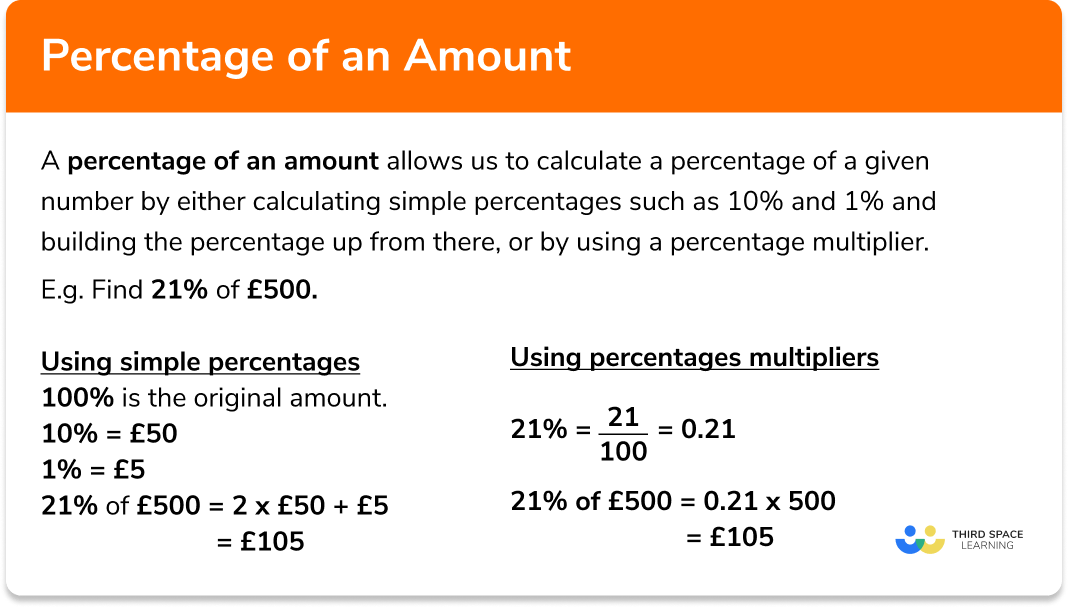
At its core, a percentage represents a part of a whole, expressed in hundredths. To find a percentage of a given number, you multiply the total amount by the decimal form of the percentage. For example, to find 15% of $2,000, you multiply 2,000 by 0.15, resulting in $300. In personal finance, this simple operation is the engine behind effective budgeting and tax planning.
The 50/30/20 Budgeting Rule
One of the most effective ways to manage personal wealth is through the 50/30/20 rule. This framework requires you to take your after-tax income and divide it into three distinct buckets: 50% for needs, 30% for wants, and 20% for savings and debt repayment.
To apply this, you must first calculate your total net monthly income. If your take-home pay is $5,000, calculating your “Needs” allocation involves finding 50% of 5,000 ($2,500). By mastering these percentages, you ensure that your lifestyle never outpaces your ability to build a financial safety net.
Calculating Taxes and Net Take-Home Pay
Understanding the percentage of your income that goes toward taxes is vital for accurate financial planning. Most tax systems are progressive, meaning different portions of your income are taxed at different rates. However, calculating your “Effective Tax Rate” provides a clear picture of your actual burden. If you earn $100,000 and pay $18,000 in total taxes, your effective tax rate is 18%. Knowing how to work backward from these percentages allows you to estimate quarterly tax payments for freelance work or side hustles, preventing unpleasant surprises during tax season.
Leveraging Percentages for Investment Success
For investors, percentages are the primary metric for measuring performance. Absolute dollar gains are often misleading; a $500 profit on a $1,000 investment is monumental, whereas the same profit on a $100,000 investment is negligible. By focusing on percentages, you can compare different asset classes—such as real estate, stocks, and crypto—on an equal playing field.
Determining Return on Investment (ROI)
ROI is perhaps the most important percentage in the world of money. It measures the efficiency of an investment relative to its cost. The formula is: [(Current Value – Initial Cost) / Initial Cost] x 100.
If you purchase a stock for $150 and it rises to $180, your gain is $30. To find the percentage gain, you divide 30 by 150 to get 0.20, or 20%. Understanding this percentage allows you to determine if your capital is working hard enough for you or if it should be reallocated to a higher-yielding asset.
Dividend Yields and Passive Income
For those seeking online income or passive cash flow, the “Dividend Yield” is a critical percentage. This represents how much a company pays out in dividends each year relative to its stock price. If a stock is trading at $100 and pays an annual dividend of $4, the yield is 4%. Calculating these percentages across a portfolio allows investors to project their annual income and plan for retirement based on sustainable withdrawal rates.
The Power of Compound Interest
Compound interest is the “eighth wonder of the world” because of how percentages interact with time. When you earn a percentage return on your principal, and then earn that same percentage on the new, larger total the following year, your wealth grows exponentially. Calculating a 7% average annual return over 30 years illustrates why starting early is more important than the initial amount invested. The percentage remains the same, but the base number grows, leading to massive wealth accumulation.

The Entrepreneur’s Edge: Percentage-Based Business Strategy
In business, percentages dictate whether a company is thriving or merely surviving. Entrepreneurs must look beyond “gross revenue” and focus on the ratios that indicate operational efficiency and market competitiveness.
Markup vs. Margin: The Profit Percentage
Many new business owners confuse markup with margin, a mistake that can lead to pricing products at a loss.
- Markup is the percentage added to the cost to reach the selling price. If an item costs $100 and you sell it for $150, your markup is 50%.
- Profit Margin is the percentage of the selling price that is profit. Using the same numbers, your profit is $50, which is 33.3% of the $150 selling price.
Knowing how to calculate these percentages ensures that your business finance remains healthy. If your overhead costs are 35% of your revenue, but your profit margin is only 33%, you are losing money on every sale despite a high markup.
Customer Acquisition Cost (CAC) and Lifetime Value (LTV)
For those generating online income or running digital agencies, the ratio between CAC and LTV is the ultimate growth metric. If it costs you $20 in marketing to acquire a customer (CAC) and that customer spends $100 over their lifetime (LTV), your CAC is 20% of your LTV. A healthy business usually aims for a CAC that is 33% or less of the LTV. By tracking these percentages, you can determine when to scale your marketing spend and when to optimize your sales funnel.
Mitigating Risk through Precise Debt Calculation
While percentages can build wealth, they can also destroy it when applied to debt. High-interest debt is a “reverse investment” where the percentage works against you, compounding your liabilities rather than your assets.
Understanding APR and Interest Accrual
The Annual Percentage Rate (APR) is the cost you pay each year to borrow money, including fees. If you carry a $5,000 balance on a credit card with a 24% APR, you aren’t just paying back the $5,000; you are accruing interest at a rate of roughly 2% per month. Calculating the monthly percentage of your balance allows you to see how much of your payment is going toward interest versus the principal. In many cases, paying only the “minimum percentage” required by the bank ensures that you remain in debt for decades.
Debt-to-Income (DTI) Ratios
When applying for a mortgage or business loan, lenders look at your Debt-to-Income ratio. This is the percentage of your gross monthly income that goes toward paying debts. Generally, lenders prefer a DTI of 36% or lower. To calculate this, you sum all your monthly debt obligations and divide them by your gross monthly income. Understanding this percentage is the key to unlocking better interest rates and higher credit limits, which in turn provides more leverage for future investments.
Digital Solutions for Complex Financial Calculations
In the modern era, you don’t need to do all this math by hand. Financial tools and software have made it easier to track these percentages in real-time, allowing for more agile decision-making.
Spreadsheet Formulas for Percentages
Microsoft Excel and Google Sheets are the most powerful tools in a financial toolkit. To calculate a percentage in a spreadsheet, you simply use the formula = (Part/Total). To add a percentage (like a tax or a tip), you use = Amount * (1 + Percentage). For example, to add 8% sales tax to a $100 price, the formula would be =100 * 1.08. Mastering these basic formulas allows you to build complex financial models, retirement trackers, and business dashboards.
Using Financial Apps for Real-Time Analysis
From budgeting apps like YNAB (You Need A Budget) to investment platforms like Vanguard or Robinhood, software handles the heavy lifting of percentage calculations. These tools provide visual breakdowns—pie charts showing your asset allocation percentages or bar graphs showing your spending categories as a percentage of your total budget. By leveraging these tools, you can maintain a high-level view of your financial health without getting bogged down in manual arithmetic.
In conclusion, knowing “how to get a percentage of a number” is the first step toward financial literacy. Whether you are applying it to your personal budget, your investment portfolio, or your business operations, the ability to think in percentages allows you to see the “why” behind the numbers. By mastering these calculations, you gain the clarity needed to make informed decisions, minimize risks, and maximize your wealth-building potential.
aViewFromTheCave is a participant in the Amazon Services LLC Associates Program, an affiliate advertising program designed to provide a means for sites to earn advertising fees by advertising and linking to Amazon.com. Amazon, the Amazon logo, AmazonSupply, and the AmazonSupply logo are trademarks of Amazon.com, Inc. or its affiliates. As an Amazon Associate we earn affiliate commissions from qualifying purchases.