
In the intricate world of personal finance, a routing number stands as a fundamental identifier, crucial for a myriad of financial transactions. Often overlooked until explicitly required, this nine-digit code acts as a unique address for your financial institution, directing funds to and from your account with precision. Understanding what a routing number is, its purpose, and—most importantly—how to locate it, is a cornerstone of effective financial management. From setting up direct deposit for your paycheck to initiating online bill payments, the routing number is an unsung hero of seamless financial operations.

This guide aims to demystify the process of finding your bank’s routing number, exploring various methods and contexts, while also delving into its significance and the broader implications for your financial security. Whether you’re a seasoned financial professional or just starting to navigate the complexities of banking, mastering the identification of this critical number is an indispensable skill.
Understanding the Anatomy and Purpose of a Routing Number
Before we dive into the practicalities of locating a routing number, it’s essential to grasp its fundamental nature and why it holds such prominence in the financial ecosystem. This understanding not only clarifies its importance but also helps in distinguishing it from other financial identifiers.
What is a Routing Number?
A routing number, officially known as an ABA (American Bankers Association) routing transit number, is a nine-digit code used to identify a specific financial institution within the United States. It was established by the ABA in 1910 to facilitate the processing of paper checks. Each financial institution, or sometimes different branches or departments within a larger bank, is assigned one or more unique routing numbers. These numbers ensure that funds are transferred to the correct bank during transactions. Think of it as a zip code for your bank.
The Purpose and Importance in Financial Transactions
The routing number serves as a critical component in almost all electronic fund transfers (EFTs) and check processing within the U.S. Its primary function is to direct money to the appropriate financial institution. Without it, transactions would lack the necessary addressing information to complete successfully.
The importance of a routing number is evident in various common financial activities:
- Direct Deposit: To receive your paycheck, tax refund, or government benefits directly into your bank account, you must provide your routing number along along with your account number to your employer or the relevant agency.
- Automatic Bill Payments (ACH Transfers): Setting up recurring payments for utilities, mortgage, rent, or loan installments typically requires your routing number to authorize the automatic debit from your account.
- Wire Transfers (Domestic): When sending or receiving money via a domestic wire transfer, the routing number is essential to ensure the funds reach the correct recipient bank.
- Online Payments and Transfers: Many third-party payment services and online portals require your routing number to link your bank account for transfers or payments.
- Check Processing: When you write a physical check, the routing number printed at the bottom facilitates its clearance through the banking system.
Distinguishing from Account Numbers and SWIFT Codes
It’s crucial not to confuse a routing number with other financial identifiers, as each serves a distinct purpose:
- Account Number: Your account number is unique to your specific account within a financial institution. While a routing number identifies the bank, your account number identifies your checking, savings, or money market account at that bank. Both are necessary for most transactions.
- SWIFT/BIC Code: SWIFT (Society for Worldwide Interbank Financial Telecommunication) codes, also known as BIC (Bank Identifier Codes), are used for international wire transfers. While a routing number is for domestic U.S. transactions, a SWIFT code is required to send or receive money across international borders, identifying banks globally. Some larger U.S. banks may have both routing numbers and SWIFT codes, but they are used for different types of transfers.
Understanding these distinctions helps prevent errors that could lead to delayed or misdirected funds, underscoring the specific role of the routing number.
Where to Locate Your Routing Number on a Check
For many, the most straightforward and traditional method of finding a routing number is by looking at a physical check. The information is printed directly on the check in a standardized format, designed for easy machine readability.
The Magnetic Ink Character Recognition (MICR) Line
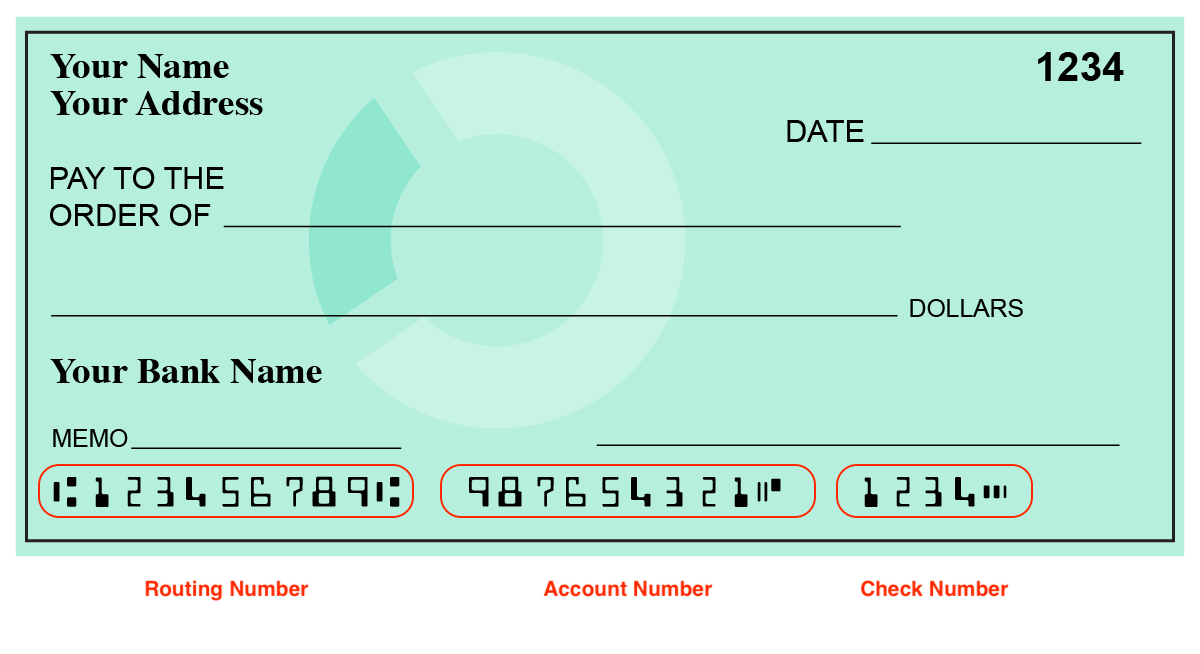
Every standard U.S. check features a special line of numbers printed at the bottom using magnetic ink. This is known as the Magnetic Ink Character Recognition (MICR) line. This line is specifically designed to be read by machines quickly and accurately, facilitating high-volume check processing. The MICR line contains three distinct sets of numbers: the routing number, your account number, and the check number.
Identifying the Nine Digits
On the MICR line, the routing number is almost always the first set of numbers printed on the left. It will always be a nine-digit code.
Here’s a breakdown of how it typically appears:
- [Routing Number] [Account Number] [Check Number]
For example:
123456789: 00012345678 : 0101
In this example:
123456789is the routing number.00012345678is the account number.0101is the check number.
Always double-check that you are copying the correct nine digits from the very beginning of the MICR line. It’s a common mistake to accidentally use part of the account number if one isn’t careful.
Variations for Different Check Types (e.g., Starter Checks)
While the general rule holds true, there can be slight variations, especially with certain types of checks:
- Personal Checks: These usually follow the standard format described above, with the routing number first.
- Business Checks: Similar to personal checks, business checks also prominently display the routing number on the MICR line.
- Starter Checks: If you’ve just opened a new account and received temporary “starter checks” or deposit slips directly from the bank, be cautious. Sometimes, these checks may not have your specific account number or even the correct routing number printed on them. They might be generic or only include the bank’s main routing number without your personal account details, which could cause issues for direct deposits or bill payments. It’s always best to verify the routing number through another method (like online banking or a bank statement) if using a starter check for critical transactions.
- Deposit Slips: Like checks, deposit slips also have the routing number and account number printed on them in the MICR line. This can be another reliable source.
When in doubt, especially with new accounts or temporary checks, it’s always safer to cross-reference the number using one of the alternative methods discussed next.
Alternative Methods for Finding Your Routing Number (Beyond the Checkbook)
What if you don’t have a checkbook handy, or you want to verify the number you found on a check? Fortunately, financial institutions provide several convenient and reliable ways to access your routing number.
Your Bank’s Official Website/Online Banking Portal
The quickest and most common method for many modern bankers is through their bank’s online platform.
- Log In: Navigate to your bank’s official website and log in to your online banking account using your credentials.
- Locate Account Information: Once logged in, look for a section related to “Account Summary,” “Account Details,” “My Accounts,” or similar.
- Find the Routing Number: Your routing number is typically displayed prominently alongside your account number. Some banks might require you to click on a specific account (e.g., your checking account) to view its full details. Often, there will be a dedicated link or section labeled “Routing Number,” “Direct Deposit Info,” or “Wire Transfer Information.”
- Specific to Account Type: Be mindful that some banks have different routing numbers for different types of accounts (e.g., checking vs. savings) or for different types of transactions (e.g., ACH vs. wire transfers). Ensure you are selecting the correct routing number for your intended purpose and account.

Bank Statements
Both digital and physical bank statements are excellent sources of your routing number.
- Physical Statements: If you receive paper statements in the mail, your routing number is usually printed on the statement. Look near your account number, often at the top or bottom of the statement, or within a section detailing direct deposit instructions.
- Digital Statements: Access your digital statements through your online banking portal. Download or view a recent statement, and you will find the routing number in the same locations as a physical statement. This is particularly useful if you need to access it on the go.
Contacting Your Bank Directly
If online methods prove elusive, or if you prefer direct assistance, contacting your bank is a foolproof option.
- Phone Call: Call your bank’s customer service number. This number can usually be found on the back of your debit card, on your bank’s official website, or on a recent bank statement. Be prepared to verify your identity with personal information (e.g., account number, date of birth, mother’s maiden name) before they provide sensitive information like your routing number.
- In-Person Visit: Visit your local bank branch. A teller or customer service representative can provide you with the correct routing number for your account. Remember to bring a form of identification (like a driver’s license) and your account details.
Mobile Banking Apps
Most financial institutions offer robust mobile banking applications that provide quick access to account information.
- Log In: Open your bank’s mobile app and log in securely.
- Navigate to Account Details: Similar to online banking, look for your specific checking or savings account. Tap on the account to view its details.
- Locate Information: The routing number is often found under “Account Info,” “Account Settings,” “Direct Deposit,” or a similar section. Some apps might even have a dedicated “Routing Number” button or link prominently displayed.
Using the mobile app is highly convenient for quick look-ups when you’re away from your computer or checkbook.
When You’ll Need Your Routing Number
Knowing how to find your routing number is only half the battle; understanding when you’ll need it is equally important. This number is a gatekeeper for various critical financial operations, ensuring funds move accurately and efficiently.
Setting Up Direct Deposit
This is arguably the most common use case for a routing number. Whether it’s your employer sending your salary, the government issuing a tax refund or social security benefits, or a pension administrator sending retirement funds, direct deposit forms invariably ask for both your routing number and your account number. Providing accurate information ensures your funds are deposited into the correct account without delay.
Automatic Bill Payments and ACH Transfers
Many individuals opt for automatic bill payments for recurring expenses like utility bills, rent, mortgage payments, or car loans. These are typically set up as Automated Clearing House (ACH) transfers. When you authorize a merchant or service provider to debit your account regularly, you will need to provide them with your bank’s routing number and your account number. This allows them to initiate the ACH transactions correctly.
Wire Transfers (Domestic)
For sending or receiving money quickly within the United States, domestic wire transfers are often utilized. When initiating a wire transfer, you’ll need the recipient’s bank routing number, their account number, and their full name and address. Conversely, if you are expecting a domestic wire transfer, you will need to provide your routing number and account number to the sender. Remember, for international wires, a SWIFT/BIC code is typically required instead of a routing number.
Initiating Online Payments and Transfers
Beyond direct deposit and automatic bill pay, various online platforms and services require your routing number to link your bank account. This could include:
- Peer-to-peer payment apps: While some P2P apps primarily use debit cards, others allow direct bank account linking, which requires your routing number for transfers.
- Investment platforms: Setting up transfers between your bank account and your brokerage or investment accounts.
- Online merchants: Some online retailers offer direct bank transfer options, though credit/debit cards are more common.
- Tax payments: Paying federal or state taxes directly from your bank account online.
In all these scenarios, the routing number serves as the crucial link that enables the seamless movement of funds between different financial entities.
Safeguarding Your Financial Information
While knowing how to find your routing number is empowering, it’s equally important to understand how to protect this piece of financial information. Although less sensitive than your account number or Social Security number, mishandling it can still pose risks.
The Importance of Security
A routing number by itself cannot be used to directly access your funds. It identifies the bank, not your specific account or you as an individual. However, when combined with your account number, it creates the essential pathway for transactions. If a malicious party gains access to both your routing number and account number, they could potentially initiate unauthorized debits or fraudulent transactions. While banks have systems in place to detect and prevent fraud, vigilance on your part is a crucial first line of defense.
Best Practices for Sharing Your Routing Number
- Be Discerning: Only provide your routing number to trusted entities and for legitimate financial purposes (e.g., your employer for direct deposit, a reputable biller for automatic payments).
- Secure Channels: When sharing it digitally, ensure you are using secure, encrypted platforms or websites (look for “https://” in the URL and a padlock icon). Avoid sending it via insecure email or public messaging apps.
- Verification: If you receive a request for your routing number, especially unexpectedly, verify the legitimacy of the request through an independent channel (e.g., call the company’s official customer service number, not a number provided in a suspicious email).
- Physical Security: When using physical checks, keep your checkbook in a secure location. Shred old checks or deposit slips before disposing of them.
Recognizing Red Flags and Scams
Awareness of common financial scams can help protect your routing and account numbers.
- Phishing Attempts: Be wary of emails or messages that claim to be from your bank or a familiar company asking for your routing number, account number, or other personal information. Banks rarely ask for such details via unsolicited emails.
- Unexpected Requests: If someone you don’t know or a service you haven’t recently interacted with suddenly asks for your routing number, treat it with extreme caution.
- Urgency or Threats: Scammers often try to create a sense of urgency or threaten negative consequences if you don’t provide information immediately. This is a classic red flag.
- Unsolicited Offers: Be skeptical of unsolicited offers that promise too-good-to-be-true deals and require your bank details upfront.
By adopting a proactive approach to financial security, you can mitigate the risks associated with sharing your routing number and safeguard your accounts from potential fraud.
Conclusion
The routing number, a seemingly simple nine-digit code, is an indispensable tool in the landscape of modern personal finance. It is the silent workhorse that ensures your paychecks land in your account, your bills are paid on time, and your funds move efficiently and accurately across the banking system. From the tangible lines on a physical check to the digital interfaces of online banking portals and mobile apps, accessing this critical identifier is simpler than it appears, once you know where to look.
By understanding its purpose, familiarizing yourself with the various methods of locating it, and practicing diligent security habits, you empower yourself with greater control over your financial transactions. In an increasingly digital world, where financial fluidity is paramount, the ability to quickly and accurately find your routing number is not just a convenience—it’s a fundamental aspect of intelligent and secure financial management. Take the time to understand this vital financial component; it’s an investment in your peace of mind and financial efficiency.
aViewFromTheCave is a participant in the Amazon Services LLC Associates Program, an affiliate advertising program designed to provide a means for sites to earn advertising fees by advertising and linking to Amazon.com. Amazon, the Amazon logo, AmazonSupply, and the AmazonSupply logo are trademarks of Amazon.com, Inc. or its affiliates. As an Amazon Associate we earn affiliate commissions from qualifying purchases.