
Determining how much you can get approved for in a home loan is the critical first step in the journey toward homeownership. While many prospective buyers begin by browsing real estate listings and attending open houses, the financial reality of what a lender is willing to provide serves as the true foundation of your search. A mortgage approval is not a single, static number; rather, it is a complex calculation based on your income, existing debts, credit history, and current market conditions.
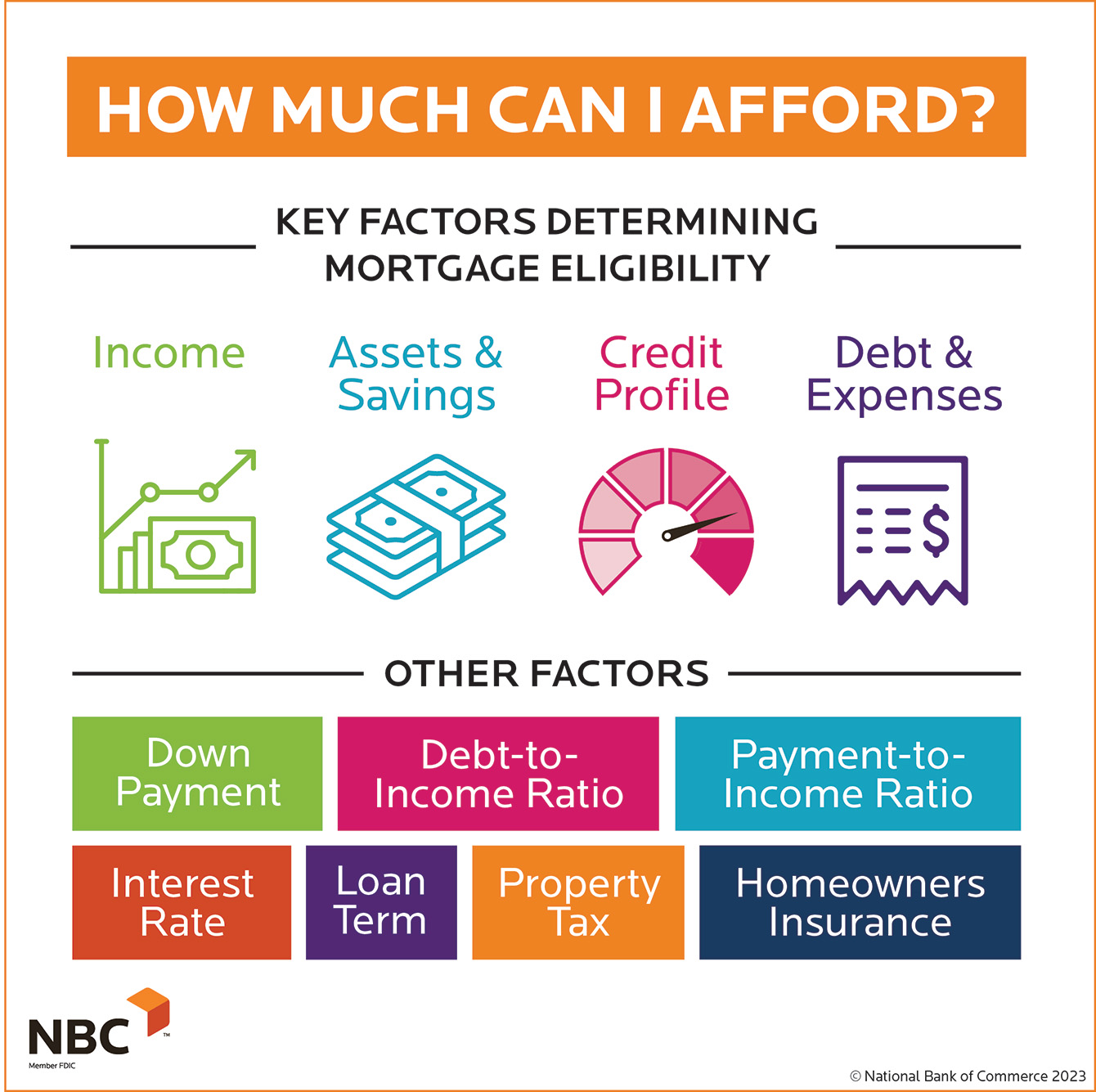
Understanding the mechanics of mortgage lending allows you to move from uncertainty to a position of strength. By analyzing the factors that influence a lender’s decision, you can optimize your financial profile to secure the best possible terms and a loan amount that aligns with both your dreams and your budget.
The Core Pillars of Mortgage Approval: Income and Debt
Lenders primarily want to ensure that you have the consistent financial capacity to repay the loan over a period of 15 to 30 years. To assess this, they look at two primary metrics: your gross monthly income and your existing debt obligations.
Debt-to-Income (DTI) Ratio: The Lender’s Golden Rule
The Debt-to-Income (DTI) ratio is arguably the most significant factor in determining your maximum loan amount. This ratio compares your total monthly debt payments to your gross monthly income (before taxes). Lenders generally categorize DTI into two parts: front-end and back-end.
The front-end ratio refers to the percentage of your income that goes specifically toward housing costs, including the mortgage principal, interest, property taxes, and homeowners insurance (often referred to as PITI). Most lenders prefer this to stay below 28%.
The back-end ratio includes your housing costs plus all other monthly debts, such as car loans, student loans, and credit card minimums. Traditionally, lenders look for a back-end ratio of 36% or lower, though many modern programs, such as FHA loans, allow for DTI ratios up to 43% or even 50% in certain circumstances. The lower your DTI, the higher the loan amount you are likely to qualify for.
Employment Stability and Income Verification
It is not just about how much you earn, but how reliably you earn it. Lenders typically require two years of consistent employment history within the same field. If you are a W-2 employee, verification is straightforward via pay stubs and tax returns.
However, for self-employed individuals or those with fluctuating commission-based income, the process is more rigorous. Lenders will often average your net income over the last two years. If your income has decreased year-over-year, they may use the lower figure to be conservative. Understanding how your specific income type is “counted” is vital for predicting your approval limit.
The Role of Credit Health and Down Payments
While income determines your ability to pay, your credit score and down payment represent your reliability and your “skin in the game.” These factors directly influence the interest rates you are offered, which in turn affects the total loan amount you can afford.
How Credit Scores Dictate Loan Limits
Your credit score is a numerical representation of your financial responsibility. In the eyes of a lender, a higher credit score equates to lower risk. When you are perceived as a low-risk borrower, you are offered lower interest rates.
Because mortgage approval is based on a maximum monthly payment (determined by your DTI), a lower interest rate allows more of that monthly payment to go toward the principal balance of the loan. For example, a buyer with a 760 credit score might qualify for a $400,000 loan, while a buyer with a 620 score—facing a much higher interest rate—might only be approved for $340,000 for the exact same monthly payment. Maintaining a clean credit report is the most effective way to “unlock” more borrowing power without increasing your income.
Down Payments and the Loan-to-Value (LTV) Ratio
The amount of cash you bring to the closing table significantly impacts your approval. The Loan-to-Value (LTV) ratio is the percentage of the home’s price that is being financed. If you put 20% down, your LTV is 80%.
A larger down payment reduces the lender’s risk and can help you bypass certain requirements, such as Private Mortgage Insurance (PMI). While you can get approved for certain loans with as little as 3% or 3.5% down, doing so increases your monthly obligation due to the insurance premiums. Consequently, if you have a fixed maximum monthly payment you can afford, a larger down payment allows you to purchase a more expensive home because you are borrowing a smaller percentage of the total value.

Understanding Interest Rates and Loan Products
The “how much” of a home loan is inextricably linked to the “how” of the loan structure. Different loan products have different qualifying criteria and interest rate structures.
Fixed-Rate vs. Adjustable-Rate Mortgages (ARMs)
A fixed-rate mortgage offers the security of a consistent interest rate for the life of the loan. This is the standard for most buyers. However, during periods of high interest rates, some buyers look toward Adjustable-Rate Mortgages (ARMs).
ARMs often feature a lower “teaser” rate for an initial period (5, 7, or 10 years). Because the initial interest rate is lower than a standard fixed-rate mortgage, your monthly payment is lower, which can technically allow you to qualify for a higher loan amount initially. However, lenders often qualify you based on the maximum possible rate the loan could hit after the adjustment, or a “fully indexed rate,” to ensure you won’t default when the rate increases.
Conventional vs. Government-Backed Loans
The type of loan you choose—Conventional, FHA, VA, or USDA—will shift the approval goalposts.
- Conventional Loans: Usually require higher credit scores but offer more flexibility for high-value properties.
- FHA Loans: Designed for those with lower credit scores or smaller down payments. They are more lenient with DTI ratios, often allowing you to get approved for a higher amount than a conventional lender might permit for the same income level.
- VA Loans: Exclusive to veterans and active-duty service members, these often require no down payment and have no PMI, significantly increasing the “buying power” of the borrower’s monthly income.
The Impact of Property-Specific Costs
When a lender calculates your approval, they don’t just look at the loan principal; they look at the total “carrying cost” of the specific property you intend to buy.
Property Taxes and Homeowners Insurance
Two houses priced at $500,000 can result in two very different loan approvals based on their location. Property taxes vary wildly by state, county, and even school district. A home in a high-tax jurisdiction will consume more of your monthly DTI allowance, meaning the lender will approve you for a smaller loan amount for that specific property.
Similarly, homeowners insurance rates depend on the home’s age, construction type, and proximity to hazards (like flood zones or fire-prone areas). It is essential to factor these “hidden” costs into your calculations early on.
Homeowners Association (HOA) Fees
If you are looking at condos, townhomes, or planned communities, you must account for HOA fees. Lenders include 100% of the HOA fee in your monthly debt obligations. A $400 monthly HOA fee has the same impact on your borrowing power as a $400 car payment or roughly $60,000 to $70,000 in additional mortgage principal. If you are aiming for a maximum loan amount, properties with high HOA fees will significantly limit your reach.
Strategic Steps to Increase Your Approval Limit
If your initial pre-approval falls short of the price range you were hoping for, there are several financial levers you can pull to improve your standing.
Reducing “Ghost” Debts and Improving Credit
Before applying, focus on paying down revolving debt, such as credit card balances. Even if you pay your cards in full every month, the balance reported on your statement date is what the lender sees. Paying these down before the lender pulls your credit can lower your DTI and potentially boost your credit score by a few points, which may push you into a better interest rate bracket.
The Power of a Co-Borrower
Adding a co-borrower—typically a spouse, partner, or family member—can substantially increase your loan approval. When you apply with a co-borrower, the lender considers the combined gross income of both individuals. While this also means adding the co-borrower’s debts to the equation, in most cases, a dual-income application yields a much higher borrowing limit than a single-income application.

The Difference Between Pre-Qualification and Pre-Approval
Finally, it is vital to distinguish between being “pre-qualified” and “pre-approved.” A pre-qualification is a surface-level estimate based on unverified information you provide. A pre-approval involves a hard credit pull and a review of your financial documents (tax returns, W-2s, bank statements). Only a pre-approval gives you a reliable figure for what you can actually get approved for, providing you with the confidence to make an offer in a competitive market.
In conclusion, the amount you can get approved for is a delicate balance of your personal financial health and the broader economic environment. By managing your DTI, protecting your credit score, and choosing the right loan product, you can maximize your borrowing power and take a decisive step toward securing your future home.
aViewFromTheCave is a participant in the Amazon Services LLC Associates Program, an affiliate advertising program designed to provide a means for sites to earn advertising fees by advertising and linking to Amazon.com. Amazon, the Amazon logo, AmazonSupply, and the AmazonSupply logo are trademarks of Amazon.com, Inc. or its affiliates. As an Amazon Associate we earn affiliate commissions from qualifying purchases.