
Costco Wholesale Corporation stands as a titan in the retail industry, revered for its bulk offerings, competitive pricing, and the treasure-hunt experience it offers. Yet, the true bedrock of its phenomenal success and robust financial health isn’t merely the vast array of products or the hot dog combo; it’s its meticulously cultivated, fiercely loyal, and ever-expanding membership base. For investors, analysts, and anyone interested in the economics of retail, understanding the sheer scale and strategic significance of Costco’s membership numbers is paramount. These figures are not just statistics; they represent a recurring revenue stream, a powerful indicator of customer loyalty, and a fundamental differentiator that underpins the company’s unique profitability model.
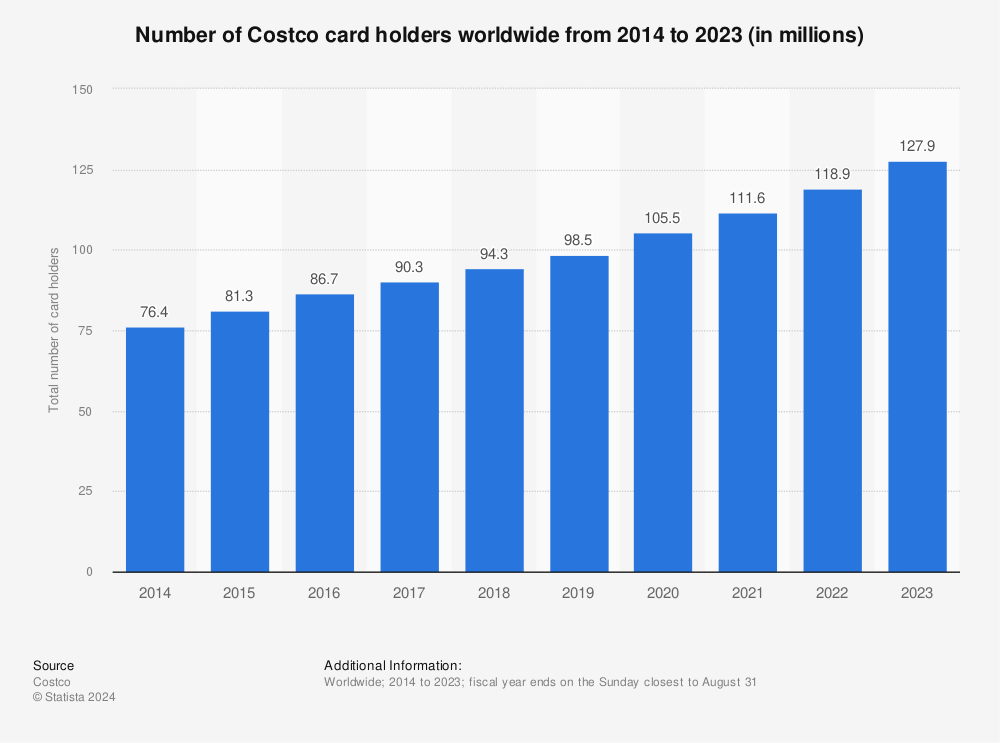
At its core, Costco operates on a unique model where merchandise sales, while substantial, often carry razor-thin margins. The real profit engine, the high-octane fuel that drives the entire enterprise, comes from its membership fees. This article delves into the financial implications of Costco’s membership strategy, exploring how many members the warehouse giant commands, what those numbers signify for its financial performance, and how this model continues to be a formidable force in the global retail landscape.
The Membership Model: Costco’s Financial Cornerstone
The concept of paying an annual fee simply to be allowed to shop might seem counterintuitive in a world saturated with free-access retail options. However, for Costco, this very barrier to entry is a strategic stroke of genius, transforming customers into committed members and guaranteeing a vital, high-margin revenue stream. This model is not just about exclusivity; it’s about predictability and a deep understanding of consumer psychology and economics.
Membership Tiers and Revenue Generation
Costco typically offers two primary membership tiers: the standard Gold Star membership and the enhanced Executive membership, alongside Business memberships. The Gold Star membership, which allows individuals to purchase products for personal use, comes with a standard annual fee. The Executive membership, costing roughly twice as much, offers additional perks, most notably an annual 2% reward (up to a certain cap) on eligible Costco and Costco.com purchases.
This tiered structure is brilliant for several reasons. Firstly, it encourages higher spending among Executive members, as the reward acts as an incentive for greater engagement. Secondly, and critically, the membership fees themselves represent nearly pure profit. Unlike merchandise sales, which involve significant costs of goods sold, supply chain expenses, and operational overheads, the incremental cost of managing an additional membership is relatively low. This means that a substantial portion of the membership fee directly translates into the company’s operating income. In essence, these fees act as a stable, predictable, and highly profitable income stream that can offset the tight margins often accepted on everyday merchandise, allowing Costco to offer competitive pricing without sacrificing overall profitability.
Beyond the Bulk Buy: The “Sticky” Nature of Membership
The annual fee creates a powerful psychological commitment from the member. Having invested in the privilege to shop, members are inherently incentivized to utilize their membership throughout the year to “get their money’s worth.” This phenomenon is often referred to as a “sunk cost fallacy” in behavioral economics, but for Costco, it’s a brilliant business strategy that ensures repeat visits and sustained engagement.
This “stickiness” fosters extraordinary customer loyalty. Members don’t just shop at Costco; they integrate it into their routine, planning their purchases around warehouse visits. The perceived value—from exclusive Kirkland Signature products to competitive pricing on national brands and member-only services like gas stations and optical centers—further reinforces the decision to renew. This relationship goes beyond a transactional exchange; it becomes a utility, a trusted resource that delivers consistent value, making the renewal decision almost automatic for a vast majority of its clientele.
Global Reach, Local Impact: Membership Across Continents
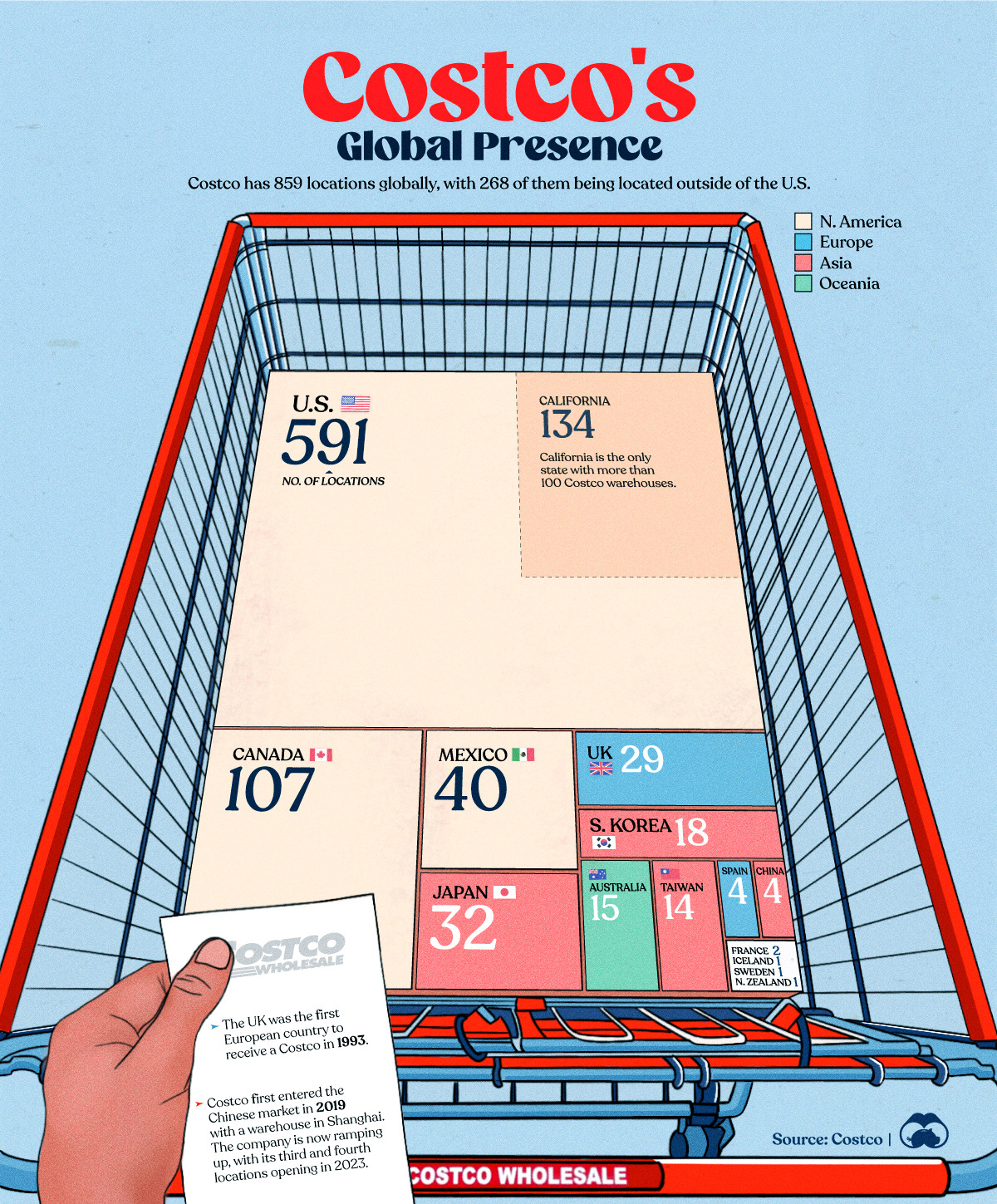
Costco’s membership model has proven remarkably adaptable and successful across diverse international markets. Whether in North America, Asia, Europe, or Australia, the core value proposition resonates with consumers seeking quality and savings. While specific product assortments or local regulations might vary, the fundamental draw of the membership—access to high-value goods at competitive prices—remains universal.
The global expansion of Costco means that its membership numbers aren’t just a reflection of its strength in its home market, but a testament to its universal appeal. Each new country or region represents a fresh opportunity to cultivate a new base of loyal members, contributing to a global network effect. This distributed growth strategy mitigates risk and ensures a continually expanding pool of recurring revenue, proving the model’s robust scalability.
Analyzing the Numbers: Membership Growth and Retention Metrics
To truly understand the financial might of Costco, one must look beyond the total count and delve into the dynamics of its growth and, crucially, its unparalleled retention rates. These metrics provide a clear picture of customer satisfaction, market penetration, and the long-term sustainability of its business model.
Tracking the Trajectory: Historical Membership Growth
Costco has consistently demonstrated impressive membership growth over the decades. While specific real-time figures fluctuate, the company has regularly reported a global membership base exceeding 120 million cardholders, representing over 65 million households or businesses. These numbers are a result of steady expansion, with new warehouses opening annually and existing locations deepening their market penetration.
Growth drivers include the continued appeal of value in a fluctuating economic climate, which often sees consumers migrating towards bulk-buy options to stretch their budgets. E-commerce initiatives, while not as central as the in-store experience, have also played a role in attracting younger demographics and providing convenience. Furthermore, the very positive word-of-mouth generated by satisfied members acts as a powerful, organic marketing tool, drawing in new converts who witness the benefits firsthand through existing members.
The Gold Standard: Retention Rates and Their Significance
Perhaps even more impressive than the sheer volume of members is Costco’s extraordinary membership retention rate. The company consistently reports retention rates for its North American members well above 90%, and for its global members, typically in the high 80s or low 90s. These figures are almost unheard of in subscription-based businesses and are a testament to the immense value members perceive in their Costco affiliation.
High retention rates are a financial golden ticket. They mean highly predictable recurring revenue, reducing the pressure to constantly acquire new customers to offset churn. It signifies a deeply satisfied customer base that continues to find compelling reasons to renew year after year. For investors, this stability translates into a more reliable revenue forecast and a business less susceptible to short-term market fluctuations or increased competition. The consistent renewal is a vote of confidence in Costco’s ability to deliver consistent quality and value.
Household Penetration vs. Individual Cards

It’s important to distinguish between total cardholders and unique memberships. A single Costco membership (Gold Star or Executive) typically includes two cards: one for the primary member and one for an additional household member. Business memberships might allow for more. Therefore, while Costco might report over 120 million cardholders, the number of unique households or businesses with active memberships is lower, perhaps around 65-70 million. This distinction is crucial for understanding market penetration and the overall reach of the Costco brand into homes and enterprises. Each household represents a purchasing unit, and the consistent growth in these unique membership units underscores the enduring appeal of the Costco model.
The Financial Implications: What Membership Data Reveals
The robustness of Costco’s membership numbers and retention rates isn’t just a feel-good story; it translates directly into significant financial advantages that set the company apart in the hyper-competitive retail sector.
Profitability Driver: Membership Fees as Pure Margin
As alluded to earlier, the primary financial benefit of the membership model is the direct contribution of fees to the bottom line. In many fiscal years, the total revenue generated from membership fees nearly matches, or even exceeds, the company’s net income. This is not a coincidence. Given the low incremental cost of memberships, these fees are a highly effective mechanism for driving profitability, often allowing Costco to run its merchandise operations on very thin margins.
This strategy allows Costco to sell goods at prices that might be unprofitable for competitors who do not have a similar recurring revenue stream. The membership fees effectively cover a significant portion of the company’s operating expenses, enabling it to pass on greater savings to members on merchandise. This creates a virtuous cycle: lower prices attract more members, who then generate more fee revenue, allowing for even more competitive pricing.
A Buffer Against Inflation and Economic Volatility
In an economic climate characterized by inflation and uncertainty, the predictable nature of membership revenue provides an invaluable buffer. When merchandise sales might be impacted by consumer spending shifts, supply chain disruptions, or rising costs, the stable inflow of membership fees offers a layer of financial resilience. This guaranteed income stream ensures that Costco can continue to invest in its operations, maintain its value proposition, and navigate economic headwinds with greater stability than retailers solely reliant on product markups.
During periods of economic downturn, the perceived value of a Costco membership often increases, as consumers become more price-sensitive and actively seek out opportunities to save money on bulk purchases. This counter-cyclical dynamic further strengthens the membership base when other retailers might be struggling.
Investor Appeal: A Predictable, High-Margin Business
For investors, Costco’s membership model is a compelling narrative. It presents a business with a highly predictable, high-margin revenue stream, driven by deeply loyal customers. This predictability and resilience make Costco a desirable long-term investment. Analysts pay close attention to membership growth, retention rates, and the average revenue per member (ARPM) as key indicators of the company’s fundamental health and future earnings potential.
The ability to consistently renew memberships at such high rates signals a robust competitive advantage, a wide economic moat that protects its market share and profitability from rivals. This stable financial foundation translates into consistent shareholder returns and a premium valuation in the stock market, demonstrating the profound financial power that lies in its vast membership numbers.
The Future of Membership: Challenges and Opportunities
While Costco’s membership model has proven incredibly successful, the retail landscape is constantly evolving. The future will demand continued innovation and adaptation to sustain growth and maintain relevance in an increasingly digital and competitive world.
Evolving Consumer Habits and Digital Integration
The modern consumer expects seamless online experiences, swift delivery, and personalized interactions. Costco, traditionally known for its in-person warehouse experience, is actively working to integrate its membership model with evolving digital habits. Enhancements to its e-commerce platform, options for in-store pickup, and potentially more personalized digital offers are critical for attracting and retaining younger, digitally native members. The challenge is to extend the unique “treasure hunt” and value proposition of the physical warehouse into the digital realm without diluting the core experience.
Competitive Landscape: Beyond the Warehouse Club
Costco faces competition not just from other warehouse clubs like Sam’s Club, but from a broader ecosystem of retailers, including e-commerce giants like Amazon (with its own Prime membership), discount supermarkets, and even specialized online subscription services. Maintaining its competitive edge requires continuous vigilance regarding pricing, product selection, and, most importantly, the perceived value of its membership. The “Costco effect”—where members often leave having spent more than planned but feeling they got a good deal—must continue to hold true.
Sustaining Growth: New Markets and Member Value
Future growth will depend on a combination of penetrating new international markets and continuing to deepen its relationship with existing members. Expanding into untapped regions offers significant opportunities for new membership acquisition. Domestically, increasing the proportion of Executive members, who generate higher fees and spend more, is a key strategy. Furthermore, continually enhancing member value through new services (e.g., travel, business services, financial products) or exclusive product offerings will be crucial to ensure the annual fee remains an undeniable bargain. Innovation in member benefits will be as important as opening new physical locations.
Conclusion
The question “how many Costco members are there?” reveals far more than a simple numerical answer. It unlocks a profound understanding of one of the most successful and resilient business models in modern retail. With a global membership base exceeding 120 million cardholders, anchored by exceptional retention rates consistently above 90%, Costco demonstrates the immense financial power of a well-executed subscription strategy.
These members are not just customers; they are a vital revenue stream, a buffer against economic volatility, and the ultimate proof of a value proposition that resonates deeply across diverse demographics and geographies. For the financially astute, Costco’s membership numbers are the clearest indicator of its robust health, predictable earnings, and enduring appeal as a retail giant that has masterfully turned exclusivity into expansive profitability. As Costco continues to navigate the complexities of the global market, its membership base will remain the unwavering cornerstone of its financial strength and a key driver of its future success.
aViewFromTheCave is a participant in the Amazon Services LLC Associates Program, an affiliate advertising program designed to provide a means for sites to earn advertising fees by advertising and linking to Amazon.com. Amazon, the Amazon logo, AmazonSupply, and the AmazonSupply logo are trademarks of Amazon.com, Inc. or its affiliates. As an Amazon Associate we earn affiliate commissions from qualifying purchases.