
In an increasingly complex financial world, the ability to understand and manipulate percentages is not merely a mathematical nicety; it is a critical life skill. From managing personal budgets and evaluating investment returns to understanding loan interest rates and deciphering economic reports, percentages are the silent language spoken by money. For anyone aspiring to financial literacy, smart spending, savvy investing, or even building a successful side hustle, a firm grasp of how to “do” percents is absolutely indispensable.
This article delves into the practical applications of percentages within the realm of personal finance, investing, and business. We’ll explore not just the mechanics of calculating percentages, but more importantly, how this skill translates into actionable financial insights, empowering you to make more informed decisions and cultivate greater financial acumen.
The Ubiquity of Percents in Personal Finance
Everyday financial decisions are steeped in percentages. Whether you’re making a purchase, planning for the future, or dealing with debt, understanding the fractional relationships that percentages represent is key to navigating your financial landscape effectively.
Budgeting and Expense Management
Effective budgeting is fundamentally an exercise in percentages. It’s not just about tracking how much money comes in and goes out, but about understanding the proportion of your income allocated to different categories. When financial experts recommend spending no more than 30% of your income on housing or saving 10-15% for retirement, they are providing percentage-based guidelines designed to promote financial health.
For instance, if your net monthly income is $4,000, and you aim to save 15%, you know you need to put aside $600 ($4,000 * 0.15). Similarly, if your housing costs total $1,500, you can quickly calculate that this represents 37.5% of your income ($1,500 / $4,000), prompting you to assess if this aligns with recommended limits or if adjustments are needed. Understanding these proportions allows for more strategic allocation of resources, helping to identify areas of overspending and opportunities for savings.
Savings and Debt
Percentages are the bedrock of savings growth and debt accumulation. Interest rates, whether on savings accounts, certificates of deposit (CDs), credit cards, or loans, are always expressed as percentages. A 2% annual percentage yield (APY) on your savings account means your money grows by 2% each year, while an 18% annual percentage rate (APR) on a credit card signifies a substantial cost for carrying a balance.
Consider a savings account with a 2.5% APY. If you deposit $10,000, you can anticipate earning $250 in interest in the first year ($10,000 * 0.025). Conversely, if you carry a $5,000 credit card balance with an 18% APR, the annual interest charges alone could be $900 ($5,000 * 0.18), highlighting the critical impact of percentages on both wealth accumulation and debt management. Being able to quickly calculate these figures allows you to compare offers, prioritize debt repayment, and make smarter decisions about borrowing and saving.
Shopping and Discounts
The retail world constantly uses percentages to entice consumers. “20% off,” “buy one get one 50% off,” or “save an additional 15% at checkout” are common marketing tactics. Without a quick mental grasp of percentages, you might miss out on genuine savings or, conversely, overestimate the value of a deal.
To calculate a discount, you simply multiply the original price by the percentage off. A $50 item with a 20% discount means you save $10 ($50 * 0.20), making the final price $40. Understanding how to calculate percentage discounts can transform you from a reactive shopper into a strategic consumer, ensuring you truly benefit from promotions and avoid overpaying.
Percents in Investing and Wealth Growth
Beyond daily spending, percentages play an even more profound role in the world of investing, acting as the primary metric for measuring performance, assessing risk, and planning for long-term wealth accumulation.
Understanding Returns on Investment (ROI)
The performance of any investment—stocks, bonds, real estate, mutual funds—is almost universally reported as a percentage return. ROI tells you how much profit or loss an investment has generated relative to its initial cost. A 10% annual return on a stock portfolio indicates healthy growth, while a negative 5% return signals a loss.
If you invest $1,000 and it grows to $1,150, your absolute gain is $150. To express this as a percentage return, you divide the gain by the initial investment: ($150 / $1,000) = 0.15, or 15%. Comparing percentage returns is vital when evaluating different investment opportunities, as it standardizes performance across varying capital inputs, allowing for an apples-to-apples comparison.
Portfolio Allocation and Diversification
Smart investors use percentages to allocate their assets across different investment types (stocks, bonds, cash, real estate) and sectors. This strategy, known as diversification, aims to reduce risk while optimizing returns. A common guideline might suggest a portfolio of 60% stocks and 40% bonds, for example.
If your total investment portfolio is $100,000, a 60/40 allocation means $60,000 in stocks and $40,000 in bonds. As market values fluctuate, these percentages will shift. Periodically rebalancing your portfolio to maintain your desired percentage allocation is a critical component of risk management, ensuring your investment mix aligns with your financial goals and risk tolerance.
Compounding Interest: The Power of Percent Growth
Perhaps the most magical application of percentages in finance is the concept of compounding interest. This is where your earnings themselves begin to earn money, creating an exponential growth effect. Albert Einstein reputedly called compound interest the “eighth wonder of the world.”
If you invest $1,000 at a 7% annual return, after one year you have $1,070. In the second year, you earn 7% not just on your initial $1,000, but on the full $1,070, yielding $74.90 in interest and a total of $1,144.90. This small difference grows substantially over time. Understanding how even modest percentage returns, when compounded over decades, can transform small sums into significant wealth is fundamental to retirement planning and long-term financial security.
Navigating Business and Online Income with Percents
For entrepreneurs, small business owners, freelancers, and those pursuing online income, percentages are indispensable tools for pricing, profitability analysis, and understanding revenue streams.

Profit Margins and Markups
Any business, whether a large corporation or a small Etsy shop, relies on profit margins to survive and grow. Gross profit margin, expressed as a percentage, indicates how much revenue is left after accounting for the cost of goods sold. Net profit margin takes into account all expenses, providing a clear picture of overall profitability.
If a product costs $10 to produce and sells for $20, the gross profit is $10. The gross profit margin is ($10 / $20) = 0.50, or 50%. Understanding and calculating these percentages is crucial for setting prices, controlling costs, and ensuring the long-term viability of any income-generating venture. Similarly, markups (the percentage added to the cost to determine the selling price) are fundamental to retail and service pricing strategies.
Commissions and Royalties
Many online income models, sales jobs, and creative endeavors involve earnings based on percentages. Salespeople earn commissions as a percentage of their sales, affiliates earn a percentage of sales generated through their links, and artists or authors receive royalties as a percentage of their work’s revenue.
If an affiliate earns a 10% commission on a $100 sale, they receive $10. If a real estate agent closes a $300,000 deal with a 3% commission, they earn $9,000. These percentage-based calculations directly determine your income, making their understanding paramount for anyone involved in these fields.
Analyzing Financial Statements
For business owners and investors alike, financial statements (like income statements and balance sheets) are rich with percentage-based insights. Ratios such as debt-to-equity, current ratio, and return on assets are all calculated using percentages and provide crucial indicators of a company’s financial health, efficiency, and risk profile. Year-over-year growth in revenue, expenses, or profits is also typically expressed as a percentage increase or decrease, allowing for quick comparisons and trend identification.
Practical Applications and Common Percent Calculations
While the underlying math can seem daunting, most percentage calculations encountered in finance boil down to a few fundamental operations.
Calculating a Percentage of a Number
This is perhaps the most common calculation. To find ‘x percent’ of a number, convert the percentage to a decimal (divide by 100) and then multiply it by the number.
- Example: What is 25% of $200?
- 25% = 0.25
- $200 * 0.25 = $50.
Finding What Percentage One Number Is of Another
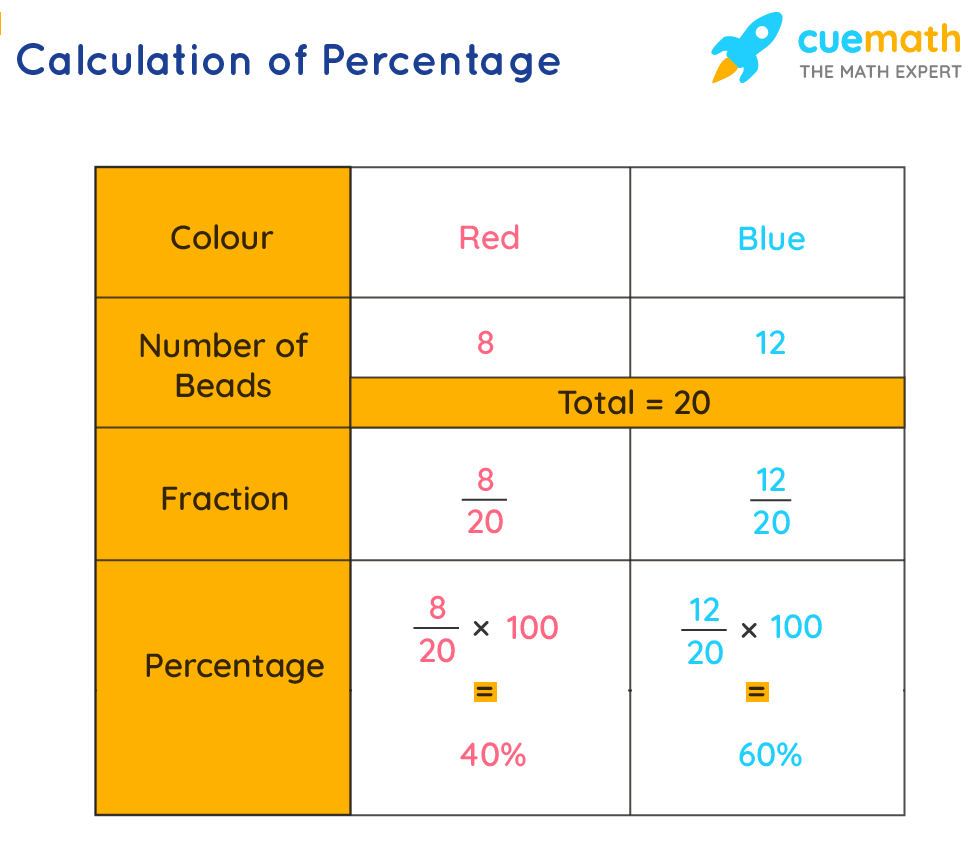
To determine what percentage a smaller number is of a larger number, divide the smaller number by the larger number, then multiply the result by 100.
- Example: If you spent $30 on groceries from a $500 budget, what percentage did you spend?
- ($30 / $500) = 0.06
- 0.06 * 100 = 6%.
Calculating Percentage Increase or Decrease
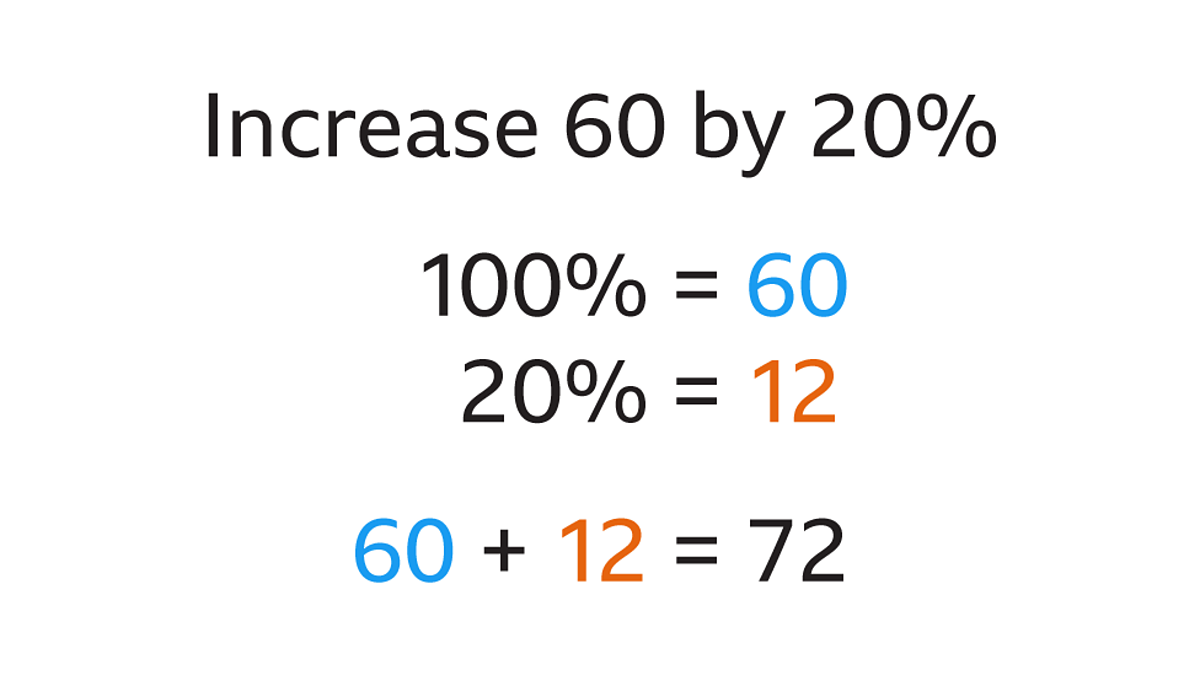
This is essential for tracking growth or decline. Subtract the original value from the new value, divide by the original value, and multiply by 100.
- Percentage Increase: (New Value – Original Value) / Original Value * 100
- Example: A stock went from $100 to $120. Percentage increase: (($120 – $100) / $100) * 100 = 20%.
- Percentage Decrease: (Original Value – New Value) / Original Value * 100
- Example: A stock went from $100 to $80. Percentage decrease: (($100 – $80) / $100) * 100 = 20%.
Reverse Percentage Calculations
Sometimes you know the final amount after a percentage change and need to find the original amount.
- Example: Original price after a discount: An item costs $80 after a 20% discount. What was the original price?
- The current price ($80) represents 80% (100% – 20%) of the original price.
- Let O = Original Price. 0.80 * O = $80.
- O = $80 / 0.80 = $100.
- Example: Original price before tax: An item costs $107 after 7% tax. What was the price before tax?
- The current price ($107) represents 107% (100% + 7%) of the original price.
- Let O = Original Price. 1.07 * O = $107.
- O = $107 / 1.07 = $100.
Tools and Strategies for Mastering Percents
While the calculations are straightforward, consistently applying them requires practice and the right tools.
The Role of Calculators and Spreadsheets
In today’s digital age, you don’t need to perform complex percentage calculations in your head for critical financial decisions. Basic calculators are ubiquitous, and spreadsheet programs like Microsoft Excel or Google Sheets are incredibly powerful tools. They allow you to set up templates for budgeting, investment tracking, and business analysis, automatically performing percentage calculations as values change. Learning basic spreadsheet formulas for percentages can revolutionize your financial management efficiency.
Building Financial Literacy
Mastering percents is part of a broader journey towards financial literacy. The more you engage with financial concepts, read financial news, and review your own financial statements, the more intuitive percentage applications will become. Continuous learning through books, online courses, and reputable financial resources will solidify your understanding and practical application of these skills.
Avoiding Common Percentage Pitfalls
It’s easy to misinterpret percentages if not careful. One common mistake is confusing percentage points with percentage change. For example, if an interest rate goes from 4% to 5%, that’s a 1 percentage point increase, but a 25% percentage change (1 / 4 * 100). Another pitfall is averaging percentages incorrectly. Always ensure you are comparing like-for-like and understanding the base upon which the percentage is calculated.
In conclusion, “how to do percents” is more than a simple arithmetic lesson; it’s a foundational pillar of financial understanding. By diligently applying these skills, you gain the power to decipher financial information, make astute decisions, and ultimately, pave your way to greater financial freedom and success. The language of money often speaks in percentages, and by becoming fluent, you unlock its secrets.
aViewFromTheCave is a participant in the Amazon Services LLC Associates Program, an affiliate advertising program designed to provide a means for sites to earn advertising fees by advertising and linking to Amazon.com. Amazon, the Amazon logo, AmazonSupply, and the AmazonSupply logo are trademarks of Amazon.com, Inc. or its affiliates. As an Amazon Associate we earn affiliate commissions from qualifying purchases.