
For the vast majority of individuals, purchasing a home is the single most significant financial transaction of their lives. While the “sticker price” of a property often grabs the headlines, the most critical number in any real estate transaction isn’t the purchase price—it is the interest rate. The interest rate is essentially the “price” of borrowing money. Over a 30-year period, a difference of even one percentage point can translate into hundreds of thousands of dollars in interest payments.
In today’s volatile economic climate, understanding what determines these rates and how they impact your personal finance strategy is essential. This guide explores the mechanics of mortgage interest rates, the macroeconomic factors that drive them, and the personal financial levers you can pull to ensure you secure the most competitive rate possible.
1. The Mechanics of Mortgage Interest Rates
To understand “what the interest rate is,” one must first understand that there is no single, universal rate. Instead, there is a benchmark rate influenced by the broader economy, upon which lenders add premiums based on risk and overhead.
The Federal Reserve and the 10-Year Treasury Yield
A common misconception is that the Federal Reserve sets mortgage rates. In reality, the Fed sets the “federal funds rate,” which is the interest rate banks charge each other for overnight loans. While mortgage rates tend to track the movement of the Fed’s decisions, they are more closely tied to the yield on the 10-year Treasury bond. When investors feel the economy is risky, they flock to the safety of government bonds, driving yields down—and mortgage rates often follow. Conversely, when the economy is heating up and inflation rises, yields go up, and so do mortgage rates.
Fixed-Rate vs. Adjustable-Rate Mortgages (ARMs)
The type of loan product you choose significantly dictates your interest rate.
- Fixed-Rate Mortgages: These are the gold standard of stability. Whether for 15 or 30 years, the interest rate remains locked. This protects the borrower from future market spikes but usually carries a slightly higher initial rate than an ARM.
- Adjustable-Rate Mortgages (ARMs): These loans offer a lower “teaser” rate for an initial period (typically 5, 7, or 10 years). After that, the rate adjusts periodically based on market indices. While enticing for those planning to sell quickly, they carry the risk of significantly higher payments in the future.
The Difference Between Interest Rate and APR
When shopping for a home, you will see two numbers: the interest rate and the Annual Percentage Rate (APR). The interest rate is the cost of borrowing the principal balance. The APR, however, is a more inclusive figure that includes the interest rate plus other costs such as broker fees, points, and some closing costs. From a personal finance perspective, the APR is the more accurate tool for comparing the true cost of loans between different lenders.
2. Personal Financial Factors That Determine Your Rate
While the bond market sets the “floor” for interest rates, your personal financial profile determines how far above that floor your specific rate will be. Lenders are in the business of pricing risk; the more reliable you appear on paper, the lower the premium you will pay.
Credit Score: The Ultimate Lever
Your FICO score is arguably the most influential factor in your interest rate determination. Lenders generally categorize borrowers into tiers. A borrower with a “Prime” score (typically 760 or higher) will qualify for the lowest available rates. Someone with a score in the 620s may still qualify for a loan but could face an interest rate 1.5% to 2% higher than the prime borrower. Over the life of a $400,000 loan, this “credit score tax” can cost an extra $100,000 or more.
Loan-to-Value (LTV) Ratio and Down Payments
The LTV ratio compares the amount of the loan to the appraised value of the property. If you put down 20%, your LTV is 80%. Lenders view a lower LTV as lower risk because the borrower has more “skin in the game.” If you have a high LTV (e.g., a 3.5% down payment), the lender faces a higher risk of loss if the market dips and they have to foreclose. Consequently, low down-payment loans often come with higher interest rates or the added cost of Private Mortgage Insurance (PMI).
Debt-to-Income (DTI) Ratios
Your DTI ratio is a calculation of your monthly debt obligations divided by your gross monthly income. Lenders use this to ensure you aren’t “house poor”—meaning you have enough cash flow to cover your mortgage even if unexpected expenses arise. A DTI below 36% is generally considered ideal. If your DTI is too high, a lender might perceive you as a high-risk borrower and increase your interest rate to compensate.
3. The Impact of the Economic Landscape on Home Loans
The question of “what is the rate” is always a snapshot in time. Interest rates are highly sensitive to the broader pulses of the global and national economy.

Inflation and Purchasing Power
Inflation is the enemy of fixed-income investors. Because mortgages are essentially long-term investments for banks, inflation erodes the value of the dollars the bank will be paid back in the future. When inflation is high, lenders demand higher interest rates to preserve their profit margins in real terms. This is why mortgage rates often skyrocket during periods of high Consumer Price Index (CPI) growth.
Global Economic Stability
Mortgage-backed securities (MBS) are traded on the global market. In times of international conflict or global economic instability, “flight to quality” occurs. International investors look for the safest place to park their capital, which is usually U.S. Treasuries and mortgage-backed securities. This increased demand can actually drive interest rates down, even if the domestic economy is struggling.
Housing Market Supply and Demand
The real estate market itself influences rates. In a “seller’s market” with high demand and low inventory, lenders are flooded with applications. To manage their capacity and maximize profit, they may raise rates. Conversely, in a slow market, lenders may become more competitive, narrowing their margins to attract the few borrowers who are actively looking for a home.
4. Strategies to Secure the Best Possible Rate
Because the interest rate is so pivotal to your long-term wealth, you should not simply accept the first offer you receive. Active management of your mortgage application can save you a fortune.
Shopping Around and Comparison Lending
Research consistently shows that borrowers who get at least three quotes save an average of $1,500 to $3,000 upfront and much more over the life of the loan. Different financial institutions—credit unions, national banks, and online mortgage brokers—have different “appetites” for risk. A credit union might offer a better rate to a local member, while a large national bank might offer a discount if you move your investment accounts to their platform.
Buying Down the Rate with Mortgage Points
“Points” are essentially prepaid interest. One point typically costs 1% of the loan amount and reduces your interest rate by a specific increment (often 0.25%). This is a “break-even” calculation. If you plan to stay in the home for a long time (10+ years), paying for points upfront can be a brilliant financial move. However, if you plan to move or refinance within a few years, the upfront cost of the points will likely exceed the monthly savings.
Timing the Market vs. Personal Readiness
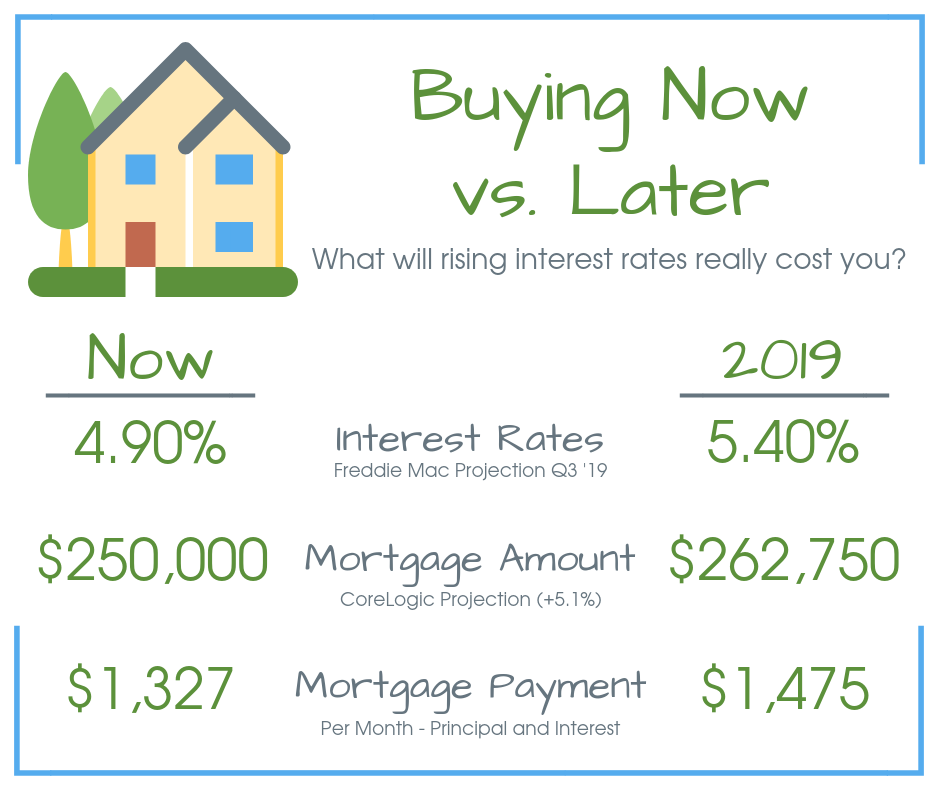
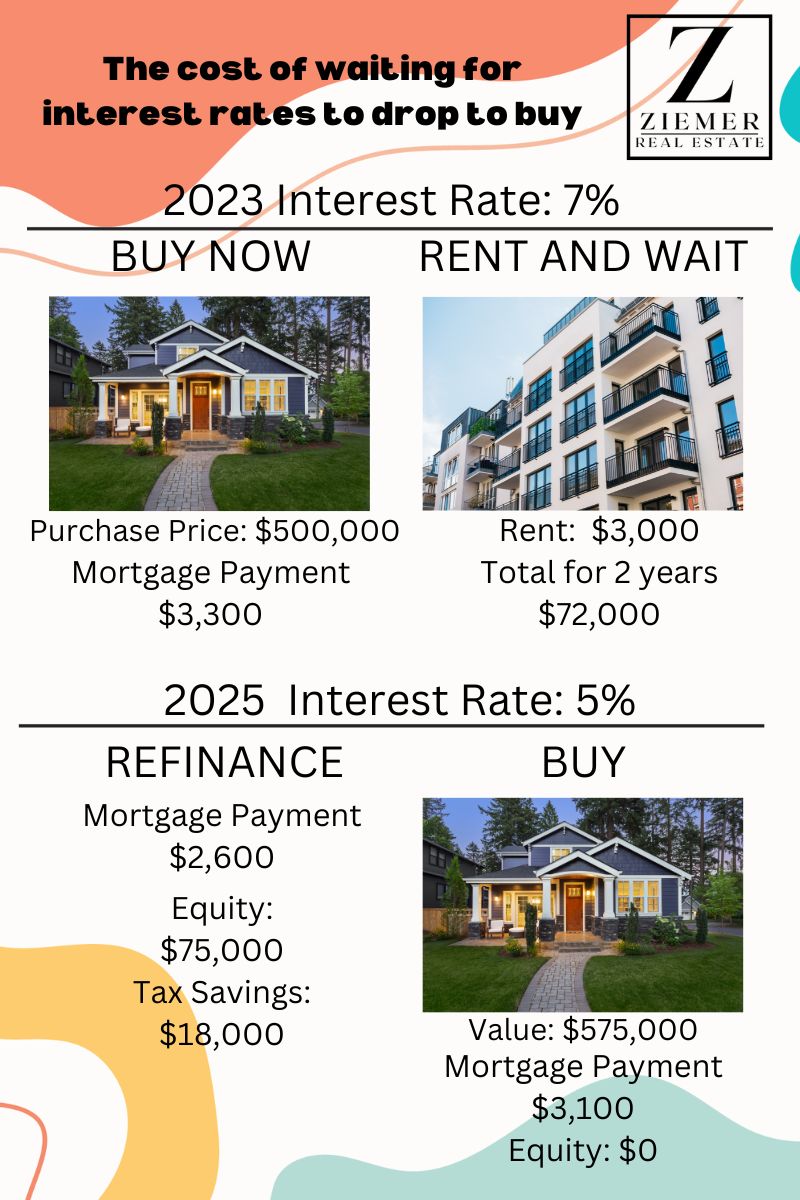
Many prospective buyers try to “time” the market, waiting for rates to drop. However, personal finance experts often suggest that “time in the market beats timing the market.” If you find a home that fits your budget and your life, it may be better to buy now and refinance later if rates drop. Waiting for a 1% drop in rates while home prices continue to rise by 5% annually can actually result in a higher total monthly payment.
5. The Long-Term Financial Impact of Your Interest Rate
To truly appreciate the importance of the interest rate, one must look at the math of amortization. Amortization is the process of paying off a debt over time through regular installments.
The Cost of Borrowing
On a standard 30-year mortgage, the early years of payments go almost entirely toward interest rather than principal. For example, on a $500,000 loan at a 7% interest rate, you will pay over $697,000 in interest alone over 30 years—more than the original cost of the house. If you manage to secure a 5% rate instead, that total interest drops to approximately $466,000. That 2% difference saves you $231,000. This is capital that could have been diverted to retirement accounts, education funds, or other investments.
The Power of Refinancing
Your initial interest rate does not have to be your “forever” rate. When market rates drop significantly (usually by 1% or more), many homeowners choose to refinance. This involves taking out a new loan at the lower rate to pay off the old one. While refinancing involves closing costs, the long-term savings on monthly payments can be substantial. For the savvy personal financier, monitoring interest rate trends even after the home purchase is a key part of wealth management.
Equity Building and Wealth Creation
A lower interest rate allows a larger portion of your monthly payment to go toward the principal balance earlier in the life of the loan. This accelerates the building of home equity. Equity is the bedrock of middle-class wealth, providing a source of capital for future endeavors through Home Equity Lines of Credit (HELOCs) or providing a significant nest egg when the home is eventually sold.
Conclusion
What is the interest rate for buying a house? It is more than just a percentage; it is the primary variable in your personal financial equation. While you cannot control the Federal Reserve or global inflation, you can control your credit score, your down payment, and your diligence in shopping for the best deal. By understanding the forces that drive interest rates and the long-term impact they have on your net worth, you can transform homeownership from a simple living expense into a powerful engine for financial growth. Strategies like comparing lenders and understanding the “break-even” of mortgage points are not just clerical tasks—they are essential components of a sophisticated personal finance strategy.
aViewFromTheCave is a participant in the Amazon Services LLC Associates Program, an affiliate advertising program designed to provide a means for sites to earn advertising fees by advertising and linking to Amazon.com. Amazon, the Amazon logo, AmazonSupply, and the AmazonSupply logo are trademarks of Amazon.com, Inc. or its affiliates. As an Amazon Associate we earn affiliate commissions from qualifying purchases.