
The Dow Jones Industrial Average (DJIA), often simply referred to as “the Dow,” is perhaps the most iconic barometer of the American economy. When people ask, “How is the Dow Jones today?” they are rarely just asking for a numerical value. Instead, they are seeking an pulse check on the financial health of the corporate world, the stability of their retirement accounts, and the general trajectory of the global marketplace. As one of the oldest and most followed equity indices in the world, the Dow provides a snapshot of 30 prominent, “blue-chip” companies listed on stock exchanges in the United States.

Understanding the Dow’s movement today requires more than just looking at a green or red arrow on a screen. It requires an analysis of macroeconomic shifts, corporate earnings, and the psychological state of investors. In this guide, we will dissect the factors that influence the Dow’s daily performance and how you can interpret these movements to make more informed financial decisions.
Understanding the Current Pulse of the Dow Jones Industrial Average
The Dow is unique among major indices because of its price-weighted methodology. Unlike the S&P 500, which is market-cap weighted, the Dow is influenced more by companies with higher share prices rather than those with the largest total market valuation. This nuance is critical when evaluating how the index is performing on any given day.
The Composition of the Index
The 30 companies that make up the Dow represent a cross-section of the U.S. economy, ranging from industrial giants and healthcare providers to financial institutions and consumer tech leaders. Because the list is curated by a committee, it is intended to reflect the evolving landscape of American business. When you look at the Dow today, you are seeing a consolidated performance report of companies like Goldman Sachs, Microsoft, UnitedHealth Group, and Boeing. If a high-priced stock like UnitedHealth experiences a significant percentage shift, it will move the Dow more significantly than a similar shift in a lower-priced stock, regardless of the company’s overall size.
How Price-Weighting Affects Performance
The price-weighted nature of the DJIA means that the “Dow Divisor”—a mathematical constant used to determine the index value—is adjusted whenever a stock split or dividend payment occurs. For the modern investor, this means that “today’s” Dow movement might sometimes diverge from the broader S&P 500. Understanding this distinction is vital for personal finance management. If the Dow is “up” while the rest of the market is “down,” it often suggests that value-oriented, blue-chip companies are outperforming growth-heavy sectors, signaling a defensive posture among institutional investors.
Macroeconomic Factors Driving Today’s Market Sentiment
No index exists in a vacuum. The Dow’s performance today is a direct reaction to the broader economic environment. Investors constantly weigh the “cost of money” against the potential for corporate growth, leading to the daily fluctuations we observe in the headlines.
Interest Rates and the Federal Reserve
The single most influential factor on the Dow today is the Federal Reserve’s monetary policy. Interest rates dictate the borrowing costs for the 30 companies within the index. When the Fed signals a “hawkish” stance (maintaining or raising rates to fight inflation), the Dow often reacts negatively. High rates increase the cost of capital and can dampen consumer spending. Conversely, a “dovish” pivot—where rates are cut or held steady—usually acts as a tailwind for the Dow, as lower borrowing costs tend to bolster corporate profit margins and encourage investment.
Inflationary Pressures and Consumer Spending
Inflation is a double-edged sword for the Dow. While some blue-chip companies possess “pricing power”—the ability to raise prices without losing customers—persistent inflation can erode the purchasing power of the average consumer. Since the Dow includes major retail and consumer discretionary brands, daily reports on the Consumer Price Index (CPI) or Personal Consumption Expenditures (PCE) can trigger immediate volatility. If today’s data suggests inflation is cooling, the Dow often rallies on the hope that the economy is achieving a “soft landing.”
Geopolitical Influence on Blue-Chip Stocks
Because the companies in the Dow are multinational corporations, they are deeply sensitive to global events. Trade tensions, fluctuations in the price of oil, and international conflicts can all impact supply chains and international sales. For instance, an energy price spike might benefit the oil majors within the index but hurt the industrial and transportation sectors. Investors tracking the Dow today must keep one eye on global news cycles, as geopolitical stability is often priced into the daily valuation of these industrial titans.

Technical Analysis: Interpreting the Daily Chart Movements
For those engaged in active trading or short-term portfolio management, the “how” of the Dow’s movement is often found in technical charts. Technical analysis focuses on price patterns and volume to predict where the index might head in the coming hours or days.
Support and Resistance Levels
Market participants often look for “support” levels—price points where the Dow has historically struggled to fall below—and “resistance” levels, where it has struggled to climb above. If the Dow breaks through a major resistance level today, it is often viewed as a bullish signal, suggesting that there is enough “money on the sidelines” coming into the market to drive prices higher. Conversely, falling below a support level can trigger “stop-loss” orders, accelerating a downward trend.
Moving Averages and Trend Indicators
The 50-day and 200-day moving averages are common tools used to assess the Dow’s momentum. When the current price is above these averages, the long-term trend is considered healthy. A “Golden Cross”—where the short-term moving average crosses above the long-term average—is a classic buy signal that many financial analysts watch for. Monitoring these indicators helps investors separate daily “noise” from actual structural changes in market direction.
The Dow vs. Other Indices: Why Today’s Movement Matters
To truly understand how the Dow Jones is doing today, it must be compared to its peers, the S&P 500 and the Nasdaq Composite. This comparison reveals which “flavor” of the market is currently in favor among the investing public.
Comparing the Dow to the S&P 500 and Nasdaq
The Nasdaq is tech-heavy and growth-oriented, while the S&P 500 is a broad representation of the total market. The Dow, by contrast, is often seen as the “stable” index. On days when the Nasdaq is plummeting but the Dow is holding steady, it suggests a “rotation” in the market. Investors may be moving money out of risky, high-valuation tech stocks and into the safer, dividend-paying companies found in the Dow. This flight to quality is a common theme during periods of economic uncertainty.
Sector Performance within the DJIA
Even though there are only 30 stocks, they span various sectors. On a day where the Dow is underperforming, it might be due to a specific sector-wide slump. For example, if the banking sector faces regulatory hurdles, Dow heavyweights like JPMorgan Chase and Goldman Sachs will drag the entire index down. Identifying which sectors are leading or lagging provides a clearer picture of whether today’s market movement is a systemic issue or a localized sector correction.
Long-term Strategies for Monitoring the Dow
While checking the Dow daily is a common habit, the most successful investors use “today’s” data to inform a long-term strategy rather than reacting impulsively to short-term swings.
Avoiding Emotional Reactivity
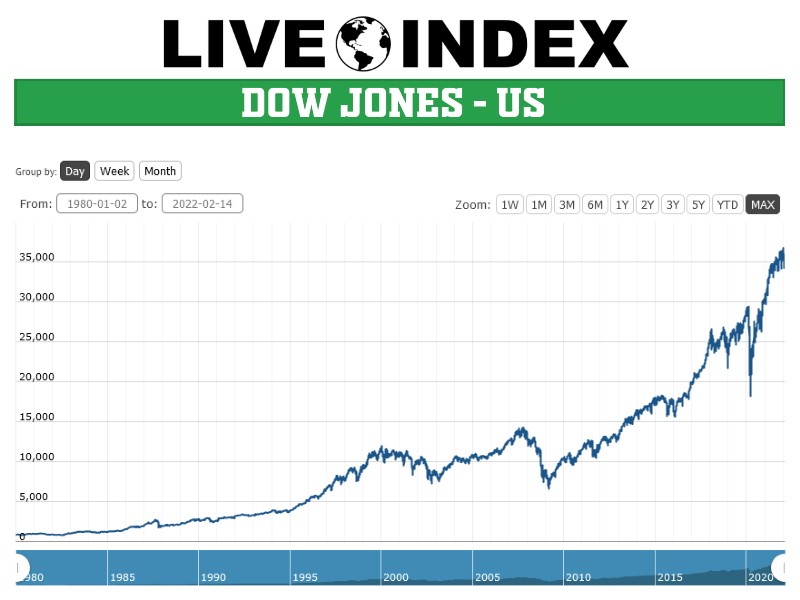
The stock market is driven by two primary emotions: fear and greed. A 500-point drop in the Dow today might feel catastrophic, but in the context of a 30,000+ point index, it is often just a standard 1-2% fluctuation. Successful personal finance management involves looking past the daily volatility. Financial tools like “dollar-cost averaging”—investing a fixed amount regularly regardless of the Dow’s price—help mitigate the risk of buying at a peak or selling during a temporary dip.
The Role of Dividends in the Dow’s Total Return
Many of the companies in the Dow Jones are “Dividend Aristocrats” or “Dividend Achievers.” These are companies that have a long history of paying and increasing dividends. When you ask how the Dow is today, remember that the price index doesn’t always show the full picture of wealth creation. For long-term investors, the dividends paid out by these 30 companies provide a consistent stream of income and a cushion against price volatility. Reinvesting these dividends can significantly increase a portfolio’s “total return” over decades, regardless of the daily price action.
In conclusion, “how the Dow Jones is today” is a question that encompasses the current state of global economics, the technical health of the markets, and the collective psychology of millions of investors. By understanding the index’s unique construction, the macroeconomic forces at play, and the importance of long-term perspective, you can turn a simple daily statistic into a powerful tool for your financial future. Whether the Dow is up or down today, the key is to remain informed, disciplined, and focused on the broader financial horizon.
aViewFromTheCave is a participant in the Amazon Services LLC Associates Program, an affiliate advertising program designed to provide a means for sites to earn advertising fees by advertising and linking to Amazon.com. Amazon, the Amazon logo, AmazonSupply, and the AmazonSupply logo are trademarks of Amazon.com, Inc. or its affiliates. As an Amazon Associate we earn affiliate commissions from qualifying purchases.