
In an increasingly subscription-driven economy, understanding the true financial commitment and value of recurring services is paramount for savvy consumers. Amazon Prime, a ubiquitous name in households worldwide, stands as a prime example of a multi-faceted membership that extends far beyond its initial sticker price. For those managing personal finances, budgeting for household expenses, or simply striving to maximize every dollar, a deep dive into the financial dimensions of Amazon Prime is not merely an exercise in curiosity, but a critical component of informed economic decision-making. This article will meticulously dissect the cost structure, evaluate the financial benefits, and offer strategies for assessing and optimizing the return on investment for an Amazon Prime membership, all within the strict confines of personal finance and economic utility.
Deconstructing Amazon Prime’s Membership Costs
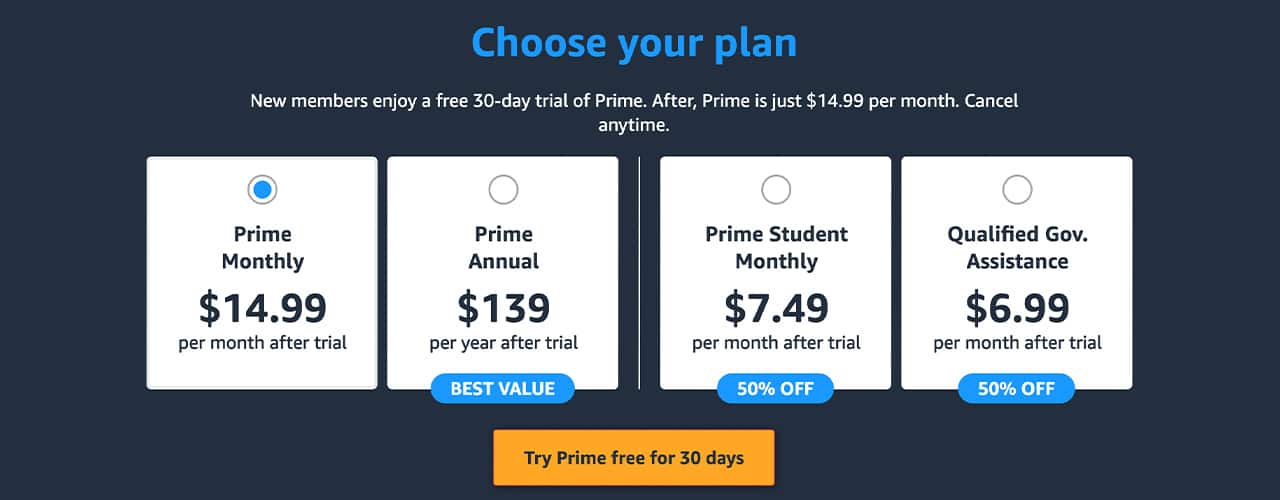
The journey into understanding Amazon Prime’s financial implications begins with a clear breakdown of its current price tiers. While the core offering remains consistent, Amazon provides various payment structures designed to cater to different consumer needs and financial capacities. Unpacking these options is the first step in aligning the service with your personal finance strategy.
Annual vs. Monthly: Breaking Down the Standard Tiers
At its most fundamental level, Amazon Prime offers two primary payment schedules for its full membership: annual and monthly.
The annual membership typically presents the most cost-effective option for long-term users. By committing to a full year upfront, members generally receive a discount compared to paying month-to-month. For instance, if the monthly fee is $14.99, an annual subscription might be around $139. This translates to an effective monthly rate of approximately $11.58, representing a notable saving of over $3 per month, or nearly $40 annually. From a personal finance perspective, this up-front payment requires a larger single outlay but offers a tangible saving for those who are confident they will utilize the service consistently throughout the year. It’s a classic example of bulk purchasing for financial benefit.
Conversely, the monthly membership provides greater flexibility. At a higher per-month cost (e.g., $14.99), it allows subscribers to cancel at any time without being locked into a year-long commitment. This option is particularly attractive for individuals who anticipate needing Prime only for specific periods, such as during holiday shopping seasons, or those who are testing the waters before committing to the annual plan. While more expensive over a full year, its financial advantage lies in minimizing sunk costs should a subscriber’s needs change or their financial situation necessitate cutting recurring expenses quickly. It’s a trade-off between cost savings and financial agility.
Special Discounts and Eligibility: Saving More
Amazon, cognizant of diverse economic realities, extends specialized pricing to specific demographics, significantly reducing the barrier to entry for certain groups. These programs represent important financial concessions designed to enhance affordability and broaden access.
Prime Student is perhaps the most prominent example. Eligible college students can often access Prime at a substantially reduced annual rate, frequently half the standard price, and often include an extended free trial period. This discount is a strategic financial boon for students, many of whom operate on tight budgets, allowing them access to expedited shipping, academic discounts, and entertainment without undue financial strain. The eligibility typically requires a valid .edu email address and verification of student status.
Another crucial discount program is Prime Access, formerly known as Prime EBT or Prime Medicaid. This initiative provides a reduced monthly rate for individuals receiving qualifying government assistance, such as EBT or Medicaid benefits. This offering highlights Amazon’s recognition of economic disparities and provides a more equitable access point to its services for lower-income households. The monthly payment structure of Prime Access, combined with its reduced rate, ensures that these members are not burdened by a large annual payment and retain the flexibility to manage their finances month-to-month.
Understanding these special programs is vital for financial planning, as they can dramatically alter the effective “price” of Prime for eligible individuals, making it a far more accessible and justifiable expense within a constrained budget.
Understanding Tax Implications and Regional Variations
While often overlooked, sales tax can incrementally affect the final price of an Amazon Prime membership. The application of sales tax varies by state and local jurisdiction, meaning the advertised price may not be the exact amount charged. For meticulous financial planning, it’s prudent to factor in these minor additions, as they can slightly alter the total annual or monthly outlay. Furthermore, the pricing of Amazon Prime is not uniform across all global markets. Due to varying economic conditions, local market competition, exchange rates, and differing operational costs, the price in the United States, for instance, will differ from that in Canada, the UK, or India. While this article primarily focuses on the typical U.S. pricing model, international readers should be aware that their local Amazon Prime costs will be distinct and should conduct their financial assessment based on their specific regional figures.
The Financial Value Proposition: What Your Prime Membership Buys
Beyond the explicit cost, the true financial assessment of Amazon Prime lies in evaluating the benefits it confers. A Prime membership is not a single service but a bundle of interconnected offerings, many of which carry an implicit or explicit financial value that can offset the subscription fee. Understanding this value proposition is crucial for determining if your spending on Prime translates into genuine economic utility.
Expedited Shipping: Quantifying the Time and Cost Savings
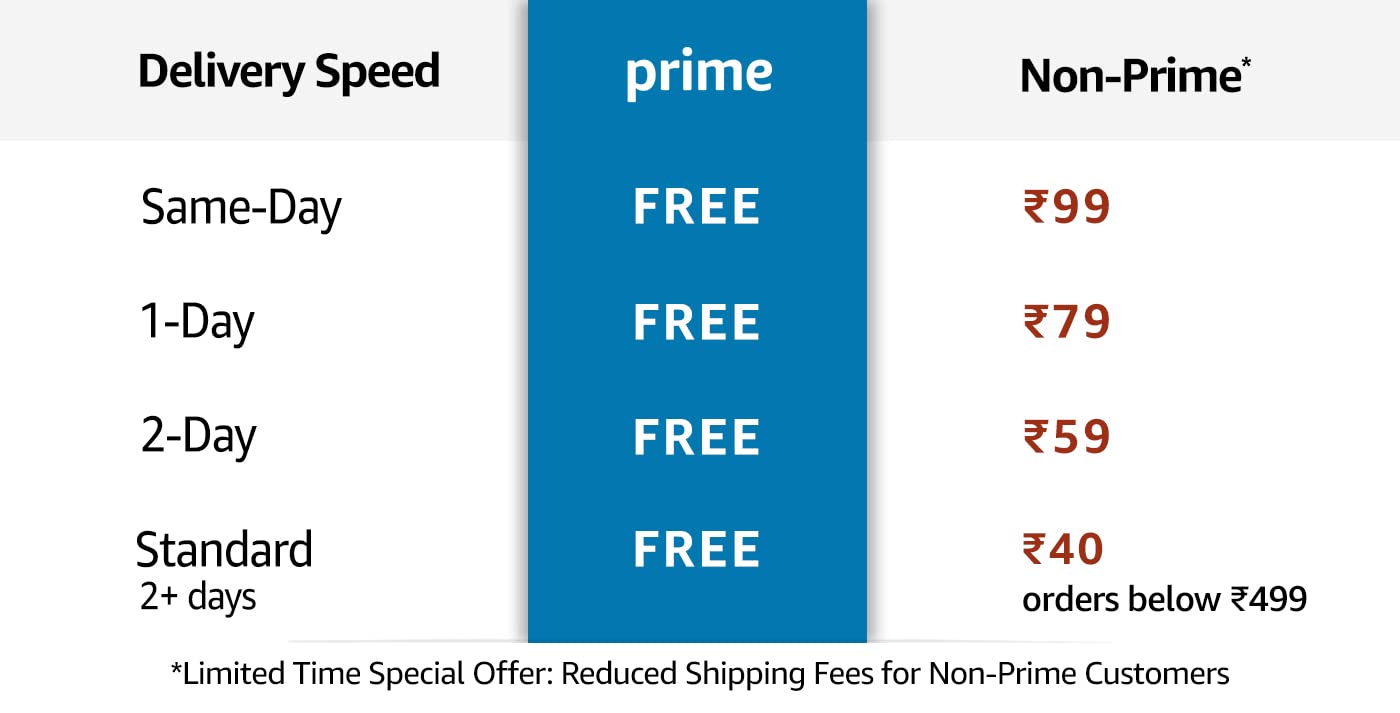
For many, the cornerstone of Prime’s appeal is its expedited shipping benefits, primarily free two-day shipping on eligible items, and often even one-day or same-day delivery in select areas. From a financial perspective, this benefit offers both direct and indirect savings.
Direct Cost Savings: Without Prime, many Amazon purchases would incur shipping fees, especially for smaller orders that don’t meet a minimum threshold for free standard shipping. For frequent shoppers, these individual shipping charges can quickly accumulate, easily surpassing the cost of a Prime membership over a year. Calculating the number of orders you place and the average shipping cost per order without Prime can provide a direct measure of these savings.
Indirect Time and Convenience Savings: While harder to quantify monetarily, the value of time and convenience is undeniable. Expedited shipping reduces the need for last-minute trips to physical stores, saving on fuel costs, wear and tear on vehicles, and, crucially, valuable personal time. For emergencies or urgent needs, the ability to receive items quickly can prevent larger expenses (e.g., buying an overpriced item locally due to urgency) or mitigate inconveniences that could have financial repercussions (e.g., a broken appliance part arriving quickly).
Entertainment Benefits: Streaming, Music, and Gaming as Added Value
Prime Video, Prime Music, and Prime Gaming (formerly Twitch Prime) represent significant components of the membership’s value, effectively bundling services that would otherwise require separate subscriptions.
Prime Video: This streaming service offers a vast library of movies, TV shows, and Amazon Originals. When considering a Prime membership from a financial perspective, one must compare the cost of Prime Video (effectively “free” within the bundle) against standalone streaming services like Netflix, Hulu, or Disney+. If Prime Video fulfills a substantial portion of your entertainment needs, it can eliminate the necessity for one or more separate streaming subscriptions, leading to direct monthly or annual savings.
Amazon Music Prime: This service provides access to a curated selection of millions of songs and ad-free listening. While not as extensive as Amazon Music Unlimited or Spotify Premium, for many casual listeners, it can suffice, potentially saving the cost of a basic music subscription.
Prime Gaming: Offering free games, in-game content, and a free Twitch channel subscription monthly, this benefit caters specifically to gamers. The financial value here comes from the explicit cost of these games or in-game items if purchased separately, or the value of supporting a streamer without additional cost.
For individuals who would otherwise subscribe to one or more of these services independently, the inclusion within Prime represents a substantial financial advantage, effectively reducing their overall entertainment budget.
Exclusive Deals and Discounts: Direct Financial Perks
Amazon Prime members frequently gain access to exclusive deals, discounts, and early access to sales events, most notably during Prime Day.
Prime Day and Exclusive Discounts: Prime Day is a proprietary sales event exclusively for Prime members, offering significant discounts across a wide range of products. For those who strategically plan their purchases around such events, the savings can be substantial, potentially offsetting a significant portion, if not all, of the annual membership fee. Additionally, throughout the year, Prime members may receive exclusive coupons, special pricing on groceries at Whole Foods Market, and other member-only promotions.
Whole Foods Market Benefits: Prime members receive special savings and an additional 10% off sale items (excluding alcohol) at Whole Foods Market, along with free two-hour grocery delivery in eligible regions. For regular Whole Foods shoppers, these continuous discounts can add up to considerable savings over time, representing a clear financial incentive.
Other Prime Privileges: Groceries, Reading, and Photo Storage
Beyond the core benefits, Prime includes a suite of additional services that contribute to its overall financial value proposition.
Amazon Fresh/Whole Foods Delivery: Free grocery delivery options for eligible orders, saving on delivery fees typically charged by other services or even Amazon itself for non-Prime members.
Prime Reading: Provides unlimited access to a rotating selection of ebooks, magazines, and comics. For avid readers, this can reduce spending on individual book purchases or separate e-reading subscriptions.
Amazon Photos: Offers unlimited full-resolution photo storage and 5 GB of video storage. This is a valuable cloud storage solution that can eliminate the need for paid subscriptions to services like Google Photos (for full-res storage), iCloud, or Dropbox for photos. For many, a separate cloud storage plan can cost anywhere from $5-$10 per month, making Prime’s inclusion a notable financial saving.
Each of these additional benefits, when utilized, chips away at the effective cost of Prime, transforming it from a simple shipping fee into a comprehensive lifestyle subscription that aims to address multiple consumer needs.
Assessing the ROI: Is Amazon Prime a Smart Financial Investment?
Determining whether Amazon Prime is a “good deal” from a personal finance perspective requires a clear-eyed assessment of its Return on Investment (ROI). This isn’t just about comparing the price to perceived value, but about quantifying your actual usage against the membership fee and understanding its place within your broader financial strategy.
Calculating Your Personal Breakeven Point
The most tangible way to assess Prime’s financial ROI is to calculate your personal “breakeven point.” This involves determining how much you would have spent on shipping and other services if you didn’t have Prime, and comparing that total to the membership fee.
- Step 1: Tally Shipping Savings: Estimate the number of Amazon orders you place annually that would typically incur shipping charges without Prime. Multiply this by the average shipping cost. (e.g., 20 orders x $5/shipping fee = $100).
- Step 2: Quantify Entertainment Savings: If you’ve cancelled or avoided other streaming/music services because of Prime, calculate those savings. (e.g., $10/month Netflix alternative x 12 months = $120).
- Step 3: Factor in Other Direct Savings: Include estimated savings from Whole Foods discounts, Prime Day purchases (only counting genuine savings on items you would have bought anyway), and any saved cloud storage costs. (e.g., $5/month for photo storage x 12 months = $60).
- Step 4: Sum It Up and Compare: Add all these estimated savings. If your total annual savings (e.g., $100 + $120 + $60 = $280) exceed the annual Prime membership cost (e.g., $139), then Prime is demonstrably providing a positive financial ROI for you.
This exercise provides a concrete, data-driven answer to whether Prime is a financially sound decision for your specific usage patterns.
The Opportunity Cost of Subscription Services
Every dollar spent on a subscription service, including Amazon Prime, represents an opportunity cost—money that could have been allocated elsewhere. From a personal finance standpoint, it’s crucial to consider what else that $139 (or $14.99/month) could buy or achieve. Could it contribute to an emergency fund, accelerate debt repayment, bolster investment portfolios, or be used for other essential expenses or experiences?
For individuals on a tight budget, even a seemingly small monthly or annual fee can significantly impact their ability to meet other financial goals. It’s important to ask: Is the value derived from Prime greater than the value I could gain by using that money for my primary financial objectives? This critical self-reflection ensures that subscription spending aligns with broader financial priorities rather than becoming an unexamined recurring expense.
Budgeting for Prime: Integrating it into Your Personal Finance Plan
For those who decide Prime’s value justifies its cost, the next step is to seamlessly integrate it into their personal finance plan.
- Categorization: Classify Prime under an appropriate budget category, such as “Subscriptions,” “Household Expenses,” or “Entertainment.”
- Annual vs. Monthly Allocation: If opting for the annual plan, budget for the lump sum payment. This might mean setting aside a small amount each month (e.g., $11.58) into a dedicated savings pot so the full amount is available when due, avoiding a financial shock. For monthly payers, it’s a straightforward recurring expense.
- Regular Review: As with all subscription services, include Prime in your periodic budget reviews (quarterly or annually). Re-evaluate your usage and the benefits derived against the current cost. Circumstances change, and a service that was valuable last year might not be this year. This proactive financial habit ensures that your money continues to work for you.
Strategies for Maximizing Your Financial Return on Prime
Once you’ve made the decision to subscribe to Amazon Prime, the financial savvy doesn’t end there. Proactive strategies can significantly enhance the financial return you get from your membership, ensuring you extract the maximum value for your investment.
Leveraging All Included Services
Many Prime members primarily utilize the free shipping and Prime Video, overlooking the breadth of other included services. To maximize your financial ROI, make a conscious effort to explore and integrate these often underutilized benefits:
- Digital Offerings: Regularly check Prime Reading for new titles that might interest you. Explore Amazon Photos as your primary cloud storage solution for pictures, potentially canceling other services.
- Local Benefits: If available in your area, take advantage of free grocery delivery through Amazon Fresh or Whole Foods. These services save not only delivery fees but also time, which has an implicit financial value.
- Gaming Perks: If you or a family member are gamers, ensure you’re claiming the free games and in-game content offered via Prime Gaming.
By fully engaging with the entire suite of services, you dilute the effective cost per benefit, making your membership an even better financial proposition.
Strategic Shopping to Capitalize on Prime Deals
Beyond simply using the free shipping, a strategic approach to your purchasing habits can yield greater financial returns.
- Prime Day Planning: Treat Prime Day not just as a sales event, but as an opportunity for planned savings. If you know you’ll need a new appliance, electronics, or specific household goods in the coming year, research if they might be discounted during Prime Day. Waiting for these sales can result in significant savings that further justify the Prime fee. However, always exercise caution against impulse purchases that erode savings.
- Whole Foods Discounts: If you shop at Whole Foods, consciously look for the yellow “Prime Member Deal” tags. The 10% off sale items and other member-exclusive discounts are a continuous source of savings. Ensure your Prime membership is linked to your Whole Foods account at checkout.
- Compare Prices Diligently: Even with Prime, always compare Amazon’s prices with other retailers. Prime offers convenience and sometimes exclusive deals, but it doesn’t always guarantee the absolute lowest price. A smart financial approach involves cross-referencing to ensure you’re truly getting the best deal.
Shared Benefits and Household Accounts
Amazon understands that households often share resources, and Prime has features designed to facilitate this, further boosting its financial efficiency.
- Amazon Household: This feature allows two adults and up to four teens and four children to share Prime benefits within the same household. This includes free shipping, Prime Video, Prime Reading, and Amazon Photos. From a financial perspective, this dramatically reduces the per-person cost of the membership. Instead of two adults each paying for Prime, a single subscription covers both, effectively halving the individual financial burden while doubling the access. This is a powerful tool for couples or families looking to optimize their shared finances.
- Family Library: Specifically for digital content, this allows family members to share purchased Kindle books, apps, and games. While not directly a Prime benefit, it complements the sharing aspect, extending the value of digital purchases.
The Evolving Cost Landscape and Future Financial Planning
The economic landscape is never static, and neither are the prices of subscription services. Amazon Prime has seen price increases over its lifetime, and responsible financial planning requires an awareness of these trends and how to adapt your budget accordingly.
Historical Price Changes and Future Expectations
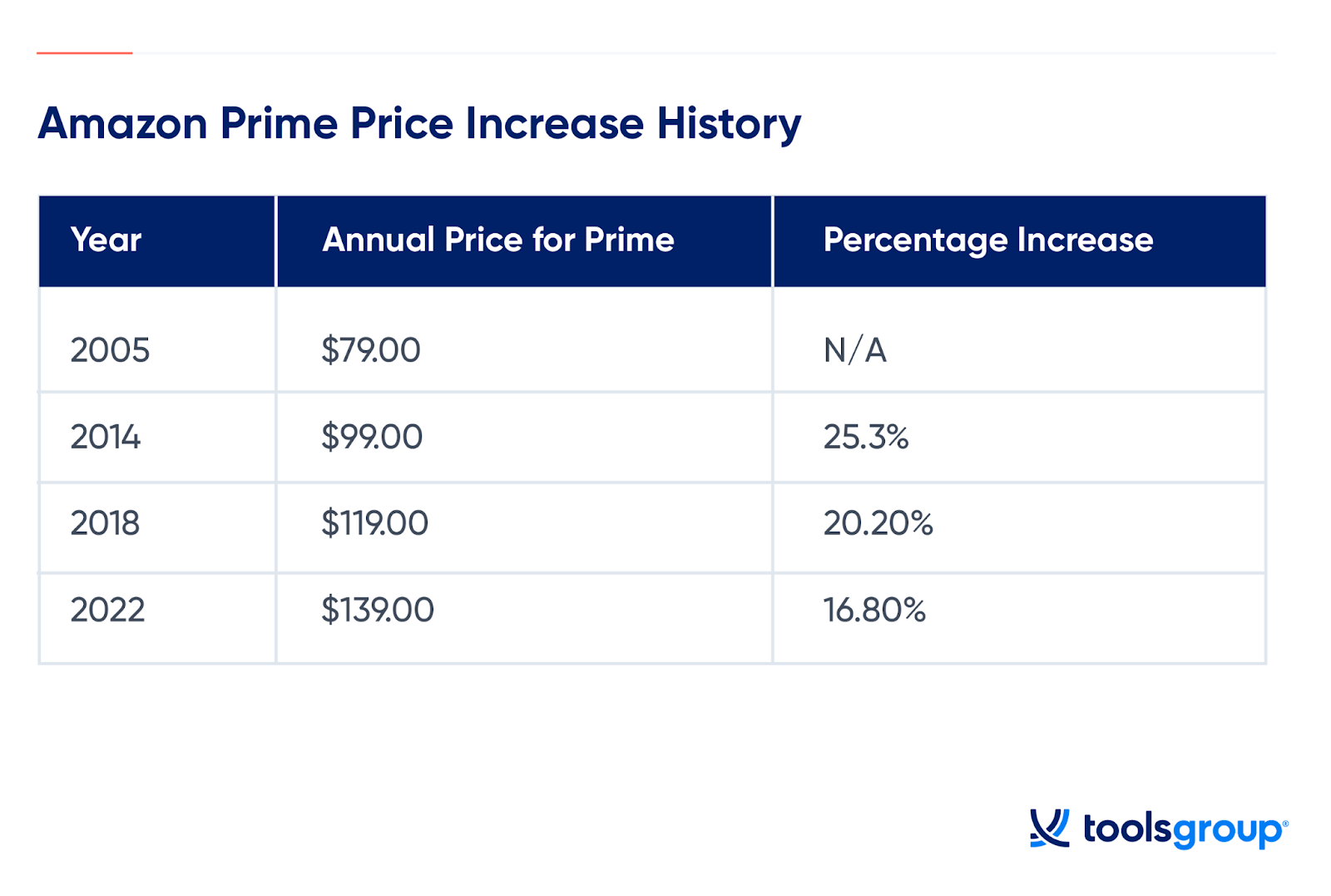
Amazon Prime’s price has not remained constant since its inception. It launched at $79 per year in 2005, then increased to $99 in 2014, and subsequently to $119 in 2018. The latest increase, to $139 annually and $14.99 monthly, took effect in early 2022. These historical increases suggest a pattern: Amazon periodically adjusts its pricing to reflect increasing operational costs, expanded benefits, and market conditions.
From a financial planning standpoint, this means subscribers should anticipate future price adjustments. It’s prudent to build a small buffer into your budget for recurring subscriptions or to factor in the possibility of re-evaluating your membership if a significant price hike occurs. Financial foresight involves not just managing current expenses, but anticipating future ones.
Comparing Prime’s Value Against Competitors
When assessing Prime’s financial viability, it’s valuable to compare its bundled offering against competitor services. While no direct competitor offers an identical bundle, breaking down its components helps.
- Shipping: For those primarily seeking fast shipping, services like Walmart+ ($98/year) offer free shipping and other perks like fuel discounts. The financial decision then hinges on where you typically shop more.
- Streaming: For entertainment, standalone services like Netflix, Hulu, Disney+, or Max each cost between $7.99 to $19.99 per month. If Prime Video fully replaces one of these for you, it has significant financial value.
- Cloud Storage: Standalone cloud photo storage can cost $5-$10/month.
By comparing the cumulative cost of acquiring similar services separately, you can get a clearer picture of Prime’s bundled financial advantage. If you would genuinely subscribe to several of these services anyway, Prime’s aggregated pricing can offer considerable savings.
When to Re-evaluate Your Prime Membership
A key principle of sound personal finance is regular review and adjustment. Your Amazon Prime membership should be no exception.
- Annual Review: Set a reminder to review your Prime membership annually, ideally before your renewal date.
- Usage Patterns: Ask yourself: Am I still using the shipping benefits frequently? Am I watching Prime Video enough to justify its cost? Am I taking advantage of the other included services? If your usage has significantly decreased, the financial ROI might no longer be positive.
- Financial Situation: Has your financial situation changed? Could that $139 be better allocated to an urgent financial goal like debt repayment or building an emergency fund?
- Alternatives: Have new competing services emerged that offer better value for your specific needs?
If, upon re-evaluation, the cost outweighs the perceived and quantified financial benefits, it might be time to consider pausing or canceling your Prime membership. Amazon makes cancellation relatively straightforward, often offering the option to end the membership at the current term’s conclusion or receive a prorated refund if you’ve barely used the benefits. This financial flexibility is important, allowing you to adapt your spending to your evolving needs and economic priorities.
In conclusion, the “price” of Amazon Prime is far more nuanced than its advertised monthly or annual fee. It encompasses a complex interplay of direct costs, hidden values, opportunity costs, and strategic financial management. For the financially astute consumer, understanding and actively managing this dynamic ensures that a Prime membership remains a valuable investment, rather than just another recurring expense in an ever-growing list of digital subscriptions.
aViewFromTheCave is a participant in the Amazon Services LLC Associates Program, an affiliate advertising program designed to provide a means for sites to earn advertising fees by advertising and linking to Amazon.com. Amazon, the Amazon logo, AmazonSupply, and the AmazonSupply logo are trademarks of Amazon.com, Inc. or its affiliates. As an Amazon Associate we earn affiliate commissions from qualifying purchases.