
The rapid advancements in technology have consistently pushed the boundaries of what we thought was possible. From the ubiquitous smartphones in our pockets to the increasingly sophisticated Artificial Intelligence powering our digital lives, innovation is the driving force behind progress. Within this dynamic landscape, a revolutionary technology called CRISPR-Cas9 is emerging, promising to fundamentally alter fields ranging from medicine and agriculture to even the very definition of human potential. While the term “CRISPR” might sound complex, its underlying principle is surprisingly elegant, and its implications are profound.
At its core, CRISPR-Cas9 is a powerful gene-editing tool. Think of it as a highly precise molecular “scalpel” that can be programmed to cut DNA at specific locations. This ability to edit DNA – the blueprint of life – opens up a vast array of possibilities, from correcting genetic diseases to developing more resilient crops. As a technology, CRISPR-Cas9 aligns perfectly with the “Tech” pillar of modern discourse, representing a significant leap forward in biotechnology. However, its impact extends far beyond the laboratory, touching upon areas of “Brand” through the companies developing and commercializing it, and “Money” through the vast investment and economic opportunities it presents.
This article will delve into the fascinating world of Cas9 CRISPR, exploring its origins, its mechanisms, its diverse applications, and the exciting future it holds. We’ll unpack what makes this technology so revolutionary, its potential benefits, and the ethical considerations that accompany such a powerful tool.
The Genesis of a Gene Editing Marvel: From Bacteria to Breakthrough
The journey of CRISPR-Cas9 from a biological curiosity to a groundbreaking scientific tool is a testament to scientific observation and persistent research. The story begins not in a high-tech lab, but in the humble world of bacteria.
Bacterial Defense Systems: The Unlikely Origin
Scientists first observed unusual, repetitive DNA sequences in bacteria, which they named CRISPR (Clustered Regularly Interspaced Short Palindromic Repeats). Further research revealed that these sequences were not random but formed a crucial part of the bacteria’s immune system. When a virus invades a bacterium, the bacterium can capture a small piece of the viral DNA and insert it into its own CRISPR array. This acts as a genetic “memory” of past infections.
When the same virus attempts to infect the bacterium again, the CRISPR system springs into action. It transcribes the stored viral DNA into RNA molecules, which then guide a special enzyme called Cas9 (CRISPR-associated protein 9) to the matching viral DNA sequence. Cas9, acting like molecular scissors, then cuts the viral DNA, effectively neutralizing the threat. This ingenious defense mechanism provided the foundational blueprint for the gene-editing technology we know today.
Adapting a Natural System for Human Innovation
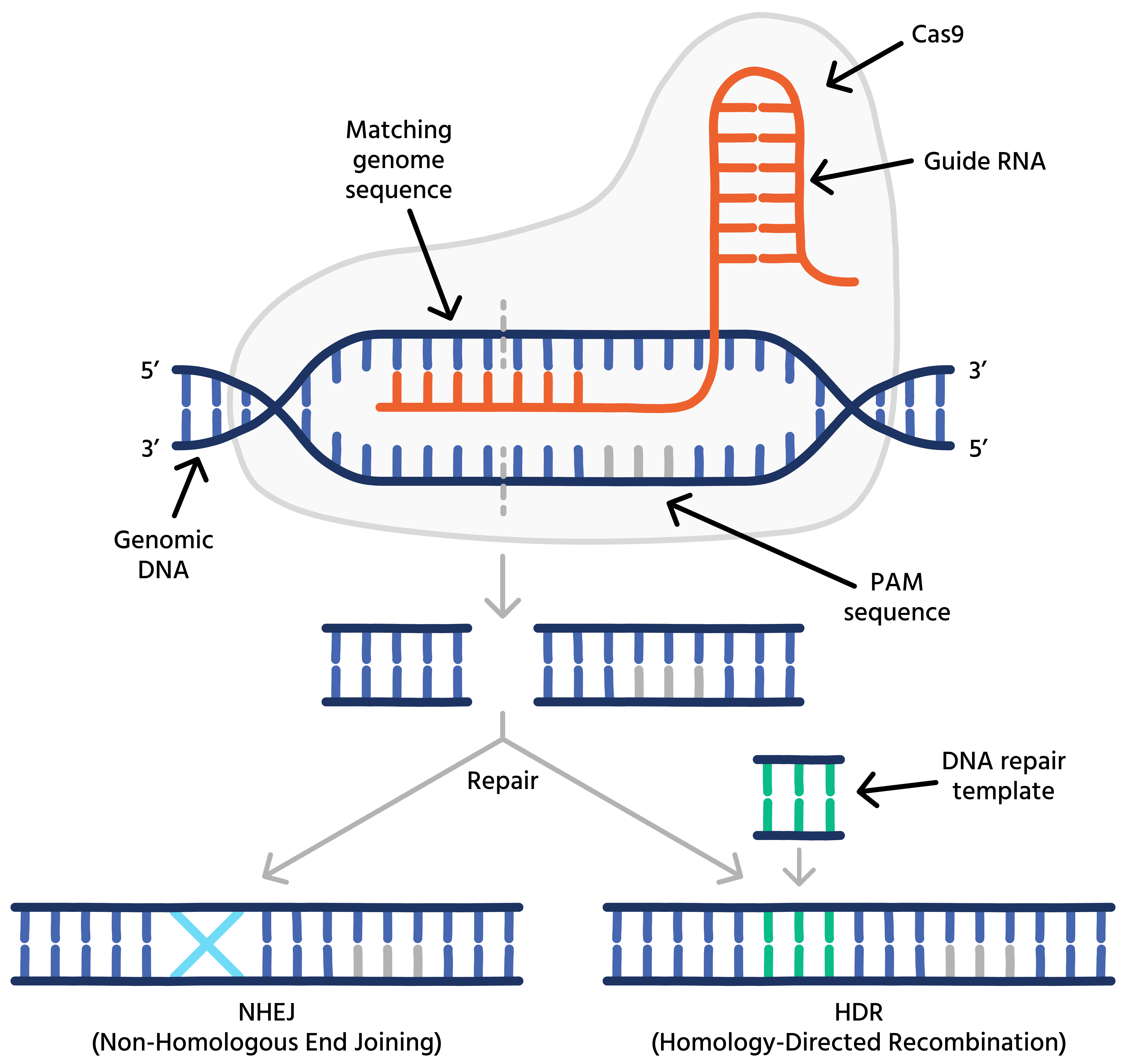
The true breakthrough came when scientists realized they could harness this bacterial defense system for precise DNA manipulation in other organisms, including humans. By designing a synthetic guide RNA (gRNA) molecule that matches a specific target DNA sequence in any organism, researchers could direct the Cas9 enzyme to that precise location. Once guided, Cas9 makes a double-strand break in the DNA. The cell’s natural repair mechanisms then kick in, and scientists can either introduce desired changes or disable a specific gene. This ability to precisely “edit” the genome opened up unprecedented possibilities.
How Does Cas9 CRISPR Work? The Molecular Mechanism Unveiled
Understanding the mechanics of Cas9 CRISPR is key to appreciating its power. The system relies on two primary components: the Cas9 enzyme and a guide RNA (gRNA).
The Precision of the Guide RNA (gRNA)
The guide RNA is the “address label” of the CRISPR-Cas9 system. It’s a short RNA molecule engineered in the lab to have a specific sequence that is complementary to the target DNA sequence you want to edit. This complementarity ensures that the gRNA can bind to the intended DNA site. The gRNA has two crucial parts: a “scaffold” region that binds to the Cas9 protein, and a “spacer” region that is designed to match the target DNA sequence.
The Cutting Power of the Cas9 Enzyme
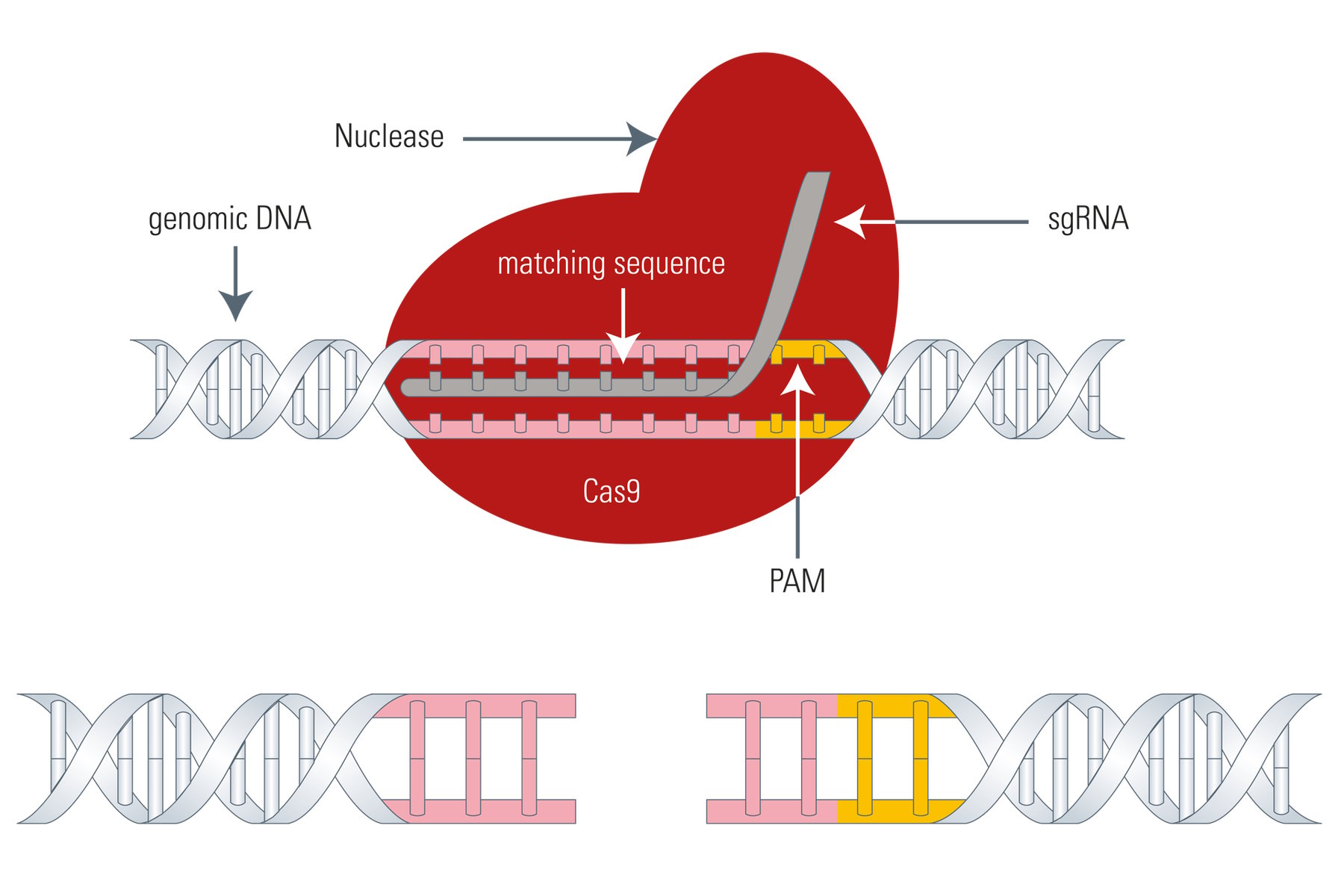
The Cas9 enzyme is the “molecular scissors.” It’s a nuclease, an enzyme that can cut DNA. When the gRNA is bound to Cas9, the gRNA guides the Cas9 enzyme to the specific DNA sequence that matches the gRNA’s spacer region. For Cas9 to make a cut, the target DNA sequence also needs to be adjacent to a short DNA sequence called the Protospacer Adjacent Motif (PAM). This PAM sequence acts as a crucial recognition site, ensuring that Cas9 only cuts at the intended location and not randomly within the genome.
The DNA Repair Pathways: Where the Editing Happens
Once Cas9 makes a double-strand break in the DNA, the cell’s natural DNA repair mechanisms are activated. There are two main pathways that cells use to repair these breaks:
-
Non-Homologous End Joining (NHEJ): This is a quick but error-prone repair pathway. It essentially “glues” the broken ends of the DNA back together. However, during this process, small insertions or deletions (indels) can occur, which often inactivates the targeted gene. This is useful for researchers who want to “knock out” or disable a specific gene.
-
Homology-Directed Repair (HDR): This pathway is more precise and is used when a template DNA sequence is available. If researchers provide a DNA template with the desired edit, the cell can use this template to repair the break, incorporating the new genetic information. This allows for precise gene correction or the insertion of new genetic material.
The Multifaceted Impact of Cas9 CRISPR: Transforming Industries
The implications of Cas9 CRISPR are far-reaching, impacting diverse sectors and promising to address some of humanity’s most pressing challenges. Its application spans across the “Tech” domain, influencing breakthroughs in healthcare and agriculture, and consequently shaping “Brand” perceptions and driving “Money” investment.
Revolutionizing Healthcare and Medicine
The most prominent applications of Cas9 CRISPR lie within the realm of healthcare. The ability to precisely edit genes opens up possibilities for treating and potentially curing genetic diseases that were previously considered intractable.
Gene Therapy for Inherited Disorders
Many diseases, such as cystic fibrosis, sickle cell anemia, and Huntington’s disease, are caused by specific mutations in a person’s DNA. CRISPR-Cas9 offers a revolutionary approach to gene therapy by allowing scientists to directly correct these faulty genes. By editing the mutated gene in a patient’s cells, the goal is to restore normal protein function and alleviate disease symptoms. Clinical trials are already underway for several of these conditions, showing promising early results.
Cancer Treatment and Prevention
CRISPR-Cas9 is also being explored for its potential in cancer therapy. It can be used to modify immune cells to better target and destroy cancer cells, a technique known as CAR T-cell therapy. Additionally, researchers are investigating how to use CRISPR to disable genes that drive cancer growth or to correct genetic predispositions to cancer.
Developing New Diagnostics and Drug Discovery
Beyond direct therapeutic interventions, CRISPR-Cas9 is a powerful tool for understanding disease mechanisms. Researchers can use it to create cellular and animal models of diseases, allowing for a deeper investigation into how specific genes contribute to illness. This accelerated understanding can lead to the development of novel diagnostic tools and more effective drug targets.
Transforming Agriculture and Food Security
The applications of CRISPR-Cas9 extend beyond human health to revolutionize agriculture, addressing the growing global demand for food and promoting sustainable practices.
Creating Disease-Resistant and Climate-Resilient Crops
CRISPR-Cas9 can be used to engineer crops that are naturally resistant to pests, diseases, and harsh environmental conditions such as drought or salinity. This can lead to higher yields, reduced reliance on chemical pesticides, and improved food security in vulnerable regions. For example, researchers are developing wheat that is resistant to a devastating fungal disease and rice that can thrive in salty soils.
Enhancing Nutritional Content and Shelf Life
Beyond resilience, CRISPR can be employed to improve the nutritional profile of crops. Imagine fruits and vegetables with higher vitamin content or healthier fat profiles. Furthermore, gene editing can enhance the shelf life of produce, reducing food waste and improving accessibility.
Developing More Sustainable Livestock
While much of the focus is on plants, CRISPR-Cas9 also holds potential for improving livestock. It could be used to breed animals that are more resistant to diseases, reducing the need for antibiotics, or to enhance their growth efficiency.
Ethical Considerations and the Future Landscape
The immense power of Cas9 CRISPR naturally brings with it significant ethical considerations that require careful deliberation and robust regulatory frameworks.
The Debate Around Germline Editing
One of the most contentious ethical debates surrounds germline editing, which involves making changes to DNA in sperm, eggs, or embryos. These edits would be heritable, meaning they would be passed down to future generations. While this could potentially eradicate inherited diseases permanently, it also raises profound questions about unintended consequences, “designer babies,” and the potential for exacerbating societal inequalities. The international scientific community has largely called for a moratorium on heritable human germline editing for reproductive purposes.
Off-Target Effects and Unintended Consequences
Despite its precision, Cas9 CRISPR is not infallible. There is a risk of “off-target” edits, where the system cuts DNA at unintended locations in the genome. These off-target effects could have unforeseen and potentially harmful consequences. Ongoing research focuses on improving the specificity and accuracy of CRISPR systems to minimize these risks.
Accessibility and Equity
As with any groundbreaking technology, ensuring equitable access to CRISPR-based therapies and advancements is crucial. There is a concern that these potentially life-saving treatments could be prohibitively expensive, widening the gap between those who can afford them and those who cannot. Discussions around intellectual property, pricing, and global accessibility are vital.

Conclusion: A New Era of Biological Engineering
Cas9 CRISPR is more than just a scientific advancement; it is a paradigm shift in our ability to interact with and modify the very fabric of life. Its journey from bacterial defense to a sophisticated gene-editing tool highlights the power of scientific discovery. As this technology continues to evolve, its potential to transform healthcare, agriculture, and our understanding of biology is immense.
However, with this power comes great responsibility. Navigating the ethical complexities, ensuring equitable access, and fostering open public discourse will be paramount to harnessing the full potential of Cas9 CRISPR for the betterment of humanity and the planet. The future of biology is being written, and Cas9 CRISPR is undoubtedly one of its most exciting and transformative chapters. As we continue to explore its capabilities, the lines between science fiction and reality blur, ushering in an era where we have an unprecedented ability to engineer a healthier, more sustainable, and ultimately, a smarter future.
aViewFromTheCave is a participant in the Amazon Services LLC Associates Program, an affiliate advertising program designed to provide a means for sites to earn advertising fees by advertising and linking to Amazon.com. Amazon, the Amazon logo, AmazonSupply, and the AmazonSupply logo are trademarks of Amazon.com, Inc. or its affiliates. As an Amazon Associate we earn affiliate commissions from qualifying purchases.