
Understanding how your monthly salary is calculated is more than just knowing your take-home pay; it’s a fundamental aspect of personal finance and a critical component of any employer’s financial operations. For employees, grasping the intricacies of your paycheque empowers you to budget effectively, negotiate salaries confidently, and plan for your financial future. For employers, a clear understanding ensures compliance with labor laws, accurate payroll processing, and transparent communication with your team. This comprehensive guide will demystify the process, breaking down gross versus net pay, exploring various deductions, and walking you through a practical step-by-step calculation.

Understanding the Basics: Gross vs. Net Salary
The journey to understanding your monthly salary begins with two fundamental terms: gross salary and net salary. While often used interchangeably in casual conversation, they represent vastly different figures that are crucial for both financial planning and accurate payroll management.
What is Gross Salary?
Gross salary is the total compensation an employee earns before any deductions are made. Think of it as the headline figure on your job offer letter – the full cost an employer incurs for your direct remuneration. It represents the “all-in” value of your salary package before taxes, social security contributions, and other payments are subtracted.
The components of gross salary can vary significantly by role, industry, and country, but typically include:
- Base Salary: The fixed amount paid for your services, usually on an annual or monthly basis. This is the core of your compensation.
- Allowances: Various additional payments designed to cover specific costs or provide benefits. These might include House Rent Allowance (HRA), Dearness Allowance (DA) to offset inflation, transport allowance, medical allowance, and special allowances related to the job.
- Overtime Pay: Additional compensation for hours worked beyond the standard workweek.
- Bonuses and Incentives: Performance-based payments, project bonuses, or annual bonuses that are sometimes factored into a monthly gross calculation (though often paid periodically).
- Employer Contributions to Benefits (sometimes included for total cost, but not always in direct gross pay): While typically not directly part of an employee’s calculable gross monthly pay for take-home purposes, the employer’s contribution to things like provident fund, gratuity, or health insurance premiums are part of the total cost to company (CTC) and contribute to the overall value of the compensation package.
Gross salary is the starting point for all salary calculations. It’s the figure used in employment contracts and often the benchmark for salary negotiations.
What is Net Salary?
Net salary, often referred to as “take-home pay,” is the amount of money an employee actually receives in their bank account after all deductions have been made from their gross salary. This is the figure that truly impacts an individual’s personal budget and spending power.
The transition from gross to net salary involves a series of mandatory and sometimes voluntary subtractions. These deductions serve various purposes, from funding public services and social security systems to covering individual benefit costs. Understanding what comes out of your gross pay is essential because it directly dictates how much disposable income you have. While gross salary dictates your earning potential, net salary determines your financial reality.
Key Deductions and Their Impact
The difference between your gross and net salary is attributed to a range of deductions. These deductions can broadly be categorized into statutory (mandatory by law) and non-statutory (voluntary or company-specific). Each plays a significant role in determining your final take-home pay.
Statutory Deductions
These are deductions mandated by government regulations and are non-negotiable. Employers are legally obligated to withhold these amounts from an employee’s gross salary and remit them to the appropriate authorities.
- Income Tax (PAYE/TDS): One of the most significant deductions is income tax, often withheld directly from your paycheque under systems like Pay As You Earn (PAYE) in the UK or Tax Deducted at Source (TDS) in India. The amount deducted depends on your total taxable income, applicable tax slabs or brackets, and any tax-saving declarations or investments you’ve made. These deductions ensure that individuals contribute to public services proportionally to their earnings.
- Social Security Contributions (e.g., EPF/401k, ESIC/Medicare/Social Security): Most countries have social security systems designed to provide benefits like retirement pensions, unemployment support, and healthcare.
- In the US, this includes contributions to Social Security and Medicare.
- In the UK, it’s National Insurance Contributions (NICs).
- In India, it’s the Employees’ Provident Fund (EPF) and Employees’ State Insurance (ESIC).
These contributions are typically split between the employer and employee, though the employee’s share is deducted from their gross pay. They represent a forced saving mechanism, ensuring a safety net for future contingencies.
- Professional Tax (if applicable): Some states or regions within a country may levy a professional tax on individuals earning an income from a profession or employment. This is usually a small, fixed amount or a percentage up to a certain limit.
Non-Statutory (Voluntary/Company-Specific) Deductions
These deductions are not mandated by law but are either agreed upon by the employee or are part of the company’s benefits structure.
- Health Insurance Premiums: If your employer offers a group health insurance plan, your share of the premium cost is often deducted directly from your salary. This provides access to healthcare services, reducing out-of-pocket medical expenses.
- Loan Repayments: If you’ve taken a loan or salary advance from your company, the agreed-upon repayment installments will be deducted from your monthly salary.
- Union Dues: For employees who are members of a trade union, membership fees are typically deducted directly from their pay.
- Voluntary Retirement Contributions (beyond statutory): Beyond mandatory social security, employees might opt for additional voluntary contributions to retirement plans (e.g., a higher percentage to a 401(k) or private pension scheme). These often offer tax advantages.
- Meal Vouchers/Pre-tax Benefits: Some companies offer benefits like meal vouchers, fuel cards, or other perquisites that are sometimes funded through pre-tax salary deductions, offering tax efficiencies to employees.
- Other Company Policies: This could include deductions for company-provided transportation, employee stock purchase plans, or charitable donations.
Each deduction, whether statutory or non-statutory, serves a specific purpose, collectively reducing your gross income to your net take-home pay.
Practical Steps to Calculate Your Monthly Salary
Calculating your monthly salary might seem complex at first glance, but by breaking it down into logical steps, it becomes a straightforward process. This section will guide you through the essential calculations, culminating in your net take-home pay.
Step 1: Determine Your Annual Gross Salary
The first step is to identify your total annual gross salary. This figure is usually clearly stated in your employment offer letter or contract. Ensure you include all fixed components agreed upon for the year, such as:
- Base Salary (annual)
- Annual allowances (HRA, DA, travel, medical, etc.)
- Guaranteed annual bonuses or fixed incentives (if applicable and specified in the contract).
For example, if your offer letter states an annual base salary of $60,000, an annual HRA of $12,000, and a fixed annual transport allowance of $2,400, your annual gross salary would be:
$60,000 (Base) + $12,000 (HRA) + $2,400 (Transport) = $74,400.
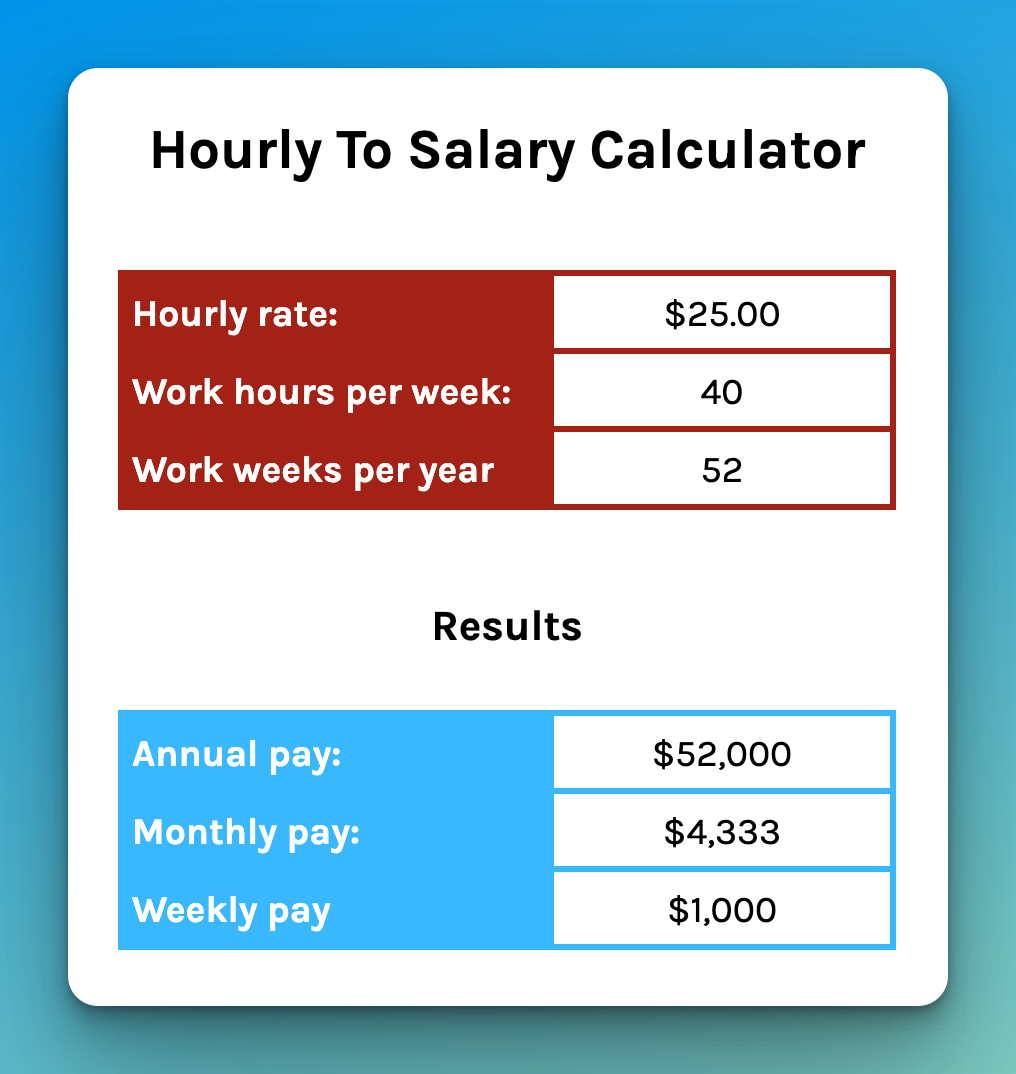
Step 2: Convert to Monthly Gross Salary
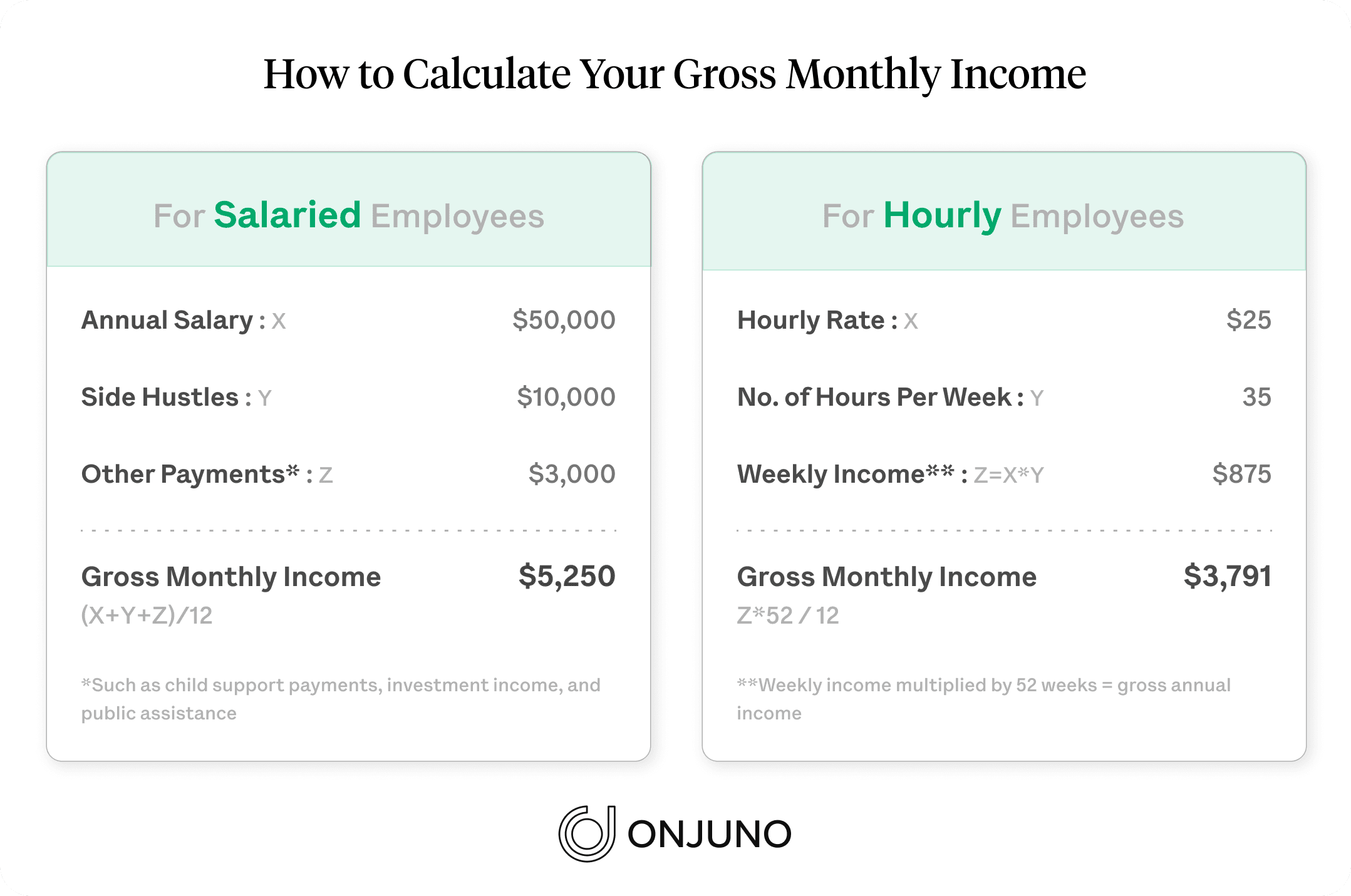
Once you have your annual gross salary, convert it to a monthly figure by dividing it by 12 (for the 12 months in a year).
Using the example above:
Monthly Gross Salary = $74,400 / 12 = $6,200.
It’s also important to account for any variable components that are paid out monthly, such as monthly sales commissions or performance incentives. These would be added to your calculated monthly fixed gross salary.
Step 3: Identify All Applicable Deductions
This is a critical step where you list out all statutory and non-statutory deductions that apply to your salary. You’ll need to know the specific percentages or fixed amounts for each.
- Statutory Deductions:
- Income Tax (PAYE/TDS): This will depend on your taxable income, tax bracket, and declarations. Many employers use online tax calculators or payroll software to determine the monthly deduction. Let’s assume a hypothetical monthly income tax deduction of $800 for our example.
- Social Security/Provident Fund: These are usually a fixed percentage of your base salary or a capped amount. For instance, an employee’s contribution might be 12% of basic salary up to a certain limit for a provident fund, or specific percentages for Social Security and Medicare. Let’s assume a combined Social Security/Medicare deduction of 7.65% of gross, capped at a certain income, but for simplicity let’s say $400 for our example.
- Professional Tax: If applicable, usually a small fixed amount, e.g., $15.
- Non-Statutory Deductions:
- Health Insurance Premium: Say, $100 per month.
- Loan Repayments: Say, $50 per month.
- Voluntary Retirement Contributions: Say, $150 per month.
Step 4: Calculate Total Monthly Deductions
Sum up all the individual deductions you identified in Step 3.
Using our example figures:
$800 (Income Tax) + $400 (Social Security) + $15 (Professional Tax) + $100 (Health Insurance) + $50 (Loan Repayment) + $150 (Voluntary Retirement) = $1,515 Total Monthly Deductions.
Step 5: Subtract Deductions from Gross to Get Net Salary
Finally, subtract your total monthly deductions from your monthly gross salary to arrive at your net monthly salary.
Using our example:
Monthly Gross Salary: $6,200
Total Monthly Deductions: $1,515
Net Monthly Salary = $6,200 – $1,515 = $4,685.
This $4,685 is your actual take-home pay for the month.
Example Calculation Scenario
Let’s summarize a simplified scenario:
Employee: Jane Doe
Annual Gross Salary: $74,400
Monthly Gross Salary: $6,200
Monthly Deductions:
- Income Tax: $800
- Social Security/Medicare: $400
- Professional Tax: $15
- Health Insurance: $100
- Company Loan Repayment: $50
- Voluntary 401(k) Contribution: $150
Total Deductions: $1,515
Net Monthly Salary:
$6,200 (Gross) – $1,515 (Deductions) = $4,685 (Net)
This systematic approach makes calculating your monthly salary manageable and transparent.
Beyond the Numbers: What Else to Consider
While the numerical calculation is crucial, understanding your monthly salary also involves recognizing the broader context of your compensation package and how to effectively manage your finances based on it.
The Impact of Benefits and Perks
Your total compensation extends beyond your direct monetary salary. Many employers offer a suite of non-monetary benefits and perks that add significant value to your overall package, even if they don’t appear directly in your net pay. These might include:
- Employer Contributions to Retirement Plans: Beyond your own contributions, companies often contribute to your 401(k), pension, or provident fund. This is a substantial long-term saving for you.
- Employer-Paid Health Insurance: If your company covers 100% of your health insurance premium, that’s a significant saving compared to paying for it yourself.
- Stock Options or Restricted Stock Units (RSUs): These can be valuable long-term incentives that tie your financial well-being to the company’s success.
- Flexible Working Arrangements: While not monetary, the value of work-life balance, remote work options, or flexible hours can be immense.
- Learning and Development Opportunities: Company-sponsored training, certifications, or tuition reimbursement enhance your skills and career prospects.
- Other Perks: Subsidized meals, gym memberships, transportation benefits, or employee discounts.
When evaluating a job offer or your current compensation, always consider the holistic value of these benefits, as they contribute significantly to your financial security and quality of life.
Understanding Your Pay Stub/Payslip
Your pay stub or payslip is more than just a piece of paper; it’s a detailed breakdown of your earnings and deductions. Learning to read it effectively is paramount for several reasons:
- Verification: It allows you to verify that your salary has been calculated correctly and that all expected deductions have been applied accurately.
- Record-Keeping: Pay stubs are important documents for tax purposes, applying for loans, or proving income.
- Financial Insight: They provide a clear overview of where your money is going, helping you understand the true cost of taxes and benefits.
- Troubleshooting: If there’s a discrepancy in your pay, your pay stub is the first place to look for answers.
Each line item on your payslip has a purpose, from your gross earnings to each specific deduction, and understanding them empowers you to manage your finances better.
Salary Negotiation and Financial Planning
Armed with a clear understanding of salary calculation, you are better positioned for both salary negotiation and effective financial planning.
- Salary Negotiation: When discussing compensation, focus on the “total compensation package” rather than just the gross salary. Understand what your desired gross salary will translate to in terms of net pay, and factor in the value of non-monetary benefits. This allows for more informed and strategic negotiation.
- Budgeting: Your net monthly salary is the foundation of your personal budget. It dictates how much you have available for living expenses, savings, and investments. Without knowing your accurate take-home pay, budgeting becomes a guessing game.
- Financial Goals: Whether it’s saving for a down payment, retirement, or a child’s education, your net salary is the primary engine for achieving these goals. Understanding how much you earn after deductions helps you set realistic savings targets and make informed investment decisions.
In essence, a deep dive into salary calculation goes beyond mere arithmetic; it’s a vital step towards financial literacy and empowerment.
Conclusion
Calculating a monthly salary, while seemingly a routine payroll function, is a fundamental process that impacts every working individual and every employing organization. By dissecting the difference between gross and net pay, identifying the various statutory and non-statutory deductions, and walking through a step-by-step calculation, we’ve illuminated the path from your advertised salary to your actual take-home pay.
This knowledge empowers employees to accurately budget, evaluate job offers holistically, and plan for their financial future with confidence. For employers, it underpins transparent payroll practices, ensures compliance, and fosters trust with their workforce. Ultimately, understanding “how do you calculate a monthly salary” is not just about numbers; it’s about financial clarity, informed decision-making, and building a secure economic foundation.
aViewFromTheCave is a participant in the Amazon Services LLC Associates Program, an affiliate advertising program designed to provide a means for sites to earn advertising fees by advertising and linking to Amazon.com. Amazon, the Amazon logo, AmazonSupply, and the AmazonSupply logo are trademarks of Amazon.com, Inc. or its affiliates. As an Amazon Associate we earn affiliate commissions from qualifying purchases.