
For the vast majority of individuals, an automobile represents the second-largest financial asset they will own, trailing only their primary residence. However, unlike real estate, which historically appreciates, a car is a depreciating asset. Selling a vehicle is not merely a logistical task; it is a critical financial transaction that requires a strategic approach to minimize loss and maximize the return on investment (ROI). Whether you are looking to liquidate a secondary vehicle for investment capital or upgrading to a newer model, understanding the fiscal nuances of the automotive market is essential.

This guide treats the sale of your car as a business divestment. By applying principles of market analysis, value-added presentation, and tactical negotiation, you can ensure that you extract every possible dollar from the transaction.
1. Financial Preparation and Market Valuation
Before listing a vehicle, one must move beyond emotional attachment and view the car through the lens of a commodity. The objective is to determine the “Sweet Spot”—the intersection between the highest possible price and a timeline that avoids further depreciation or maintenance costs.
Understanding the Mechanics of Depreciation
Every month a car sits in your driveway, it loses value. This is driven by both chronological age and the introduction of newer models by manufacturers. To sell effectively, you must understand where your vehicle sits on the depreciation curve. Luxury vehicles tend to have steeper curves, while reliable economy brands or niche enthusiasts’ cars may plateau. Identifying the current market trajectory for your specific make and model is the first step in setting a realistic, yet profitable, asking price.
Comparative Market Analysis (CMA)
In real estate, agents use “comps” to price homes. You should do the same for your vehicle. Use financial tools and platforms like Kelley Blue Book (KBB), Edmunds, and NADA Guides to establish a baseline. However, these are merely data points. To find the true market value, analyze active listings on platforms like Autotrader or specialized forums. Look for vehicles with similar mileage, trim levels, and geographic locations. A car in a snow-belt state may command a premium if it has All-Wheel Drive, whereas the same car might be less valuable in a temperate coastal region.
Timing the Sale for Peak ROI
The timing of your exit from an asset can significantly impact the final sale price. Convertibles and sports cars fetch higher prices in the spring and summer. Conversely, Four-Wheel Drive trucks and SUVs see a surge in demand—and price—during the late autumn and winter months. Furthermore, selling a car before it hits major mileage milestones (such as 60,000 or 100,000 miles) can prevent a “psychological cliff” where buyers perceive the vehicle as high-risk, thereby driving down your price.
2. Private Sale vs. Dealer Trade-In: An ROI Analysis
The most pivotal decision in the selling process is choosing the channel of sale. This is essentially a trade-off between convenience and capital.
The “Convenience Tax” of Dealerships
Selling or trading in your car to a dealership is the path of least resistance. However, it comes with a heavy financial penalty. Dealerships operate on a “wholesale-to-retail” spread. When they buy your car, they must factor in reconditioning costs, overhead, and their own profit margin. Typically, a trade-in will net you 15% to 25% less than a private sale. From a personal finance perspective, this is a significant loss of equity that could otherwise be used for your next investment.
Maximizing Private Sale Margins
While a private sale requires more effort—fielding inquiries, arranging test drives, and handling paperwork—it allows you to capture the full “retail” value of the asset. By cutting out the middleman, you retain the profit margin that the dealership would have otherwise kept. For a vehicle valued at $20,000, a private sale could easily net an additional $3,000 to $4,000. When viewed as hourly pay for the time spent managing the sale, the “wage” is incredibly high.
Navigating Sales Tax Credits
In many jurisdictions, there is a financial incentive to trade in a vehicle when purchasing a new one from the same dealer: the sales tax credit. If you sell your car for $10,000 and buy a new one for $30,000, you may only be taxed on the $20,000 difference. It is vital to run the numbers. If the tax savings plus the dealer’s offer is still significantly lower than the private market value, the private sale remains the superior financial move.
3. Increasing Asset Value Through Strategic Presentation
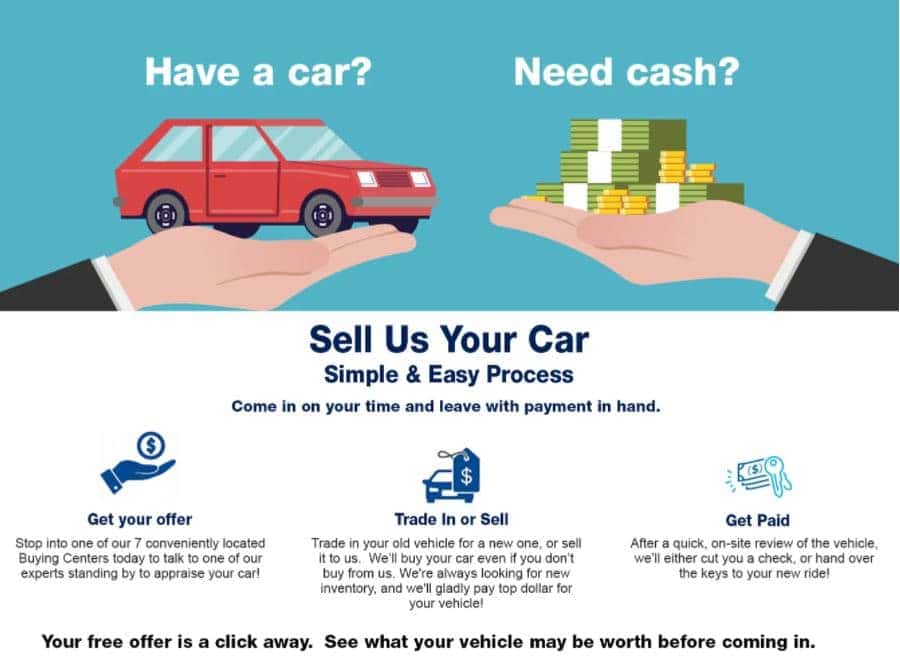
In the world of finance, the “perceived value” of an asset can often be leveraged to increase the actual sale price. With a car, this involves low-cost, high-impact improvements.
The Psychology of Curb Appeal
A buyer’s first impression is often the deciding factor in how much they are willing to negotiate. Investing in a professional “full detail” for $200–$300 can often yield an additional $1,000 in the final sale price. Cleanliness signals to the buyer that the vehicle has been meticulously maintained. This reduces their perceived risk, which in turn justifies a higher price point. Focus on high-touch areas: the steering wheel, upholstery, and the engine bay.
Documenting Maintenance as Financial Proof
A car is a complex machine with inherent risks of failure. You can mitigate a buyer’s fear—and their leverage to low-ball your price—by providing a comprehensive maintenance ledger. A organized folder of receipts for oil changes, brake replacements, and tire rotations serves as “proof of life” for the asset. In the eyes of a savvy buyer, a car with a documented service history is worth a premium over an identical car with no records.
Low-Cost Repairs with High ROI
Before listing, evaluate minor repairs. A cracked windshield, a burnt-out headlight, or a set of bald tires can give a buyer ammunition to ask for thousands off the price. Spending $400 on a new set of entry-level tires can often “save” $1,500 in negotiation leverage. Address the small things so the buyer has no reason to doubt the vehicle’s overall integrity.
4. Mastering the Art of Negotiation and Secure Transactions
Once you have a prospect, the sale moves into the closing phase. This is where many sellers lose money by failing to maintain their financial position.
Setting a Defensive Asking Price
When listing your car, always build in a “negotiation buffer.” If your target price is $15,000, list the vehicle for $16,500. This allows the buyer to feel they have achieved a “win” by negotiating the price down, while you still walk away with your desired amount. If you list at your absolute bottom line, you leave yourself no room to maneuver, which can stall the transaction.
Vetting Buyers and Avoiding Fraud
From a financial security standpoint, you must protect yourself against scams. High-value private transactions are targets for fraudulent checks and “overpayment” scams. Always insist on a secure method of payment. A cashier’s check verified at the issuing bank or a direct wire transfer are the gold standards. Avoid apps like Venmo or PayPal for large sums due to their dispute policies which can be exploited by unscrupulous buyers.
The Legal Transfer of Liability
The sale isn’t finished until the title is transferred and the liability is off your books. Ensure you complete a “Bill of Sale” and immediately notify your Department of Motor Vehicles (DMV) that the vehicle has been sold. This protects you from being financially liable for any accidents or tickets the new owner may incur. Additionally, remember to cancel your insurance policy the moment the title changes hands to receive a prorated refund of your premium.
5. Post-Sale Strategy: Allocating the Capital
The final step in selling your car is deciding what to do with the liquidated capital. This is where true financial management takes place.
Evaluating Opportunity Costs
Once the cash is in hand, resist the urge to immediately spend it on a more expensive vehicle with a high-interest loan. Analyze the opportunity cost. Could a portion of these funds be used to pay off high-interest debt or be placed into a brokerage account? If you are replacing the car, consider the “Total Cost of Ownership” (TCO) of the next vehicle, including insurance hikes, fuel efficiency, and projected depreciation.
Tax Implications of the Sale
For most private sellers, a car is sold for less than its original purchase price, meaning there is no “capital gain” and thus no tax liability to the IRS. However, if you are selling a classic car or a rare enthusiast vehicle that has appreciated in value, you may be liable for capital gains tax. Consulting with a tax professional in these rare instances is a prudent move to ensure you aren’t hit with an unexpected bill during tax season.

Reinvesting in Mobility
If the goal was to “downgrade” to free up cash, ensure that your new mode of transportation doesn’t eat up the profits through hidden maintenance costs. The goal of selling an asset should always be to improve your net worth or your cash flow. By following a disciplined, financially-minded process, you transform the simple act of “selling a car” into a sophisticated move that strengthens your overall financial portfolio.
aViewFromTheCave is a participant in the Amazon Services LLC Associates Program, an affiliate advertising program designed to provide a means for sites to earn advertising fees by advertising and linking to Amazon.com. Amazon, the Amazon logo, AmazonSupply, and the AmazonSupply logo are trademarks of Amazon.com, Inc. or its affiliates. As an Amazon Associate we earn affiliate commissions from qualifying purchases.