
Navigating the landscape of higher education finance can often feel like deciphering a foreign language. Amidst the acronyms like FAFSA, EFC, and SAR, one document stands out as perhaps the most critical legal instrument in a student’s financial journey: the Master Promissory Note (MPN). For anyone looking to bridge the gap between their savings and the cost of a degree, understanding the MPN is not just a procedural hurdle; it is a fundamental step in sophisticated personal finance management.
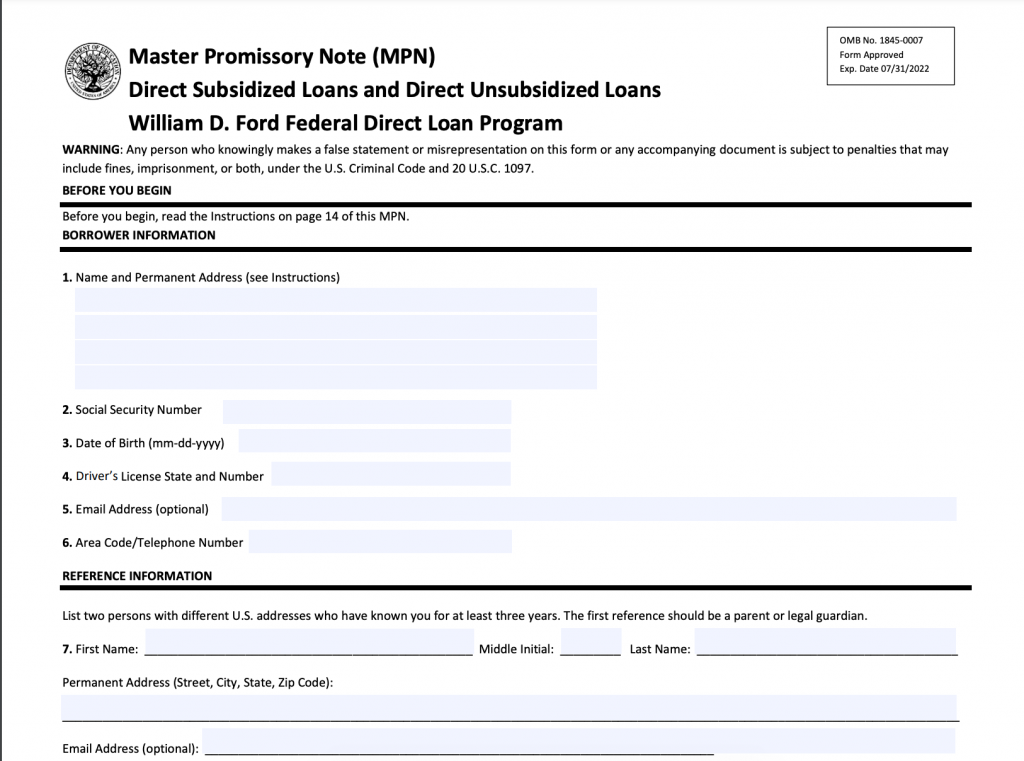
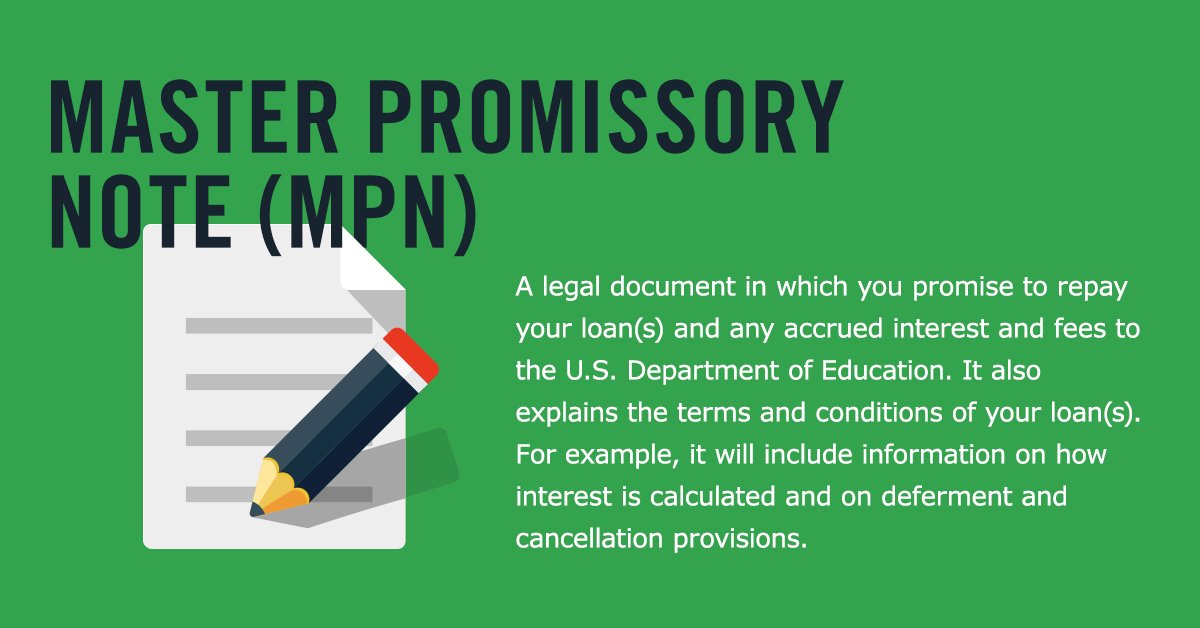
At its core, a Master Promissory Note is a legal document in which you promise to repay your federal student loans plus any accrued interest and fees to the U.S. Department of Education. It also explains the terms and conditions of your loans. While it may seem like just another form in the financial aid process, the “Master” prefix indicates its unique power: a single MPN can cover both subsidized and unsubsidized federal student loans for up to 10 years of continuous enrollment.
The Architecture of the Master Promissory Note
The MPN is more than a simple “IOU.” It is a binding contract that outlines the entire lifecycle of your debt. To manage your personal finances effectively, you must understand the structural components that make this document the foundation of federal lending.
Legal Binding and the Obligation to Repay
The most vital aspect of the MPN is the unconditional promise to pay. Unlike a standard consumer loan, federal student loans often do not require collateral. Therefore, the MPN serves as the primary security for the government. By signing, you acknowledge that you are legally obligated to repay the loan even if you do not complete your education, are unable to find employment upon graduation, or are dissatisfied with the quality of the education you received. This section of the document reinforces the seriousness of the financial commitment, placing it on par with a mortgage or a professional business loan.
Loan Types Covered Under the MPN
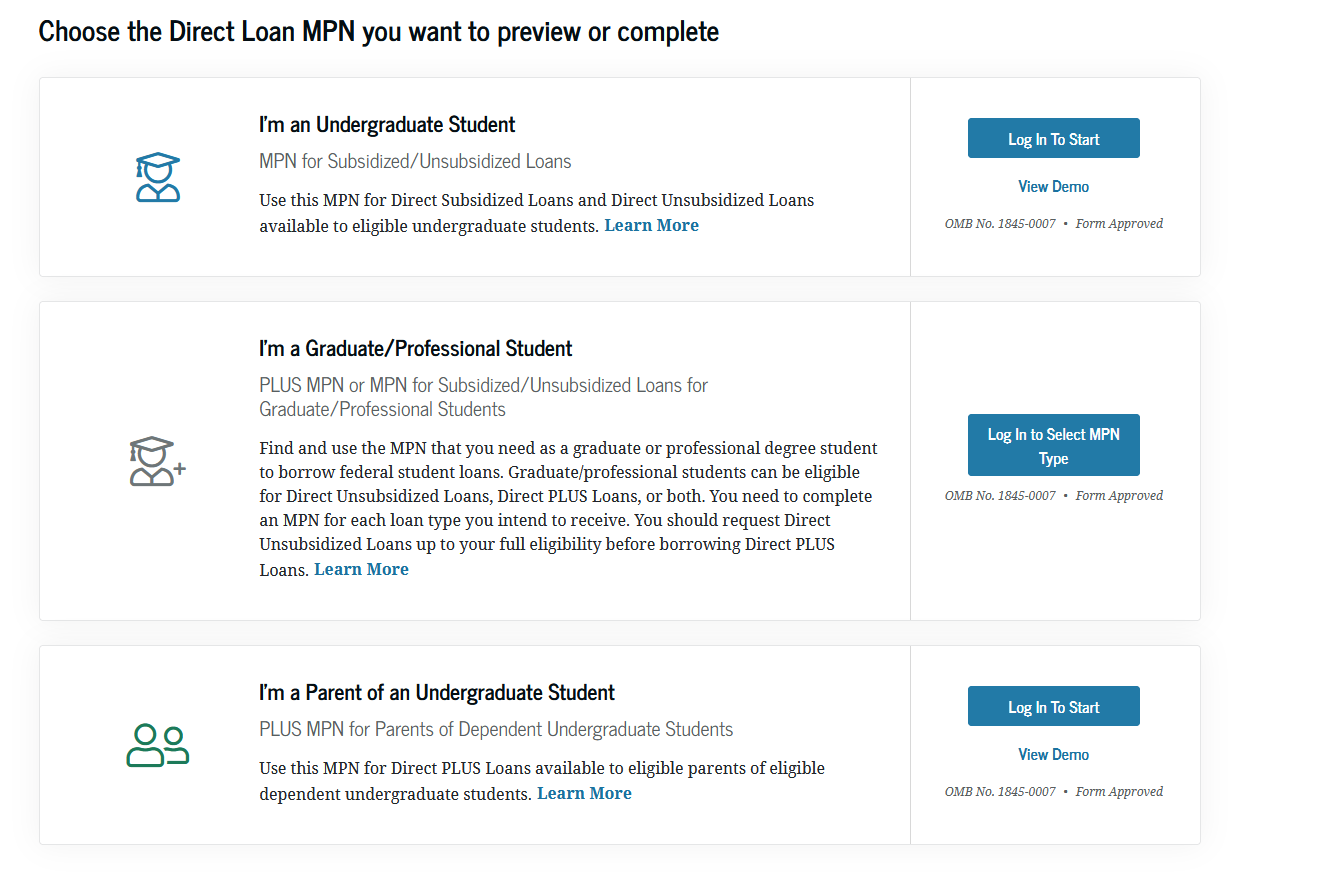
There are different MPNs for different types of borrowers. It is crucial to sign the correct one to ensure your funding is processed.
- Subsidized/Unsubsidized Loans: Most undergraduate and graduate students will sign an MPN for Direct Subsidized or Unsubsidized loans.
- Direct PLUS Loans: Parents of dependent undergraduate students or graduate/professional students who are borrowing under the PLUS program must sign a separate MPN specifically for those funds.
Understanding which document you are signing allows you to track which interest rates and repayment terms apply to your specific financial portfolio.
The Ten-Year Validity Rule
One of the most efficient features of the MPN—and why it is called a “Master” note—is its longevity. Generally, once you sign an MPN for a specific loan type at a specific school, you do not need to sign a new one for subsequent academic years, provided you remain enrolled. This validity usually lasts for ten years. From a financial planning perspective, this streamlines the borrowing process, but it also means you must remain vigilant, as your initial signature continues to authorize new debt as long as you remain in school.
Navigating the Signing Process and Required Documentation
For many students, the MPN is their first encounter with a complex legal contract. The process is handled digitally through the Federal Student Aid portal, but the information required serves as a blueprint for your future financial identity.
Information Requirements and References
To complete the MPN, you will need your Federal Student Aid (FSA) ID, personal details, and school information. However, a unique requirement of the MPN is the listing of two personal references. These individuals must have known you for at least three years and cannot live at the same address. From a financial institution’s perspective, these references act as a “skip-tracing” tool; if the lender loses contact with you during the repayment period, they will reach out to these references to locate you. Choosing reliable references is a small but important part of your long-term financial reputation.
The Role of Entrance Counseling
For first-time borrowers, the MPN is almost always paired with “Entrance Counseling.” While the MPN is the legal contract, Entrance Counseling is the educational component. It explains how interest accrues, how capitalization works, and what your estimated monthly payments might look like based on your projected debt. Treating this session with the same seriousness as the MPN signature ensures that you are not just signing a contract, but also understanding the financial implications of the debt you are assuming.
Digital Signatures and Record Keeping
In the modern financial era, the MPN is signed electronically. This convenience, however, can lead to a “click-through” mentality. It is vital to download and save a PDF copy of your signed MPN. In the event of a dispute regarding loan terms, interest rates, or repayment schedules years down the line, having the original document you signed is an essential component of responsible record-keeping and financial self-defense.
Rights, Responsibilities, and Financial Implications
The MPN is not just a list of the borrower’s obligations; it also outlines the rights you have as a debtor. Understanding these rights can help you navigate financial hardship and optimize your repayment strategy.
Interest Rates and Grace Periods
The MPN details how interest is calculated. Federal student loans typically use a daily interest formula. The document explains the “Grace Period”—usually six months after you graduate, leave school, or drop below half-time enrollment—during which you are not required to make payments. From a personal finance standpoint, understanding the difference between subsidized loans (where the government pays the interest during the grace period) and unsubsidized loans (where interest accrues immediately) is essential for calculating the “true cost” of your degree.
Repayment Plans and Flexibility
One of the major benefits outlined in the MPN is the access to various repayment plans. Unlike private loans, federal loans governed by an MPN offer Income-Driven Repayment (IDR) plans, which cap your monthly payment at a percentage of your discretionary income. The MPN also details the conditions for deferment and forbearance—legal ways to temporarily stop making payments during periods of unemployment or economic hardship. Knowing these options exist within your contract provides a financial safety net that private debt rarely offers.
The Consequences of Default
The MPN is very clear about the penalties for failing to meet your obligations. Defaulting on a federal student loan is a severe financial event. Because the government has significant collection powers, they can garnish wages, withhold tax refunds, and seize Social Security benefits without a court order. Furthermore, a default will severely damage your credit score, making it difficult to secure mortgages, car loans, or even professional licenses in some states. The MPN serves as a stark reminder that while the loan is a tool for advancement, it carries the weight of serious financial consequences.
Strategic Management of Your Student Debt Portfolio
Once the MPN is signed and the funds are disbursed, the document transitions from a “form” to a “financial strategy.” Managing this debt effectively requires a proactive approach to the terms agreed upon in the note.
Tracking Aggregated Debt
Because the MPN allows for multiple disbursements over several years, it is easy to lose track of the total principal balance. Savvy borrowers use the “Master” nature of the note as a prompt to conduct an annual financial audit. By logging into the National Student Loan Data System (NSLDS), you can see how much debt is being accumulated under that single MPN. This prevents “sticker shock” upon graduation and allows for adjustments in spending or part-time work to minimize future borrowing.
Prepayment Strategies
The MPN explicitly states that there are no “prepayment penalties” on federal student loans. This is a significant advantage in the world of finance. If you find yourself with extra income from a side hustle or a graduation gift, you can apply those funds directly to the principal of your loans. By understanding the terms of the MPN, you realize that you have the power to reduce the total interest paid over the life of the loan by paying more than the minimum whenever possible.
Consolidating and Refinancing
Later in your financial life, you may consider consolidating your loans. It is important to know that when you consolidate, you are essentially taking out a new loan to pay off the old ones, which means signing a new promissory note. While this can simplify your payments, you must weigh the benefits against the potential loss of specific protections or interest rate benefits outlined in your original MPN. Being intimately familiar with your MPN allows you to make an informed “apples-to-apples” comparison when considering private refinancing options.
Conclusion: The MPN as a Foundation for Financial Literacy
The Master Promissory Note is far more than a prerequisite for financial aid; it is a gateway to adulthood and a significant lesson in personal finance. It represents a calculated investment in your human capital, backed by a serious legal commitment. By thoroughly understanding the “Master” aspect of the note, the rights it grants you, and the heavy responsibilities it imposes, you position yourself not just as a student, but as a disciplined and informed borrower.
In the broader context of money management, the MPN is often an individual’s first major contract. Treating it with professional rigor—reading the fine print, understanding the interest mechanics, and maintaining meticulous records—sets the tone for a lifetime of successful financial decisions. Whether you are a freshman signing your first MPN or a graduate preparing for repayment, remember that this document is the roadmap for your debt; knowing how to read that map is the surest way to reach financial independence.
aViewFromTheCave is a participant in the Amazon Services LLC Associates Program, an affiliate advertising program designed to provide a means for sites to earn advertising fees by advertising and linking to Amazon.com. Amazon, the Amazon logo, AmazonSupply, and the AmazonSupply logo are trademarks of Amazon.com, Inc. or its affiliates. As an Amazon Associate we earn affiliate commissions from qualifying purchases.