
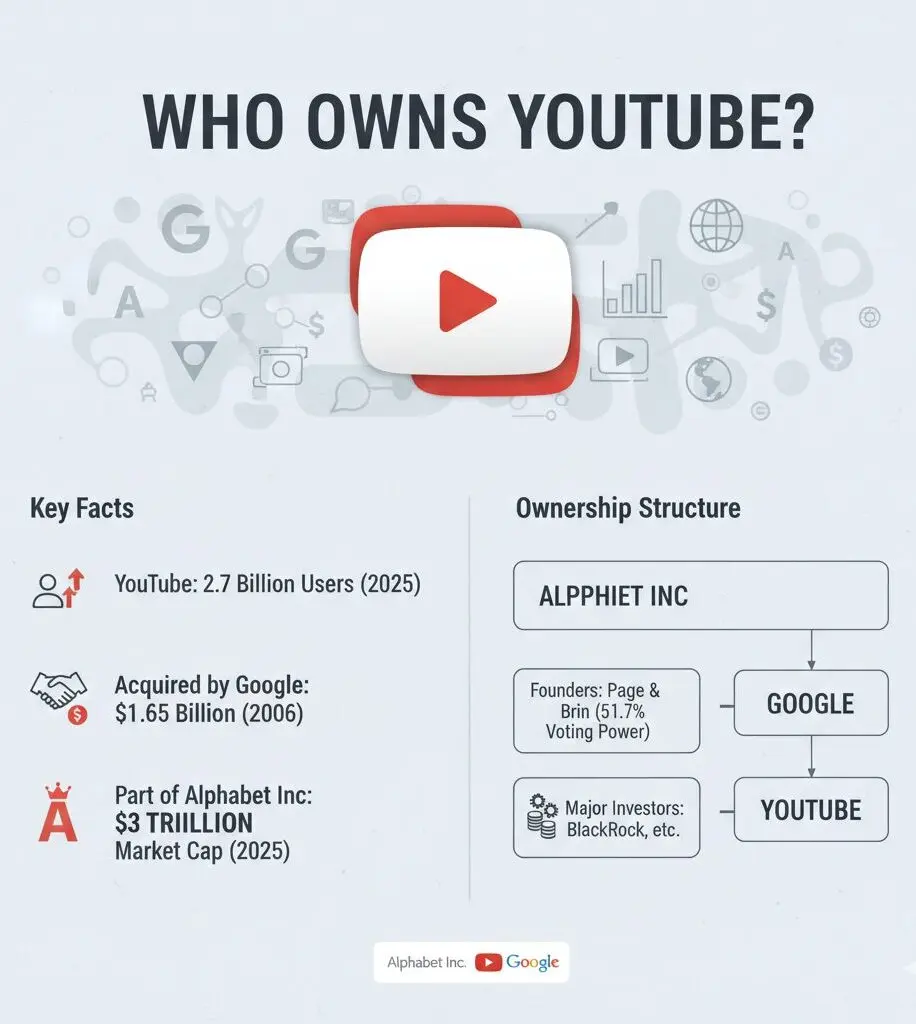
For anyone tracking the evolution of the digital economy, the question of who owns the world’s most popular video platform is more than a trivia point—it is a study in one of the most successful corporate acquisitions in history. YouTube is currently owned by Alphabet Inc., the parent conglomerate that also owns Google. While many users still refer to the platform as “Google-owned,” the 2015 corporate restructuring that created Alphabet placed YouTube as a key subsidiary under the broader corporate umbrella.
Understanding the ownership of YouTube requires diving into the intersection of venture capital, strategic acquisitions, and the massive financial engine that powers the modern internet. From its humble beginnings as a venture-funded startup to becoming a cornerstone of Alphabet’s multi-billion dollar revenue stream, YouTube’s journey is a masterclass in business finance and market dominance.
The Strategic Acquisition: How Google Secured the Future of Digital Media
In late 2006, the tech world was stunned by the announcement that Google would acquire a fledgling video-sharing site called YouTube for $1.65 billion in stock. At the time, YouTube was barely 18 months old, had no clear path to profitability, and was embroiled in potential copyright litigations. Critics labeled the move a “dot-com bubble” style gamble. However, from a business finance perspective, it was a visionary move to secure a monopoly on the future of consumer attention.
The 2006 Deal: A $1.65 Billion Gamble
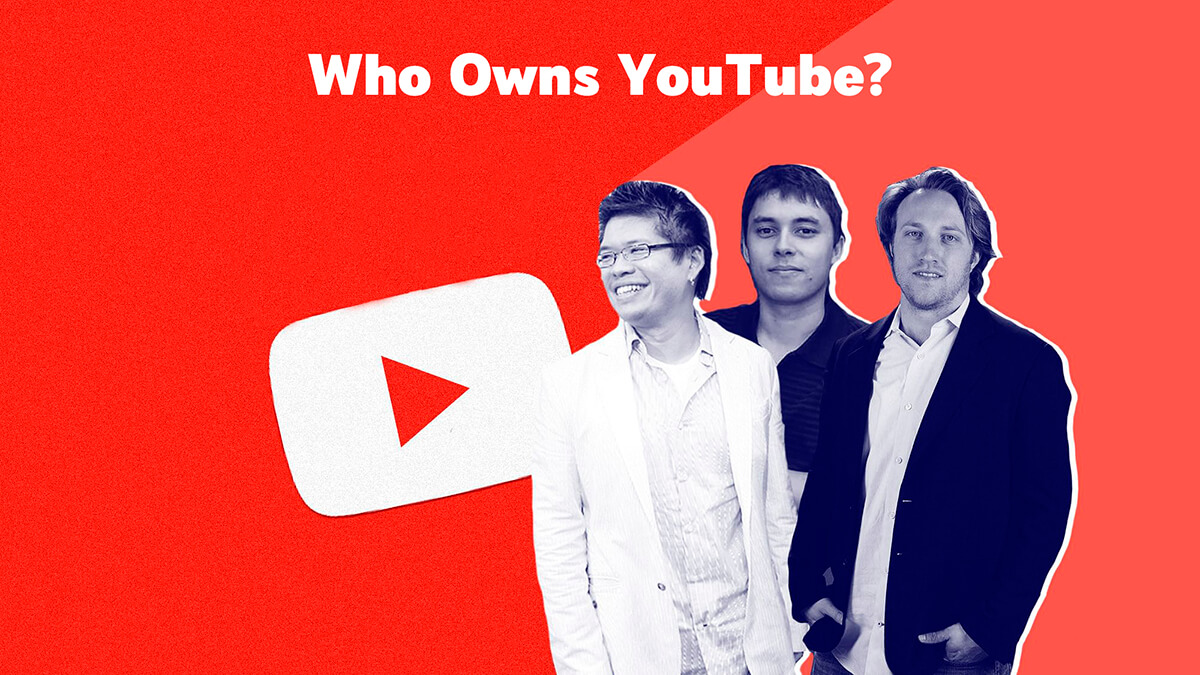
When Chad Hurley, Steve Chen, and Jawed Karim founded YouTube in 2005, they tapped into a burgeoning need for easy video hosting. Google, meanwhile, was struggling with its own “Google Video” platform, which failed to gain the same viral traction. The $1.65 billion acquisition price was considered astronomical at the time. Yet, in retrospect, this transaction is viewed as one of the most lucrative deals in corporate history. Google didn’t just buy a website; it bought the primary infrastructure for the world’s visual information, a strategic asset that would eventually yield a return on investment (ROI) that few companies have ever matched.
From Startup to Subsidiary: Transitioning to the Google Ecosystem
The transition from an independent startup to a subsidiary of a search giant allowed YouTube to leverage Google’s massive server infrastructure and sophisticated advertising technology. Initially, YouTube operated with a degree of autonomy, but as it became clear that video was the next frontier for ad revenue, the integration deepened. By the time Google restructured into Alphabet Inc. in 2015, YouTube had evolved from a “risky bet” into a core financial pillar. Under the Alphabet structure, YouTube remains a subsidiary of Google LLC, which is in turn the largest division of Alphabet Inc. This hierarchy allows Alphabet to funnel resources into YouTube while keeping its financial performance integrated with Google’s broader search and advertising ecosystem.
YouTube’s Role in the Alphabet Inc. Financial Ecosystem
For years, Alphabet kept YouTube’s specific financial performance a closely guarded secret, bundling its earnings into the “Google Other” or broader “Google Search & Other” categories. This changed in 2020 when Alphabet began breaking out YouTube’s advertising revenue in its quarterly earnings reports. The numbers revealed a financial powerhouse that rivals many Fortune 500 companies on its own.
Revenue Streams: Beyond Traditional Advertising
YouTube’s primary financial engine is its advertising platform, powered by Google’s “AdSense” technology. In recent fiscal years, YouTube has generated upwards of $29 billion to $31 billion in annual ad revenue alone. This represents roughly 10% to 15% of Alphabet’s total annual revenue. However, the business model has evolved to become more diversified. Alphabet has successfully introduced “non-ad” revenue streams that provide a more predictable, recurring cash flow. This includes revenue from the YouTube Partner Program, where the company takes a percentage of “Super Chats,” channel memberships, and virtual “stickers” sold during live streams.
The YouTube Premium and Music Growth Engine
A significant shift in YouTube’s financial strategy has been the aggressive push toward subscription models. YouTube Premium and YouTube Music have become vital components of Alphabet’s “Google Other” revenue segment. By converting free users into paying subscribers, Alphabet reduces its total reliance on the volatile digital advertising market. As of recent reports, YouTube’s subscription services have surpassed 100 million members (including trials). From an investor’s perspective, this high-margin subscription revenue increases the platform’s overall valuation and provides a hedge against periods of low ad spend during economic downturns.
Investing in the Creator Economy: YouTube’s Business Model
What makes YouTube unique as a financial asset is its reliance on the “Creator Economy.” Unlike Netflix, which spends billions on original content production, YouTube’s content is provided for free by millions of users. This significantly lowers the cost of goods sold (COGS) for Alphabet, although they do share a massive portion of the revenue back with the creators.
The AdSense Partnership: A Revenue-Sharing Revolution
The genius of the YouTube business model lies in the YouTube Partner Program (YPP). Alphabet shares approximately 55% of advertising revenue with creators who meet certain eligibility criteria. This creates a self-sustaining financial cycle: creators produce content to make money, more content attracts more viewers, and more viewers attract more advertisers. From a corporate finance standpoint, this is a highly efficient way to scale a platform. Alphabet only pays for content that is actually performing, meaning they don’t take the massive financial risks associated with traditional Hollywood studio production.
Diversification of Income: Shorts, Memberships, and Super Chat
To compete with emerging platforms and maximize “Average Revenue Per User” (ARPU), Alphabet has introduced several new monetization layers. YouTube Shorts, the platform’s answer to TikTok, recently integrated a revenue-sharing model that incentivizes short-form content creators. Additionally, the platform has integrated “Shopping” features, allowing creators to link products directly to their videos. These initiatives transform YouTube from a simple video-hosting site into a full-service e-commerce and fintech hub, further cementing its value within the Alphabet portfolio.
Market Competition and the Future Valuation of YouTube
While YouTube remains the dominant player in the video space, its financial future is not without challenges. Alphabet must navigate a landscape of shifting consumer habits, regulatory scrutiny, and fierce competition for advertising dollars.
The Battle for Screen Time: Competing with TikTok and Netflix
From a market share perspective, YouTube faces a two-front war. On one side, TikTok has captured the attention of younger demographics with short-form, algorithmic-heavy content, threatening YouTube’s ad dominance in the mobile space. On the other side, streaming giants like Netflix and Disney+ compete for “living room” screen time. However, Alphabet’s financial advantage lies in YouTube’s versatility. It is the only platform that successfully spans short-form clips, long-form educational content, live streaming, and music. This multi-format approach ensures that Alphabet can capture ad spend across every possible digital video category.

Forecasting Growth: The Role of AI in Long-Term Profitability
As we look toward the future, Alphabet’s investment in Artificial Intelligence (AI) is set to redefine YouTube’s profitability. AI-driven recommendations keep users on the platform longer, increasing the number of ad impressions per session. Furthermore, AI tools for creators—such as automated dubbing, generative backgrounds, and enhanced editing suites—lower the barrier to entry for content production. By making it easier and cheaper for creators to produce high-quality video, Alphabet ensures a steady supply of monetizable inventory.
Analysts often speculate on what YouTube would be worth if it were spun off as an independent company. Current estimates suggest a standalone valuation ranging from $300 billion to $400 billion, which would make it one of the most valuable companies in the world in its own right. As a subsidiary of Alphabet, it serves as a massive growth engine that balances the more mature “Google Search” business.
In conclusion, while the simple answer to “who owns YouTube” is Alphabet Inc., the deeper reality is that YouTube is a sophisticated financial ecosystem that has fundamentally changed how the world consumes media and how businesses reach consumers. Through strategic acquisition, disciplined financial management, and a revolutionary revenue-sharing model, Alphabet has turned a $1.65 billion “gamble” into one of the most profitable and influential business assets in history.
aViewFromTheCave is a participant in the Amazon Services LLC Associates Program, an affiliate advertising program designed to provide a means for sites to earn advertising fees by advertising and linking to Amazon.com. Amazon, the Amazon logo, AmazonSupply, and the AmazonSupply logo are trademarks of Amazon.com, Inc. or its affiliates. As an Amazon Associate we earn affiliate commissions from qualifying purchases.