
The meteoric rise of digital assets over the last decade has transformed the landscape of modern finance. From the genesis of Bitcoin to the proliferation of decentralized finance (DeFi) protocols, cryptocurrency has offered unprecedented opportunities for wealth creation. However, this potential for high returns comes with a shadow: extreme volatility. For many investors, a “crypto crash”—defined by double-digit percentage drops within hours or days—can be a harrowing experience. Understanding why these crashes occur is not merely an academic exercise; it is a fundamental necessity for anyone looking to navigate the complex intersection of technology and personal finance.
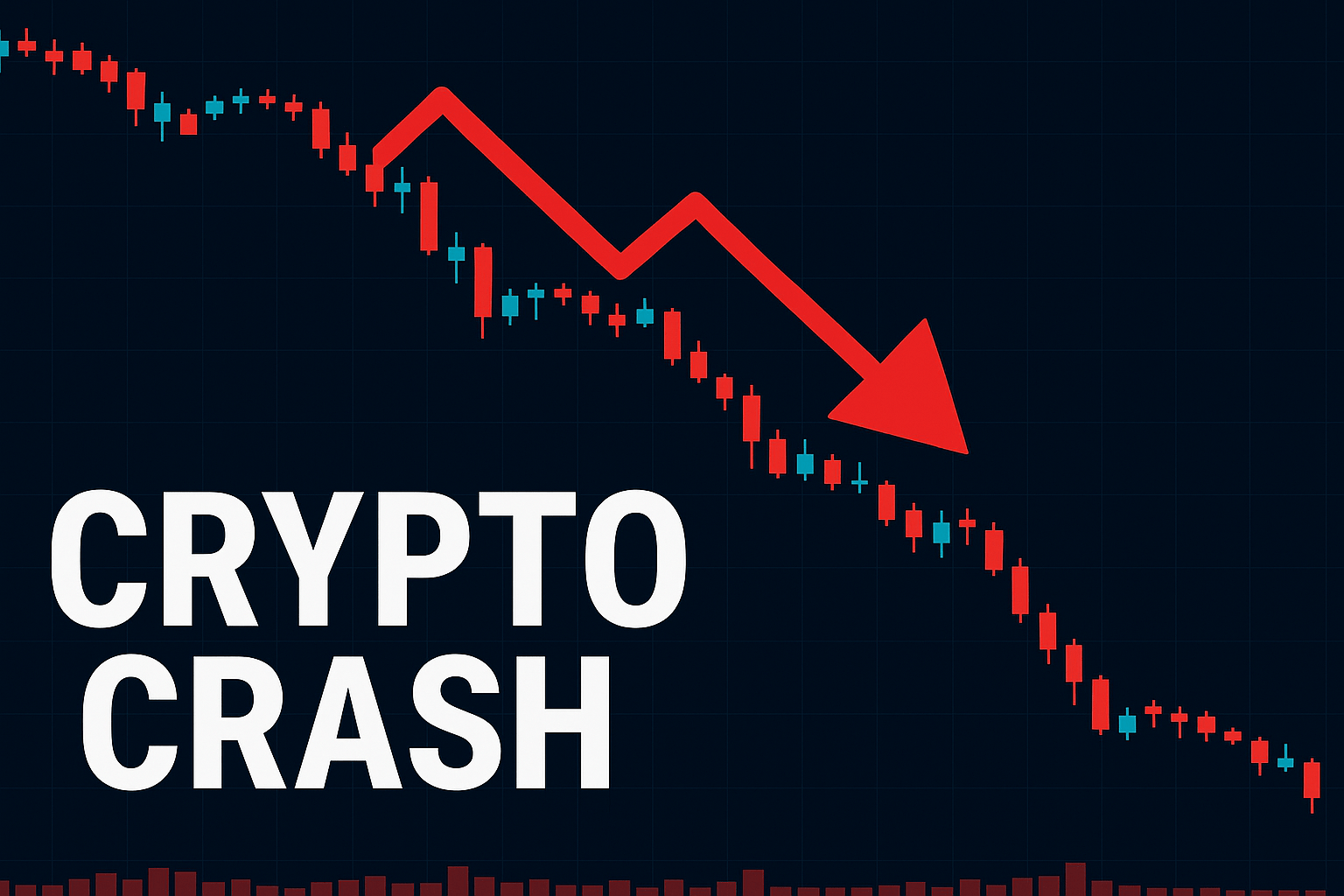
Cryptocurrency crashes are rarely the result of a single isolated event. Instead, they are usually the product of a “perfect storm” of macroeconomic shifts, internal market dynamics, and psychological triggers. By deconstructing these factors through a financial lens, investors can better prepare their portfolios for the inevitable turbulence of the digital asset market.
1. Macroeconomic Pressures and Global Financial Shifts
While cryptocurrency was originally envisioned as an alternative to the traditional financial system, it has become increasingly correlated with global markets. The “digital gold” narrative, which suggested Bitcoin would act as a hedge against inflation and economic instability, has often been challenged by the reality of how institutional money treats these assets.
Interest Rates and Central Bank Policies
The most significant driver of modern crypto crashes is the policy direction of central banks, particularly the U.S. Federal Reserve. When the economy experiences high inflation, central banks raise interest rates to cool down spending. For the crypto market, this is a “liquidity drain.”
When interest rates are low, “cheap money” flows into high-risk, high-reward assets like tech stocks and cryptocurrencies. However, as rates rise, investors seek the safety of guaranteed returns in government bonds and savings accounts. As capital is pulled out of the “risk-on” crypto market to cover costs or seek safer yields, prices plummet. This systemic withdrawal of liquidity is often the primary catalyst for a prolonged “crypto winter.”
Inflation and the “Risk-Off” Sentiment
Inflation is a double-edged sword for digital assets. While moderate inflation can drive interest toward capped-supply assets like Bitcoin, hyper-inflation or aggressive stagflation often triggers a “risk-off” sentiment. In times of extreme economic uncertainty, institutional investors—who now hold a significant portion of the total crypto market cap—prioritize capital preservation. They sell off their most volatile holdings first. Because cryptocurrency is perceived as the most volatile asset class, it is often the first to be liquidated during a global financial contraction.
2. Market Dynamics and the Role of Institutional Liquidity
Beyond the broad economy, the internal mechanics of how cryptocurrency is traded contribute heavily to the severity of a crash. The crypto market operates 24/7, lacks the “circuit breakers” found in traditional stock exchanges, and is characterized by high levels of debt.
Leverage and Liquidation Cascades
One of the most common reasons a minor price dip turns into a full-scale crash is “leverage.” Many traders use borrowed funds to amplify their positions, sometimes at ratios as high as 100:1. When the price of an asset drops even a small percentage, these leveraged positions hit their “liquidation price.”
At this point, the exchange automatically sells the trader’s assets to cover the loan. This forced selling puts further downward pressure on the price, which then triggers the liquidation of other traders’ positions. This chain reaction, known as a “liquidation cascade,” can wipe out billions of dollars in market value in minutes, creating a vertical drop on the price charts that is untethered from the asset’s actual utility or long-term value.
The Impact of “Whale” Movements and Liquidity Gaps
In the financial world, “whales” are individuals or entities that hold massive amounts of a specific cryptocurrency. Because the crypto market is still relatively small compared to the global bond or equity markets, a single large sell order from a whale can move the price significantly.
If a market lacks “depth”—meaning there aren’t enough buy orders at various price levels to absorb a large sale—the price will “slip” drastically until it finds a buyer. When a whale exits a position during a period of low trading volume, it can create a panic that leads retail investors to follow suit, compounding the crash.
3. Regulatory Landscape and Legal Uncertainty
Money thrives on stability and clear rules. Cryptocurrency, by its very nature, challenges existing legal frameworks, leading to a constant tug-of-war between innovators and regulators. Sudden shifts in the legal landscape are frequent triggers for market sell-offs.
Government Crackdowns and Compliance Issues
News of a major economy—such as China, India, or the United States—proposing a ban on mining or strictly regulating trading platforms often leads to immediate price drops. Regulatory pressure creates “exit liquidity” problems; if investors fear they will soon be unable to convert their crypto back into “fiat” currency (like USD or EUR), they will rush to the exits simultaneously.
Furthermore, when prominent exchanges face lawsuits or investigations for anti-money laundering (AML) failures or securities violations, it erodes investor confidence. The fear that a major trading hub might be shut down or its assets frozen can cause a mass exodus of capital, as seen in various historical exchange collapses.
The Fragility of Stablecoins
The crypto economy relies heavily on stablecoins—digital assets pegged to the value of a traditional currency like the US Dollar. These coins act as the “reserve currency” of the crypto world. However, if a stablecoin loses its peg (de-pegging), it can cause a catastrophic failure of the entire ecosystem.
The collapse of the TerraUSD (UST) algorithmic stablecoin is a prime example. When the mechanism maintaining its $1 value failed, it caused a multi-billion dollar wipeout that affected nearly every other asset in the market. Investors lost faith in the financial “plumbing” of the crypto world, leading to a massive withdrawal of funds from decentralized finance (DeFi) platforms.
4. Psychological Triggers and Investor Sentiment
The financial markets are driven as much by human emotion as they are by math. In the world of cryptocurrency, where valuation models are often speculative, psychology plays an outsized role in price movements.
Fear, Uncertainty, and Doubt (FUD)
The term “FUD” is common in crypto circles, but its financial impact is very real. Negative news cycles—whether regarding a potential hack, a software vulnerability, or a celebrity critic—can spread rapidly through social media. Unlike traditional markets where quarterly earnings reports provide a reality check, crypto sentiment is often driven by real-time narratives. When the narrative shifts from “hyper-growth” to “impending doom,” the resulting panic selling is swift. This is a classic “herd mentality” where the fear of losing one’s initial investment outweighs the long-term thesis for holding the asset.
The Bursting of Speculative Bubbles
Every major crypto crash is usually preceded by a period of “irrational exuberance.” During a bull market, the fear of missing out (FOMO) drives prices to levels that are unsustainable based on any traditional metric of value. When the market becomes overextended, it only takes a small catalyst to prick the bubble. Once the upward momentum stalls, the “weak hands”—investors who bought in late hoping for a quick profit—are the first to sell, triggering a downward trend that eventually brings the price back to its mean.
5. Risk Management Strategies for the Volatile Crypto Market
Understanding why crashes happen is the first step toward building a resilient financial strategy. While it is impossible to predict the exact timing of a crash, investors can employ several wealth-preservation techniques to mitigate the impact of volatility.
Diversification Beyond Digital Assets
From a personal finance perspective, one of the greatest risks is over-concentration. While the returns in crypto can be life-changing, the “all-in” approach leaves an individual vulnerable to total capital loss. A professional approach to money management involves balancing high-risk digital assets with traditional investments like index funds, real estate, or precious metals. By diversifying, an investor ensures that a 50% drop in Bitcoin does not result in a 50% drop in their total net worth.

The Perils of Active Trading vs. Long-Term Holding
Data consistently shows that “market timing” is a losing game for the vast majority of retail investors. Trying to sell at the top and buy at the bottom of a crash often results in selling at the bottom and buying back in higher due to emotional decision-making.
A more robust financial strategy often involves “Dollar Cost Averaging” (DCA)—investing a fixed amount of money at regular intervals regardless of the price. This strategy lowers the average cost of the investment over time and removes the psychological stress of trying to “beat the crash.” For those who believe in the long-term value of the technology, surviving a crash is simply a matter of having a long enough time horizon and the emotional fortitude to avoid panic-selling.
In conclusion, cryptocurrency crashes are a feature, not a bug, of this nascent financial ecosystem. They are the result of complex interactions between global economics, market leverage, regulatory shifts, and human psychology. By understanding these underlying forces, investors can move away from reactive trading and toward a proactive, disciplined approach to managing their digital wealth. In the world of crypto, the winners are rarely those who chase the peaks, but rather those who understand and respect the valleys.
aViewFromTheCave is a participant in the Amazon Services LLC Associates Program, an affiliate advertising program designed to provide a means for sites to earn advertising fees by advertising and linking to Amazon.com. Amazon, the Amazon logo, AmazonSupply, and the AmazonSupply logo are trademarks of Amazon.com, Inc. or its affiliates. As an Amazon Associate we earn affiliate commissions from qualifying purchases.