
For over a decade, the financial world has watched Apple Inc. with a mixture of awe and scrutiny, not just for its revolutionary hardware, but for its unprecedented balance sheet. When investors ask, “how much does apple have in cash,” they aren’t merely asking about a balance in a checking account. They are inquiring about one of the most sophisticated corporate treasury operations in history. As of the most recent fiscal filings, Apple maintains a cash position that exceeds the GDP of several developed nations. However, the true story of Apple’s money lies not in the total sum, but in how the company manages, protects, and eventually distributes that wealth to its shareholders.
The Current Landscape: Quantifying Apple’s Liquidity
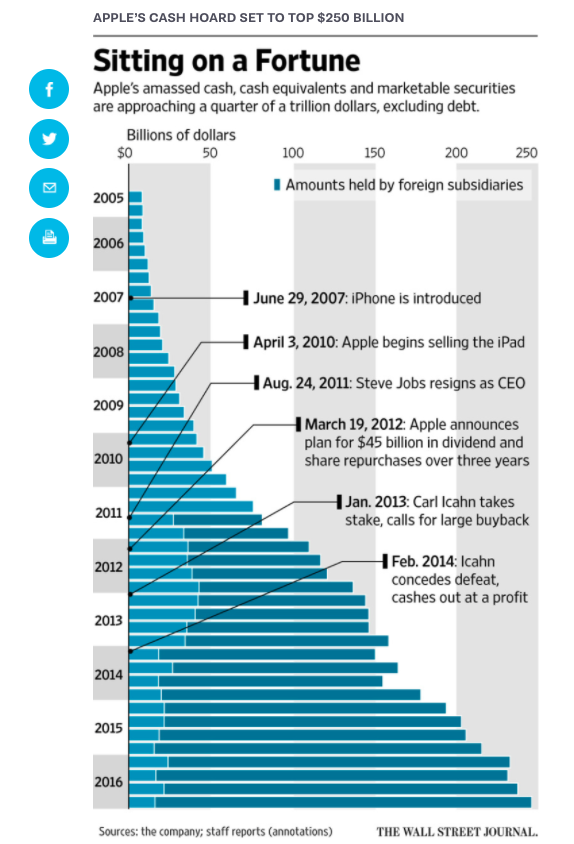
To understand Apple’s financial might, one must first decipher the components of what the company classifies as “cash.” In corporate finance, liquidity is often a tiered concept. Apple does not simply keep hundreds of billions of dollars in a vault; instead, it manages a complex portfolio designed to ensure liquidity while generating a modest return.
Cash, Cash Equivalents, and Marketable Securities
In its quarterly earnings reports, Apple typically breaks its liquidity down into three main buckets: cash on hand, short-term marketable securities, and long-term marketable securities. As of late 2023 and early 2024, Apple’s total cash and marketable securities have fluctuated between $160 billion and $170 billion.
“Cash equivalents” include highly liquid investments like commercial paper and money market funds. “Marketable securities” represent a more significant portion, consisting of corporate debt, U.S. Treasury securities, and municipal bonds. This diversified approach allows Apple to remain the most liquid company on earth while shielding its principal from the eroding effects of inflation.
Comparing Apple to Its Peers
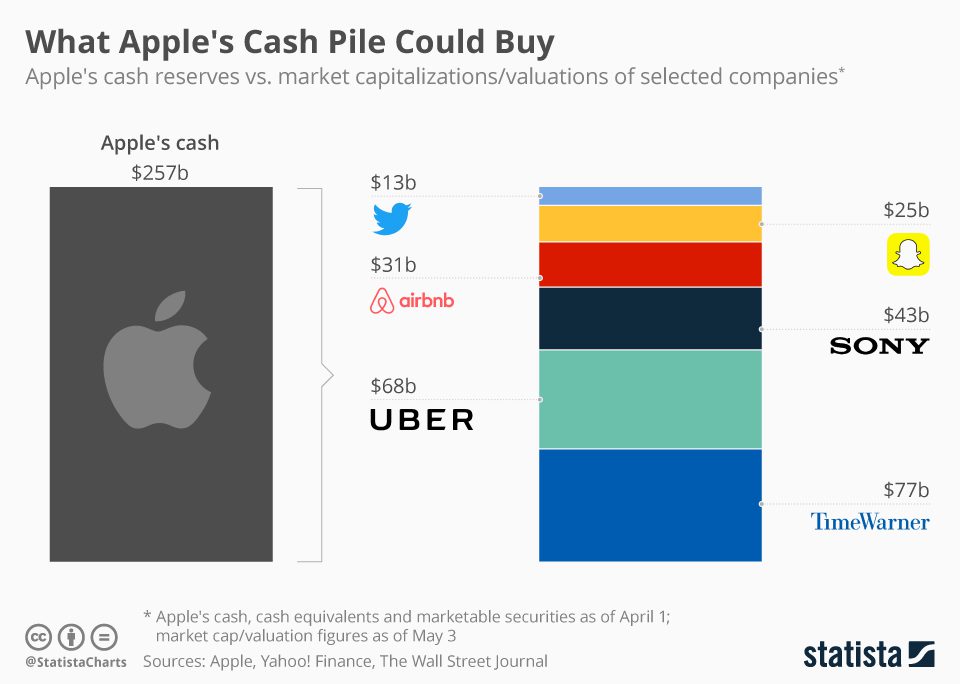
To put Apple’s $160 billion+ reserve into perspective, one must look at the broader “Magnificent Seven” and the S&P 500. While companies like Microsoft and Alphabet (Google) also boast massive cash reserves—often exceeding $100 billion—Apple’s management of these funds is uniquely aggressive in its commitment to shareholder returns. While other tech giants might hoard cash for massive “moonshot” acquisitions, Apple’s strategy is built on a foundation of operational efficiency and a disciplined “net cash neutral” goal.
The Philosophy of the “Cash Neutral” Goal
Under the leadership of CEO Tim Cook and CFO Luca Maestri, Apple has pioneered a specific financial target known as a “net cash neutral” position. This is a sophisticated business finance strategy that dictates the company’s long-term capital allocation.
Moving Toward a Net-Zero Cash Position
The concept of “net cash neutral” means that Apple aims to eventually have a balance where its total cash is roughly equal to its total debt. For years, Apple had significantly more cash than debt. By returning more cash to shareholders than it generates in free cash flow, Apple is slowly bringing that cash pile down to match its debt levels.
This is not a sign of financial distress; rather, it is a sign of extreme financial optimization. Holding too much idle cash is often seen by institutional investors as “lazy capital.” By moving toward a neutral position, Apple ensures that every dollar on the balance sheet is being used as efficiently as possible to drive value, whether through reinvestment or distribution.
The Role of Long-Term Debt in Capital Structure
A common question arises: Why does a company with $160 billion in cash also carry over $100 billion in debt? The answer lies in the mechanics of interest rate arbitrage and tax efficiency.
Historically, Apple issued debt at incredibly low interest rates. If Apple can borrow money at 2% or 3% while keeping its own cash invested in higher-yielding securities or using it to buy back stock (which has a much higher “yield” in terms of earnings-per-share growth), it is financially advantageous to hold debt. Furthermore, before the 2017 Tax Cuts and Jobs Act, bringing overseas cash back to the U.S. would have triggered massive tax liabilities. Issuing debt in the U.S. allowed Apple to fund buybacks and dividends without the tax hit of repatriation.
Capital Returns: How Apple Rewards Its Shareholders
Apple’s cash mountain serves as the primary engine for its Capital Return Program, which is widely considered the most ambitious in corporate history. Since 2012, Apple has returned over $700 billion to shareholders through two primary channels.
The Power of Share Buybacks
The cornerstone of Apple’s financial strategy is the share repurchase program. By using its cash to buy back its own stock, Apple reduces the total number of shares outstanding. For the remaining investors, this means they own a larger “slice” of the company’s earnings.

Buybacks are a powerful tool for boosting Earnings Per Share (EPS). Even in quarters where net income remains flat, Apple can report growth in EPS because the earnings are divided among fewer shares. This financial engineering has been a significant driver of Apple’s stock price appreciation over the last decade, making it a favorite for long-term “buy and hold” value investors.
Dividend Consistency and Growth
While Apple is often categorized as a growth stock, its cash reserves have allowed it to become a reliable dividend payer. Since reinstating its dividend in 2012, the company has increased its payout every single year.
Although the dividend yield might appear low compared to utility or consumer staple stocks, the absolute dollar amount is staggering. Apple pays out billions in dividends annually. For investors, these dividends represent a tangible “rent” paid on their investment, backed by the safety of the world’s most robust balance sheet.
Strategic Reinvestment: Where the Money Goes
Beyond returning money to Wall Street, Apple’s cash allows it to outspend competitors in the pursuit of innovation and supply chain dominance. This is where business finance meets operational strategy.
Research and Development (R&D) as a Growth Engine
In the last several years, Apple’s R&D spending has surged, now exceeding $25 billion to $30 billion annually. This cash is used to develop proprietary silicon (the M-series and A-series chips), explore augmented reality, and refine AI capabilities.
Having a massive cash reserve allows Apple to invest in long-term projects that might not see a return for five to ten years. Unlike smaller firms that must answer to creditors for every dollar spent, Apple’s cash provides a “buffer” that fosters a culture of perfectionism and patient innovation.
Strategic Acquisitions vs. Internal Development
While rivals like Microsoft or Meta often engage in “mega-mergers” (such as Microsoft’s acquisition of Activision Blizzard), Apple’s acquisition strategy is famously disciplined. Apple uses its cash to acquire small, specialized technology firms—often 15 to 25 companies per year—that it can integrate directly into its existing products.
This “tuck-in” acquisition strategy is less risky than large-scale mergers and ensures that Apple’s cash is being used to acquire intellectual property and talent rather than just buying market share. This disciplined approach to M&A has protected Apple from the massive “write-downs” that often plague other tech giants who overpay for acquisitions.
The Economic Implications of a Cash-Rich Balance Sheet
In an era of economic volatility, Apple’s cash is more than just a resource; it is a strategic moat that protects the company from macroeconomic headwinds.
Navigating High Interest Rate Environments
When interest rates rise, most companies struggle with the increased cost of borrowing. Apple, however, finds itself in a “win-win” scenario. While it may pay more on new debt, it also earns significantly higher yields on its $160 billion+ in marketable securities. In some quarters, Apple’s interest income alone is enough to cover the interest expenses of its entire debt load. This “natural hedge” makes Apple one of the most resilient companies in the face of Federal Reserve policy shifts.
Geopolitical Risks and Global Cash Management
Managing cash on a global scale involves navigating currency fluctuations and geopolitical instability. A significant portion of Apple’s cash is generated in foreign markets. The company’s treasury team must constantly manage “currency risk”—the danger that a strong dollar will eat into the value of international sales.
Apple’s massive reserves allow it to engage in sophisticated hedging strategies, using financial derivatives to lock in exchange rates and ensure that its cash flow remains predictable. This level of financial sophistication is usually reserved for major central banks, yet Apple executes it with corporate precision.
Conclusion: The Ultimate Financial Fortress
When we look at how much cash Apple has, we are looking at the ultimate financial fortress. That $160 billion+ reserve is not a static pool of money; it is a dynamic tool used to reward shareholders, stifle competitors, and weather economic storms.
For the individual investor, Apple’s cash position provides a level of “margin of safety” rarely found in the equity markets. It ensures that the company can continue to innovate, pay dividends, and buy back shares regardless of the broader economic climate. Apple has successfully transformed itself from a computer company into a global financial powerhouse, proving that in the world of big business, cash is not just king—it is the entire kingdom.
aViewFromTheCave is a participant in the Amazon Services LLC Associates Program, an affiliate advertising program designed to provide a means for sites to earn advertising fees by advertising and linking to Amazon.com. Amazon, the Amazon logo, AmazonSupply, and the AmazonSupply logo are trademarks of Amazon.com, Inc. or its affiliates. As an Amazon Associate we earn affiliate commissions from qualifying purchases.