
For many Americans, Social Security is the cornerstone of retirement planning. Yet, despite its importance, the system remains a “black box” for many workers. Understanding how much you will receive from Social Security is not just about a single number; it is about understanding a complex formula based on your lifetime earnings, the age at which you choose to retire, and the specific rules governing various types of benefits.
As you navigate your financial journey, deciphering these variables is essential for building a robust retirement strategy. This guide breaks down the mechanics of the Social Security Administration (SSA) calculations and provides the insights necessary to maximize your future monthly checks.
Understanding the Calculation: How the SSA Determines Your Benefit
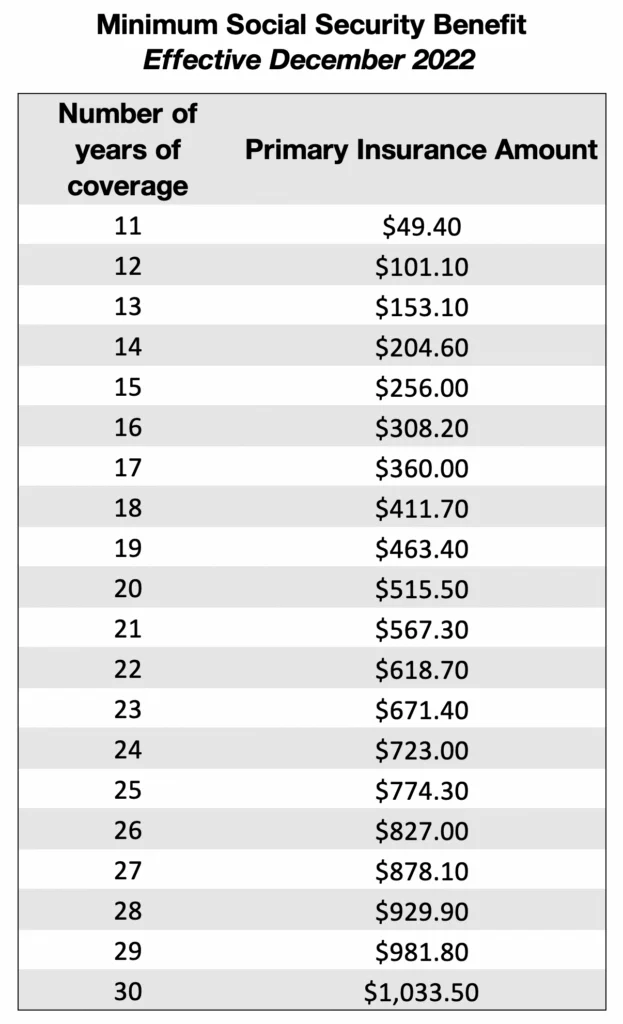
The amount you receive from Social Security is primarily dictated by your earnings history. Unlike a private pension that might look at your final three or five years of work, the SSA takes a much broader view of your career.
The Role of Your Top 35 Years of Earnings
The Social Security calculation begins with your “Average Indexed Monthly Earnings” (AIME). The SSA looks at your entire work history and selects the 35 years in which you earned the most, adjusted for inflation. If you worked fewer than 35 years, the remaining years are averaged in as zeros, which can significantly lower your monthly benefit.
This underscores a vital personal finance strategy: if you have a few years with very low or zero earnings, working a few extra years later in life can replace those “zeros” or “lows” with higher current earnings, effectively boosting your lifetime average and your final benefit amount.
How Inflation Adjustments and “Bend Points” Work
Once your AIME is calculated, the SSA applies a formula to determine your Primary Insurance Amount (PIA). This formula is progressive, meaning it is designed to replace a higher percentage of lower-income workers’ earnings than higher-income workers.
The formula uses “bend points”—specific dollar thresholds that change annually. For example, in 2024, the SSA might take 90% of the first portion of your AIME, 32% of the middle portion, and 15% of any amount above that. This tiered structure ensures a safety net for lower-wage earners while still providing higher absolute dollar amounts to those who paid more into the system through payroll taxes.
The Impact of Timing: When You Claim Matters
Perhaps the most significant decision a retiree makes regarding Social Security is when to start receiving benefits. While you can technically begin as early as age 62, there is a substantial financial trade-off for doing so.
Full Retirement Age (FRA) vs. Early Filing
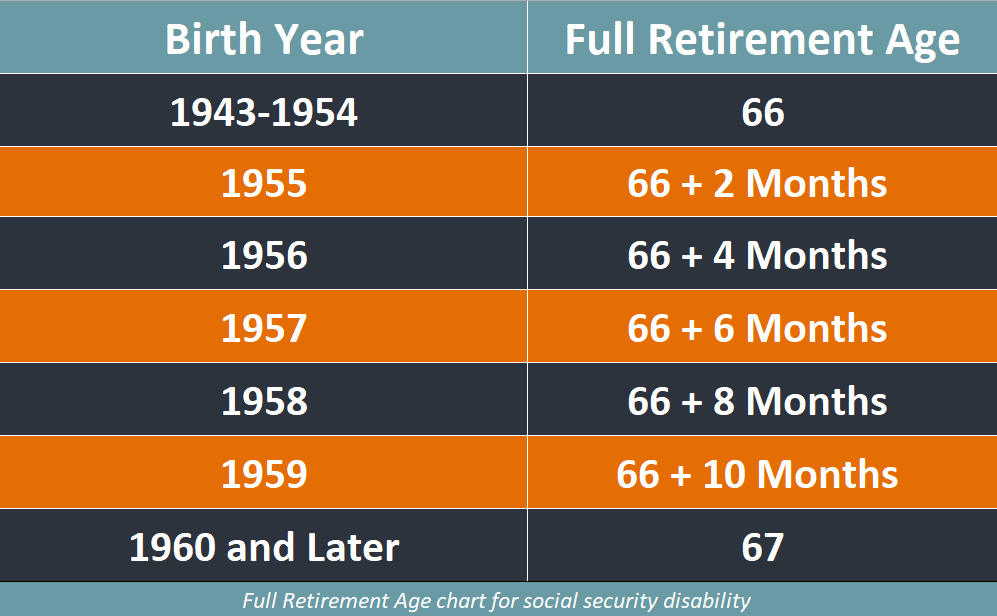
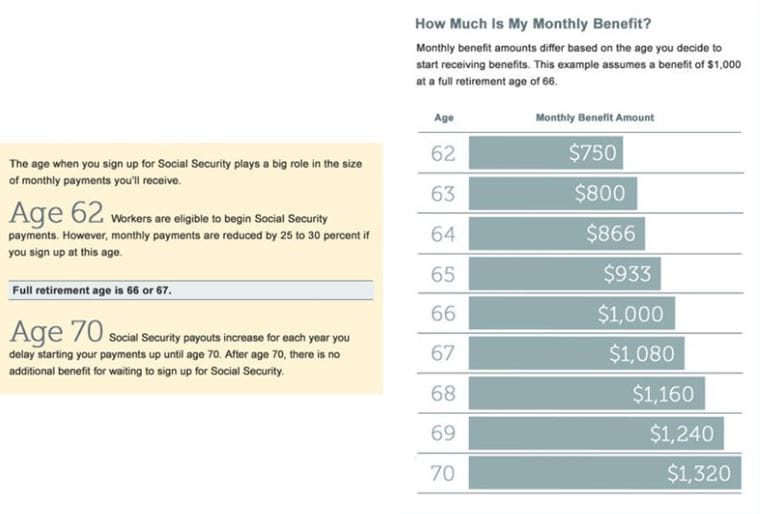
Your Full Retirement Age (FRA) is the age at which you are entitled to 100% of your calculated PIA. For those born in 1960 or later, the FRA is 67. If you choose to file for benefits early—at age 62—your monthly check will be permanently reduced by up to 30%.
This reduction is calculated monthly. For every month you file before your FRA, your benefit is shaved down. While filing early provides immediate cash flow, it significantly reduces your “cost-of-living adjustment” (COLA) impact over time, as those percentage-based increases will be applied to a smaller base number.
The Power of Delayed Retirement Credits
On the other side of the spectrum is the “delayed retirement credit.” For every year you wait to claim past your FRA (up until age 70), your benefit increases by approximately 8% per year in simple interest.
If your FRA is 67 and you wait until age 70 to claim, your monthly benefit will be 124% of your PIA. This is one of the few guaranteed “returns” in the financial world. For individuals in good health with other sources of retirement income, waiting until 70 acts as a powerful hedge against longevity risk, ensuring that if you live into your 90s, you have the highest possible inflation-adjusted floor for your income.
Maximizing Benefits Beyond the Individual
Social Security is not just an individual benefit; it is a family insurance program. Many people overlook the fact that they may be eligible for benefits based on someone else’s work record.
Spousal and Survivor Benefits
If you are married, you are entitled to either your own Social Security benefit or up to 50% of your spouse’s benefit, whichever is higher. This is particularly beneficial in households where one spouse earned significantly more than the other or where one spouse stayed home to raise children.
Crucially, “Survivor Benefits” function differently. If a spouse passes away, the surviving spouse can typically inherit 100% of the deceased spouse’s monthly benefit, provided the survivor has reached their own FRA. In this context, it often makes sense for the higher-earning spouse to delay filing until age 70 to lock in the largest possible survivor benefit for their partner.
Benefits for Divorced Spouses
A common misconception is that divorce ends your claim to a former spouse’s record. If your marriage lasted at least 10 years and you have been divorced for at least two years (and remain unmarried), you may be eligible to claim benefits based on your ex-spouse’s earnings record.
Importantly, claiming on an ex-spouse’s record does not reduce the benefit that the ex-spouse or their current partner receives. It is an independent calculation that allows individuals who may have sacrificed their own career growth during a long marriage to access financial security in retirement.
Factors That Can Reduce Your Check
It is a mistake to assume that the number you see on your annual statement is exactly what will hit your bank account. Several factors can “claw back” some of those funds.
Taxation of Social Security Benefits
Depending on your total “combined income,” you may have to pay federal income taxes on your Social Security benefits. Combined income is the sum of your adjusted gross income, non-taxable interest, and half of your Social Security benefits.
If you file as an individual and your combined income is between $25,000 and $34,000, you may pay income tax on up to 50% of your benefits. If it’s more than $34,000, up to 85% of your benefits may be taxable. For married couples, these thresholds are $32,000 and $44,000, respectively. Effective tax planning, such as managing withdrawals from Roth IRAs versus traditional IRAs, can help keep your combined income below these thresholds.
The Retirement Earnings Test
If you choose to work while receiving Social Security benefits before you reach your Full Retirement Age, the SSA applies an earnings test. If you earn more than a specific limit ($22,320 in 2024), the SSA will temporarily withhold $1 for every $2 you earn above that limit.
The good news is that these “withheld” funds are not lost forever. Once you reach your FRA, the SSA recalculates your benefit upward to account for the months they withheld payment. However, if you are still working a high-paying job, it usually makes more financial sense to delay filing until you reach FRA to avoid the administrative headache and the temporary reduction in cash flow.
Planning for the Future: Estimating Your Specific Number
Because Social Security is a moving target influenced by your future earnings and legislative changes, you must take an active role in monitoring your status.
Using the “my Social Security” Portal
The most accurate way to find out “how much you get” is to create an account on the official SSA website. Your “my Social Security” account provides a personalized Social Security Statement. This document outlines your earnings history—allowing you to check for errors—and provides estimates for your benefits at age 62, FRA, and 70.
Reviewing this statement annually is a vital financial habit. If an employer failed to report your income correctly decades ago, it could be dragging down your AIME. Identifying and correcting these errors early is much easier than trying to do so once you have already retired.
Integrating Social Security into Your Broader Portfolio
Finally, Social Security should be viewed as one “bucket” in a diversified retirement plan. Most financial planners suggest that Social Security will replace approximately 40% of an average worker’s pre-retirement income.
To maintain your lifestyle, the remaining 60% must come from personal savings, 401(k)s, IRAs, or other income streams. By knowing your estimated Social Security number today, you can calculate the “retirement gap”—the difference between what the government will provide and what you need to live comfortably. This clarity allows you to adjust your current savings rate, invest more aggressively, or perhaps decide to work a few years longer to ensure financial independence.
In conclusion, “how much you get” from Social Security is not a matter of luck; it is the result of a specific formula and the strategic choices you make regarding your career and your retirement timeline. By understanding the nuances of the 35-year average, the benefits of delaying your claim, and the tax implications of your total income, you can turn Social Security from a mysterious government program into a powerful, predictable tool for wealth preservation.
aViewFromTheCave is a participant in the Amazon Services LLC Associates Program, an affiliate advertising program designed to provide a means for sites to earn advertising fees by advertising and linking to Amazon.com. Amazon, the Amazon logo, AmazonSupply, and the AmazonSupply logo are trademarks of Amazon.com, Inc. or its affiliates. As an Amazon Associate we earn affiliate commissions from qualifying purchases.