
In the realm of finance, numbers are the primary language, but percentages are the grammar that gives those numbers meaning. Whether you are tracking the growth of a retirement fund, calculating the cost of a mortgage, or evaluating the health of a business, the “percentage” is the most critical tool in your analytical arsenal. At its simplest, a percentage is a way to express a number as a fraction of 100. However, in the context of money, it represents the velocity of capital, the cost of time, and the measurement of risk.
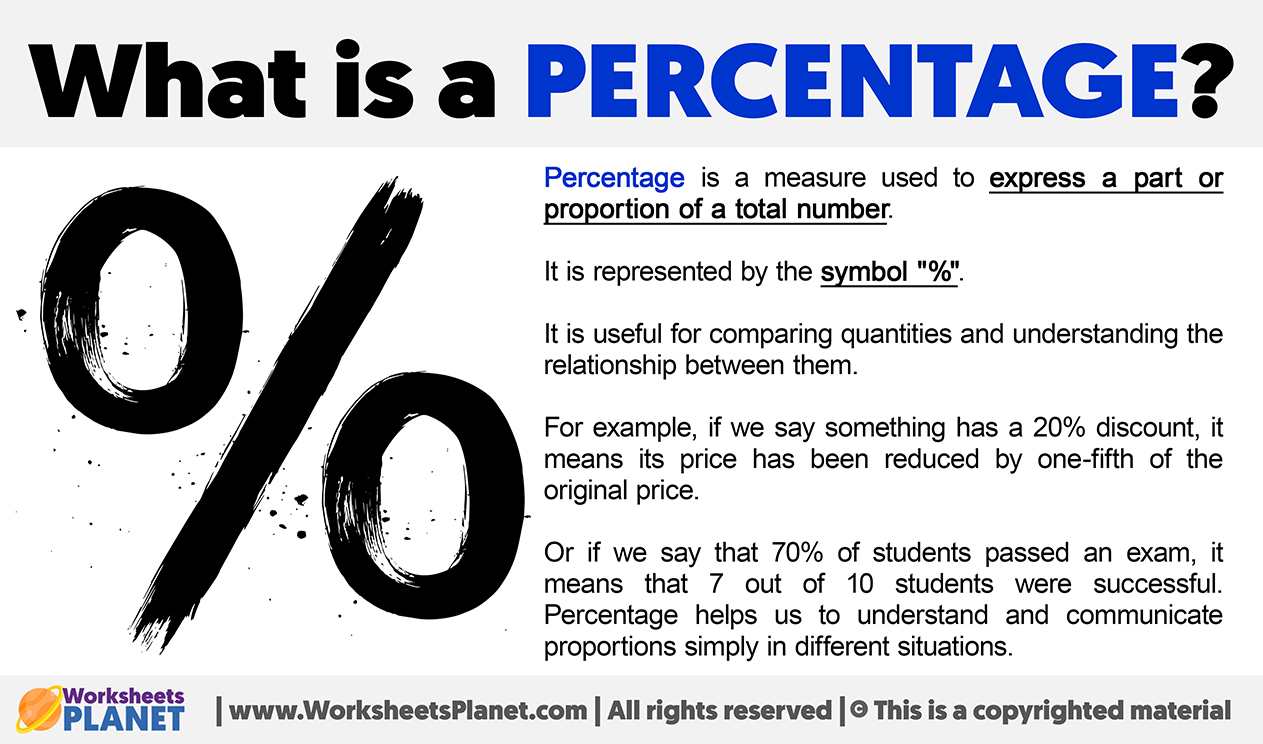
Understanding what a percentage is—and more importantly, how it functions within the global economic ecosystem—is the first step toward true financial independence. It allows investors to compare apples to oranges, such as comparing a high-yield savings account to a volatile stock market index, by distilling complex fluctuations into a single, standardized metric.
The Mathematics of Money: Why Percentages Matter
In personal and business finance, absolute numbers often hide the truth. If a company makes $1 million in profit, it sounds successful. However, if that company spent $990,000 to make that million, its “percentage” of profit—the margin—is only 1%. Conversely, a small side hustle that makes $10,000 in profit on $20,000 of revenue has a 50% margin. The percentage reveals the efficiency and sustainability of the venture in a way that the raw dollar amount cannot.
From Fractions to Financial Decimals
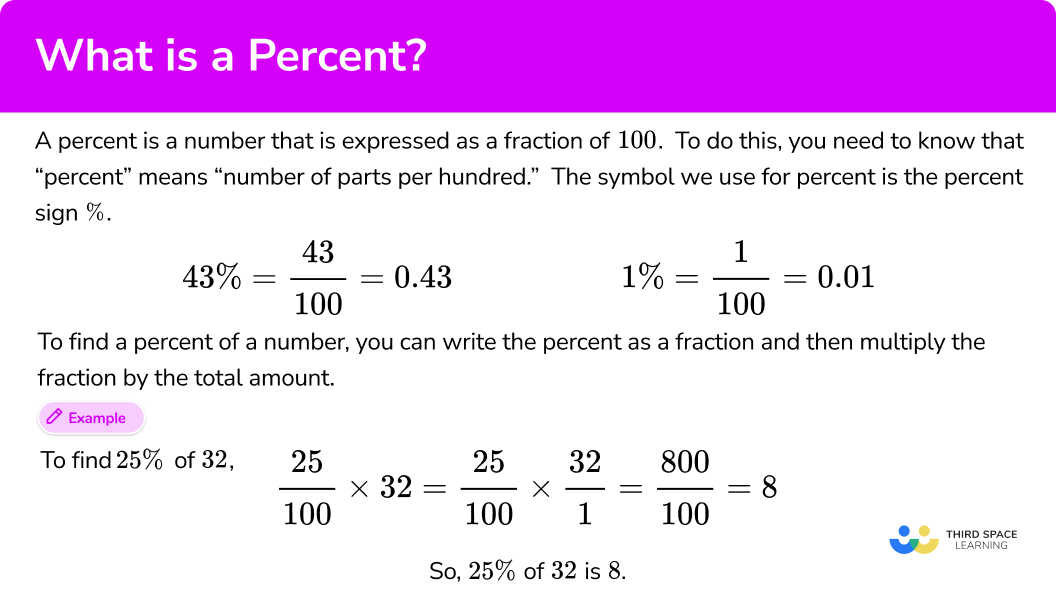
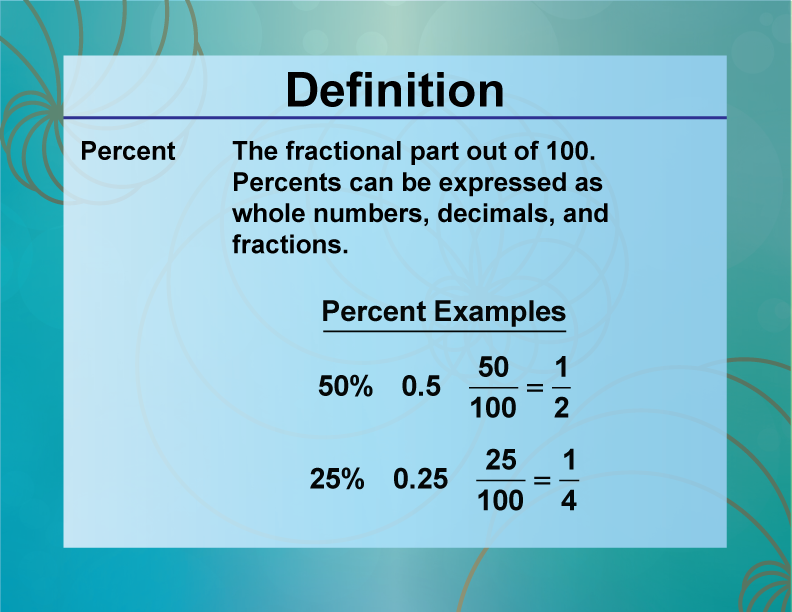
The term “percent” comes from the Latin per centum, meaning “by the hundred.” In financial calculations, we often convert these into decimals to simplify equations. For instance, a 5% interest rate becomes 0.05 in a spreadsheet. This conversion is the basis for all modern financial modeling. Understanding this relationship is vital for anyone using financial tools, from simple budgeting apps to complex stock valuation software. When you see a “0.75% expense ratio” on a mutual fund, being able to mentally translate that into “75 cents for every 100 dollars” is essential for grasping the impact on your long-term wealth.
The Psychology of Percentages vs. Absolute Values
Human psychology often falls prey to “percentage bias.” We might drive across town to save $10 on a $20 electronic gadget (a 50% saving), yet we won’t drive that same distance to save $10 on a $2,000 laptop (a 0.5% saving). In both cases, the gain is exactly $10. In the world of money management, high-net-worth individuals train themselves to look at the absolute impact of percentages. A 1% fee on a $1 million portfolio is $10,000—a significant sum that could fund a year’s worth of expenses for some. Learning to respect the percentage, regardless of the scale of the principal, is a hallmark of professional financial management.
Interest Rates and the Power of Compound Growth
If percentages are the language of finance, interest rates are the most important words in the dictionary. An interest rate is essentially the “price” of money. For a borrower, it is the cost of using someone else’s capital; for a lender or investor, it is the reward for deferring consumption.
APR and APY: Knowing the Difference
When dealing with credit cards, loans, or savings accounts, you will encounter two primary percentage metrics: Annual Percentage Rate (APR) and Annual Percentage Yield (APY). While they look similar, the difference is crucial. APR represents the simple interest rate over a year, while APY accounts for the effect of compounding—the process where interest earns interest. If you are an investor, you want a high APY. If you are a debtor, you want a low APR. Failing to distinguish between these two can result in thousands of dollars in hidden costs over the life of a loan.
The Rule of 72: How Percentages Predict the Future
One of the most powerful mental shortcuts in finance is the “Rule of 72.” By dividing 72 by your annual percentage return, you can estimate how many years it will take for your money to double. For example, at a 7% return (the historical average of the stock market after inflation), your investment will double roughly every 10.2 years. This simple percentage-based calculation demonstrates why starting to invest early is more important than the actual amount invested. A small percentage change in your annual return can result in a massive difference in your final net worth due to the exponential nature of compound interest.
Portfolio Management and Asset Allocation
Professional investing is less about picking “the next big stock” and more about managing percentages. Successful investors view their wealth as a pie chart, where each slice represents a percentage of their total net worth allocated to different asset classes like stocks, bonds, real estate, and cash.
Determining Your Risk Tolerance Percentage
Risk is often quantified as “volatility,” which is measured in percentage points. A high-risk portfolio might have an annual fluctuation of 20%, meaning it could go up or down by a fifth of its value in a single year. A low-risk portfolio might only fluctuate by 3%. Financial advisors help clients determine what percentage of their portfolio should be in “aggressive” assets versus “conservative” ones based on their age and goals. A common rule of thumb is the “100 minus age” rule: if you are 30, you should have 70% of your wealth in stocks. While this is a simplification, it highlights how percentages provide a roadmap for long-term financial security.
Rebalancing: Maintaining Your Target Ratios
Over time, different investments grow at different rates. If your target was a 60/40 split between stocks and bonds, a bull market might push your stock allocation to 70%. This increases your risk beyond your comfort level. Rebalancing is the disciplined act of selling a percentage of your winners to buy more of the underperformers to return to your original percentage targets. This process forces you to “buy low and sell high,” utilizing percentages as a mechanical guide to avoid emotional decision-making.
Business Finance and Profitability Metrics
For entrepreneurs and corporate leaders, percentages are the ultimate diagnostic tool. They reveal the “why” behind the “what” in a company’s financial statements.
Gross vs. Net Profit Margins
Gross profit margin is the percentage of revenue remaining after deducting the cost of goods sold. It indicates the efficiency of a company’s production process. Net profit margin, however, is the “bottom line”—the percentage of revenue left after all expenses, including taxes and interest, are paid. A company can have a high gross margin but a low net margin if its administrative costs are too high. By analyzing these percentages over time, management can identify exactly where a business is leaking capital and take corrective action.
ROI and ROE: Measuring Efficiency
Return on Investment (ROI) and Return on Equity (ROE) are the gold standards for measuring financial success. ROI is a percentage calculation of the profit made relative to the cost of the investment. If you spend $100 on marketing and generate $150 in profit, your ROI is 50%. ROE measures how effectively a company uses shareholder capital to generate earnings. For a business owner, these percentages are more important than total sales. A high-revenue business with a low ROI is often a “vanity project,” whereas a low-revenue business with a high ROI is a “wealth machine.”
Inflation and Tax: The Percentages That Take Away
While we often focus on the percentages that help our money grow, it is equally important to understand the percentages that erode our purchasing power.
Real vs. Nominal Returns
When a bank tells you that your savings account earns 4% interest, that is the “nominal” rate. However, if the annual inflation rate is 3%, your “real” return is only 1%. Inflation is the percentage increase in the price of goods and services over time. If your income and investments do not grow at a percentage higher than inflation, you are effectively becoming poorer even if the number in your bank account is increasing. Understanding the “real percentage” is the key to preserving generational wealth.
Marginal Tax Rates and Effective Tax Burdens
Taxation is almost always calculated in percentages, but the “marginal” system can be confusing. In a progressive tax system, you don’t pay one single percentage on all your income. Instead, different portions of your income are taxed at different percentage “brackets.” Your “effective tax rate” is the actual percentage of your total income that goes to the government. Strategic financial planning—such as contributing to a 401(k) or utilizing tax-loss harvesting—is essentially the art of legally reducing your effective tax percentage to keep more of what you earn.
In conclusion, a percentage is far more than a mathematical concept; it is the fundamental metric of the financial world. It provides the context necessary to evaluate opportunities, manage risks, and measure growth. By mastering the application of percentages—from interest rates and margins to inflation and tax brackets—you move from being a passive observer of your finances to an active architect of your economic future. In the world of money, those who understand percentages earn them, and those who don’t, pay them.
aViewFromTheCave is a participant in the Amazon Services LLC Associates Program, an affiliate advertising program designed to provide a means for sites to earn advertising fees by advertising and linking to Amazon.com. Amazon, the Amazon logo, AmazonSupply, and the AmazonSupply logo are trademarks of Amazon.com, Inc. or its affiliates. As an Amazon Associate we earn affiliate commissions from qualifying purchases.