
Understanding the rhythm of the financial markets is a fundamental skill for any investor, whether you are a seasoned day trader or a long-term retirement planner. While the digital age allows us to check our portfolios 24/7, the actual buying and selling of equities primarily occur within specific windows of time. Knowing the stock market hours for today and understanding the nuances of different trading sessions can significantly impact your execution price, liquidity, and overall strategy.
In this guide, we will break down the standard operating hours of the major exchanges, explore the world of extended-hours trading, and examine how global market cycles influence your domestic investments.
Understanding Regular Trading Sessions: The NYSE and Nasdaq
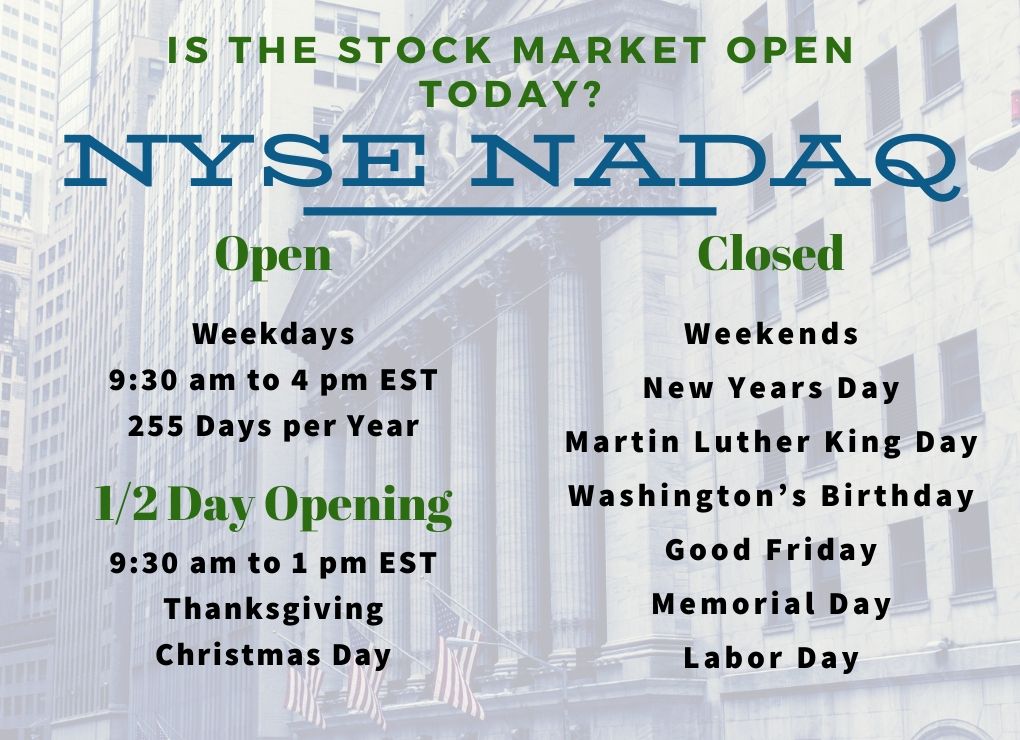
For the vast majority of retail investors in the United States, the “stock market hours” refer to the regular trading session of the two largest exchanges in the world: the New York Stock Exchange (NYSE) and the Nasdaq. These hours are standardized to ensure maximum liquidity and a concentrated environment for price discovery.
The Core 9:30 AM to 4:00 PM Window
The standard trading session for the U.S. stock market runs from 9:30 AM to 4:00 PM Eastern Time (ET), Monday through Friday. During these six and a half hours, the market experiences its highest volume of activity. This is when institutional investors, mutual funds, and retail traders are most active, leading to narrower “bid-ask spreads”—the difference between the price a buyer is willing to pay and the price a seller is willing to accept.
Trading during these core hours is generally recommended for beginners because the high volume ensures that orders are filled quickly and at prices that closely track the current market value.
The Importance of the Opening and Closing Bells
The first and last 30 minutes of the regular session are often the most volatile and significant periods of the trading day. The “Opening Bell” at 9:30 AM represents the culmination of all the news, earnings reports, and global events that occurred overnight. This often leads to a surge in volume as the market “discovers” the new equilibrium price for stocks.
Conversely, the “Closing Bell” at 4:00 PM is when institutional “window dressing” and passive index fund rebalancing occur. Many high-frequency trading algorithms and professional traders focus heavily on the “Closing Auction,” a process that determines the official daily closing price for every stock listed on the exchange.
Extended Hours Trading: Pre-Market and After-Hours
The stock market does not truly sleep. While the “floor” may close at 4:00 PM, electronic communication networks (ECNs) allow trading to continue long before the opening bell and long after the closing bell. This is known as extended-hours trading.
How Pre-Market Trading Works (4:00 AM – 9:30 AM)
Pre-market trading in the U.S. can begin as early as 4:00 AM ET, though the bulk of the activity typically starts around 8:00 AM ET. This session is vital for investors looking to react to early-morning economic data—such as Consumer Price Index (CPI) releases or unemployment numbers—which are traditionally published at 8:30 AM ET.
Navigating the After-Hours Session (4:00 PM – 8:00 PM)
The after-hours session runs from 4:00 PM to 8:00 PM ET. This is arguably the most dramatic time for individual stocks, as the vast majority of public companies release their quarterly earnings reports immediately after the 4:00 PM close. A company might report better-than-expected profits at 4:05 PM, causing its stock price to jump 10% in the after-hours session before the general public has a chance to trade the next morning.
Risks and Rewards of Extended Trading
While extended-hours trading offers the advantage of acting on news immediately, it comes with significant risks:
- Lower Liquidity: There are far fewer participants, meaning it can be harder to buy or sell large blocks of shares.
- Wide Spreads: Because there are fewer traders, the gap between the bid and ask price can be massive, leading to “slippage” where you pay much more than the last quoted price.
- Increased Volatility: Small trades can cause large price swings, which may not reflect where the stock will actually open during the regular session.
Global Market Schedules: Trading Around the World
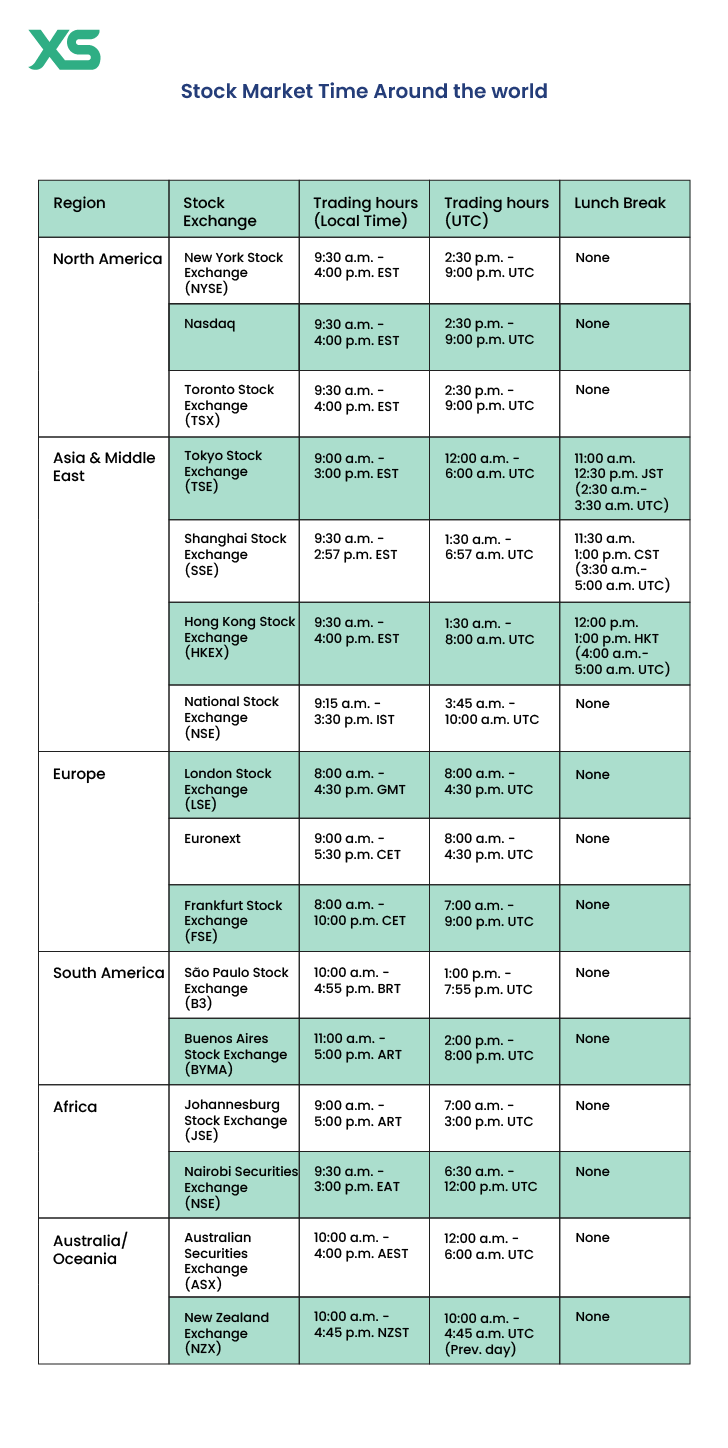
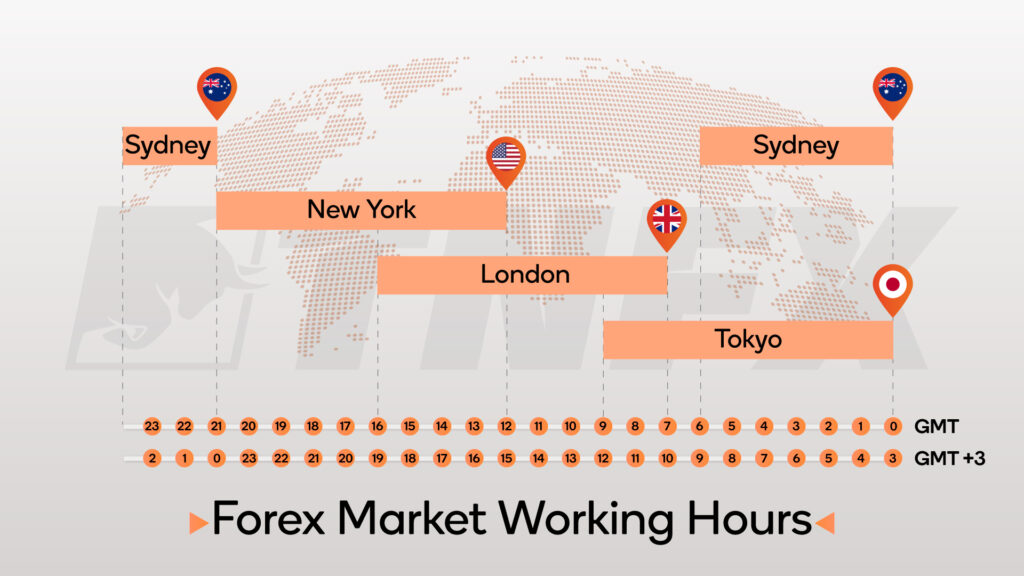
Money never sleeps, and the global financial system is a relay race. As the sun sets on New York, markets in Asia are preparing to open, followed by Europe. For a modern investor, understanding these international hours is crucial because global events dictate domestic openings.
European Markets (LSE, Euronext)
The major European markets, such as the London Stock Exchange (LSE) and the Euronext (Paris, Amsterdam, Brussels), typically operate from 8:00 AM to 4:30 PM local time. For an investor on the East Coast of the U.S., this means European markets are active from roughly 3:00 AM to 11:30 AM ET. There is a significant three-hour overlap (9:30 AM to 11:30 AM ET) where both the U.S. and European markets are open, often resulting in some of the highest global liquidity of the day.
Asian Markets (Tokyo, Hong Kong, Shanghai)
The Asian trading day begins while most Americans are finishing dinner. The Tokyo Stock Exchange (TSE) generally opens at 8:00 PM ET and closes at 2:00 AM ET (with a lunch break in between). The Hong Kong and Shanghai exchanges follow a similar late-night schedule for U.S. investors. Trends in these markets often set the tone for the “futures” market, which gives U.S. investors a preview of whether the NYSE will open higher or lower.
Dealing with Time Zone Conversions
When tracking international hours, always be mindful of Daylight Saving Time (DST). Not all countries observe DST, and those that do often switch on different dates than the United States. This can cause the “overlap” periods to shift by an hour, potentially catching traders off guard.
Market Holidays and Early Closures
Just because it is a weekday does not mean the market is open. The U.S. stock market observes several federal holidays, during which the NYSE and Nasdaq are completely closed.
Major U.S. Stock Market Holidays
The market is closed on the following days:
- New Year’s Day
- Martin Luther King, Jr. Day
- Presidents’ Day
- Good Friday
- Memorial Day
- Juneteenth National Independence Day
- Independence Day (July 4th)
- Labor Day
- Thanksgiving Day
- Christmas Day
If a holiday falls on a Saturday, the market usually closes on the preceding Friday. If it falls on a Sunday, the market closes on the following Monday.
Half-Day Sessions and Special Schedules
In addition to full closures, the market occasionally operates on an abbreviated schedule. The most notable example is the day after Thanksgiving (Black Friday) and sometimes Christmas Eve, when the market closes early at 1:00 PM ET. During these half-day sessions, trading volume is typically very thin, as many institutional traders take the day off, leading to quiet and sometimes unpredictable price movements.
Maximizing Your Strategy Based on Market Timing
Knowing the hours is the first step; knowing how to trade within those hours is where the profit lies. Your strategy should shift depending on the clock.
The Best Times of Day to Buy and Sell
For the average investor, the “Golden Hours” are often considered to be the first hour (9:30 AM – 10:30 AM) and the last hour (3:00 PM – 4:00 PM). The morning hour provides the volatility necessary for day traders to find opportunities, while the final hour provides the stability and volume required for large-scale entries or exits.
The “Mid-day Lull” (12:00 PM – 2:00 PM ET) is generally the slowest time of the day. Volume drops as traders in New York take lunch, and price action often becomes “range-bound,” meaning stocks move sideways without a clear direction.
How Market Hours Impact Liquidity and Volatility
Liquidity is your best friend in investing. It allows you to enter and exit positions without moving the price against yourself. If you try to sell a large position at 7:45 PM ET in the after-hours session, you might find that the lack of buyers forces you to accept a price 2% lower than the last trade.
However, for sophisticated investors, the volatility of the off-hours is where the “alpha” (market-beating returns) is found. By reacting to a news event at 4:15 PM while the rest of the world is waiting for the next morning, you may be able to capture a price movement before it becomes common knowledge.
In conclusion, “what are the stock market hours today” is a question that requires looking at more than just the 9:30 AM start time. By mastering the regular session, navigating the risks of extended hours, and keeping an eye on global cycles and holiday schedules, you position yourself as a more disciplined and informed participant in the global financial landscape. Success in the money markets is often a matter of timing; make sure your clock is synchronized with the world’s exchanges.
aViewFromTheCave is a participant in the Amazon Services LLC Associates Program, an affiliate advertising program designed to provide a means for sites to earn advertising fees by advertising and linking to Amazon.com. Amazon, the Amazon logo, AmazonSupply, and the AmazonSupply logo are trademarks of Amazon.com, Inc. or its affiliates. As an Amazon Associate we earn affiliate commissions from qualifying purchases.