
For investors, analysts, and financial enthusiasts, the NASDAQ is more than just a stock exchange; it is a barometer for the global innovation economy. When people ask “how many NASDAQ stocks” are currently trading, they are often looking for a static number. However, the answer is dynamic, reflecting the constant ebb and flow of the global financial landscape. Currently, the NASDAQ Stock Market hosts approximately 3,500 to 3,700 listed companies, though this number fluctuates weekly based on new public offerings, mergers, and regulatory delistings.
Understanding the volume and variety of stocks on the NASDAQ is essential for anyone looking to build a diversified portfolio. As the world’s first electronic stock market, the NASDAQ has evolved into the primary home for growth-oriented companies, particularly in the technology, biotechnology, and consumer services sectors.
Understanding the NASDAQ Ecosystem and Its Listing Tiers
The total number of stocks on the NASDAQ is distributed across three distinct market tiers. These tiers are designed to categorize companies based on their market capitalization, liquidity, and financial standing. When evaluating the “how many” aspect of the exchange, it is important to recognize that not all NASDAQ stocks are created equal in terms of regulatory oversight or prestige.
The Three Tiers of the NASDAQ Market
The NASDAQ is structured into three specific levels:
- The NASDAQ Global Select Market: This is the most prestigious tier, reserved for large-cap companies that meet the highest financial and liquidity requirements. It includes many of the world’s most recognizable brands. Approximately 1,200 to 1,500 companies reside in this tier.
- The NASDAQ Global Market: This mid-tier category consists of companies with a global reach but slightly lower market capitalization requirements than the Global Select tier.
- The NASDAQ Capital Market: Formerly known as the “SmallCap” market, this tier focuses on emerging companies looking to raise capital. While the listing requirements are less stringent than the higher tiers, these companies are still subject to rigorous corporate governance standards.
The Difference Between the NASDAQ Composite and the NASDAQ-100
When discussing the number of stocks, many investors confuse the exchange itself with its primary indices. The NASDAQ Composite Index includes almost all stocks listed on the NASDAQ exchange—meaning it tracks over 3,000 securities. In contrast, the NASDAQ-100 Index is a modified capitalization-weighted index that tracks only the 100 largest non-financial companies listed on the exchange. If you are looking for stability and “blue-chip” growth, you are likely looking at the 100 stocks; if you are looking for the total breadth of the market, you are looking at the 3,000+ stocks in the Composite.
Why the Number of NASDAQ Stocks Fluctuates
The count of NASDAQ-listed companies is never permanent. On any given day, the exchange may add new names through Initial Public Offerings (IPOs) or remove others due to corporate consolidations. For an investor, tracking these changes provides insight into the health of the “Money” sector and the appetite for risk in the broader economy.
The Impact of Initial Public Offerings (IPOs)
The primary driver for an increase in the number of NASDAQ stocks is the IPO market. The NASDAQ has historically been the preferred destination for tech startups and healthcare innovators. During “bull markets,” the number of listings tends to climb as venture-backed companies seek to go public to provide liquidity for early investors and raise capital for expansion. In record-breaking years, the exchange has seen hundreds of new listings in a single twelve-month period.
Delistings, Mergers, and Acquisitions
Conversely, the number of stocks can decrease due to several factors:
- Mergers and Acquisitions (M&A): When one large company acquires another NASDAQ-listed firm, the acquired company’s ticker symbol is removed from the exchange, reducing the total count.
- Going Private: Occasionally, a public company is bought out by a private equity firm (a “leveraged buyout”), leading to its removal from the public markets.
- Regulatory Delistings: The NASDAQ maintains strict requirements regarding minimum share price (often $1.00) and timely financial reporting. Companies that fail to meet these standards are moved to the “Over-the-Counter” (OTC) markets, effectively removing them from the NASDAQ count.
Sector Diversification Within the NASDAQ
A common misconception is that the NASDAQ is exclusively a “tech” exchange. While technology firms make up a significant plurality of the listings, the exchange is actually quite diverse. Understanding the sector breakdown helps investors understand where the “Money” is flowing and how to balance their own financial interests.
The Tech Dominance and the “Magnificent Seven”
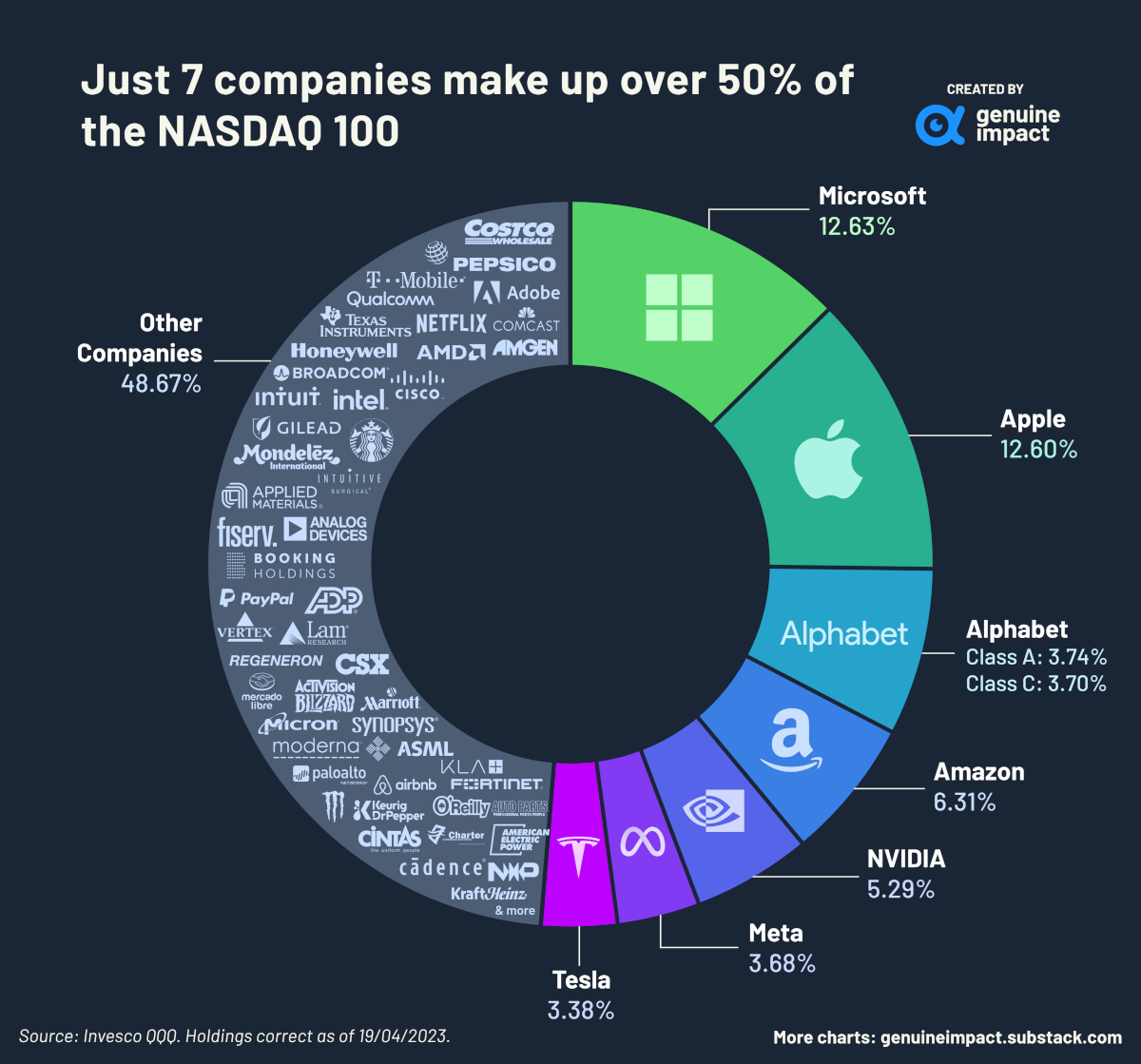
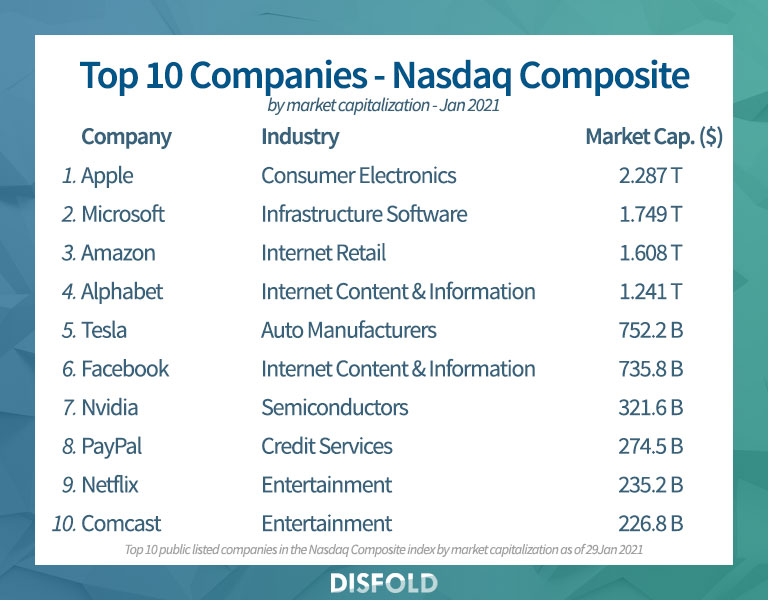
It is impossible to discuss the NASDAQ without acknowledging the outsized influence of technology. Roughly 50% of the NASDAQ’s total market value is tied to tech companies. This includes the “Magnificent Seven”—Apple, Microsoft, Alphabet, Amazon, Nvidia, Meta, and Tesla. While these represent only seven of the thousands of stocks, their performance often dictates the movement of the entire exchange.
The Rise of Healthcare and Biotechnology
In terms of the sheer number of companies, the healthcare sector—specifically biotechnology—is a massive component of the NASDAQ. Many of the 3,500+ stocks are small-to-mid-cap biotech firms working on specialized drug therapies or medical devices. These stocks are often highly volatile, offering the potential for massive gains or total losses based on FDA approvals and clinical trial results.
Consumer Services and Retail Giants
Beyond tech and science, the NASDAQ is home to major players in the consumer services sector. Companies like Starbucks, Costco, and Netflix are listed here. This diversification is why the NASDAQ is often viewed as a proxy for the modern consumer economy, reflecting how we shop, eat, and entertain ourselves in a digitally-integrated world.
Investment Strategies for Navigating Thousands of Stocks
With over 3,500 stocks to choose from, the “paradox of choice” can overwhelm individual investors. Success in the financial markets requires a disciplined approach to filtering these thousands of options into a manageable and profitable portfolio.
Index Funds vs. Individual Stock Picking
For most people managing their personal finance, buying individual stocks out of a pool of 3,500 is risky and time-consuming.
- The Case for ETFs: Exchange-Traded Funds (ETFs) allow you to own a piece of the entire NASDAQ ecosystem without having to research every single company. The Invesco QQQ Trust, for example, tracks the NASDAQ-100, providing exposure to the top-tier growers.
- The Case for Individual Selection: More sophisticated investors may look for “hidden gems” in the NASDAQ Capital Market—smaller companies with the potential to move up to the Global Select tier. This requires deep fundamental analysis of balance sheets and growth prospects.
Managing Volatility and Risk
Because the NASDAQ is heavily weighted toward growth and innovation, it tends to be more volatile than the New York Stock Exchange (NYSE). When interest rates rise, growth stocks often see their valuations compressed. To protect your capital, it is essential to look at the “how many” question through the lens of risk management. Diversifying across different sectors within the NASDAQ—balancing a high-growth software stock with a stable consumer staple like Costco—can help mitigate the swings of the market.
The Importance of Liquidity and Volume
When trading among the thousands of available NASDAQ stocks, liquidity is a critical factor. The top 100 stocks have massive daily trading volumes, meaning you can buy or sell shares instantly at a fair price. However, many of the smaller-cap stocks among the 3,500+ may have “thin” liquidity. For a retail investor, this means it might be harder to exit a position during a market downturn without significantly impacting the share price. Always check the average daily trading volume before committing capital to the lesser-known names on the exchange.

Conclusion: The Ever-Evolving Market
The answer to “how many NASDAQ stocks” is a moving target that represents the heartbeat of the modern financial world. Whether the count is 3,500 or 3,700, the significance remains the same: the NASDAQ provides a platform for the most ambitious companies to find the capital they need to change the world.
For the investor, the total number of stocks serves as a reminder of the vast opportunities available in the public markets. By understanding the tiers of the exchange, the reasons for listing fluctuations, and the sectoral diversity of the companies involved, you can better position your personal finances to benefit from the growth engine of the global economy. In the world of money and investing, knowledge of the market’s structure is the first step toward long-term wealth creation.
aViewFromTheCave is a participant in the Amazon Services LLC Associates Program, an affiliate advertising program designed to provide a means for sites to earn advertising fees by advertising and linking to Amazon.com. Amazon, the Amazon logo, AmazonSupply, and the AmazonSupply logo are trademarks of Amazon.com, Inc. or its affiliates. As an Amazon Associate we earn affiliate commissions from qualifying purchases.