
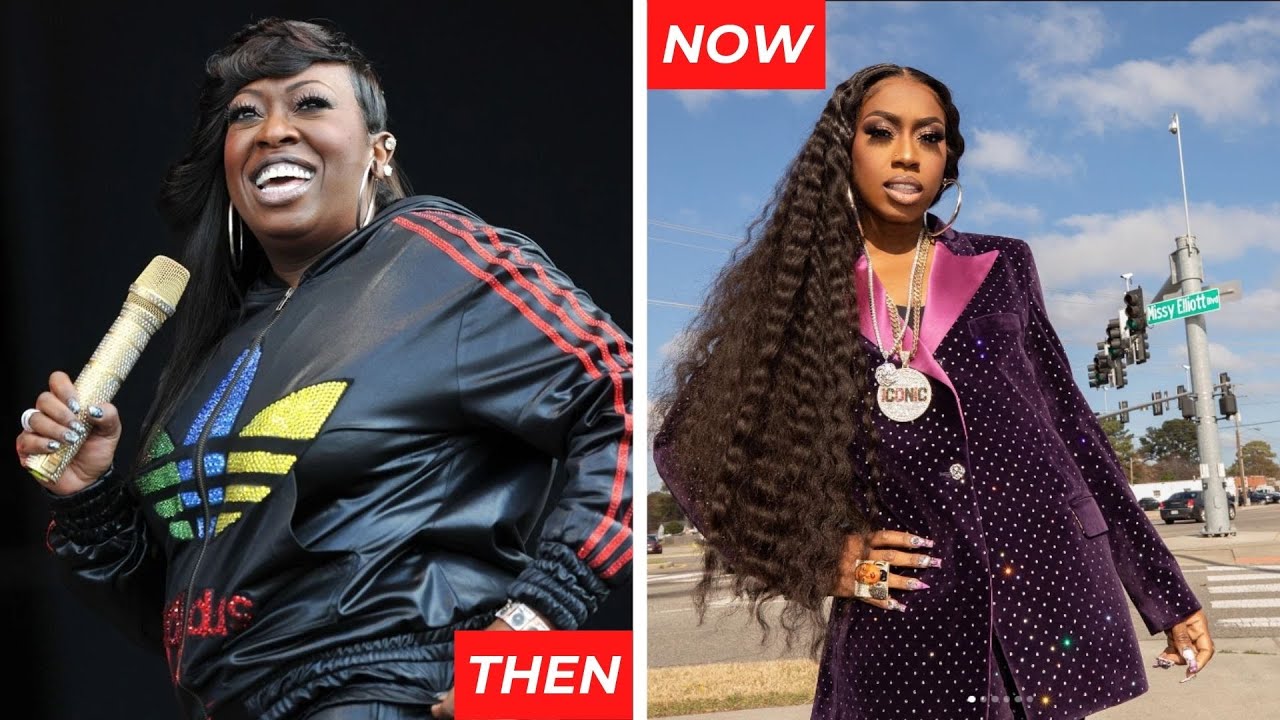
For many years, the question “What happened to Missy Elliott?” echoed through the halls of pop culture and music forums. After a decade of unrivaled dominance in the late 1990s and early 2000s, the “Queen of Rap” seemed to retreat from the spotlight. However, from a brand strategy perspective, Missy Elliott’s trajectory is not a story of a fading star, but rather a sophisticated case study in brand preservation, strategic scarcity, and successful reinvention.
In the world of corporate and personal branding, maintaining relevance over three decades is a feat rarely achieved. Missy Elliott didn’t just survive the transition from the analog to the digital era; she leveraged her unique brand identity to become a symbol of timeless innovation. By examining her career through the lens of brand management, we can uncover how she navigated health challenges, market shifts, and legacy building to remain one of the most valuable “IPs” in music history.

The Architecture of an Iconic Brand Identity
Every successful brand requires a “Unique Selling Proposition” (USP). In the mid-90s, the landscape of female hip-hop was largely defined by hyper-sexualization or gritty street narratives. Missy “Misdemeanor” Elliott entered the market with a brand identity that was radically different: the “Afrofuturist Disruptor.”
The Visual Vanguard: Breaking Traditional Beauty Standards
Missy Elliott’s brand was built on the foundation of visual disruption. While her peers were leaning into traditional glamor, Missy debuted in a giant, inflatable “trash bag” suit for the “The Rain (Supa Dupa Fly)” music video. This wasn’t just a fashion choice; it was a brilliant branding move. It established her as a visual artist who prioritized creativity over conformity. By refusing to be pigeonholed by her physical appearance, she built a brand that was immune to the ageist and sexist critiques that often plague female artists. This visual equity allowed her to own the “futuristic” aesthetic long before it became a mainstream marketing staple.
Sonic Innovation: The Missy-Timbaland Production Era
A brand is only as good as its product. Together with producer Timbaland, Missy developed a sonic signature that acted as a “brand sound.” The off-beat rhythms, avant-garde sound effects, and intricate layering created a product that was instantly recognizable. In marketing terms, this is equivalent to Coca-Cola’s unique bottle shape or Apple’s minimalist interface. When you heard a Missy Elliott track, you didn’t need to be told who it was. This consistency in product quality established high brand loyalty and set a benchmark that competitors struggled to replicate.
The Power of the Strategic Pivot: Managing the Hiatus
To the casual observer, Missy Elliott’s reduced output in the late 2000s looked like a decline. In reality, it was a period of “Brand Hibernation” necessitated by a health crisis. In 2008, Elliott was diagnosed with Graves’ disease, an autoimmune disorder that affected her motor skills and energy levels.
Managing Brand Vulnerability: The Human Element
In the modern era of personal branding, transparency is often touted as a virtue. However, Missy Elliott chose a path of “selective vulnerability.” She didn’t turn her struggle into a reality TV arc or a social media spectacle. By stepping back, she protected the high-energy, “superhuman” persona that was central to her brand. From a brand management standpoint, this prevented “brand dilution.” Instead of releasing sub-par content while ill, she chose to focus on songwriting and production for other artists (like Beyoncé and Ciara), effectively moving from a “B2C” (Business to Consumer) model to a “B2B” (Business to Business) model within the industry.
Scarcity as a Marketing Tactic
In an economy of attention, “constant presence” is the standard. However, Missy Elliott leveraged the “Scarcity Principle.” By remaining out of the public eye for long stretches, she increased the perceived value of her appearances. When she finally re-emerged—most notably during the 2015 Super Bowl Halftime Show—the “market” responded with overwhelming enthusiasm. Her catalog sales spiked by over 1,000% following that performance. This proved that her brand equity had not diminished; it had merely been stored, waiting for the right moment of “reactivation.”
Reinvention and the Return to Relevance in the Digital Age

The most difficult challenge for any legacy brand is staying relevant to a younger demographic without alienating the core “loyalist” base. Missy Elliott’s recent years have been a masterclass in modern brand scaling.
Leveraging Nostalgia in the Digital Age
Social media platforms like TikTok have become the new frontier for music branding. Missy Elliott’s brand proved to be “future-proof” because her 20-year-old visuals and sounds were already optimized for the short-form, high-impact nature of digital content. Her team successfully leaned into nostalgia while positioning her as the “mother of the modern aesthetic.” By engaging with younger artists who cite her as an influence, she has successfully performed a “brand transfer,” where the cool-factor of New-Gen artists (like Lizzo or Katy Perry) reinforces her own status as a pioneer.
Curating a Legacy through High-Value Milestones
Rather than chasing chart hits, the Missy Elliott brand has shifted toward “Prestige Branding.” Her recent accolades—becoming the first female rapper inducted into the Songwriters Hall of Fame, receiving the MTV VMA Video Vanguard Award, and her induction into the Rock & Roll Hall of Fame—serve as high-level endorsements. These are not just trophies; they are “trust signals” that solidify her brand as a permanent fixture in the cultural pantheon. Her 2024 “Out of This World” tour is the culmination of this strategy, marketed not just as a concert, but as a premium “experience” celebrating her legacy.
Lessons in Personal Branding for Modern Entrepreneurs
The “What happened to Missy Elliott” narrative offers several high-value insights for anyone looking to build a sustainable personal or corporate brand.
Authenticity Over Conformity
The most enduring brands are those that dare to be “weird.” Missy Elliott’s refusal to follow the industry’s standard “playbook” for female artists created a blue ocean strategy—she had no direct competitors because no one else was doing what she did. For entrepreneurs, this highlights the importance of finding a niche that is authentically yours and doubling down on it, even if it seems unconventional at first.
Protecting Intellectual and Creative Equity
Missy Elliott is a prolific songwriter and producer with credits on dozens of hits for other artists. This diversified her “revenue streams” and ensured her brand remained influential even when her face wasn’t on the album cover. In business, this is the equivalent of a company owning the underlying technology used by its competitors. By controlling the “means of production,” you ensure your brand’s long-term survival regardless of market trends.
The Value of Professional Silence
In an era of oversharing, there is immense power in knowing when to be quiet. Missy Elliott’s “absence” allowed the public to miss her, creating a vacuum that only she could fill. This teaches us that brand growth isn’t always linear. Sometimes, the best way to move a brand forward is to step back, refine the product, and wait for the market to realize your value.
The Future Outlook of the Missy Elliott Brand
As we look toward the future, the Missy Elliott brand is in its most powerful phase yet: the “Icon Phase.” She has successfully transitioned from a contemporary artist competing for radio play to a cultural institution.
What happened to Missy Elliott? She became a blueprint. Her brand today is a hybrid of nostalgia and futurism, leveraging a deep catalog of hits while continuing to push visual boundaries through AI and new digital media. She has proven that a personal brand, when built on a foundation of genuine innovation and managed with strategic patience, can transcend the temporary cycles of fame.
Missy Elliott didn’t go anywhere; she simply outpaced the industry. Her story is a reminder that in the world of branding, it’s not about who moves the fastest, but who builds something that lasts. For any brand strategist or entrepreneur, the “Misdemeanor” model is a shining example of how to turn a moment of disruption into a lifetime of influence.
aViewFromTheCave is a participant in the Amazon Services LLC Associates Program, an affiliate advertising program designed to provide a means for sites to earn advertising fees by advertising and linking to Amazon.com. Amazon, the Amazon logo, AmazonSupply, and the AmazonSupply logo are trademarks of Amazon.com, Inc. or its affiliates. As an Amazon Associate we earn affiliate commissions from qualifying purchases.