
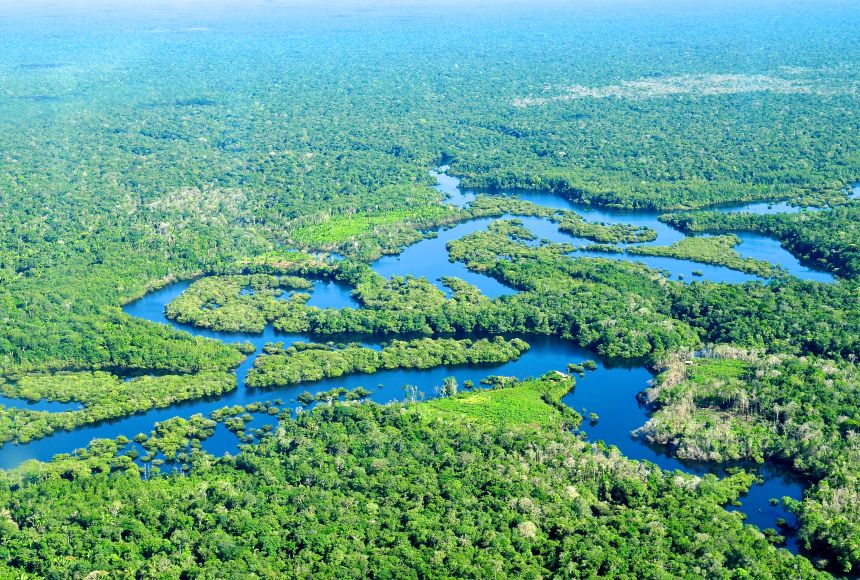
When investors discuss “emerging markets” or “diversified portfolios,” the conversation usually revolves around tech stocks, real estate, or precious metals. However, the most significant asset on the global balance sheet is one that is rarely quantified in traditional accounting: the Amazon rainforest. Far from being just a biological marvel, the Amazon is a foundational pillar of the global financial system. Its importance lies in its role as a provider of “natural capital”—a suite of ecosystem services that underpin trillion-dollar industries, from global agribusiness to the burgeoning carbon credit market.
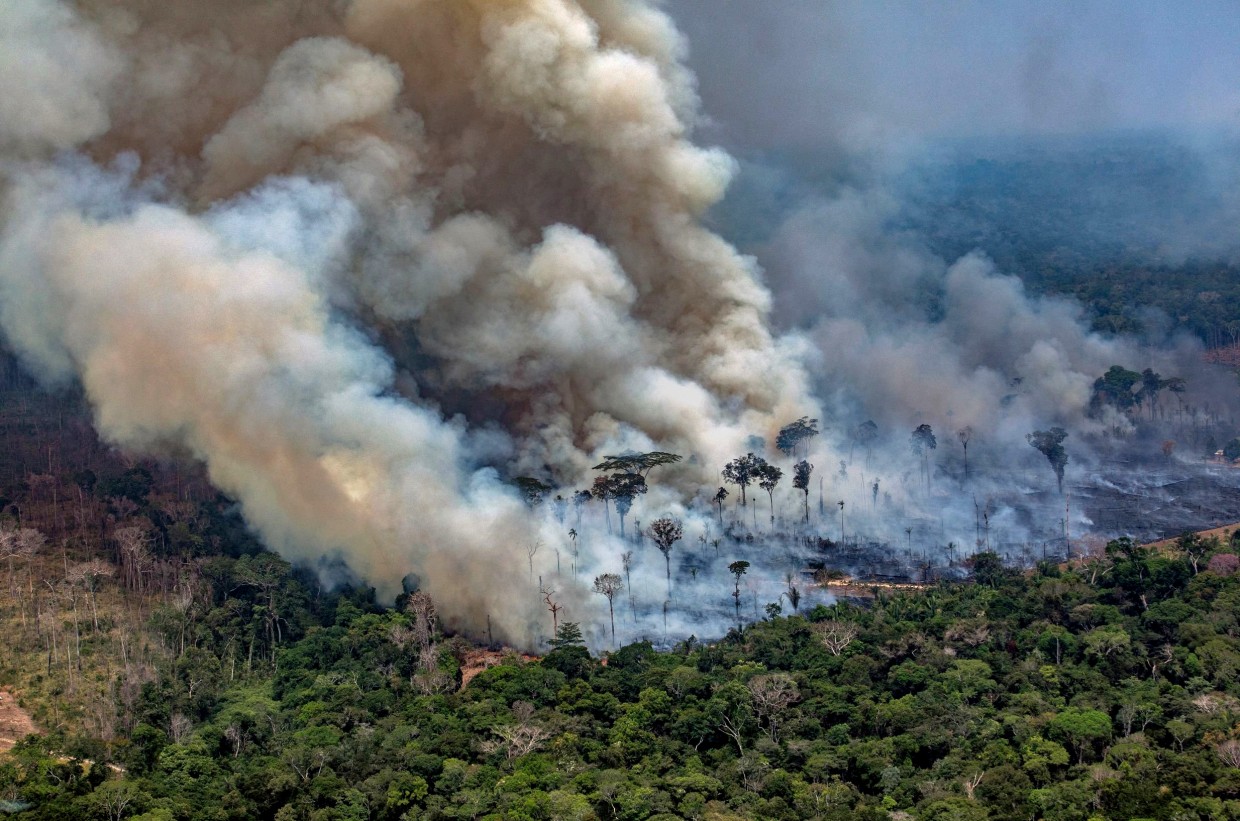
Understanding why the Amazon is important through a financial lens requires a shift in perspective. We must view the rainforest not as a static wilderness, but as a high-functioning economic engine. If this engine fails, the resulting “margin call” would trigger a global financial crisis unlike any we have seen.
Natural Capital and the Valuation of Biodiversity
In modern finance, the concept of “Natural Capital” has moved from the fringes of environmentalism to the center of institutional investing. Natural capital refers to the world’s stocks of geology, soil, air, water, and all living organisms. The Amazon is the world’s most concentrated repository of this capital.
Ecosystem Services as Hidden Subsidies
The Amazon rainforest provides essential services that act as massive, interest-free subsidies to the global economy. One of the most critical is the “biotic pump” effect—the process by which the forest releases moisture into the atmosphere, creating “flying rivers” that transport rain across South America.
For the agribusiness sector, this is a multi-billion dollar service. Large-scale soy and beef production in Brazil and Argentina depends almost entirely on this rainfall. Without the Amazon, the costs of irrigation would skyrocket, rendering many agricultural operations unprofitable. When we ask why the Amazon is important for money, the answer begins with the fact that it secures the production of global food commodities, keeping inflation in check and ensuring the solvency of agricultural debt.
The ROI of Conservation vs. Exploitation
For decades, the economic logic of the Amazon was based on extraction: logging, mining, and clearing land for cattle. However, recent economic modeling suggests that the return on investment (ROI) for conservation far outstrips that of exploitation.
A “standing forest” economy focuses on sustainable harvesting of non-timber products, ecotourism, and bio-based industries. Studies indicate that the long-term economic value of the Amazon’s ecosystem services is estimated at over $8 billion per year for Brazil alone. In contrast, the short-term gains from deforestation are often concentrated in the hands of a few, while the long-term financial costs—in the form of droughts, lost soil fertility, and climate mitigation—are socialized across the global economy.
The Carbon Credit Market: Investing in the Amazon’s Future
As the world moves toward “Net Zero” targets, the financial importance of the Amazon has become inextricably linked to the carbon markets. The forest acts as one of the world’s largest terrestrial carbon sinks, sequestering billions of tons of carbon dioxide. In the world of business finance, this capacity has been transformed into a tradable financial instrument.
Understanding Voluntary Carbon Markets (VCM)
The Voluntary Carbon Market (VCM) allows corporations to purchase carbon credits to offset their emissions. Each credit represents one metric ton of CO2 either removed from the atmosphere or prevented from being released. The Amazon is the “blue chip” asset of the VCM.
High-quality carbon projects in the Amazon—such as REDD+ (Reducing Emissions from Deforestation and Forest Degradation)—provide a mechanism for private capital to flow into conservation. For investors, these projects offer a way to hedge against future carbon taxes and regulatory changes. As demand for high-integrity credits grows, the valuation of Amazon-based carbon assets is projected to increase significantly, creating a new “green” asset class for institutional portfolios.
Blockchain and Transparency in Carbon Trading
One of the primary hurdles in carbon investing has been “double counting” and lack of transparency. This is where financial technology (FinTech) intersects with the Amazon. New platforms are utilizing blockchain technology to tokenize carbon credits, providing an immutable ledger of ownership and impact.
By integrating IoT (Internet of Things) sensors and satellite monitoring with blockchain, developers can provide real-time data on the health of the forest tracts being traded. This level of transparency is attracting a new wave of “impact investors” and “regenerative finance” (ReFi) enthusiasts. For the tech-savvy investor, the Amazon is no longer just a forest; it is a verifiable data set that represents a stable, long-term store of value.
Agribusiness and the Financial Risks of Deforestation
While the Amazon represents an opportunity for new income streams, it also represents a significant source of systemic risk. Financial institutions are increasingly recognizing that deforestation is not just an ethical issue; it is a material financial risk that can impact stock prices, credit ratings, and insurance premiums.
Supply Chain Volatility and Commodity Prices
The global supply chain is highly sensitive to environmental disruptions. As the Amazon approaches a “tipping point”—the stage at which the forest can no longer sustain itself and begins to turn into a dry savanna—the resulting weather changes will disrupt global commodity markets.
We are already seeing this in the price of coffee, cocoa, and grains. Financial tools used to hedge against commodity price volatility are becoming more expensive as the predictability of rainfall patterns declines. For personal finance and large-scale investing alike, the health of the Amazon is a key indicator of future food security and price stability.
ESG Compliance and Access to Capital
Environmental, Social, and Governance (ESG) criteria are now a standard part of corporate identity and brand strategy. Companies that are linked to Amazonian deforestation through their supply chains face significant financial repercussions.
Major investment firms and sovereign wealth funds have begun divesting from companies that fail to meet strict “zero-deforestation” standards. This means that for a business, protecting the Amazon is no longer a PR move—it is a requirement for maintaining access to low-cost capital. Firms that ignore this risk face higher borrowing costs and potential exclusion from major indices, directly impacting their market capitalization and shareholder value.
Bioprospecting: The Trillion-Dollar Pharmaceutical Frontier
Perhaps the most undervalued financial aspect of the Amazon is its “genetic library.” The rainforest is home to millions of species, many of which contain unique biochemical compounds that have yet to be discovered.
Investing in Ethnobotany
The pharmaceutical industry has long relied on nature as a source of innovation. Aspirin, quinine, and many cancer treatments were derived from forest plants. The Amazon represents an untapped frontier for “bioprospecting”—the search for biological sources that can be developed into commercial products.
Investing in sustainable bioprospecting is a high-stakes, high-reward venture. By partnering with indigenous communities and utilizing modern genomic sequencing, biotech firms are looking for the next generation of antibiotics, antivirals, and specialized enzymes. This is a form of intellectual property (IP) that is currently undervalued on global markets.
Intellectual Property and Sustainable Revenue Streams
The transition from an extractive economy to a “bioeconomy” requires a sophisticated legal and financial framework regarding Intellectual Property. Who owns the rights to a chemical compound found in a rare Amazonian orchid?
As international treaties like the Nagoya Protocol gain traction, a new financial model is emerging: one where the “provider” countries and communities receive a share of the royalties from products derived from their biodiversity. For business finance, this creates a sustainable, long-term revenue stream that incentivizes the protection of the forest over its destruction. It turns the Amazon into a perpetual R&D lab for the global life sciences sector.

Conclusion: The Bottom Line on the Amazon
Why is the Amazon rainforest important? From a financial perspective, it is the bedrock upon which much of our global prosperity is built. It is a provider of essential services, a stabilizer of global markets, a source of new financial instruments, and a repository of future technological breakthroughs.
For the modern investor, financial advisor, or business leader, the Amazon is no longer an external “environmental” factor. It is an internal economic necessity. Protecting the Amazon is not an act of charity; it is a strategic investment in the stability and growth of the global economy. As we move further into the 21st century, the ability to value, protect, and sustainably leverage the natural capital of the Amazon will be the defining characteristic of a successful and resilient financial system.
aViewFromTheCave is a participant in the Amazon Services LLC Associates Program, an affiliate advertising program designed to provide a means for sites to earn advertising fees by advertising and linking to Amazon.com. Amazon, the Amazon logo, AmazonSupply, and the AmazonSupply logo are trademarks of Amazon.com, Inc. or its affiliates. As an Amazon Associate we earn affiliate commissions from qualifying purchases.