
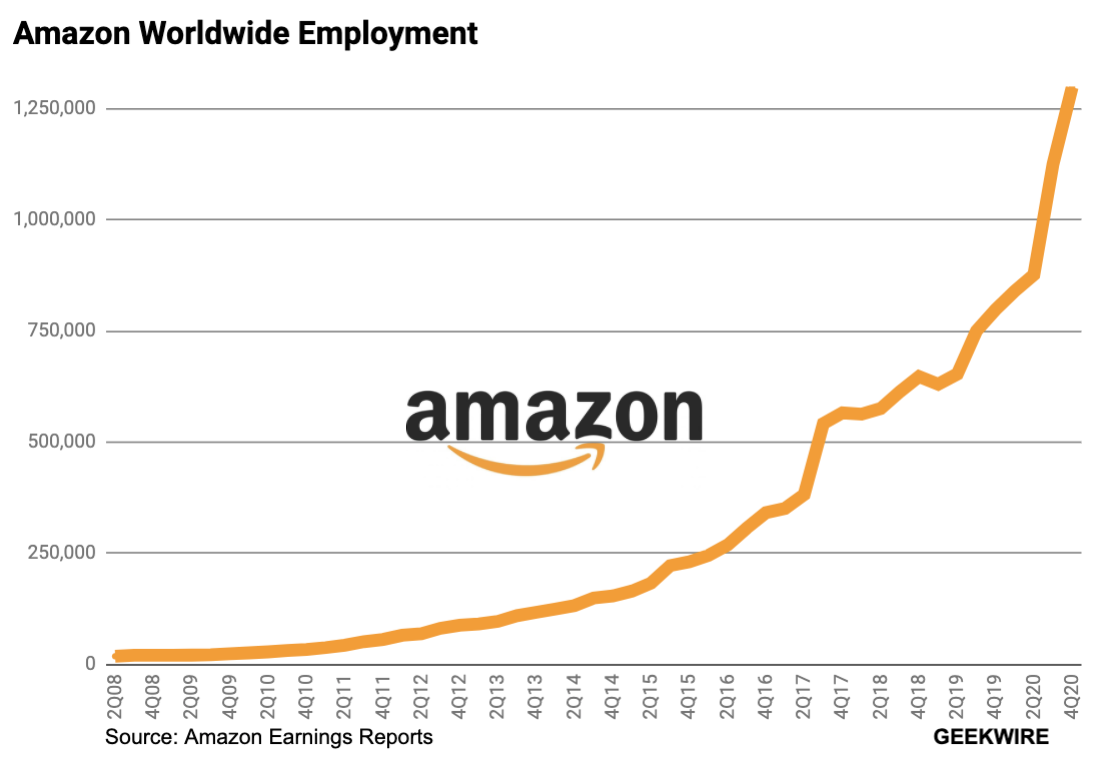
Amazon is no longer just an e-commerce platform; it is a global economic sovereign. To understand the sheer magnitude of its operations, one must look past the Prime delivery vans and the AWS cloud servers and focus on the company’s most significant investment: its people. As of recent filings, Amazon employs approximately 1.5 million full-time and part-time workers globally. This figure does not even account for the hundreds of thousands of delivery service partners or seasonal contractors that swell the ranks during peak shopping holidays.
From a financial perspective, managing a workforce of this size is a masterclass in capital allocation, operational efficiency, and risk management. This article explores the fiscal implications of Amazon’s massive headcount, the cost of human capital, and the strategic transition toward automation as the company seeks to protect its bottom line in an increasingly volatile global economy.

The Financial Blueprint of a Global Giant
Amazon’s workforce is a direct reflection of its “Day 1” philosophy—a commitment to constant growth and market dominance. However, maintaining over 1.5 million employees creates a financial structure that is unique in the corporate world. Unlike software-heavy tech firms like Google or Meta, which maintain high revenue-per-employee ratios with relatively small headcounts, Amazon operates a labor-intensive logistics machine that functions more like a traditional industrial power.
Tracking Headcount Growth vs. Revenue
The trajectory of Amazon’s hiring is inextricably linked to its revenue cycles. The most dramatic shift occurred during the 2020-2022 period, where the company doubled its fulfillment network and hired hundreds of thousands of people to meet the pandemic-driven surge in online shopping. During this era, the correlation between headcount and revenue was nearly linear.
However, in the current fiscal landscape, the focus has shifted from expansion to optimization. Investors now look at “revenue per employee” as a key metric of health. When Amazon’s headcount plateaus while its revenue continues to climb—thanks to high-margin sectors like Amazon Web Services (AWS) and Advertising—its profit margins expand. For the business analyst, the number of employees is a “cost of goods sold” variable that must be meticulously balanced against consumer demand.
Labor as the Engine of Operational Cash Flow
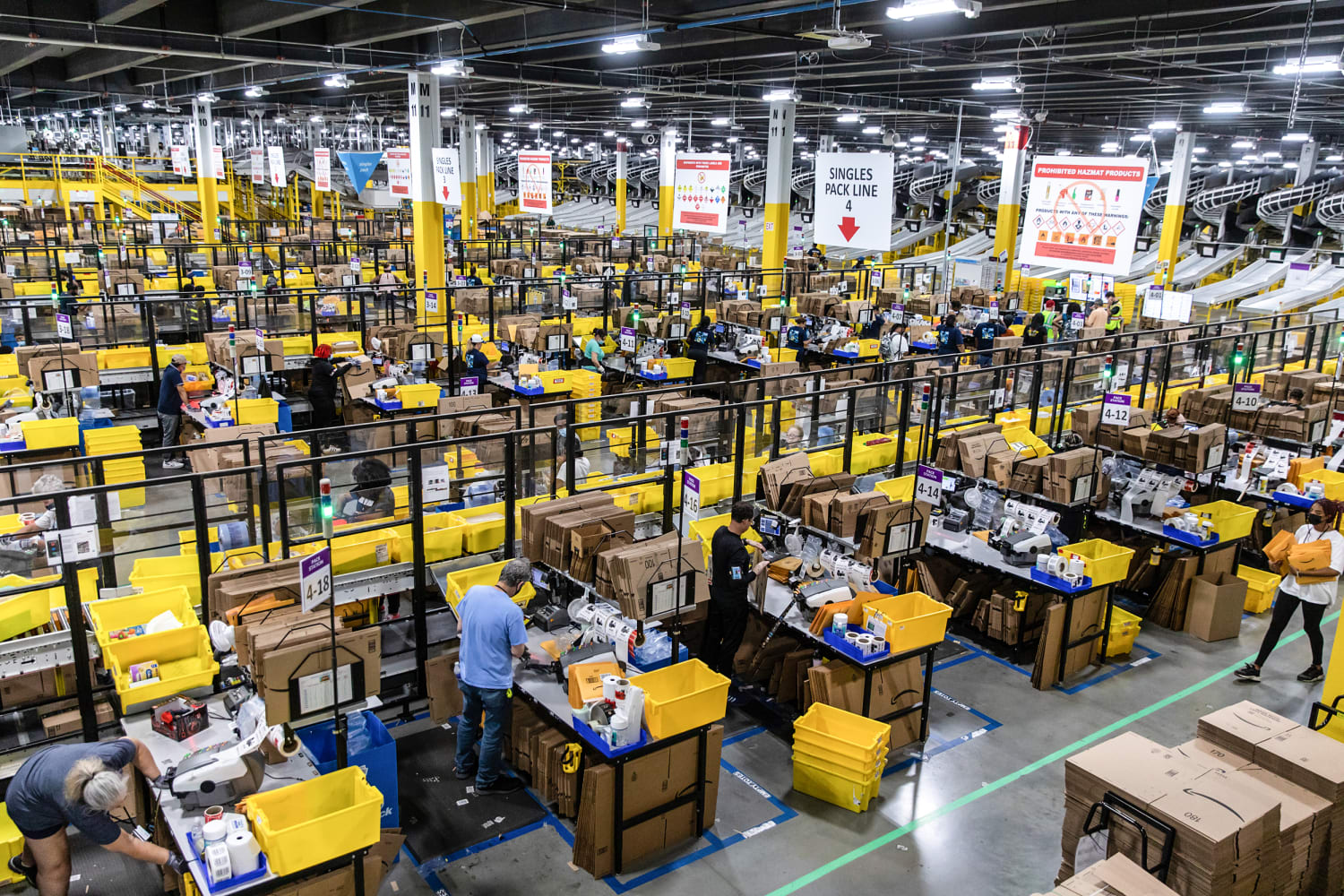
In the world of business finance, labor is often viewed as an operational expense (OpEx). For Amazon, it is the primary engine that generates operational cash flow. The speed at which an item is picked, packed, and shipped directly impacts the company’s “Cash Conversion Cycle.” By employing a massive, decentralized workforce, Amazon ensures that inventory moves quickly, allowing them to collect cash from customers often before they have even paid their own suppliers. This financial wizardry is only possible because of the human scale of their fulfillment operations.
The Cost of Human Capital: Wages and Benefits
Managing the payroll for 1.5 million people is a staggering financial undertaking. Amazon’s total labor costs run into the tens of billions of dollars annually. To remain competitive in a tight labor market, the company has had to balance the necessity of low-cost operations with the financial reality of rising wage floors.
The $15 Minimum Wage and Its Impact on the Bottom Line
Amazon was one of the first major retailers to implement a $15 per hour minimum wage across its U.S. operations, a move that has since scaled even higher in many regions to roughly $20 per hour. From a financial strategy standpoint, this was a defensive maneuver designed to reduce turnover costs and preempt regulatory pressure.
High turnover is a silent killer of corporate profits. It costs thousands of dollars to recruit, onboard, and train a single warehouse associate. By offering higher base wages and immediate benefits, Amazon attempts to stabilize its workforce. Even a 5% reduction in annual turnover across 1.5 million employees translates to hundreds of millions of dollars in saved operational expenses.
Investing in Retention: Upskilling as a Financial Strategy
Amazon’s “Career Choice” program, which pre-pays tuition for employees to learn new skills, is often framed as a corporate social responsibility initiative. However, through a financial lens, it is a sophisticated retention and tax-optimization tool. By investing in the education of their workforce, Amazon creates a pipeline of internal talent for more complex roles, reducing the need for expensive external recruiting. Furthermore, these programs often qualify for various tax credits and deductions, allowing the company to offset a portion of their massive payroll tax obligations.
Seasonal Scaling and the Gig Economy Model
A significant portion of Amazon’s financial agility comes from its ability to scale its workforce up and down with surgical precision. The “Peak Season”—spanning from Black Friday through January—requires a surge in labor that would be financially unsustainable if maintained year-round.
Managing Peak Season: The Fiscal Impact of Temporary Labor
Every year, Amazon hires between 150,000 and 250,000 seasonal workers. This allows the company to transform a fixed cost into a variable cost. By utilizing temporary contracts, Amazon avoids the long-term liabilities associated with permanent employment, such as multi-year benefit obligations and severance risks. This flexibility is a key driver of their Q4 profitability, ensuring they have the “hands on deck” to capture holiday revenue without bloating their permanent balance sheet.
Amazon Flex and the Outsourcing of Last-Mile Delivery Costs
Beyond its direct employees, Amazon leverages a massive network of independent contractors through “Amazon Flex” and third-party Delivery Service Partners (DSPs). This is a strategic move to insulate the company from the rising costs of “the last mile”—the most expensive part of the delivery process.
By utilizing a gig-economy model for delivery, Amazon shifts the financial burden of vehicle maintenance, insurance, and fuel onto the contractors or small business owners. This allows Amazon to maintain a “lean” corporate structure relative to the volume of packages it moves, effectively offloading capital expenditures (CapEx) while maintaining control over the brand experience.
Automation vs. Human Labor: The ROI of Robotics
The most pressing question for Amazon’s financial future is how long it will continue to be a “people” company. With over 750,000 robots currently deployed in its fulfillment centers, the company is aggressively pursuing an automation strategy that has profound implications for its future headcount.
Capital Expenditure in Fulfillment Technology
The transition from human labor to robotics represents a shift from OpEx (wages) to CapEx (investing in machines). While a robot requires a high upfront investment, its “hourly wage” over a five-year lifespan is significantly lower than that of a human worker. Robots do not require health insurance, they do not experience fatigue, and they do not join unions.
For CFOs and investors, the Return on Investment (ROI) of Amazon’s robotics division (Amazon Robotics) is the holy grail of margin expansion. As the technology matures, we can expect to see the headcount in fulfillment centers stabilize or even decline, even as the volume of packages processed continues to grow.
Can Amazon Sustain Growth Without Increasing Headcount?
The ultimate goal for Amazon is “decoupling”—the ability to grow revenue without a corresponding increase in the number of employees. We are already seeing the early stages of this in Amazon’s financial reports. By integrating AI-driven logistics and autonomous mobile robots (AMRs), Amazon is increasing the units-per-hour processed per human worker.
From a business finance perspective, this increased productivity per head is the primary driver of the company’s stock valuation. Investors are no longer impressed by how many people Amazon can hire; they are impressed by how much work those people (and their robotic counterparts) can accomplish.
Conclusion: The Future of the Amazonian Workforce
Amazon’s status as one of the world’s largest employers is a testament to its scale, but it also represents its greatest financial challenge. Managing 1.5 million people requires a delicate balance of competitive compensation, strategic seasonal scaling, and a forward-looking investment in automation.
As the company moves forward, the “number of people who work at Amazon” may eventually become a less relevant metric than the “efficiency of the Amazon ecosystem.” For now, the human element remains the backbone of the company’s financial success. Every package delivered represents a complex chain of financial decisions, where human labor is the most vital—and most expensive—link. By mastering the economics of this massive workforce, Amazon has built a defensive moat that few companies in history can hope to cross.
aViewFromTheCave is a participant in the Amazon Services LLC Associates Program, an affiliate advertising program designed to provide a means for sites to earn advertising fees by advertising and linking to Amazon.com. Amazon, the Amazon logo, AmazonSupply, and the AmazonSupply logo are trademarks of Amazon.com, Inc. or its affiliates. As an Amazon Associate we earn affiliate commissions from qualifying purchases.