
Navigating the world of auto financing can feel like walking through a complex maze of percentages, credit tiers, and predatory lending traps. For most consumers, a vehicle is the second-largest purchase they will ever make, trailing only behind a home. However, while most people focus on the “sticker price” of the car, the interest rate—the cost of borrowing that money—often dictates the true financial health of the deal. Understanding the average car interest rate is not just about knowing a single number; it is about understanding the macroeconomic factors, personal financial metrics, and industry standards that determine how much you will pay over the life of your loan.
The Foundations of Auto Interest Rates: Key Influencing Factors
To understand the “average” rate, one must first understand that interest rates are rarely a one-size-fits-all figure. Lenders view an auto loan through the lens of risk management. The interest rate is essentially the premium you pay for the risk the bank takes by lending you capital for a depreciating asset.
Credit Scores: The Primary Driver of Your Rate
Your FICO score is the single most influential factor in determining your interest rate. Lenders categorize borrowers into “tiers.” Those in the “Super Prime” category (typically scores above 780) enjoy the lowest rates, often hovering near the national prime rate. Conversely, “Deep Subprime” borrowers (scores below 580) may face interest rates that are four to five times higher. Because a car is a repossessable asset, lenders are willing to take risks on lower credit scores, but they offset that risk with aggressive interest charges.
New vs. Used Vehicles: Why Age Matters
There is a persistent gap between interest rates for new cars versus used cars. Generally, new cars come with lower interest rates. This seems counterintuitive—why would a more expensive asset be cheaper to finance? The answer lies in the resale value. New cars are easier for banks to value and easier to sell at auction if the borrower defaults. Used cars, especially those older than five years, carry more mechanical risk and unpredictable depreciation, leading lenders to charge a higher interest premium to cover potential losses.
Loan Term Length and Its Hidden Costs
In recent years, the average loan term has stretched from 48 or 60 months to 72 or even 84 months. While a longer term lowers the monthly payment, it almost always triggers a higher interest rate. Lenders view a seven-year loan as significantly riskier than a four-year loan. Furthermore, a longer term means you are paying interest on the principal for a longer duration, which can lead to a situation where you owe more on the car than it is actually worth—a scenario known as being “underwater.”
Current Market Trends and Average Rate Benchmarks
The “average” car interest rate is a moving target, heavily influenced by the Federal Reserve’s monetary policy. When the Fed raises the federal funds rate to combat inflation, the cost of borrowing for banks increases, and those costs are passed directly to the consumer in the form of higher APRs (Annual Percentage Rates).
The Impact of Federal Reserve Policy
In the current economic climate, we have transitioned away from the era of “free money” and 0% APR financing. As the central bank maintains higher rates to stabilize the economy, the baseline for even the most qualified borrowers has shifted upward. It is now common to see “Prime” rates for new cars sitting between 5% and 7%, whereas a few years ago, those same borrowers might have secured 2% or 3%. For the consumer, this means that a $40,000 car now costs significantly more in total interest than it did in the previous decade.
Breaking Down the Averages by Credit Tier
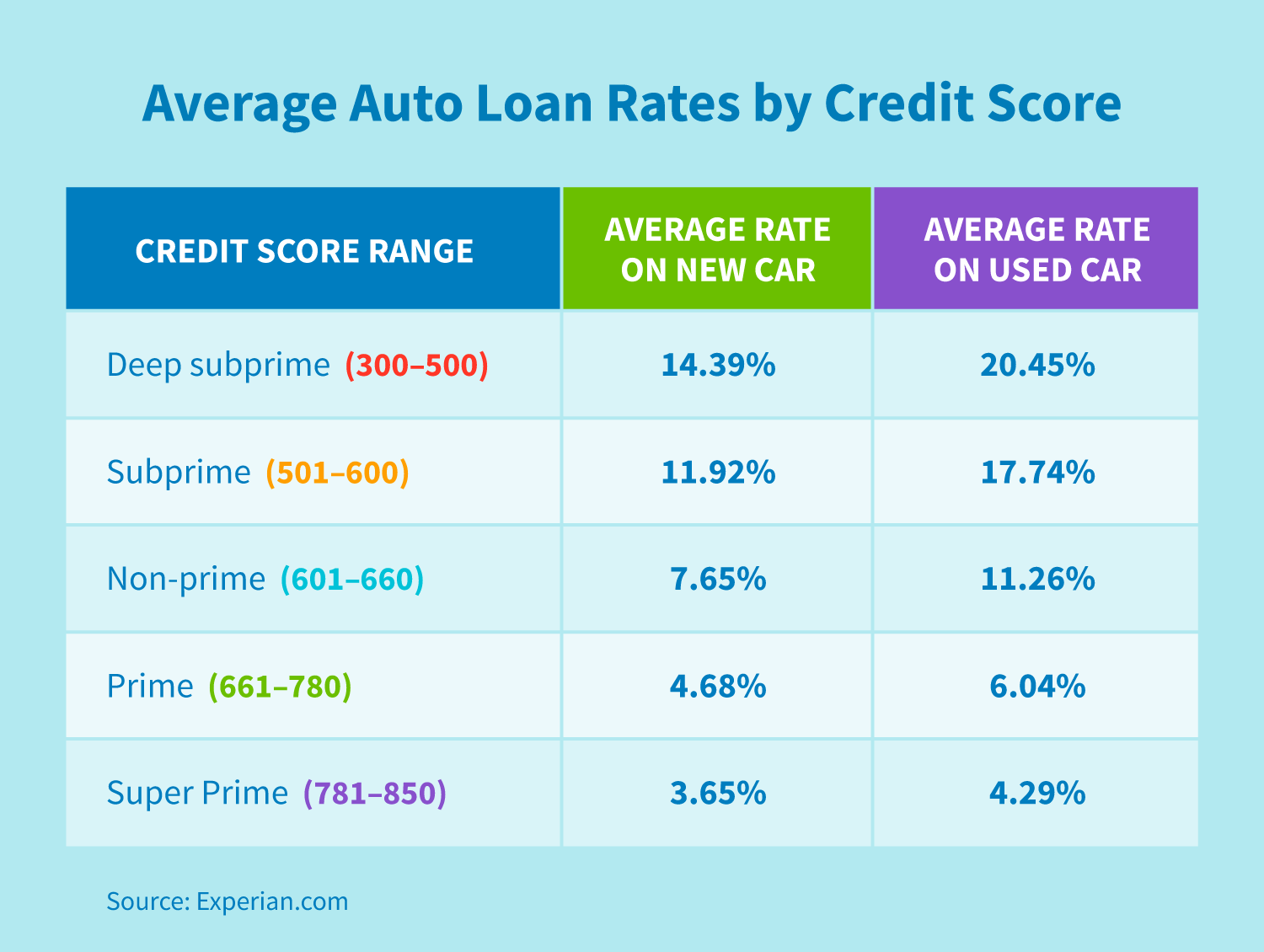
To get a realistic picture of the market, one must look at the data across the credit spectrum. As of the current market cycle, the averages generally break down as follows:
- Super Prime (781-850): New: ~5.5% | Used: ~7%
- Prime (661-780): New: ~7% | Used: ~9.5%
- Nonprime (601-660): New: ~9.5% | Used: ~14%
- Subprime (501-600): New: ~12% | Used: ~18%
- Deep Subprime (300-500): New: ~15% | Used: ~21%
These numbers highlight the “poverty penalty” in auto financing; those with the least financial stability often end up paying the most for the same utility, making it even harder to build wealth.
Regional and Institutional Variations
Average rates also fluctuate based on where you borrow. Credit unions, which are member-owned non-profits, traditionally offer rates that are 1% to 2% lower than national big-box banks. Similarly, captive lenders—the financing arms of manufacturers like Ford Credit or Toyota Financial Services—may offer promotional rates (such as 1.9% or 2.9%) to move specific inventory, regardless of the national average.

Strategic Maneuvers to Secure a Lower Interest Rate
Securing a rate below the national average requires a proactive approach. Many consumers make the mistake of “shop-by-payment,” focusing only on the monthly outflow rather than the interest rate and total cost of the loan.
The Power of the Pre-Approval
Before stepping foot on a dealership lot, you should secure a pre-approval from an external lender, such as a credit union or an online bank. This serves two purposes. First, it establishes a “ceiling” for your interest rate. If the dealer wants your financing business, they must beat the rate you already have in hand. Second, it transforms you into a “cash buyer” in the eyes of the salesperson, allowing you to negotiate the price of the car separately from the financing.
Negotiating the “Buy Rate” vs. the “Contract Rate”
Most consumers are unaware that dealerships often add a “markup” to the interest rate provided by the bank. If a bank approves you for a 6% rate (the “buy rate”), the dealership might present you with a contract for 8% (the “contract rate”). The 2% difference is pure profit for the dealership. By asking the finance manager directly if the rate is the “buy rate” and showing that you understand this mechanism, you can often negotiate the rate down closer to the bank’s original offer.
Refinancing: A Second Chance at Savings
If you were forced to accept a high interest rate due to poor credit or an urgent need for a vehicle, you are not stuck with that rate for the duration of the loan. If you make on-time payments for 6 to 12 months, your credit score will likely improve. At that point, you can look into auto refinancing. Replacing a 15% loan with an 8% loan can save thousands of dollars in interest and shave hundreds off your monthly obligations, providing more breathing room for investments or savings.
The Long-Term Financial Impact of Interest on Net Worth
In the realm of personal finance, a car is typically a “depreciating asset.” Unlike a house or a stock portfolio, a car loses value the moment you drive it home. When you add high-interest debt to a depreciating asset, you create a significant drag on your long-term net worth.
The Opportunity Cost of High Interest
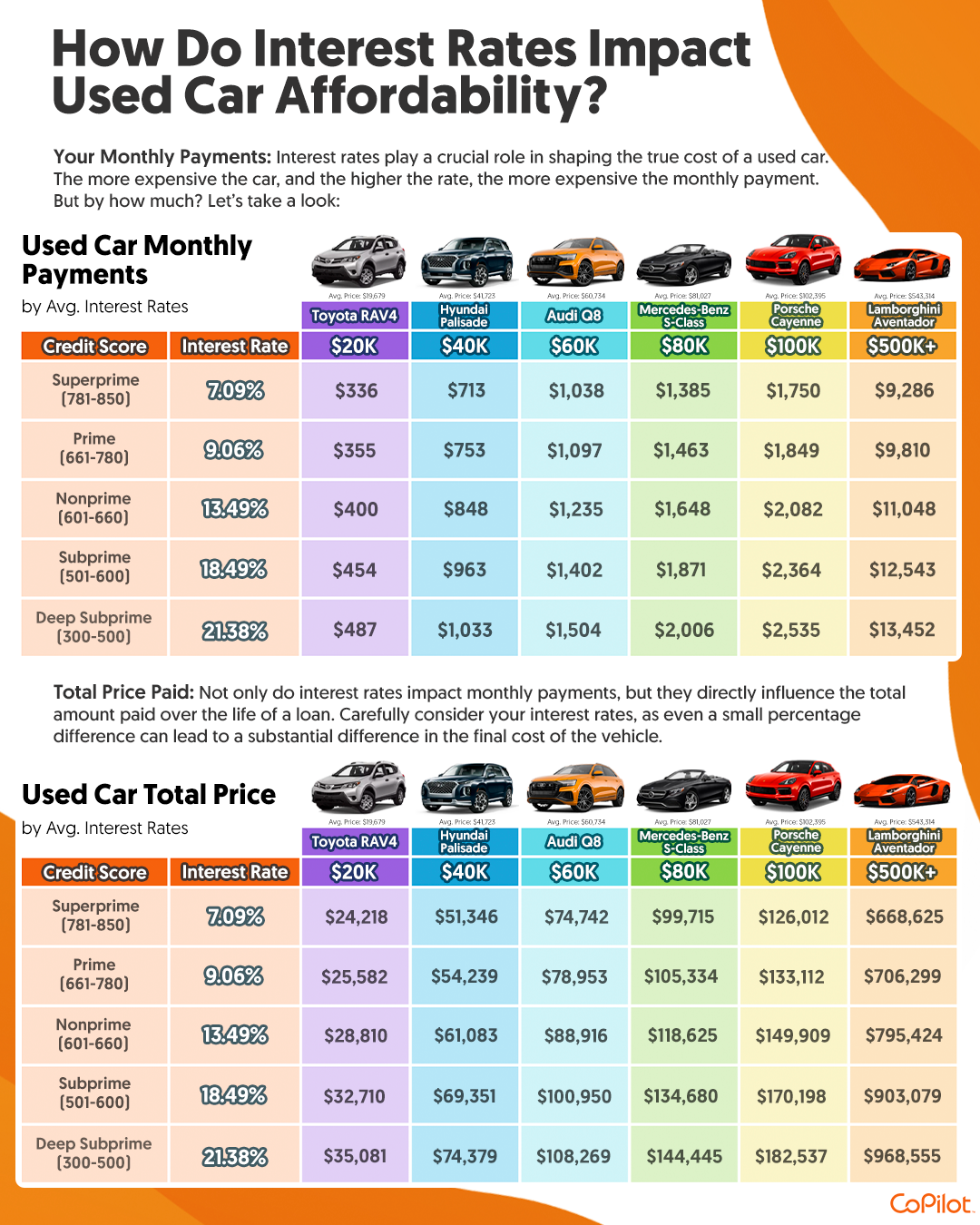
Every dollar paid in interest is a dollar that isn’t being invested in the S&P 500 or a high-yield savings account. For example, the difference between a 4% interest rate and a 10% interest rate on a $35,000, five-year loan is roughly $6,000. If that $6,000 were invested in a retirement account with a 7% average annual return, it could grow to over $23,000 over 20 years. Understanding the average car interest rate is, therefore, a crucial component of opportunity cost analysis.
Avoiding “Negative Equity” and the Trap of Roll-Over Loans
When interest rates are high and loan terms are long, the balance of the loan decreases slower than the value of the car drops. This leads to negative equity. The danger is compounded when consumers trade in a car with negative equity and “roll” that debt into a new car loan. This creates a snowball effect where the consumer is paying interest on a car they no longer own. Keeping your interest rate low and your term short (ideally 60 months or less) is the best defense against this cycle.
Total Cost of Ownership (TCO) Calculations
A sophisticated approach to money management involves looking at the Total Cost of Ownership. This includes the purchase price, the total interest paid, insurance, maintenance, and fuel. When interest rates are high, the financing portion of the TCO can represent as much as 20% of the total expense of the vehicle. By minimizing the interest rate, you significantly lower your “cost per mile,” allowing you to allocate capital toward wealth-building assets instead of interest expenses.
Conclusion: Mastering the Math of Mobility
The average car interest rate is more than just a statistic; it is a reflection of the current economic environment and a scorecard of your personal financial health. While you cannot control the Federal Reserve’s decisions, you have significant control over your credit profile, the type of vehicle you choose, and the institution you borrow from.
By understanding that rates are negotiable, that credit unions often offer better terms, and that the “average” is merely a benchmark to be beaten, you can approach auto financing with the mindset of a savvy investor rather than a passive consumer. In the journey toward financial independence, minimizing interest on depreciating assets like cars is one of the most effective ways to ensure your money stays in your pocket, working for your future instead of the bank’s bottom line.
aViewFromTheCave is a participant in the Amazon Services LLC Associates Program, an affiliate advertising program designed to provide a means for sites to earn advertising fees by advertising and linking to Amazon.com. Amazon, the Amazon logo, AmazonSupply, and the AmazonSupply logo are trademarks of Amazon.com, Inc. or its affiliates. As an Amazon Associate we earn affiliate commissions from qualifying purchases.