
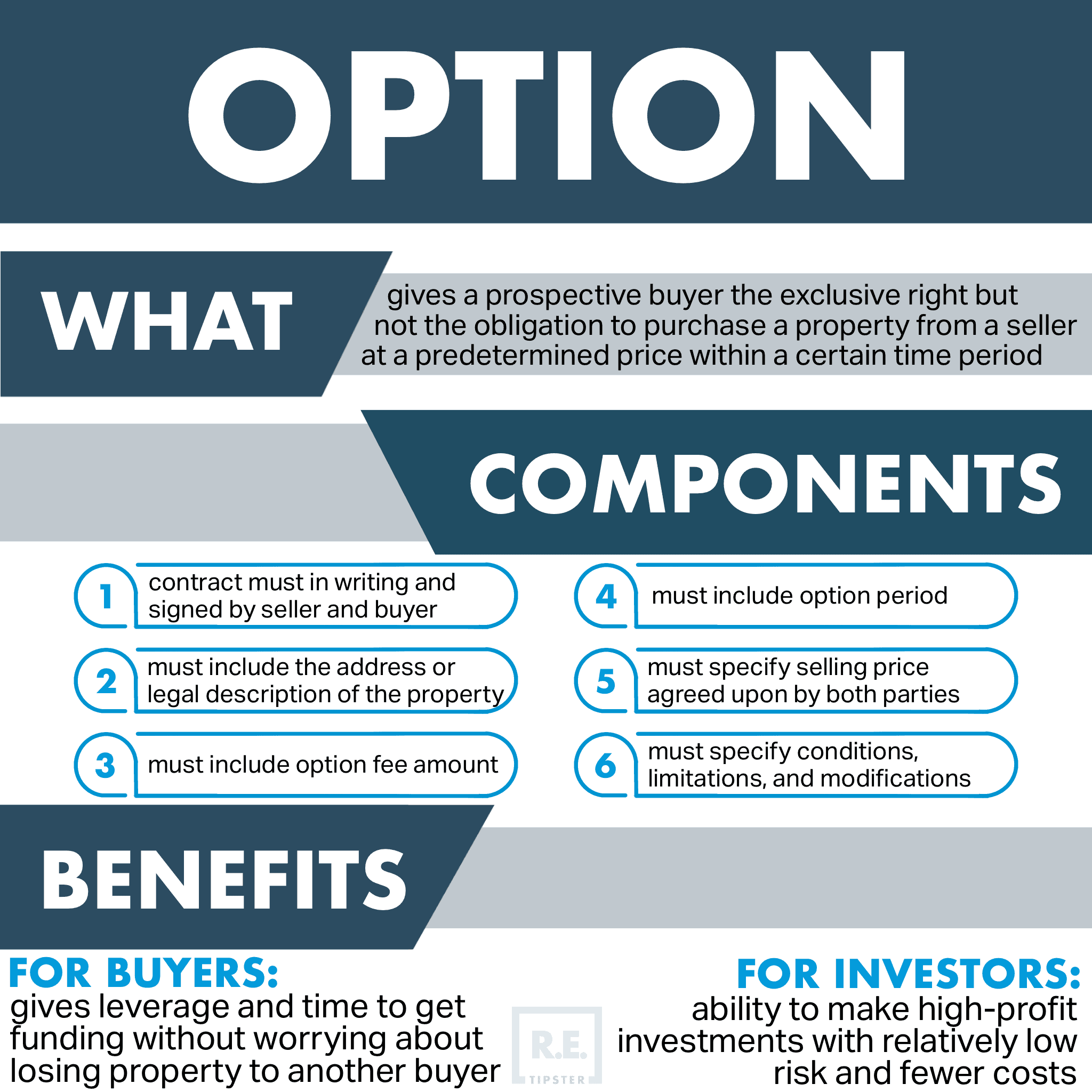
Understanding option contracts is fundamental for anyone looking to navigate the complex yet potentially rewarding world of financial derivatives. These instruments offer a unique way to participate in market movements with a defined risk, making them popular among investors and traders alike. At its core, an option contract is a legal agreement that grants the buyer the right, but not the obligation, to buy or sell an underlying asset at a specific price on or before a certain date. This right comes at a cost, known as the premium, paid by the buyer to the seller (also known as the writer) of the option.

The beauty of option contracts lies in their flexibility. They can be used for a variety of purposes, including speculation, hedging against potential losses, and generating income. The underlying asset can be anything from stocks, bonds, commodities, currencies, to even interest rates. The specific terms of the contract, such as the strike price (the price at which the asset can be bought or sold) and the expiration date (the last day the option is valid), are crucial in determining its value and potential outcomes.
This article will delve into the fundamental aspects of option contracts, exploring their core components, different types, how they are priced, and their common applications in the financial markets.
The Anatomy of an Option Contract
To truly grasp what an option contract is, it’s essential to understand its constituent parts. Each element plays a critical role in defining the rights and obligations of the parties involved and ultimately influences the contract’s value.
The Underlying Asset
The foundation of any option contract is the underlying asset. This is the security or commodity that the option contract gives the holder the right to buy or sell. The most common underlying assets include:
- Stocks: Options on individual company stocks are widely traded, allowing investors to speculate on or hedge against movements in specific equities.
- Indices: Options on broad market indices like the S&P 500 or Nasdaq 100 enable traders to bet on the overall direction of the stock market or specific market segments.
- Commodities: Futures contracts on commodities like oil, gold, agricultural products, and metals can also have associated option contracts.
- Currencies: Foreign exchange options provide a way to manage or speculate on currency fluctuations.
- Bonds and Interest Rates: Options can also be written on debt instruments and interest rate futures.
The performance and volatility of the underlying asset are primary drivers of an option’s price.
Strike Price (Exercise Price)
The strike price, also known as the exercise price, is the predetermined price at which the buyer of the option can purchase or sell the underlying asset if they choose to exercise their right. For a call option, it’s the price at which the buyer can buy; for a put option, it’s the price at which the buyer can sell. The relationship between the strike price and the current market price of the underlying asset is a key factor in determining whether an option is “in-the-money,” “at-the-money,” or “out-of-the-money.”
Expiration Date
The expiration date is the date on which the option contract ceases to exist. After this date, the option is worthless, and the holder can no longer exercise their right. Options have a finite life, and their value erodes as they approach expiration, a phenomenon known as time decay. The longer the time until expiration, the more time there is for the underlying asset’s price to move favorably, generally making longer-dated options more expensive.
Premium
The premium is the price paid by the buyer of an option contract to the seller (writer) for the right to buy or sell the underlying asset. This premium is essentially the cost of acquiring the option and represents the maximum potential loss for the buyer. For the seller, the premium received is the maximum potential profit. The premium is influenced by several factors, including the current price of the underlying asset, the strike price, the time to expiration, interest rates, and the volatility of the underlying asset.
Types of Option Contracts: Calls and Puts
Option contracts are broadly categorized into two main types: call options and put options. Each offers a different right and is used to express a particular market view.
Call Options
A call option gives the buyer the right, but not the obligation, to buy an underlying asset at the strike price on or before the expiration date.
- Buying a Call (Long Call): A trader who buys a call option typically believes the price of the underlying asset will rise significantly before the expiration date. If the price of the underlying asset rises above the strike price plus the premium paid, the buyer can profit. The potential profit for a long call is theoretically unlimited, as the price of the underlying asset can continue to climb. The maximum loss is limited to the premium paid.
- Selling a Call (Short Call): A trader who sells (writes) a call option typically believes the price of the underlying asset will stay flat or decline. They receive the premium upfront. If the price of the underlying asset stays below the strike price, the option expires worthless, and the seller keeps the premium. However, if the price rises significantly above the strike price, the seller can incur substantial losses, as their potential loss is theoretically unlimited if they do not already own the underlying asset (this is known as a “naked” call). Selling a call is often done as part of more complex strategies, like covered calls, where the seller already owns the underlying asset.
Put Options
A put option gives the buyer the right, but not the obligation, to sell an underlying asset at the strike price on or before the expiration date.
- Buying a Put (Long Put): A trader who buys a put option typically believes the price of the underlying asset will fall before the expiration date. If the price of the underlying asset falls below the strike price minus the premium paid, the buyer can profit. The maximum profit for a long put is limited to the strike price minus the premium paid, as the price of the underlying asset cannot fall below zero. The maximum loss is limited to the premium paid.
- Selling a Put (Short Put): A trader who sells (writes) a put option typically believes the price of the underlying asset will stay flat or rise. They receive the premium upfront. If the price of the underlying asset stays above the strike price, the option expires worthless, and the seller keeps the premium. However, if the price falls significantly below the strike price, the seller can incur substantial losses. The maximum loss for a short put is limited to the strike price minus the premium received, as the price of the underlying asset cannot fall below zero.
Factors Influencing Option Prices (The Greeks)
The price of an option contract, the premium, is not static. It fluctuates based on a variety of factors, many of which are captured by a set of risk management measures known as “The Greeks.” These metrics help traders understand how sensitive an option’s price is to changes in different market variables.
Implied Volatility
Implied volatility (IV) is perhaps the most significant factor influencing an option’s premium, aside from the price of the underlying asset itself. It represents the market’s expectation of how much the underlying asset’s price will move in the future. Higher implied volatility means the market anticipates larger price swings, which increases the likelihood of the option moving into profitable territory for the buyer. Consequently, options with higher implied volatility will have higher premiums, all else being equal.
Time to Expiration
As mentioned earlier, time decay, or theta, is the rate at which an option’s value erodes as it approaches its expiration date. Options with more time until expiration generally have higher premiums because there is a greater opportunity for the underlying asset’s price to move favorably. As an option gets closer to expiration, its time value decreases, and its price becomes more closely tied to its intrinsic value (if any).
Interest Rates and Dividends
Interest rates and expected dividends also play a role in option pricing, though their impact is often less pronounced than volatility and time. Higher interest rates generally make call options slightly more expensive and put options slightly cheaper, as holding the underlying asset involves an opportunity cost represented by interest. For dividend-paying stocks, the expectation of a dividend payment before expiration can reduce the price of call options and increase the price of put options, as the stock price is expected to drop by the dividend amount on the ex-dividend date.
The Greeks (Delta, Gamma, Theta, Vega, Rho)
Beyond these core factors, sophisticated traders use the “Greeks” to quantify risk:
- Delta: Measures the sensitivity of an option’s price to a $1 change in the price of the underlying asset.
- Gamma: Measures the rate of change of Delta with respect to a $1 change in the underlying asset’s price.
- Theta: Measures the rate at which an option’s value decays over time.
- Vega: Measures the sensitivity of an option’s price to a 1% change in implied volatility.
- Rho: Measures the sensitivity of an option’s price to a 1% change in interest rates.
Understanding these Greeks is crucial for managing risk and fine-tuning trading strategies involving options.
Common Applications and Strategies
Option contracts are versatile tools employed by a wide range of market participants for various strategic objectives. Their ability to offer leverage and define risk makes them particularly attractive.
Speculation
One of the most common uses of options is speculation. Traders use call options to bet on rising prices and put options to bet on falling prices. Because options require a smaller upfront investment (the premium) compared to buying the underlying asset outright, they offer leverage. This leverage can magnify both gains and losses. For example, a small percentage move in the underlying asset can translate into a much larger percentage gain or loss on the option.
Hedging
Options are also invaluable for hedging, a strategy used to protect an existing investment from potential adverse price movements.
- Hedging a Stock Portfolio: An investor holding a portfolio of stocks might buy put options on those stocks or on a broad market index. If the market declines, the gains from the put options can offset some or all of the losses in the stock portfolio.
- Hedging a Short Position: Conversely, a trader who has sold a stock short (expecting its price to fall) might buy call options to limit their potential losses if the stock price unexpectedly rises.
Income Generation
Options can be used to generate income, particularly by selling them.
- Covered Calls: A common strategy where an investor who owns shares of a stock sells call options against those shares. The investor receives the premium from selling the call. If the stock price stays below the strike price, the option expires worthless, and the investor keeps the premium, effectively enhancing their return on the stock holding. If the stock price rises above the strike price, the investor may be obligated to sell their shares at the strike price, capping their potential upside but still retaining the premium.
- Cash-Secured Puts: In this strategy, an investor sells put options and sets aside enough cash to buy the underlying stock if assigned. The investor receives the premium. If the stock price stays above the strike price, the option expires worthless, and the investor keeps the premium. If the stock price falls below the strike price, the investor may be obligated to buy the shares at the strike price, effectively acquiring the stock at a lower net price (strike price minus the premium received).

Volatility Trading
Option contracts are also used by traders who want to profit from changes in volatility itself, rather than just the direction of the underlying asset. Strategies like straddles and strangles involve buying both call and put options with the same or different strike prices, respectively, and expiration dates. These strategies are designed to profit if the underlying asset makes a significant move in either direction, regardless of the direction, or if implied volatility increases.
In conclusion, option contracts are sophisticated financial instruments that offer a wide array of possibilities for investors and traders. By understanding their fundamental components, types, pricing dynamics, and strategic applications, individuals can leverage these contracts to manage risk, speculate on market movements, and potentially enhance their investment returns. However, due to their leverage and complexity, a thorough understanding and careful risk management are paramount before engaging with option trading.
aViewFromTheCave is a participant in the Amazon Services LLC Associates Program, an affiliate advertising program designed to provide a means for sites to earn advertising fees by advertising and linking to Amazon.com. Amazon, the Amazon logo, AmazonSupply, and the AmazonSupply logo are trademarks of Amazon.com, Inc. or its affiliates. As an Amazon Associate we earn affiliate commissions from qualifying purchases.