
In the modern agricultural landscape, the question “what does a spinach plant look like?” is no longer a query reserved for amateur gardeners or culinary students. It has become a fundamental problem in the realms of computer vision, machine learning, and AgTech (Agricultural Technology). As the global population nears 10 billion, the ability of software to visually identify, categorize, and monitor crops like spinach (Spinacia oleracea) is the cornerstone of the next green revolution.
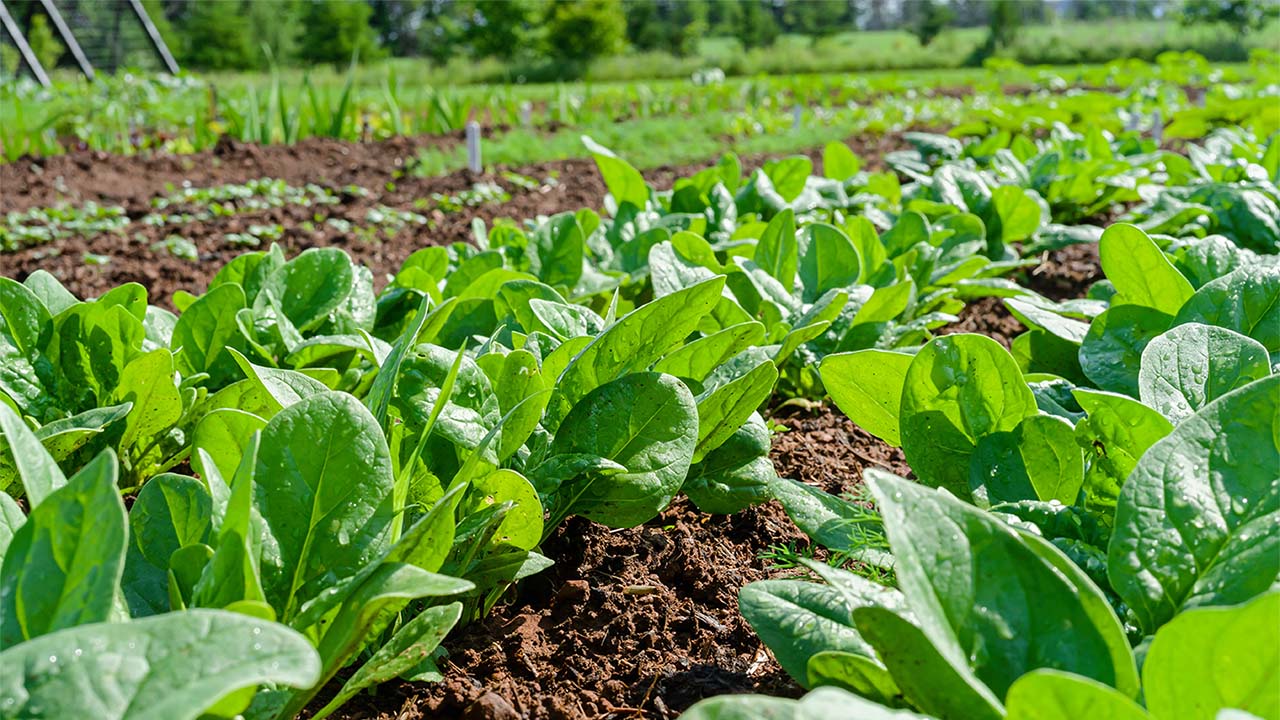
For a human, a spinach plant is a collection of dark green, spade-shaped leaves arranged in a rosette. For an Artificial Intelligence (AI) model, it is a complex array of pixel densities, edge gradients, and spectral signatures. Understanding how technology perceives this plant is essential for developing autonomous weeding robots, drone-based health monitoring systems, and automated harvest logistics.
The Architecture of Recognition: Translating Botany into Data
To answer what a spinach plant looks like from a technological perspective, we must look at the “Feature Extraction” process. When an AI is tasked with identifying spinach, it doesn’t see a “leaf”; it sees a mathematical pattern.
Convolutional Neural Networks (CNNs) and Leaf Morphology
The primary tool used to identify spinach in the tech world is the Convolutional Neural Network (CNN). Developers feed thousands of labeled images into these networks, teaching the software to recognize the specific “look” of spinach. This includes the plant’s distinctive rosette growth habit—where leaves radiate from a central point—and its specific leaf margins.
Unlike a simple shape, spinach leaves vary significantly. AI must be trained to recognize the “Savoy” variety, which features deeply crinkled, curly leaves, as well as “Flat-leaf” spinach, which is smooth and often used for processing. The technology uses edge detection algorithms to map the unique contours of these leaves, allowing a robot to distinguish a young spinach seedling from a common weed like fat-hen (Chenopodium album), which often mimics the spinach plant’s early appearance.
Texture and Color Gradient Analysis
The “look” of a spinach plant is also defined by its color depth. Spinach is notoriously high in chlorophyll, giving it a deeper, cooler green than many of its competitors. AI systems utilize RGB (Red, Green, Blue) analysis to quantify these hues. By measuring the intensity of the green channel against the red and blue, software can identify the specific “Spinach Green” signature.
Furthermore, texture analysis algorithms look for the “rugosity” (the wrinkliness) of the leaf. This is particularly important for quality control software used in packaging facilities. If a leaf is too smooth or exhibits yellowing (chlorosis), the vision system flags it as an anomaly, demonstrating that the tech doesn’t just know what a spinach plant looks like—it knows what a healthy spinach plant looks like.
Machine Learning Models for Growth Stage Identification
In the AgTech sector, identifying a mature plant is only half the battle. Technology must be able to track the visual evolution of the spinach plant from germination to senescence.
Seedling Recognition and the “Cotyledon” Challenge
In its earliest stages, a spinach plant looks vastly different from its mature state. The first leaves to emerge are the cotyledons, which are long, narrow, and grass-like. To a non-specialized AI, these could easily be mistaken for blades of grass or other monocots.
Advanced machine learning models use temporal data—tracking the plant’s growth over time—to confirm identity. By analyzing the transition from the narrow cotyledon to the “true leaves,” which possess the characteristic spade shape, the system builds a high-confidence identification. This is critical for autonomous weeding gadgets that must remove “non-spinach” plants without damaging the delicate crop.
Predicting Harvest Readiness through Geometric Growth
A key metric for food tech companies is “biomass estimation.” By using overhead cameras and LiDAR (Light Detection and Ranging), technology can create 3D models of a spinach plant. The software calculates the surface area of the leaves and the volume of the rosette.
When the plant reaches a specific geometric threshold, the AI triggers an alert for harvest. This removes the guesswork from commercial farming. In this context, the “look” of the spinach plant is translated into a volumetric measurement, ensuring that the plant is harvested at its peak nutritional value and texture.
Beyond the Visible Spectrum: The Role of Hyperspectral Imaging
When we ask what a spinach plant looks like, we are usually limited by the human eye’s visible spectrum (400–700 nm). However, modern agricultural gadgets see much more.

NDVI and the “Invisible” Look of Spinach
Hyperspectral and multispectral imaging allow drones and sensors to see the “Near-Infrared” (NIR) reflections of a spinach plant. Healthy spinach leaves reflect a high amount of NIR light due to their cellular structure. By calculating the Normalized Difference Vegetation Index (NDVI), technology can see “stress” before it is visible to the human eye.
In this tech-driven view, a spinach plant lacking water doesn’t just look “wilted”; it exhibits a specific shift in its spectral signature. This data allows for “Precision Agriculture,” where water and nutrients are delivered only to the specific plants that show visual signs of distress in the non-visible spectrum.
Thermal Imaging and Transpiration Rates
Furthermore, thermal cameras integrated into AgTech stacks provide another layer of visual data. A spinach plant “looks” cool when it is transpiring properly. If the plant’s temperature rises relative to the ambient air, the vision system identifies a potential blockage in the plant’s vascular system or soil compaction issues. This “thermal look” is an essential diagnostic tool for large-scale digital farming operations.
The Hardware Revolution: Drones, Robots, and Edge Computing
The software that identifies the spinach plant requires sophisticated hardware to navigate the physical world. This is where the intersection of robotics and AI becomes most visible.
Field Robotics and Real-Time Processing
Autonomous rovers equipped with high-resolution cameras patrol spinach fields, processing images at the “edge.” Edge computing refers to data processing that happens on the device itself rather than in a distant cloud server. This is vital because a robot needs to decide in milliseconds whether a plant is a spinach leaf or a weed.
These robots use “stereo vision”—two cameras mimicking human depth perception—to understand the 3D structure of the plant. This allows the mechanical arms to interact with the plant, perhaps for targeted leaf-thinning or precise fertilizer application, without crushing the fragile leaves.
Satellite Imagery and Macro-Visuals
On a macro level, satellite technology like the Sentinel or Landsat missions provides a “bird’s eye” view of what a spinach plant looks like when grown in thousands of acres. At this scale, the individual plant disappears, replaced by a “greenness index” across a landscape.
For tech-based commodity traders and global supply chain analysts, this visual data is used to predict crop yields and market fluctuations. They aren’t looking at a single leaf; they are looking at the “visual footprint” of an entire region’s spinach production to determine global food security and pricing.
Future Horizons: Digital Twins and the Simulated Spinach
The future of AgTech lies in the creation of “Digital Twins.” A Digital Twin is a virtual replica of a physical spinach plant, living in a simulated environment.
Generative AI and Synthetic Datasets
One of the hurdles in training AI to know what a spinach plant looks like is the need for massive datasets. Recently, tech companies have begun using Generative AI (similar to the tech behind DALL-E or Midjourney) to create synthetic images of spinach plants in various states of growth, disease, and lighting.
These synthetic plants are used to train vision models, allowing the AI to “experience” millions of variations of a spinach plant’s appearance in a fraction of the time it would take in a real field. This ensures that when the software encounters a rare blight or an unusual leaf mutation in the real world, it already “knows” what it is seeing.
The Integration of IoT and Visual Analytics
As we move forward, the Internet of Things (IoT) will further refine the digital image of the spinach plant. Soil sensors, weather stations, and cameras will work in a feedback loop. If an IoT sensor detects high humidity, the visual AI will increase its sensitivity to the visual markers of “Downy Mildew,” a common spinach pathogen.
In this integrated tech ecosystem, the question of “what does a spinach plant look like” becomes a dynamic, multi-layered data point. It is a fusion of pixel data, spectral reflection, thermal output, and historical growth patterns.

Conclusion: The New Botanical Vision
In conclusion, technology has fundamentally expanded our understanding of what a spinach plant looks like. To the modern AgTech stack, spinach is more than a vegetable; it is a complex subject of digital scrutiny. Through CNNs, hyperspectral imaging, and autonomous robotics, we are able to see the spinach plant with a level of detail and foresight that was previously impossible.
This technological gaze allows for a more sustainable and efficient food system. By precisely identifying the plant, monitoring its health in real-time, and predicting its needs through visual data, we ensure that this nutrient-dense crop can be grown at scale with minimal environmental impact. The next time you see a spinach plant, remember that somewhere, an AI is seeing it too—not just as a leaf, but as a masterpiece of biological data.
aViewFromTheCave is a participant in the Amazon Services LLC Associates Program, an affiliate advertising program designed to provide a means for sites to earn advertising fees by advertising and linking to Amazon.com. Amazon, the Amazon logo, AmazonSupply, and the AmazonSupply logo are trademarks of Amazon.com, Inc. or its affiliates. As an Amazon Associate we earn affiliate commissions from qualifying purchases.