
Travel is often cited as one of the most significant discretionary expenses in a household budget. For the savvy investor or the disciplined personal financier, the cost of a flight is not a fixed price tag but a variable that can be optimized through strategic planning, market analysis, and the clever application of financial tools. In the realm of personal finance, securing “cheap flights” is less about luck and more about understanding the economics of the aviation industry and leveraging travel arbitrage.
To truly master the art of finding affordable airfare, one must move beyond the casual search engine query and adopt a professional financial mindset. This involves evaluating the return on investment (ROI) of travel rewards, understanding currency fluctuations, and utilizing sophisticated financial strategies to minimize capital outlay while maximizing value.
Leveraging Financial Tools and Credit Optimization
The foundation of any robust travel-saving strategy lies in the effective use of financial instruments, specifically travel-reward credit cards. In the world of high-finance travel hacking, flights are rarely paid for with liquid cash; instead, they are “purchased” using a secondary currency: points and miles.
The Mathematics of Travel Rewards
From a personal finance perspective, a credit card sign-up bonus represents one of the highest guaranteed returns on spend available. For example, a card offering 60,000 points after a $4,000 spend essentially provides a “rebate” of roughly 15% to 25% if those points are redeemed for high-value international flights. To optimize this, one must calculate the “cents per point” (CPP) value. If a flight costs $1,200 or 60,000 miles, the value is 2 CPP. A professional financier aims for redemptions that exceed the baseline 1.0 CPP offered by standard cash-back programs.
Understanding Transfer Partners and Point Portability
Not all financial tools are created equal. The most powerful assets in a traveler’s portfolio are “flexible currencies”—points earned through major banking institutions that can be transferred to various airline partners. This creates a form of liquidity, allowing you to move “capital” to the airline offering the best “exchange rate” for your specific route. By holding points in a flexible ecosystem, you avoid the inflationary risk associated with a single airline’s frequent flyer program devaluing its miles.
Credit Score Management as a Travel Asset
Accessing the best financial tools for travel requires a high credit tier. Maintaining a disciplined credit profile—keeping utilization low and payments timely—is a prerequisite for the “churning” strategy, where one strategically opens and closes accounts to harvest bonuses. In this context, your credit score is a financial engine that generates travel capital.
Strategic Budgeting and Timing the Market
In any market, timing is the difference between a profit and a loss. The airline industry operates on dynamic pricing models that are influenced by supply, demand, and consumer psychology. To secure the lowest prices, one must approach booking with the analytical rigor of a day trader.
The Myth of the “Tuesday Booking” and Data-Driven Purchasing
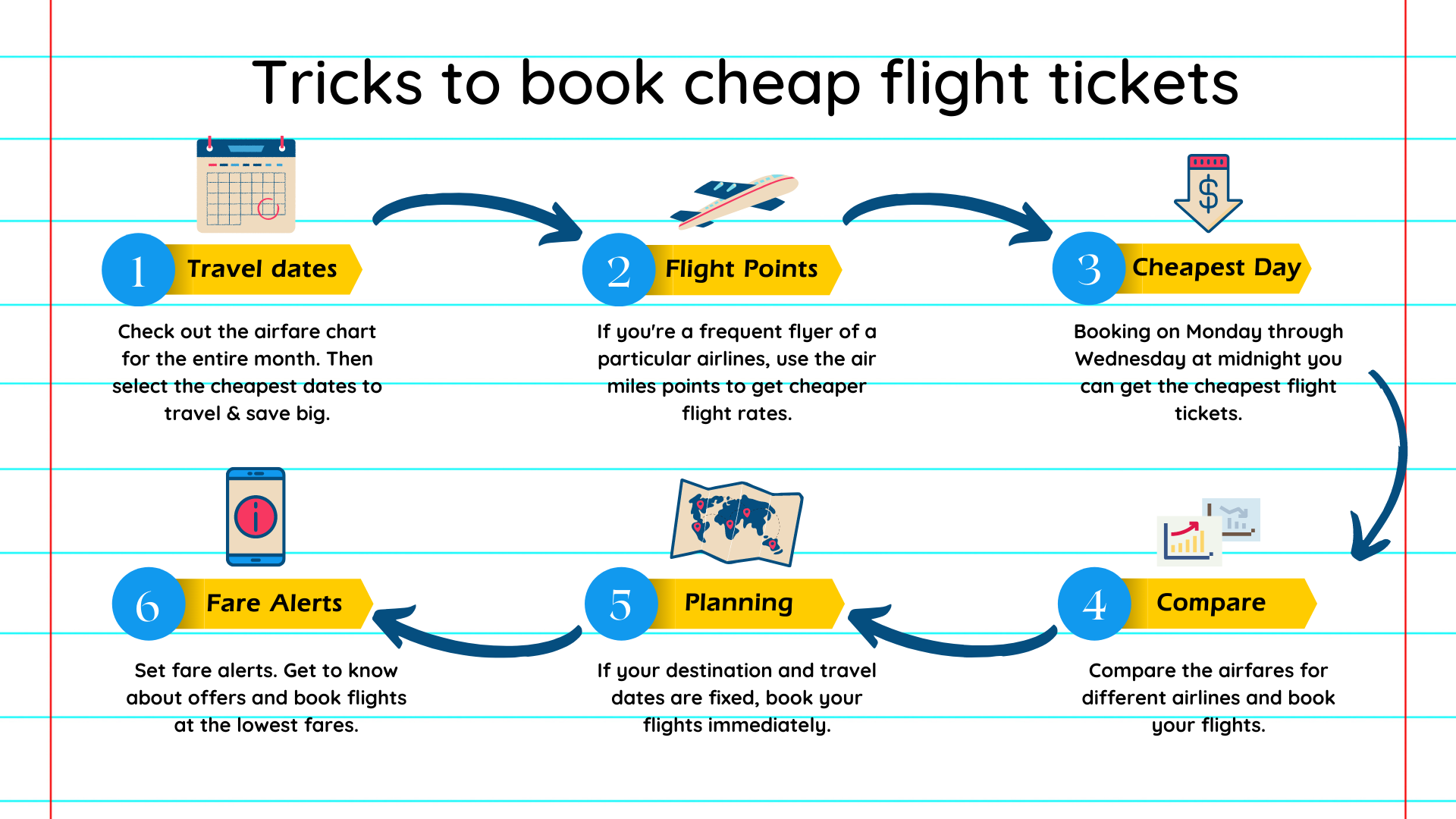
There is a long-standing myth that booking on a Tuesday leads to cheaper flights. Modern financial analysis shows this is largely outdated. Instead, the focus should be on the “Booking Window.” For domestic travel, the “Goldilocks Zone” is typically 1 to 3 months in advance, while international routes require a 2 to 8-month lead time. Utilizing historical price data tools allows a traveler to see if the current “ask price” is significantly above or below the 52-week moving average for that specific route.
Exploiting Seasonal Arbitrage
Price volatility in travel is heavily dictated by the school calendar and major holidays. Strategic budgeting involves “counter-cyclical travel”—visiting high-demand destinations during the “shoulder season.” Financially, this is a double win: airfare costs are plummeted due to low demand, and the purchasing power of your local currency often stretches further at the destination due to lower hotel and service costs.

Hidden City Ticketing and Risk Assessment
A more advanced financial maneuver is “Hidden City Ticketing,” where a traveler books a flight with a layover in their actual destination and simply exits the airport at the stopover point. While this can offer massive savings—often 40% to 60%—it comes with a “contractual risk.” Airlines discourage this practice and may penalize frequent flyer accounts. From a business finance perspective, one must weigh the immediate cost savings against the potential loss of long-term loyalty assets.
Currency Arbitrage and Regional Pricing Strategies
One of the most overlooked aspects of flight pricing is how airlines utilize geographic price discrimination. A flight from London to New York may be priced differently if purchased in British Pounds on a UK-based site than if purchased in U.S. Dollars on an American site.
The Power of Local Currency Payments
When booking international carriers, the airline’s booking engine often detects your location via your IP address and defaults to your local currency, often applying a poor exchange rate or a “convenience fee.” By using a credit card with no foreign transaction fees and choosing to pay in the airline’s home currency, you can often save 3% to 5% on the total transaction. This is a simple form of currency arbitrage that accumulates significant savings over multiple trips.
Regional Pricing Disparity
Airlines often price tickets based on the perceived purchasing power of a specific region. For example, a flight within Southeast Asia might be cheaper when booked through a regional version of the website (e.g., the Vietnamese portal vs. the Global portal). Using a Virtual Private Network (VPN) to “relocate” your digital presence can occasionally reveal lower fares intended for local markets. This requires a diligent comparison of prices across different “points of sale” to ensure the lowest possible cost of acquisition.
Multi-City Routing and Positioning Flights
A professional approach to travel involves unbundling the journey. Instead of booking a single ticket from a small regional airport to a distant international hub, it is often more cost-effective to buy a “positioning flight.” This involves paying a small amount for a budget carrier to get to a major hub like London, Singapore, or New York, and then booking a separate, high-value long-haul ticket from there. This “Lego-block” approach to itinerary building can slash total costs by half, provided the traveler accounts for the risk of separate tickets and allows for sufficient connection time.
Integrating Travel Savings into Long-Term Financial Planning
Achieving “cheap flights” is not a one-off event but a lifestyle integration. It requires a shift in how one views travel within their broader financial portfolio.
The Use of Sinking Funds for Travel
To avoid the high-interest debt associated with travel, disciplined savers utilize “Sinking Funds.” This is a dedicated savings account where a set amount of “side hustle” income or a portion of a monthly salary is diverted specifically for travel. By treating travel as a pre-funded liability rather than a spontaneous expense, the traveler removes the emotional pressure of booking, allowing them to wait for the “market bottom” (the lowest fare) without fear of missing out.
The ROI of Travel Hacking
While travel hacking takes time, the “return on time invested” can be astronomical. If spending five hours researching routes and transfer partners saves $2,000 on a business class ticket, the effective “hourly rate” for that work is $400/hour. For many professionals, this is a highly efficient use of time that rivals or exceeds their primary income rate.

Business Expense Management and Tax Deductibility
For entrepreneurs and freelancers, the cost of a flight can be further mitigated through tax strategy. If a trip has a legitimate business purpose, the airfare may be a deductible business expense. In this scenario, the “real cost” of the flight is reduced by the traveler’s marginal tax rate. Combining this with credit card points earned on business spending creates a “double-dip” effect: the flight is paid for with points (zero out-of-pocket) while the points-earning spend itself reduces the business’s taxable income.
In conclusion, securing cheap flights is a multifaceted financial discipline. It requires the strategic use of credit as a tool, an analytical approach to market timing, an understanding of global currency dynamics, and a long-term perspective on budgeting. By treating travel as a series of financial transactions to be optimized rather than a luxury to be endured, individuals can see the world without compromising their financial future. Through these methods, the world becomes more accessible, and the “expensive” nature of travel becomes a manageable variable in a well-ordered financial life.
aViewFromTheCave is a participant in the Amazon Services LLC Associates Program, an affiliate advertising program designed to provide a means for sites to earn advertising fees by advertising and linking to Amazon.com. Amazon, the Amazon logo, AmazonSupply, and the AmazonSupply logo are trademarks of Amazon.com, Inc. or its affiliates. As an Amazon Associate we earn affiliate commissions from qualifying purchases.