
The democratization of the financial markets has transformed the way individuals interact with wealth creation. Only a few decades ago, buying a share of a company required a physical phone call to a stockbroker, high commission fees, and significant capital. Today, the question of “where do you buy stocks” has dozens of answers, ranging from high-tech mobile applications to legacy banking institutions. Selecting the right venue is the first and perhaps most critical decision a new investor makes, as the platform dictates the tools, costs, and assets available to them.

In this guide, we will explore the landscape of modern brokerage options, evaluate the criteria for choosing a provider, and outline the logistical steps required to move from a curious observer to an active shareholder.
1. Understanding the Different Types of Investment Platforms
The “where” of stock buying is generally categorized into four distinct types of platforms. Each serves a different psychological and financial profile, from the hands-off saver to the hyper-active day trader.
Online Discount Brokerages
Discount brokerages are the most popular choice for individual investors. These platforms, such as Fidelity, Charles Schwab, and E*TRADE, offer a balance of comprehensive research tools and low-to-zero commission structures. They are called “discount” because they do not provide personalized investment advice or wealth management services in their standard tier, though they offer a massive array of investment products including stocks, bonds, ETFs, and mutual funds.
Mobile-First Investment Apps
In the last decade, apps like Robinhood, Webull, and Public have revolutionized the industry by prioritizing user experience and accessibility. These platforms were pioneers of the “zero-commission” model. They are ideal for beginners who may be intimidated by complex desktop interfaces. However, while they excel in ease of use, they sometimes lack the deep fundamental analysis tools found in more traditional brokerages.
Robo-Advisors
For those who want to invest in the stock market but do not want to pick individual companies, robo-advisors like Betterment or Wealthfront are the primary destination. These platforms use algorithms to build and manage a diversified portfolio based on your risk tolerance and goals. You aren’t “buying stocks” in the sense of picking Apple or Amazon; instead, you are buying into a curated basket of assets managed automatically by software.
Full-Service Brokers
Full-service brokers represent the traditional “Wall Street” experience. Firms like Morgan Stanley or Merrill Lynch provide a dedicated financial advisor who executes trades on your behalf and offers holistic financial planning. These come with significantly higher fees (often a percentage of assets under management) and are typically reserved for high-net-worth individuals who require complex tax planning and estate management.
2. Key Factors to Evaluate When Choosing a Broker
Choosing where to buy stocks is not just about the brand name; it is about the “plumbing” of the platform and how it aligns with your financial strategy.
Fee Structures and Indirect Costs
While most major brokers have moved to $0 commissions for online stock and ETF trades, they are not charities. It is essential to look at the “fine print” costs. This includes margin interest rates (the cost of borrowing money to trade), options contract fees, and account maintenance fees. Additionally, some brokers profit from “Payment for Order Flow” (PFOF), which can sometimes result in slightly less favorable execution prices for your trades. Understanding how your broker makes money is vital for long-term transparency.
Research, Education, and Analysis Tools
A brokerage is more than a checkout counter; it should be a library. High-quality platforms provide access to third-party research from firms like Morningstar or Reuters, real-time news feeds, and advanced charting software. If you are a long-term “buy and hold” investor, you might prioritize educational webinars and retirement calculators. If you are interested in technical analysis, you will need a platform with robust indicators and fast execution speeds.
Security, Regulation, and Insurance
The safety of your capital is paramount. Any reputable place where you buy stocks must be a member of the Securities Investor Protection Corporation (SIPC) and regulated by the Financial Industry Regulatory Authority (FINRA). SIPC insurance protects customers if a brokerage firm fails, covering up to $500,000 in securities. Furthermore, look for platforms that offer multi-factor authentication (MFA) and have a clean track record regarding digital security.

3. The Step-by-Step Process of Opening an Account
Once you have identified the right platform, the process of actually getting into the market involves a few standardized regulatory steps.
Account Application and Verification
To buy stocks in a regulated environment, you must provide personal information, including your Social Security Number (SSN) or Taxpayer Identification Number (TIN). This is part of the “Know Your Customer” (KYC) laws designed to prevent money laundering. You will also be asked about your employment status, net worth, and investment experience. This helps the broker determine if certain high-risk products (like options or futures) are appropriate for you.
Choosing Your Account Type
You must decide between a standard brokerage account (taxable) or a retirement account (tax-advantaged).
- Taxable Brokerage Account: Offers the most flexibility. You can withdraw your money at any time, but you must pay capital gains taxes on your profits.
- IRA (Individual Retirement Account): Offers significant tax advantages, such as tax-deductible contributions (Traditional IRA) or tax-free withdrawals in retirement (Roth IRA). However, these funds are generally locked away until age 59½.
Funding and Executing the Trade
After your identity is verified, you link a bank account via ACH transfer or wire. Many modern brokers offer “instant deposits,” allowing you to trade with a limited amount of money while your bank transfer clears. When you are ready to buy, you search for the company’s “ticker symbol” (e.g., TSLA for Tesla) and choose an order type. A “Market Order” buys the stock immediately at the current price, while a “Limit Order” allows you to set a specific price you are willing to pay.
4. Advanced Options: Beyond the Standard Brokerage
For investors who have mastered the basics, there are alternative “locations” to purchase equity that offer different benefits.
Direct Stock Purchase Plans (DSPPs)
Some companies allow you to bypass the broker entirely and buy shares directly from them. These plans are often managed by transfer agents like Computershare. The advantage of a DSPP is that it often facilitates easy “Dividend Reinvestment Plans” (DRIPs), where your dividends are automatically used to buy more fractional shares. This can be a powerful tool for compounding wealth over decades without the temptation of active trading.
Fractional Shares and Micro-Investing
If you want to buy a stock that costs $3,000 per share but you only have $50, many modern platforms (like Fidelity, Schwab, and Robinhood) offer fractional shares. This has fundamentally changed “where” people buy stocks by making the high-priced titans of the S&P 500 accessible to everyone. Micro-investing platforms take this a step further by “rounding up” your daily purchases and investing the spare change into the market.
5. Developing a Sustainable Investment Strategy
Knowing where to buy stocks is a logistical hurdle; knowing what and when to buy is a strategic one. A professional approach to the market requires moving beyond the platform and into the mindset of an owner.
The Importance of Diversification
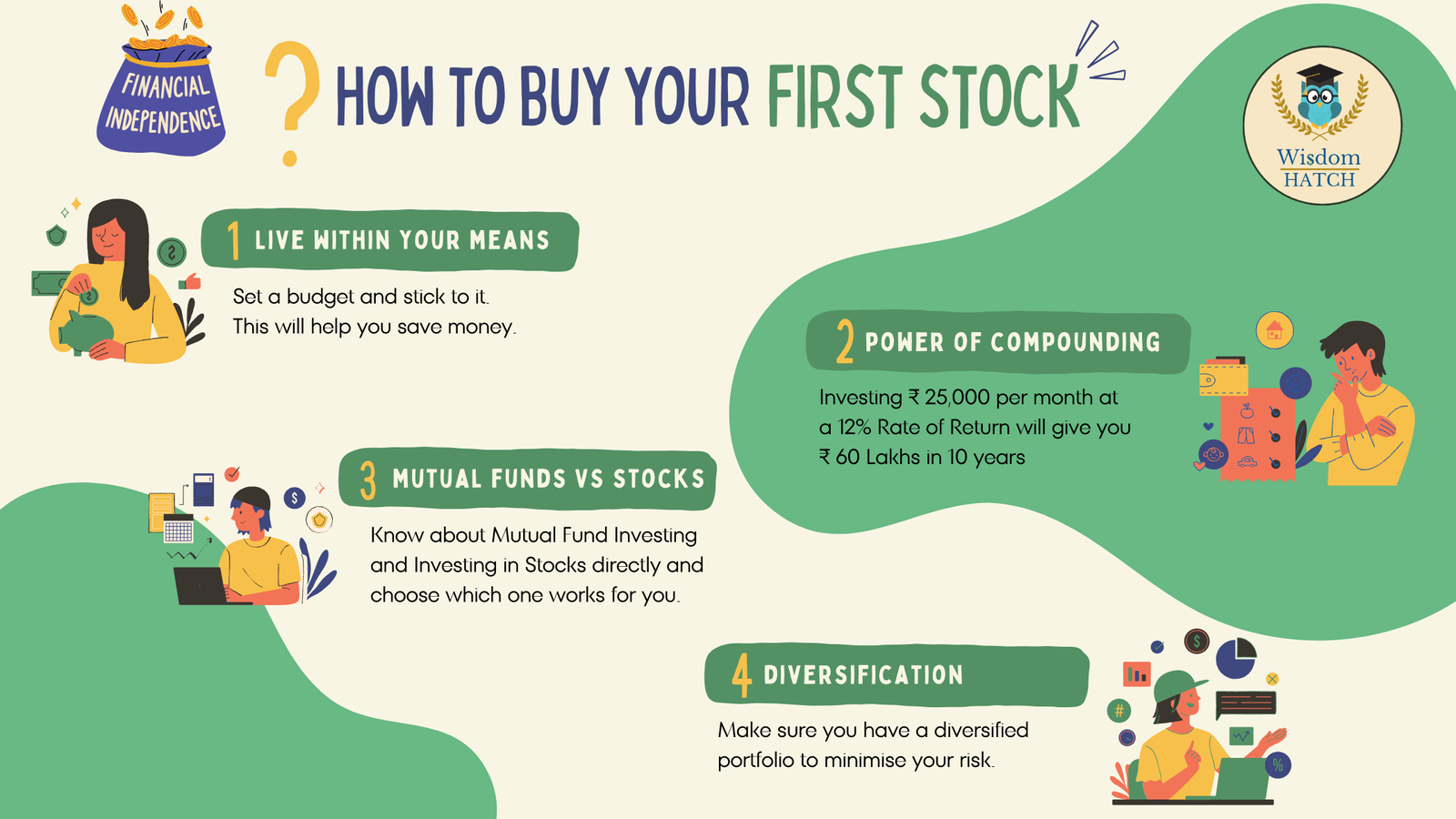
The primary risk of buying individual stocks is “concentration risk.” If you put all your money into one company and that company fails, your capital is gone. Most financial experts recommend using your brokerage platform to buy low-cost Index Funds or ETFs (Exchange Traded Funds). These allow you to own a tiny slice of hundreds of different companies simultaneously, reducing the impact of any single company’s failure.
Utilizing Professional Analytical Tools
Regardless of the platform you choose, you should utilize its analytical suite. Professional investors look at the “Price-to-Earnings” (P/E) ratio, debt-to-equity ratios, and free cash flow. Most modern brokers provide these metrics for free. Engaging with these tools ensures that your decision to buy a stock is based on the underlying health of the business rather than social media hype or temporary price fluctuations.
Maintaining a Long-Term Perspective
The “where” of buying stocks has become incredibly fast. You can execute a trade in seconds from your pocket. However, the “how” of making money in stocks remains slow. The market is volatile in the short term but historically trends upward over the long term. A successful investor uses their chosen platform as a portal for long-term wealth accumulation, resisting the urge to over-trade or react emotionally to daily market “noise.”
In conclusion, the best place to buy stocks is the one that aligns with your specific goals, offers the lowest unnecessary costs, and provides the security required to protect your future. Whether you choose a legacy powerhouse like Fidelity or a streamlined app like Robinhood, the most important step is simply getting started and remaining disciplined in your journey toward financial independence.
aViewFromTheCave is a participant in the Amazon Services LLC Associates Program, an affiliate advertising program designed to provide a means for sites to earn advertising fees by advertising and linking to Amazon.com. Amazon, the Amazon logo, AmazonSupply, and the AmazonSupply logo are trademarks of Amazon.com, Inc. or its affiliates. As an Amazon Associate we earn affiliate commissions from qualifying purchases.