
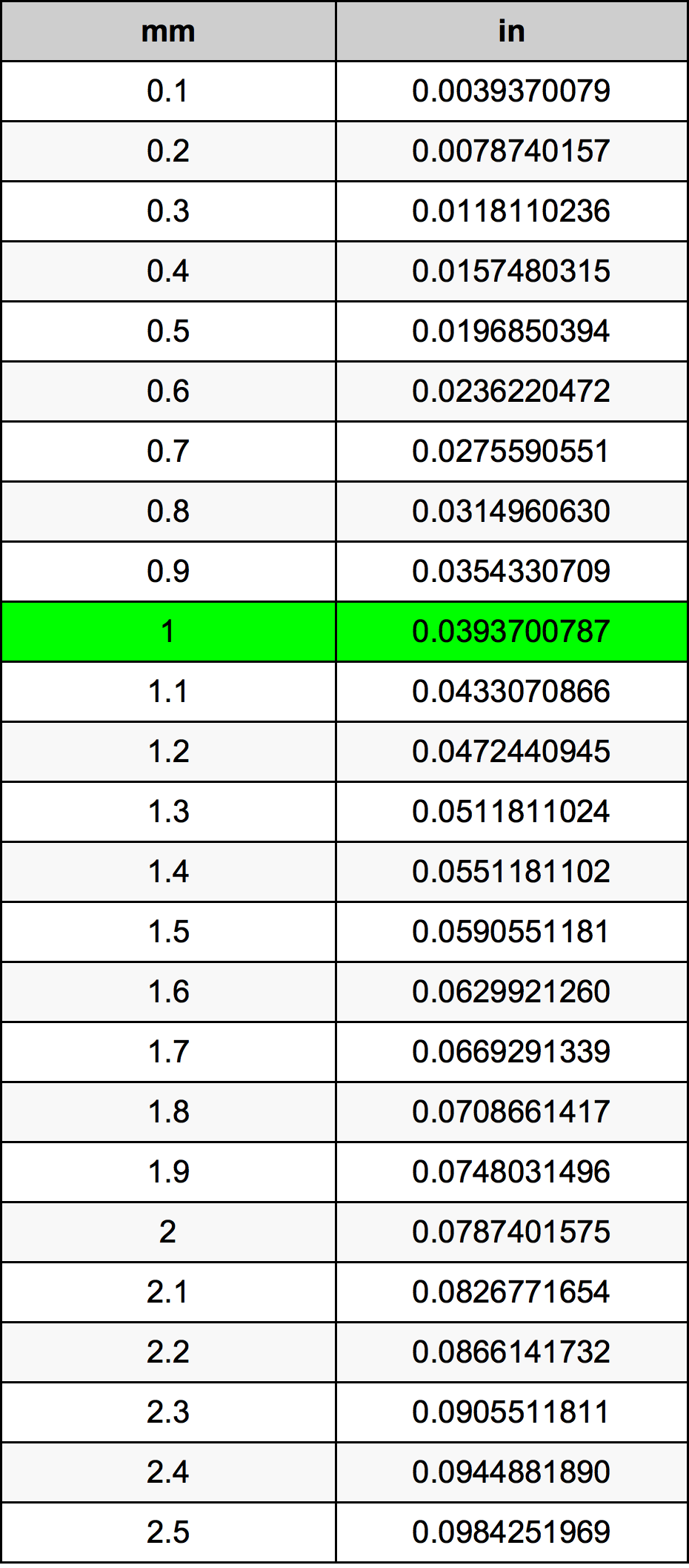
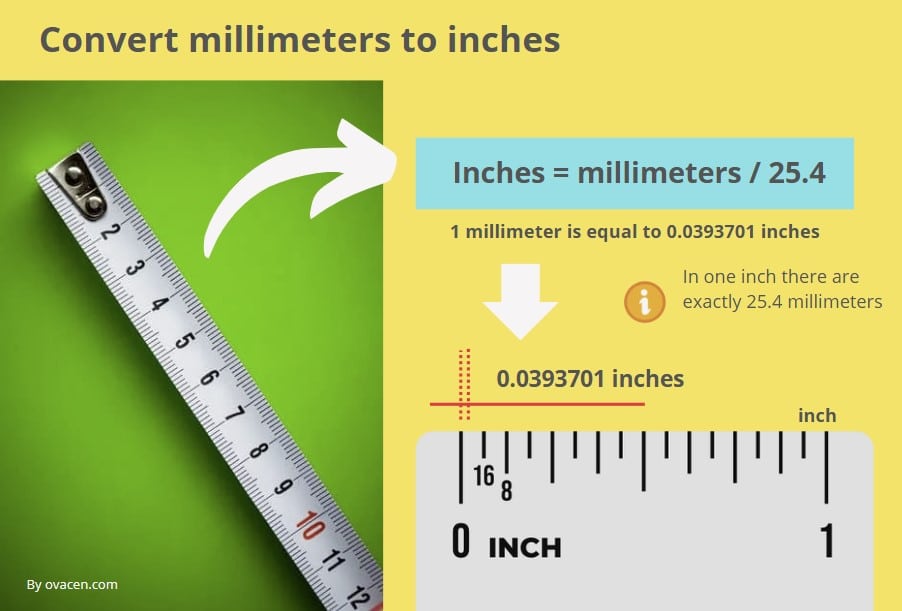
In the world of technology, the difference between a revolutionary product and a total failure often comes down to measurements so small they are invisible to the naked eye. While the casual consumer might ask, “What is 1mm in inches?” the engineer, the hardware designer, and the software developer see that question as the foundation of cross-border innovation. To answer the mathematical prompt: 1 millimeter (mm) is equal to approximately 0.0393701 inches.
While this conversion might seem like a simple arithmetic exercise, in the tech sector, it represents the bridge between two massive manufacturing worlds. From the thickness of a smartphone’s bezel to the layer height of a high-end 3D printer, the “1mm threshold” is a critical benchmark in digital and physical design.
The Digital Dimension: Why Millimeter Precision Matters in Hardware Design
In the realm of consumer electronics, we are currently living in an era of “thinness wars.” Every year, tech giants compete to shave fractions of a millimeter off their flagship devices. When a company converts its designs from metric to imperial for Western markets, or vice versa for global manufacturing, the conversion factor of 0.03937 becomes a vital variable in Computer-Aided Design (CAD) software.
From Macro to Micro: The Scaling of Modern Gadgets
Consider the modern smartphone. Most internal components, such as the motherboard and the battery housing, are designed using the metric system because of its logical scalability. However, many tooling machines in North American factories still operate on imperial units. A 1mm difference in the placement of a thermal heat sink could lead to catastrophic hardware failure or overheating.
In hardware tech, 1mm is actually quite large. We now measure processor nodes in nanometers (nm). However, on the macroscopic level—the level where users interact with hardware—1mm defines the tactile experience. It is the difference between a sleek, premium-feeling tablet and one that feels bulky or outdated.
The Conversion Factor: 1mm to 0.03937 inches in CAD Software
Engineers utilize software like AutoCAD or SolidWorks to manage these conversions. In these environments, precision is typically tracked to the fourth or fifth decimal place. A rounding error in the conversion of 1mm to inches can accumulate across a complex assembly. If a designer rounds 0.0393701 down to 0.039, they lose seven ten-thousandths of an inch. Over a 100-component assembly, those “tiny” errors can result in parts that simply do not fit together, leading to millions of dollars in wasted prototype materials.
3D Printing and Additive Manufacturing: The 1mm Threshold
Perhaps no tech sector is more obsessed with the millimeter than 3D printing. Whether it is Fused Deposition Modeling (FDM) or Stereolithography (SLA), the “1mm” mark serves as a standard reference point for structural integrity and detail.
Layer Height and Wall Thickness: The Impact of Tiny Measurements
In 3D printing, 1mm is often the standard wall thickness required to ensure a part is “water-tight” or structurally sound. When a hobbyist or a professional engineer sets their slicer software, they must choose between metric and imperial inputs.
Understanding that 1mm is roughly 1/25th of an inch helps technicians realize the resolution of their prints. A 0.1mm layer height (a tenth of a millimeter) is considered high resolution. By understanding that this is roughly 0.0039 inches, tech professionals can better compare the capabilities of different machines across international markets, ensuring that the final physical product matches the digital twin precisely.
Calibrating for Accuracy in Global Tech Markets
Additive manufacturing relies on precise calibration. If a printer’s firmware expects a 1mm movement but the mechanical lead screw is designed for imperial increments, the resulting print will be distorted. This is why many open-source tech communities (like the RepRap project) have moved almost exclusively to metric standards. However, since many mechanical parts like bolts and nuts are still sold in inch-based sizes in the US, the 1mm-to-inch conversion remains a daily necessity for makers and hardware developers.
Semiconductors and Circuitry: When 1mm is a Mile

While we often discuss tech in terms of screens and keyboards, the real magic happens at the circuit level. In the world of Printed Circuit Board (PCB) design, 1mm is actually considered a relatively large distance.
The Shrinking World of Microchips
In the semiconductor industry, we deal with “mils” (one-thousandth of an inch). Since 1mm is approximately 39.37 mils, designers must be incredibly careful when placing traces on a chip. A 1mm gap between two high-voltage traces on a PCB is a massive safety margin, but in a high-density smartphone motherboard, a 1mm gap is a luxury that designers rarely have.
As we push toward 2nm and 3nm process nodes in chip manufacturing, the macroscopic 1mm serves as the housing limit. The physical size of the chip package itself—the square piece of silicon and plastic you see—is measured in millimeters. Converting these dimensions to inches is necessary for the mechanical engineers who design the laptops and servers that will house these chips.
Thermal Management and Space Optimization
Tech hardware produces heat. The efficiency of a cooling system often depends on the “air gap” between a processor and its fan or heat sink. A 1mm gap filled with thermal paste can be the difference between a stable overclocked gaming rig and a thermal-throttled system. In the precision-driven world of tech, being “off” by 0.039 inches is an unacceptable margin of error.
User Interface and Ergonomics: The Physical-Digital Bridge
The concept of 1mm also plays a vital role in Human-Computer Interaction (HCI). Tech is not just about raw power; it’s about how the human body interacts with the machine.
Tactile Feedback and Button Travel
Think about your laptop keyboard. The “travel distance”—how far the key moves down when you press it—is usually between 1mm and 2mm. If a keyboard has 1mm of travel (0.039 inches), it feels “clicky” and responsive. If it drops to 0.5mm, it can feel like typing on glass, which has historically led to significant user backlash in the laptop industry.
The conversion to inches is important here because ergonomic standards in different regions often use different units to define “comfort.” A 1mm adjustment in the curvature of a mouse or the depth of a smartphone button can significantly change the “UX” (User Experience) rating of a tech product.
Screen Protectors and Bezel Ratios
When you buy a screen protector for your smartphone, the thickness is usually listed in millimeters (e.g., 0.33mm). For a tech enthusiast, knowing that this is approximately 0.013 inches helps in understanding how much bulk it will add to the device. Similarly, the “bezel width”—the black border around a screen—is a key marketing spec. A 1mm reduction in bezel size allows for a larger screen-to-body ratio, a key metric in modern smartphone reviews and “gadget-tech” comparisons.
The Future of Precision: AI-Driven Measurement and Robotics
As we move into the future, the reliance on manual unit conversion is being replaced by AI-driven systems and advanced robotics that think in “units-agnostic” environments. However, the fundamental value of the 1mm measurement remains.
Machine Vision and Sub-Millimeter Accuracy
In automated warehouses and robotic assembly lines, machine vision systems are calibrated to recognize objects with sub-millimeter precision. A robot arm designed to pick up a microchip must be accurate to within a fraction of a millimeter. If the AI model driving the robot is trained on metric data but the physical sensors are reporting in imperial units, the resulting “hand-eye coordination” of the machine will fail without perfect conversion algorithms.
Standardization in a Globalized Tech Economy
The tech industry is perhaps the most globalized sector in the world. A device might be designed in California (imperial-heavy), use chips from Taiwan (metric), and be assembled in China (metric). The ability to instantly translate “1mm” into “0.03937 inches” is more than just a math trick; it is the universal language of global tech production. As we move toward more integrated AI tools, these conversions happen in the background, but the physical reality of that 0.039-inch space remains the final frontier of hardware engineering.
In conclusion, while 1mm may seem like a negligible distance in everyday life, it is a titan in the world of technology. It defines the limits of our hardware, the resolution of our 3D prints, the comfort of our interfaces, and the success of our global manufacturing chains. Whether you are a software developer calculating UI padding or a hardware engineer fitting a battery into a chassis, mastering the 1mm-to-inch conversion is an essential step in understanding the precision that drives the modern world.
aViewFromTheCave is a participant in the Amazon Services LLC Associates Program, an affiliate advertising program designed to provide a means for sites to earn advertising fees by advertising and linking to Amazon.com. Amazon, the Amazon logo, AmazonSupply, and the AmazonSupply logo are trademarks of Amazon.com, Inc. or its affiliates. As an Amazon Associate we earn affiliate commissions from qualifying purchases.