
The meteoric rise of Bitcoin is perhaps the most significant financial phenomenon of the 21st century. For investors, economists, and the general public, the trajectory from an obscure cryptographic experiment to a trillion-dollar asset class is a journey marked by unprecedented returns and extreme volatility. However, to understand Bitcoin’s current status as “digital gold,” one must look back to its inception. To answer the question of what price Bitcoin started at, one must look past the thousands of dollars it commands today and revisit a time when it literally had no market value at all.
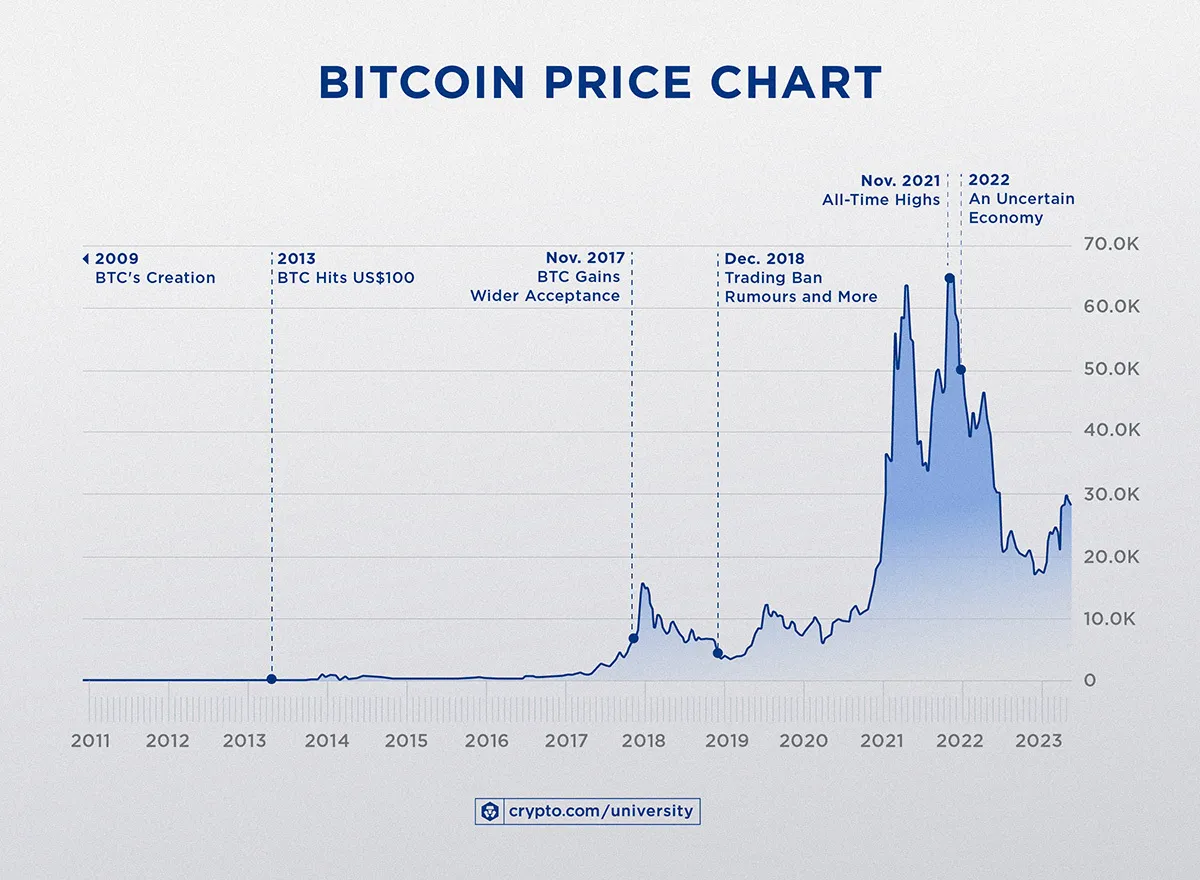
The Humble Origins: Bitcoin’s Zero-Value Phase (2008–2009)
In the immediate wake of the 2008 global financial crisis, an anonymous figure (or group) known as Satoshi Nakamoto released the Bitcoin whitepaper. At that moment, Bitcoin was not a financial instrument traded on an exchange; it was a conceptual solution to the problem of centralized banking.
The Whitepaper and the Genesis Block
On October 31, 2008, the whitepaper titled Bitcoin: A Peer-to-Peer Electronic Cash System was shared on a cryptography mailing list. At this stage, the “price” was nonexistent because there was no market, no demand, and no way to trade it. On January 3, 2009, Nakamoto mined the first block of the Bitcoin network, known as the “Genesis Block” or Block 0. While 50 BTC were created as a reward for mining this block, these coins were essentially worthless in fiat terms. There were no exchanges, no digital wallets with “Buy” buttons, and no institutional interest.
The First Transaction and the Lack of a Market Exchange
For the first several months of its existence, Bitcoin’s value was purely theoretical. The first-ever Bitcoin transaction took place on January 12, 2009, when Nakamoto sent 10 BTC to developer Hal Finney. While this proved the software worked, no money changed hands in the traditional sense. During this period, the cost of a Bitcoin was simply the cost of the electricity used to run the computer that mined it. Early adopters were hobbyists and cypherpunks who were more interested in the ideological implications of a decentralized ledger than in the potential for a high return on investment (ROI).
Finding Its First Price: From Pennies to Parity
Bitcoin’s transition from a “valueless” digital experiment to a priced asset occurred in late 2009. This was the moment the “Money” aspect of Bitcoin began to take shape, as the community realized that for the network to be sustainable, the tokens needed to carry a quantifiable market value.
The New Liberty Standard and Early Exchange Listings
The first recorded exchange rate for Bitcoin was established on October 5, 2009, by the “New Liberty Standard.” They set the initial price at 1,309.03 BTC to $1 USD. This valuation was calculated using a formula that accounted for the cost of electricity required to mine a single Bitcoin. At this rate, a single Bitcoin was worth approximately $0.00076. This is the closest historical answer to the question of Bitcoin’s “starting price” in a transactional context.
If an investor had spent just $100 on Bitcoin at that 2009 valuation, they would have acquired over 130,000 BTC—a fortune that would be worth billions today. However, at the time, there was virtually no liquidity; there were no platforms to easily sell those coins back for cash.
The Famous 10,000 BTC Pizza Purchase
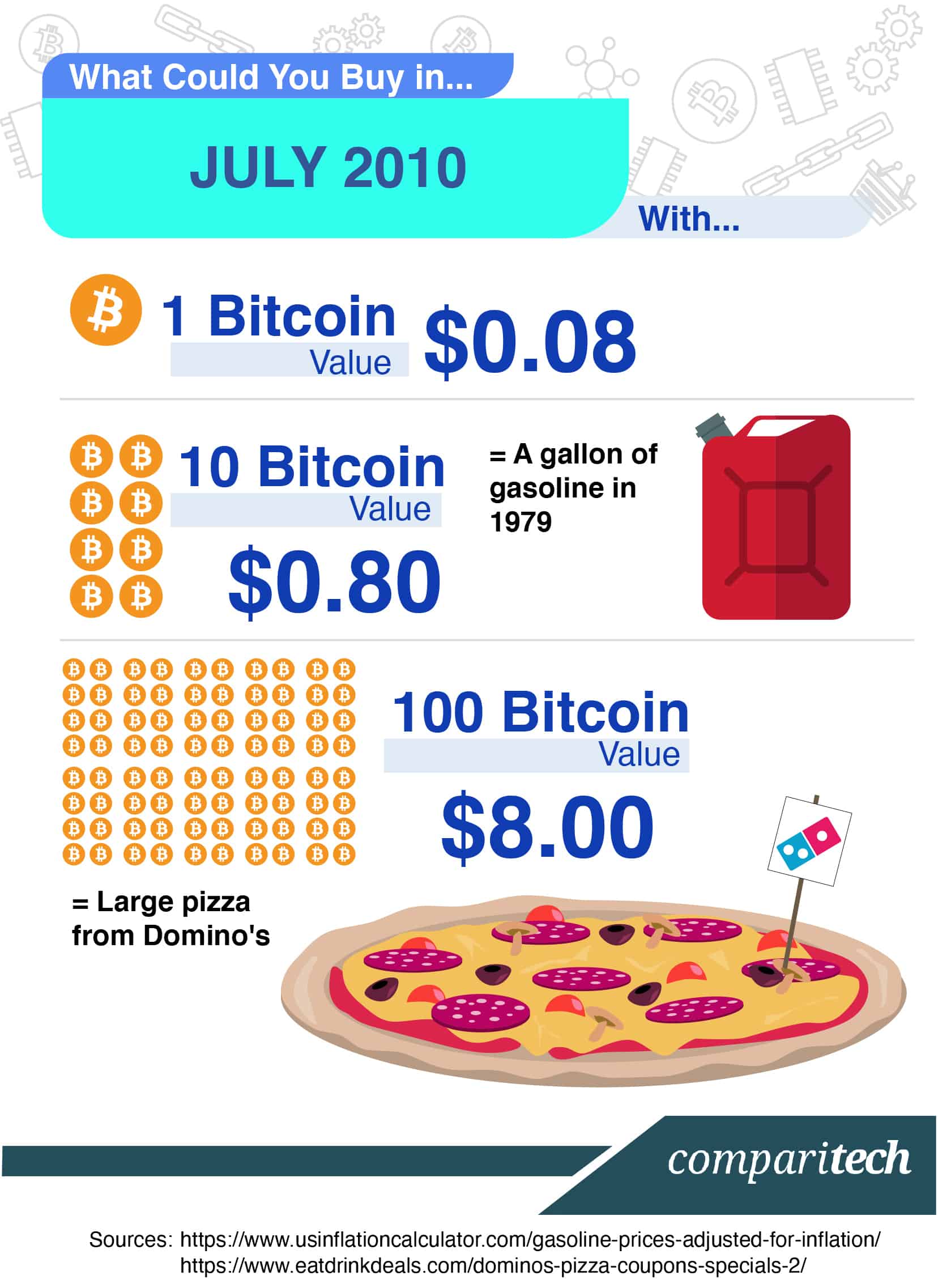
The most iconic milestone in Bitcoin’s price history occurred on May 22, 2010. A programmer named Laszlo Hanyecz agreed to pay 10,000 BTC for two Papa John’s pizzas. At the time, the transaction was valued at roughly $41, putting the price of a single Bitcoin at approximately $0.0041. While this seems like a tragic financial decision in hindsight, it was a pivotal moment in the “Money” niche: it was the first time Bitcoin was used as a medium of exchange for a physical good. It proved that Bitcoin had purchasing power.
Bitcoin as a Disruptive Asset Class: The Shift in Market Valuation
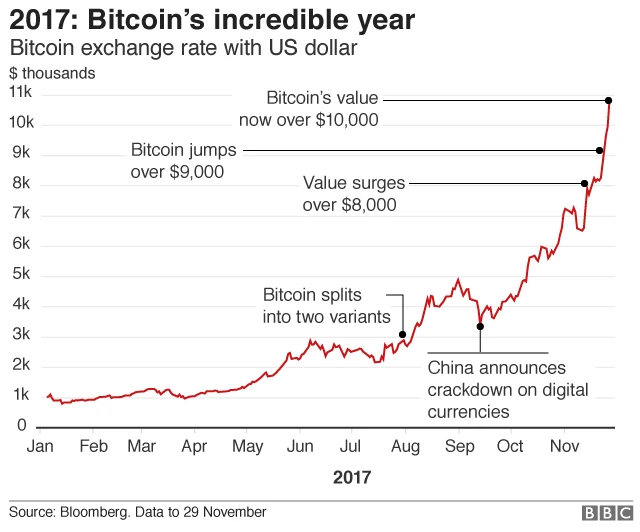
As Bitcoin moved from fractions of a penny to the $1.00 mark (achieved in February 2011), the financial world began to take notice. Bitcoin was no longer just a hobby; it was becoming a speculative asset class. The “starting price” was now a distant memory as the market began to price in the potential of a limited-supply digital currency.
Volatility as a Feature, Not a Bug
In the world of personal finance and investing, volatility is often viewed as a risk to be mitigated. However, for Bitcoin, extreme price swings were the mechanism through which the market attempted to discover its true value. From 2011 to 2013, Bitcoin saw its first major “boom and bust” cycles, rising to $30 before crashing to $2, and later surging to $1,000 before a multi-year bear market. This volatility attracted a new breed of investors—speculators who saw Bitcoin as a high-risk, high-reward “side hustle” or a hedge against traditional currency debasement.
Institutional Adoption and the Maturity of the Market
The narrative of Bitcoin changed significantly around 2017 and 2020. It was no longer just for retail investors or tech enthusiasts. Large-scale financial institutions, hedge funds, and even publicly traded companies like MicroStrategy and Tesla began adding Bitcoin to their balance sheets. This institutional inflow transformed Bitcoin from a fringe experiment into a legitimate component of a modern investment portfolio. The focus shifted from “what price it started at” to “what is its fair market value” in a world of fiat inflation.
Understanding Bitcoin’s ROI: A Comparative Financial Analysis
To appreciate why the starting price of $0.00076 is so significant, one must compare Bitcoin’s growth to traditional financial benchmarks. Bitcoin has outperformed every major asset class—including gold, the S&P 500, and real estate—over the last decade.
Comparing Bitcoin to Traditional Equities and Gold
While gold is often the primary point of comparison for Bitcoin, their growth trajectories are vastly different. Gold has served as a store of value for millennia, offering stability and a hedge against inflation. Bitcoin, however, represents “digital scarcity.” Because its supply is hard-capped at 21 million units, its price is purely a function of demand. Unlike corporate stocks, Bitcoin has no earnings reports or P/E ratios; its value is derived from its network effect and its utility as a censorship-resistant asset.
The Impact of Halving Events on Price Action
From a financial planning perspective, the “Bitcoin Halving” is the most critical event to monitor. Approximately every four years, the reward for mining new blocks is cut in half, reducing the rate at which new Bitcoin enters supply. Historically, these events have acted as catalysts for massive price appreciation. By understanding that Bitcoin started at essentially zero and has a built-in “supply shock” mechanism, investors can better understand its long-term cyclical nature.
The Future of Bitcoin Pricing: Factors Influencing Long-Term Value
Looking ahead, the question of Bitcoin’s starting price serves as a reminder of its potential for asymmetric returns. As the asset matures, the factors influencing its price have evolved from simple “cost of electricity” to complex global macroeconomic variables.
Scarcity and the 21 Million Cap
In the realm of business finance, scarcity is a powerful driver of value. Bitcoin is the first example of absolute mathematical scarcity in human history. As global central banks continue to expand the money supply (quantitative easing), the fixed supply of Bitcoin becomes increasingly attractive to those looking to preserve wealth. This “Scarcity Play” is why many financial advisors now suggest a 1% to 5% allocation to Bitcoin as a “tail-risk” hedge.
Regulatory Environments and Global Economic Shifts
The future price of Bitcoin will be heavily influenced by regulatory clarity. As governments develop frameworks for digital asset taxation and custody, more “conservative” capital is expected to enter the market. Furthermore, in developing nations with hyperinflationary local currencies, Bitcoin is being adopted not just as an investment, but as a functional financial tool for survival.
In conclusion, Bitcoin started at a price of zero in early 2009 and found its first recorded market valuation at $0.00076 in late 2009. That journey from a fraction of a cent to a global financial powerhouse highlights a fundamental shift in how we perceive value, money, and sovereignty. While the days of buying 1,300 BTC for a single dollar are long gone, the underlying financial principles of scarcity, decentralization, and global liquidity continue to drive the asset’s narrative in the modern financial landscape. For the savvy investor, the lesson of Bitcoin’s starting price is clear: innovation often begins in the margins, and the greatest financial opportunities frequently arise from the most humble beginnings.
aViewFromTheCave is a participant in the Amazon Services LLC Associates Program, an affiliate advertising program designed to provide a means for sites to earn advertising fees by advertising and linking to Amazon.com. Amazon, the Amazon logo, AmazonSupply, and the AmazonSupply logo are trademarks of Amazon.com, Inc. or its affiliates. As an Amazon Associate we earn affiliate commissions from qualifying purchases.