
Kinetic energy, at its most fundamental, is the energy an object possesses due to its motion. It is one of the two primary forms of mechanical energy, the other being potential energy, which is stored energy. While this definition might sound like a simple scientific concept, its implications resonate profoundly throughout the entire technological landscape. From the smallest micro-electromechanical systems (MEMS) to the largest industrial machinery, and from the generation of electricity to the propulsion of spacecraft, understanding, harnessing, and manipulating kinetic energy is absolutely crucial for innovation, efficiency, and safety in modern technology.
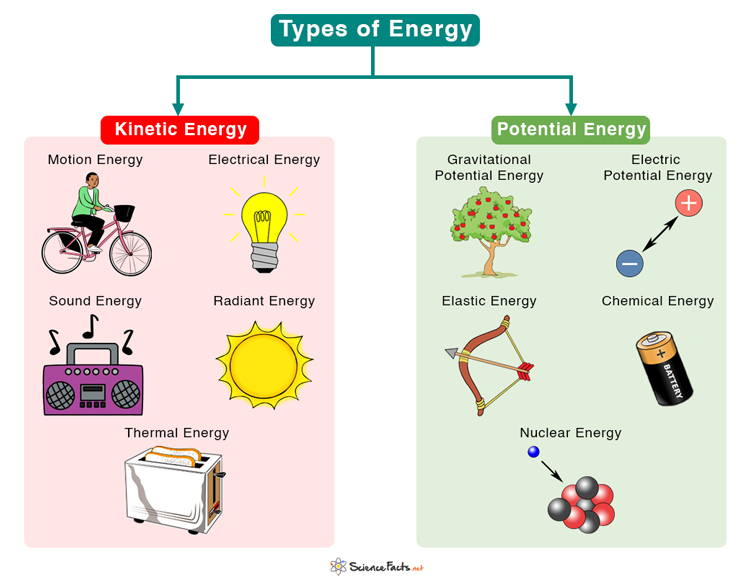
This article delves into the essence of kinetic energy, not merely as a physics principle, but as a foundational element underpinning countless technological advancements. We will explore its definition, its ubiquity in technological applications, the sophisticated methods engineers employ to manage and convert it, and its promising role in the future of emerging technologies, underscoring its indispensable value in the tech world.
The Core Mechanics of Motion: Defining Kinetic Energy in a Technological Context
To appreciate the technological applications of kinetic energy, one must first grasp its foundational principles. It’s not just a theoretical concept; it’s a measurable and manipulable force that engineers and developers contend with daily.
Understanding Energy in Physics: A Brief Overview
In physics, energy is the capacity to do work. It exists in various forms, but mechanical energy, which comprises potential and kinetic energy, is particularly pertinent to engineering and technology. Potential energy is stored energy—energy an object possesses due to its position or state (e.g., a car parked on a hill, a stretched spring, or a charged battery storing chemical potential energy). Kinetic energy, conversely, is the energy of motion. An object has kinetic energy simply because it is moving. The faster it moves and the heavier it is, the more kinetic energy it possesses. This distinction is vital in technology, as engineers often design systems to convert potential energy into kinetic energy (e.g., a car accelerating down a road) and vice versa (e.g., regenerative braking).
The Formula and Its Variables: Mass and Velocity
The mathematical representation of kinetic energy is elegantly simple yet powerfully descriptive:
$KE = frac{1}{2}mv^2$
Where:
- $KE$ is Kinetic Energy
- $m$ is the mass of the object
- $v$ is the velocity of the object
This formula reveals two critical insights for technologists. Firstly, kinetic energy is directly proportional to the mass of the object. A heavier object moving at the same speed has more kinetic energy than a lighter one. Secondly, and more significantly for technological design, kinetic energy is proportional to the square of the velocity. This means that a small increase in speed leads to a disproportionately large increase in kinetic energy. Doubling the speed of a vehicle, for instance, quadruples its kinetic energy. This exponential relationship has profound implications for designing everything from high-speed transportation systems to safety mechanisms and impact absorption technologies, where managing immense kinetic forces becomes paramount.
Units of Measurement: Joules and Their Significance in Tech
The standard unit for energy, including kinetic energy, in the International System of Units (SI) is the Joule (J). One Joule is defined as the amount of work done when a force of one Newton displaces an object by one meter. In technological terms, understanding Joules allows engineers to quantify the energy involved in various processes. For example, when designing an electric motor, knowing the required kinetic energy output allows for precise calculations of power consumption and efficiency. Similarly, in fields like ballistics or crash testing, quantifying kinetic energy in Joules is essential for predicting impact forces and designing protective materials. Other units like kilowatt-hours (kWh) are common in energy consumption contexts, but Joules remain the fundamental unit for expressing energy in its most raw form.
Kinetic Energy in Action: Technological Applications Across Industries
The concept of kinetic energy might be abstract, but its applications are concrete and pervasive across virtually every sector of technology. It is the invisible force driving much of our modern world.
Transportation and Mobility: From Cars to High-Speed Trains
Perhaps the most intuitive application of kinetic energy is in transportation. Every vehicle, from a bicycle to a jet plane, relies on generating and managing kinetic energy to move. In automotive engineering, understanding kinetic energy is critical for engine design (to produce sufficient thrust), braking systems (to dissipate kinetic energy safely), and structural integrity (to absorb kinetic energy during collisions). High-speed trains, for example, require immense power not just to accelerate their massive bulk, but also to overcome drag and maintain their high kinetic energy. The development of electric vehicles and regenerative braking systems is a prime example of technologically advanced kinetic energy management, where the kinetic energy of deceleration is converted back into electrical energy and stored, improving efficiency.
Renewable Energy Systems: Wind Turbines and Hydroelectric Power
Kinetic energy plays a pivotal role in large-scale renewable energy generation. Wind turbines harness the kinetic energy of moving air, converting the rotational kinetic energy of their blades into electrical energy via generators. The efficiency of these turbines is directly related to how effectively they capture and convert this kinetic energy, necessitating sophisticated aerodynamic designs and control systems. Similarly, hydroelectric power plants capture the kinetic energy of flowing water (often from potential energy stored in elevated reservoirs), guiding it through turbines to generate electricity. These massive systems exemplify how natural kinetic forces can be tamed and transformed into usable power through engineering prowess.
Industrial Machinery and Robotics: Harnessing Motion for Work

In manufacturing and industrial settings, kinetic energy is central to the operation of countless machines. Conveyor belts use motors to impart kinetic energy to goods for transport. Cutting, drilling, and pressing machines rely on the kinetic energy of their moving parts to perform work on materials. Robotics, a cornerstone of modern automation, is essentially about precise control over kinetic energy. Robot arms lift, move, and manipulate objects, requiring exact calculations of torque, speed, and acceleration to ensure accuracy and safety. The design of actuators, gears, and end-effectors in robotics is all about efficiently translating electrical or hydraulic energy into controlled kinetic energy to perform intricate tasks.
Consumer Electronics and Gadgets: Micro-Scale Kinetic Applications
Even in the realm of everyday consumer electronics, kinetic energy finds fascinating applications, albeit often on a smaller scale. Haptic feedback mechanisms in smartphones and game controllers use tiny vibration motors to generate controlled kinetic energy, providing tactile responses to users. Kinetic energy harvesting, though still nascent, is an emerging field where ambient motion (like a person walking or a device vibrating) is converted into small amounts of electrical energy to power low-power sensors or charge small batteries. Smartwatches, for instance, might one day be powered or augmented by the kinetic energy from wrist movements, reducing reliance on frequent charging.
Harnessing and Managing Kinetic Energy for Innovation
The ability to not just generate but also effectively manage and convert kinetic energy is what separates rudimentary motion from advanced technological systems. This management is key to efficiency, sustainability, and safety.
Energy Conversion and Storage Technologies: Regenerative Braking, Flywheels
One of the most significant areas of innovation is the conversion and storage of kinetic energy. Regenerative braking systems, as mentioned, are now standard in electric and hybrid vehicles. Instead of dissipating kinetic energy as heat through friction brakes, these systems convert it back into electricity, storing it in batteries for later use. This dramatically improves energy efficiency. Another important technology is the flywheel, a mechanical device that stores rotational kinetic energy. Flywheels can be used in uninterruptible power supplies (UPS) to provide instantaneous backup power, or even in some public transport systems to capture braking energy and reuse it for acceleration. High-tech flywheels with magnetic bearings and vacuum chambers are incredibly efficient at storing energy over long periods, making them valuable in grid stabilization and renewable energy integration.
Mitigating Kinetic Energy: Impact Absorption and Safety Systems
Given that kinetic energy increases with the square of velocity, the destructive potential of uncontrolled kinetic energy is immense. Therefore, mitigating and absorbing kinetic energy is a critical area of technological development, particularly for safety. Crumple zones in vehicles are designed to deform in a controlled manner, absorbing and dissipating kinetic energy during a collision, thereby protecting the occupants. Airbags rapidly inflate to provide a soft landing for occupants, extending the time over which kinetic energy is dissipated and reducing peak forces. Beyond vehicles, seismic isolation systems in buildings use specialized bearings and dampeners to absorb the kinetic energy of an earthquake, preventing structural damage. The materials science behind these systems, from advanced composites to shear-thickening fluids, is constantly evolving to handle higher kinetic loads more effectively.
Kinetic Energy as a Data Source: Sensors and Predictive Maintenance
An often-overlooked aspect of kinetic energy in technology is its role in providing valuable data. Accelerometers and gyroscopes, ubiquitous in smartphones, wearables, and industrial machinery, measure changes in velocity and orientation, effectively quantifying aspects of an object’s kinetic state. This data is used for everything from step counting and gesture recognition to navigation and stabilization systems. In industrial contexts, monitoring vibrations—which are manifestations of kinetic energy—can provide early warnings of mechanical failure in rotating machinery. Predictive maintenance systems use sensors to track the kinetic energy signatures of components, allowing for proactive repairs before catastrophic breakdowns occur, thus saving time and money and improving operational reliability.
The Future of Kinetic Energy in Emerging Technologies
As technology continues its rapid advancement, the principles of kinetic energy remain at the forefront of innovation, driving the development of future systems and solutions.
Advanced Robotics and Autonomous Systems: Precision Motion Control
The next generation of robotics and autonomous systems will demand even more sophisticated control over kinetic energy. Collaborative robots (cobots) need to operate safely alongside humans, requiring precise kinetic energy management to avoid accidental impacts. Autonomous vehicles must accurately predict and react to the kinetic energy of other road users and their own, performing complex maneuvers and emergency stops with unprecedented accuracy. Soft robotics, a burgeoning field, aims to create robots that can safely interact with delicate objects and environments, often by carefully controlling the kinetic energy of compliant materials. The challenge lies in developing algorithms and hardware that can anticipate, control, and compensate for kinetic forces in dynamic, unpredictable environments.
Sustainable Urban Infrastructure: Capturing Movement for Power
Urban environments are rife with untapped kinetic energy. Research is ongoing into technologies that can capture this energy for sustainable power. Imagine sidewalks that generate electricity from the kinetic energy of footsteps, or roads that harness the kinetic energy of passing vehicles. While currently producing relatively small amounts of power, these technologies could contribute to localized power grids, powering streetlights, sensors, or charging stations. Kinetic energy-capturing speed bumps, for instance, are being trialed to convert the motion of cars into electricity. Such innovations could integrate energy generation seamlessly into our daily lives, reducing reliance on traditional power sources and fostering greener cities.
Space Exploration and Propulsion: Overcoming Inertia
In the extreme environment of space, understanding and manipulating kinetic energy is fundamental. Rocket propulsion is all about imparting massive kinetic energy to a spacecraft to overcome Earth’s gravity and achieve orbital velocity. Once in space, systems like reaction wheels use the principle of conservation of angular momentum (a form of rotational kinetic energy) to orient and stabilize satellites and spacecraft without expending propellant. Future propulsion technologies, such as advanced ion thrusters or even theoretical concepts like warp drives, are ultimately concerned with the most efficient ways to generate and control the kinetic energy needed for interstellar travel, pushing the boundaries of what is technologically possible.

Conclusion
Kinetic energy is far more than just a chapter in a physics textbook; it is a dynamic, pervasive force that underpins the vast majority of our technological world. From the simple act of a device vibrating to the complex ballet of high-speed transportation, and from the generation of sustainable power to the meticulous control required for advanced robotics, its presence is felt everywhere. Engineers, scientists, and innovators across every tech domain continually strive to better understand, measure, harness, and manage kinetic energy. As we venture further into an era defined by automation, sustainable solutions, and advanced exploration, the principles of kinetic energy will remain an indispensable tool, driving efficiency, safety, and the relentless march of technological progress. The future of tech, undoubtedly, will continue to be a testament to the power of motion.
aViewFromTheCave is a participant in the Amazon Services LLC Associates Program, an affiliate advertising program designed to provide a means for sites to earn advertising fees by advertising and linking to Amazon.com. Amazon, the Amazon logo, AmazonSupply, and the AmazonSupply logo are trademarks of Amazon.com, Inc. or its affiliates. As an Amazon Associate we earn affiliate commissions from qualifying purchases.