
The question “what is the starting salary” is fundamental to anyone embarking on a new career, changing industries, or evaluating a job offer. It’s more than just a number; it’s a critical component of personal finance, career trajectory, and overall economic well-being. For employers, understanding competitive starting salaries is vital for attracting top talent and maintaining a sustainable workforce. In essence, a starting salary represents the initial compensation package offered to an employee upon commencing a new role, serving as a baseline for their future earnings and financial planning. This comprehensive guide will dissect the multifaceted nature of starting salaries, exploring their components, the factors that influence them, effective strategies for research and negotiation, and their long-term implications.
Understanding the Components of a Starting Salary
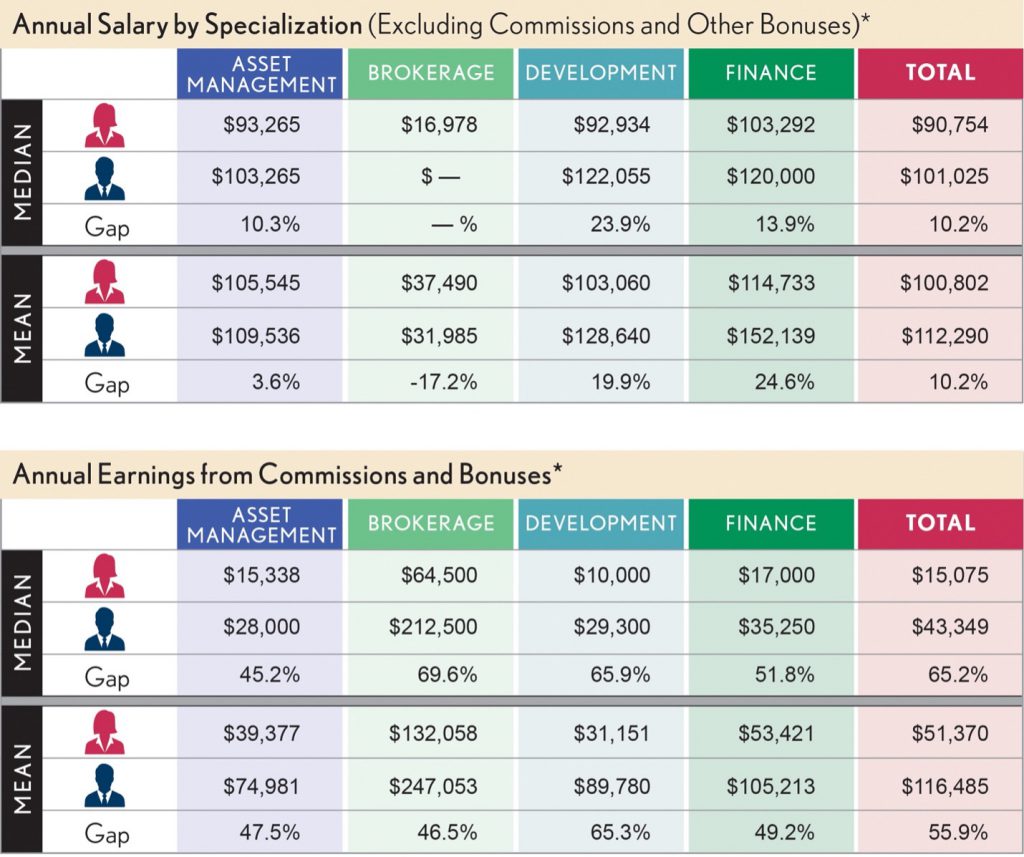
A starting salary isn’t a monolithic figure. It’s often a blend of various financial and non-financial elements that, when combined, constitute the total compensation package. Grasping these components is crucial for accurately assessing the true value of a job offer.
Base Pay: The Foundation
The most straightforward element of a starting salary is the base pay. This is the fixed amount of money an employee receives before any bonuses, benefits, or deductions. Base pay can be structured in a few ways:
- Hourly Wage: Common for entry-level, part-time, or certain skilled trades positions, where compensation is tied directly to the hours worked.
- Annual Salary: Predominant in professional and managerial roles, where a fixed sum is paid over a year, typically divided into bi-weekly or monthly installments, regardless of the exact hours worked (though expectations of full-time work apply).
Factors directly influencing base pay include the specific role, the industry average, the geographic location, the candidate’s experience level, and the size and financial health of the employing company. For instance, a software engineer’s starting base pay in Silicon Valley will likely differ significantly from that of a marketing assistant in a smaller market, even with similar levels of education.
Variable Compensation and Benefits
Beyond the base pay, many companies offer additional forms of compensation and benefits that significantly enhance the overall value of a starting salary. These are often crucial differentiators between job offers.
- Bonuses:
- Signing Bonuses: One-time payments offered upfront to new hires, often to sweeten a deal or compensate for forfeited bonuses from a previous employer.
- Performance Bonuses: Tied to individual or company performance, usually paid annually, reflecting achievements beyond regular duties.
- Retention Bonuses: Offered to incentivize an employee to stay with the company for a specified period.
- Commissions: Especially prevalent in sales roles, commissions are a percentage of sales revenue generated by the employee, often complementing a lower base salary.
- Equity/Stock Options: Common in tech startups and growth companies, these offer employees a share in the company’s ownership or the right to purchase shares at a predetermined price. While their immediate cash value might be zero, they can offer substantial long-term wealth potential if the company succeeds.
- Benefits: These non-cash compensations are often highly valued and can represent a significant portion of total compensation. Key benefits include:
- Health Insurance: Medical, dental, and vision coverage.
- Retirement Plans: 401(k)s (with potential employer matching), pensions, or other retirement savings vehicles.
- Paid Time Off (PTO): Vacation days, sick leave, and holidays.
- Life and Disability Insurance.
- Education Assistance: Tuition reimbursement, professional development courses.
- Wellness Programs: Gym memberships, mental health support.
- Perks: While less tangible, perks can improve daily work life, such as free meals, commuter benefits, flexible work arrangements, or subsidized childcare.
The Total Compensation Package
It’s imperative for job seekers to look beyond the base pay and evaluate the total compensation package. A lower base salary might be offset by generous benefits, significant bonus potential, or valuable equity. Conversely, a high base salary might come with minimal benefits, making its true value less appealing. Understanding and itemizing each component allows for a holistic comparison of job offers and a clearer picture of one’s financial standing.
Key Factors Influencing Starting Salaries
Starting salaries are not arbitrary figures; they are shaped by a complex interplay of market dynamics, individual attributes, and economic conditions. Acknowledging these influences empowers individuals to better understand their market value and employers to benchmark their offers competitively.
Industry and Sector
Different industries possess varying pay scales due to supply and demand for specific skills, profitability margins, and the economic value generated. For example:
- High-demand sectors like technology, finance, and healthcare often command higher starting salaries due to specialized skill requirements and lucrative market opportunities.
- Non-profit organizations, education, and some creative arts fields typically offer more modest starting salaries, often balancing compensation with mission-driven work or lifestyle benefits.
Geographic Location
The cost of living and regional economic activity profoundly impact starting salaries. A position in a major metropolitan area with a high cost of living (e.g., New York City, San Francisco, London) will generally offer a higher starting salary than an identical role in a rural area or a city with a lower cost of living, even within the same country. This disparity reflects the need for employees to maintain a comparable quality of life.
Education and Qualifications
A candidate’s educational background and specialized qualifications are significant determinants:
- Degree Level: Higher degrees (Master’s, PhD) or professional degrees (JD, MD) typically lead to higher starting salaries than bachelor’s degrees, especially in fields requiring advanced expertise.
- Field of Study: STEM (Science, Technology, Engineering, Mathematics) graduates often start with higher salaries due to specific industry demand.
- Certifications and Specialized Training: Industry-recognized certifications (e.g., PMP for project management, various IT certifications) can significantly boost earning potential by demonstrating specific, in-demand skills.
- Reputation of Institution: While less impactful than degree level, graduating from a highly regarded university or program can sometimes provide a slight edge.
Experience Level and Skill Set
Even for entry-level positions, previous experience plays a role:
- Internships and Co-ops: Relevant prior experience, even unpaid or low-paying internships, can lead to a higher starting salary compared to a candidate with no prior professional exposure.
- Hard Skills: Technical skills (coding languages, data analysis, specific software proficiency) are often highly valued and can command premium pay.
- Soft Skills: While harder to quantify, strong communication, leadership, problem-solving, and teamwork skills are increasingly recognized as essential and can contribute to a more attractive offer.
- Niche Skills: Expertise in emerging technologies or highly specialized areas (e.g., cybersecurity, AI ethics) can lead to significantly elevated starting salaries due to limited supply and high demand.
Company Size and Type
The nature of the employing organization also affects salary structures:

- Large Corporations: Often have more structured pay scales, robust benefits, and greater capacity to offer competitive salaries.
- Startups: May offer lower base salaries but compensate with greater equity potential, a dynamic work environment, and rapid career growth opportunities.
- Public Sector vs. Private Sector: Government jobs may offer greater job security and comprehensive benefits, but often with lower starting salaries than comparable private sector roles.
Economic Conditions
Broader economic forces can significantly influence the job market and, by extension, starting salaries:
- Economic Growth: In periods of robust economic expansion, companies are often more profitable and willing to invest in talent, leading to higher starting salaries and more competition for skilled workers.
- Recessions/Downturns: During economic contractions, job availability may decrease, and companies may offer lower starting salaries or freeze wages as they cut costs.
- Inflation: High inflation can pressure companies to offer higher nominal salaries to maintain the real purchasing power of their employees’ wages.
Researching and Negotiating Your Starting Salary
Armed with an understanding of salary components and influencing factors, the next crucial step is to effectively research your market value and confidently negotiate for an equitable starting salary. This process is both an art and a science, requiring preparation, strategy, and self-assurance.
Effective Salary Research Strategies
Before engaging in any salary discussion, thorough research is paramount. This allows you to set realistic expectations and justify your salary requests with data.
- Online Salary Aggregators: Websites like Glassdoor, LinkedIn Salary, Payscale, and Salary.com provide salary ranges for various roles, industries, and locations based on reported data. Always consult multiple sources for a balanced perspective.
- Industry-Specific Reports: Professional associations and recruiting firms often publish annual salary guides tailored to specific industries or professions, offering highly accurate data.
- Networking: Informational interviews with professionals in your target role or industry can provide invaluable insights into typical compensation packages. Ask about industry standards, not specific personal salaries.
- Company Research: Investigate the company’s financial health, funding rounds (for startups), and publicly available reports to gauge its capacity to pay.
- Consider Total Compensation: Remember to research not just base pay, but also typical bonuses, benefits, and equity offerings in your field.
Crafting a Compelling Negotiation Strategy
Negotiation is a conversation, not a confrontation. It’s about demonstrating your value and reaching a mutually beneficial agreement.
- Know Your Worth: Based on your research, skills, experience, and the value you bring to the role, determine a realistic and ambitious salary range. Have a target number and a walk-away number.
- Practice Your Pitch: Articulate clearly and confidently why you deserve your requested salary. Focus on your unique skills, relevant experience, achievements, and how you will contribute to the company’s success. Avoid making it solely about your personal financial needs.
- Focus on Value: Frame your negotiation around the value you will add to the organization. Quantify your past achievements where possible (e.g., “I increased sales by X%”).
- Consider the Total Package: Be prepared to negotiate beyond base salary. If base pay is fixed, explore options for a signing bonus, more vacation time, enhanced benefits, professional development funds, or a review after six months.
- Timing is Key: Generally, it’s best to discuss salary once a formal job offer has been extended and you know the company is genuinely interested. Avoid revealing your current or desired salary too early in the process.
- Be Professional and Enthusiastic: Maintain a positive, respectful, and collaborative tone throughout the negotiation. Express genuine excitement for the role and the company.
- Get it in Writing: Once an agreement is reached, ensure all components of the compensation package are clearly documented in an official offer letter.
Avoiding Common Negotiation Pitfalls
Several mistakes can undermine your negotiation efforts:
- Revealing Your Current/Previous Salary Too Early: This can anchor the employer’s offer to your past earnings rather than your market value for the new role.
- Not Having a Clear Target: Going into negotiation without a specific range can lead to accepting less than you’re worth.
- Being Unrealistic or Aggressive: Demanding an unreasonable salary or adopting an adversarial stance can sour the relationship and lead to the offer being rescinded.
- Not Considering the Total Package: Focusing solely on base pay and overlooking the value of benefits can lead to a less optimal outcome.
- Failing to Get it in Writing: Verbal agreements can be misinterpreted or forgotten.
The Long-Term Impact of Your Starting Salary
The starting salary is far more than just your first paycheck; it lays the groundwork for your entire financial future and career trajectory. Its effects ripple through subsequent salary increases, wealth accumulation, and even career satisfaction.
Future Earning Potential
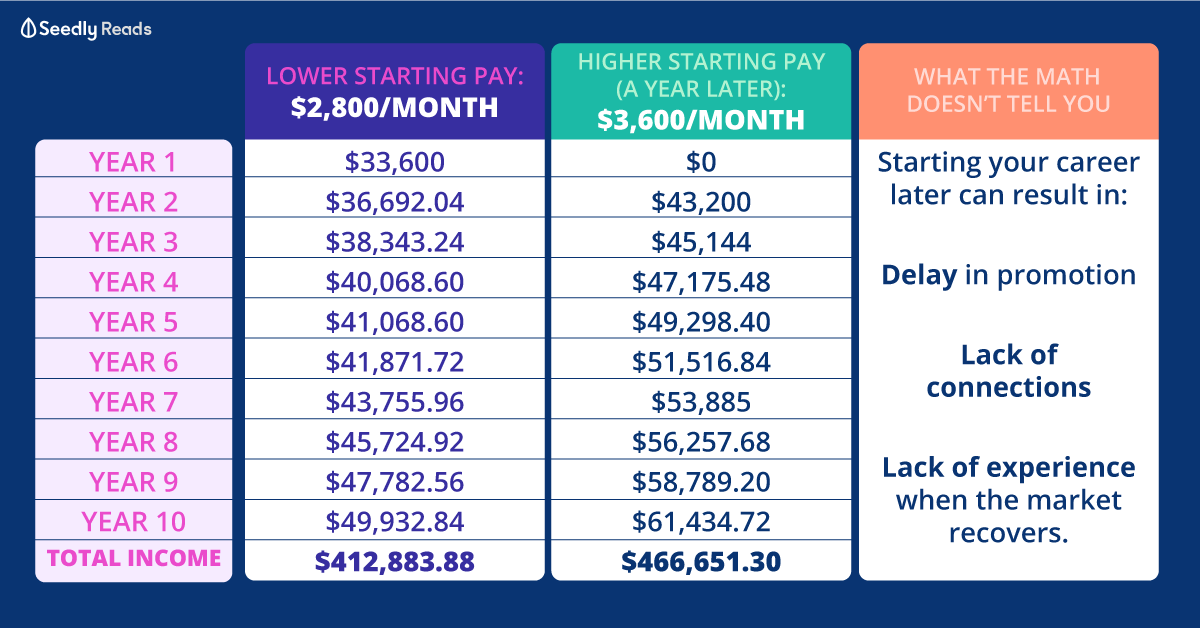
Your initial starting salary serves as the baseline for all future salary negotiations and raises within that company or when moving to new roles. Subsequent percentage-based raises compound on this initial figure. A higher starting salary means that even a modest annual raise translates into a larger absolute increase in income over time. This compounding effect significantly impacts your total career earnings. Furthermore, employers often use your current salary as a benchmark when making new offers, making a strong start crucial.
Financial Planning and Lifestyle
A competitive starting salary directly influences your ability to achieve various financial goals.
- Budgeting and Savings: A higher income provides more disposable funds for essential expenses, but also for building an emergency fund, saving for a down payment on a home, or investing for retirement.
- Debt Repayment: Graduates often face student loan debt. A better starting salary can accelerate repayment, reducing interest accrual and freeing up financial resources sooner.
- Quality of Life: While money isn’t everything, a comfortable starting salary can alleviate financial stress, enable a desired lifestyle, and open doors to experiences or opportunities that might otherwise be out of reach. It directly impacts your ability to live where you want, travel, or pursue hobbies.
Career Satisfaction and Motivation
Feeling adequately compensated for your skills and efforts is a powerful motivator. A fair starting salary can contribute significantly to:
- Job Satisfaction: Employees who feel valued and fairly paid tend to be more engaged, motivated, and satisfied with their work.
- Retention: Companies offering competitive starting salaries and clear paths for growth are more likely to retain talent, reducing turnover costs and fostering a stable workforce.
- Professional Confidence: A strong starting salary can boost confidence in your professional worth and encourage you to pursue more challenging and rewarding career paths. Conversely, a feeling of being underpaid can lead to resentment, reduced motivation, and an early departure from a role or company.
Conclusion
The question “what is the starting salary?” unravels into a complex and critical financial discussion. It encompasses base pay, variable compensation, comprehensive benefits, and a myriad of factors ranging from industry demand and geographic location to individual qualifications and economic conditions. Understanding these nuances is not merely an academic exercise; it’s an essential skill for career advancement and personal financial health.
By thoroughly researching market rates, crafting a compelling negotiation strategy, and confidently advocating for your worth, you can significantly impact your immediate earnings and lay a robust financial foundation for your entire professional life. Remember, your starting salary is more than just compensation for your time; it’s an investment in your future, shaping your earning potential, lifestyle, and overall career satisfaction. Approach it with preparation, insight, and the confidence that comes from knowing your true value.
aViewFromTheCave is a participant in the Amazon Services LLC Associates Program, an affiliate advertising program designed to provide a means for sites to earn advertising fees by advertising and linking to Amazon.com. Amazon, the Amazon logo, AmazonSupply, and the AmazonSupply logo are trademarks of Amazon.com, Inc. or its affiliates. As an Amazon Associate we earn affiliate commissions from qualifying purchases.