
In the rapidly evolving landscape of artificial intelligence, conversational agents have become increasingly ubiquitous, transforming how we interact with technology and access information. Among these, OpenAI’s ChatGPT has emerged as a frontrunner, captivating millions with its ability to generate human-like text, answer complex questions, and engage in nuanced discussions. A common initial query from new users, often stemming from familiarity with established voice assistants like Siri, Alexa, or Google Assistant, is “What is the name of the ChatGPT assistant?” The answer, while seemingly straightforward, unravels a deeper narrative about how we perceive and interact with advanced AI systems, and how their creators choose to brand and position them within the technological ecosystem.
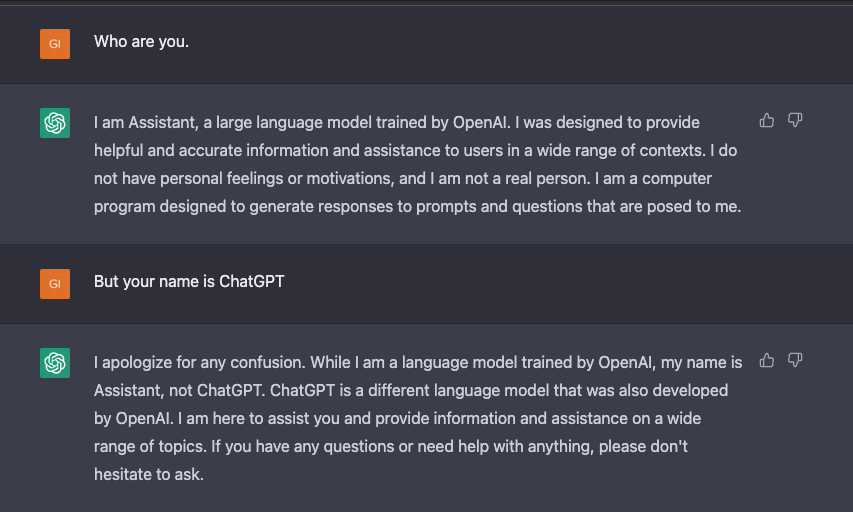
Unlike its anthropomorphized counterparts, ChatGPT does not possess a distinct personal name for its “assistant.” It is, quite simply, “ChatGPT.” This might come as a surprise to those accustomed to AI being presented with human-like monikers. However, this intentional decision by OpenAI reflects a nuanced approach to AI development and user interaction, emphasizing its identity as a powerful tool or model rather than a sentient entity with a personal brand. Understanding this distinction is crucial for appreciating the technological philosophy behind ChatGPT and its place in the broader AI narrative.
The Identity of a Conversational AI
The way we name and identify AI systems profoundly influences our perception of their capabilities, limitations, and even their perceived autonomy. The decision to assign a personal name versus a descriptive product name carries significant implications for user experience, ethical considerations, and the very future of human-AI collaboration.
Dispelling the Myth of a Personal Name
Many users, especially those new to advanced AI, naturally expect ChatGPT to have a personal name similar to Apple’s Siri, Amazon’s Alexa, or Google Assistant. These popular voice assistants have been deliberately designed with distinct names and often personalized voices to foster a sense of familiarity, approachability, and even companionship. This anthropomorphic design strategy aims to make interaction feel more natural and less intimidating.
However, ChatGPT fundamentally diverges from this model. OpenAI has opted to name the product and the underlying model (GPT, standing for Generative Pre-trained Transformer) directly, rather than assigning a separate personal name to the conversational interface. When you interact with ChatGPT, you are conversing directly with the software itself, which is a specific instantiation of the GPT language model. There isn’t a separate “assistant personality” layer superimposed with its own name. This absence of a personal name underscores its nature as a sophisticated technological instrument designed for specific tasks, rather than a digital companion.
The Concept of AI Personas
While ChatGPT doesn’t have a given name, it can adopt various “personas” based on the user’s prompts. This is a crucial distinction. Users can instruct ChatGPT to “act as a Shakespearean scholar,” “write an email as a marketing expert,” or “respond as a friendly customer service agent.” In these instances, ChatGPT is not being a distinct named assistant; it is emulating a specific role or style based on the extensive data it was trained on and the instructions it receives.
This capability highlights ChatGPT’s versatility and adaptability as a language model. Its strength lies in its ability to generate text that aligns with a vast array of contexts and styles, rather than being confined to a single, predefined persona. This dynamic persona capability emphasizes its function as a tool that can be wielded for diverse communicative purposes, shifting its linguistic style and knowledge application as dictated by the user’s needs. This technological design choice empowers users with greater control over the interaction, allowing them to shape the AI’s output to fit specific requirements without being constrained by a fixed identity.
User Interaction and AI Identification
The way users identify and refer to ChatGPT reflects this underlying design philosophy. Most users refer to it simply as “ChatGPT” or “the AI.” This direct reference to the product name fosters a perception of it as a technological service rather than an individual entity. This can also contribute to clearer expectations regarding its functionality; users are less likely to project human-like emotions or intentions onto a system named “ChatGPT” than they might onto an assistant named “Alexa.” This differentiation is important for managing user expectations and promoting a realistic understanding of AI capabilities. It grounds the interaction in the realm of technology and information processing, rather than venturing into the complexities of simulated social relationships.
ChatGPT: A Product, Not a Persona
The design and naming choices for ChatGPT are deeply rooted in OpenAI’s overarching mission and technological philosophy. It positions ChatGPT as a powerful, versatile tool designed to augment human capabilities, rather than replacing or mimicking human interaction in a purely social sense.
OpenAI’s Approach to Naming
OpenAI, as a leading AI research and deployment company, has consistently focused on naming its models and products descriptively. “GPT” stands for “Generative Pre-trained Transformer,” accurately reflecting its core architecture and function. “ChatGPT” simply combines this model name with “Chat,” indicating its conversational application. This nomenclature is precise, technical, and avoids anthropomorphism. It signals that the primary value of the technology lies in its underlying mechanics and its output, not in a curated, personalized identity.
This approach aligns with a broader trend in advanced AI development, where the emphasis is often on the model’s capabilities, scalability, and integration into various applications, rather than on creating individual “assistants.” It positions the technology as a building block for a multitude of AI-powered services, rather than a standalone, named personality. This strategy reflects a focus on transparency about the AI’s nature—it is a sophisticated algorithm, not a person.
Distinguishing ChatGPT from Virtual Assistants
It’s helpful to draw a clear line between ChatGPT and traditional virtual assistants. Virtual assistants like Siri, Alexa, and Google Assistant are typically designed to integrate into smart home ecosystems, manage schedules, play music, provide quick information retrieval, and handle specific commands (e.g., “Set a timer for 10 minutes”). They often have wake words, distinctive voices, and sometimes even a degree of “personality” baked into their responses. Their core function is to act as a readily available, often voice-activated, utility.
ChatGPT, while capable of answering questions, is fundamentally a large language model optimized for generating coherent, contextually relevant, and often creative text. Its primary strength lies in its linguistic fluency, its ability to understand complex prompts, summarize information, translate languages, write different kinds of creative content, and engage in extended, nuanced conversations. While it can perform some tasks similar to virtual assistants, its core design is geared towards advanced language generation and comprehension. The lack of a personal name for ChatGPT reinforces this distinction, signaling that it is a specialized tool for complex linguistic tasks rather than a general-purpose, named interface for device control or quick factual lookups.
The Role of the Model vs. the Interface
When interacting with ChatGPT, one is interacting with a web interface (or API) that provides access to the underlying GPT model. The “assistant” aspect is a functional description of what the software does – it assists users through conversation. However, this functional description doesn’t necessitate a unique name for the assistant itself, separate from the product. The model is the engine, and ChatGPT is the vehicle.
OpenAI’s strategy allows for the evolution of the GPT models (e.g., GPT-3.5, GPT-4), which are distinct technological advancements. The “ChatGPT” branding then acts as a consistent identifier for the conversational application that leverages these evolving models. This separation allows OpenAI to upgrade the underlying intelligence without having to reintroduce or rebrand a “new assistant.” It keeps the focus on the technological progression of the models themselves, which is crucial in a field as rapidly advancing as AI.
The Evolution of AI Naming Conventions
The trajectory of AI naming has seen a fascinating evolution, reflecting changing societal perceptions of technology and the increasing sophistication of AI systems. From early anthropomorphic aspirations to current functional descriptors, the chosen names reveal much about the intended role and impact of AI.
From Anthropomorphic Assistants to Functional AI
Early consumer-facing AI often adopted human-like names to make the technology more palatable and less intimidating. “Siri,” “Alexa,” and “Cortana” were chosen for their pleasant sounds and often ambiguous origins, allowing users to project a sense of personality onto them. This strategy was effective in introducing AI into mainstream homes, fostering a sense of comfort and familiarity. It was about demystifying complex technology through relatable branding.

However, as AI capabilities have expanded beyond simple commands and information retrieval, the naming conventions have begun to shift. More advanced AI systems, particularly those focused on complex tasks like language generation, scientific research, or creative writing, are increasingly named to reflect their function or the underlying technology. “AlphaGo,” “Deep Blue,” and now “GPT” and “ChatGPT” are examples of this trend. These names evoke precision, power, and technological prowess, emphasizing the AI’s utility and technical sophistication rather than a simulated human connection. This shift suggests a growing maturity in how society and developers view AI — as powerful tools rather than digital companions.
Brand Recognition vs. Individual Identity
For a company like OpenAI, the brand recognition of “ChatGPT” is paramount. It represents a significant leap in conversational AI and has become synonymous with cutting-edge language generation. Maintaining “ChatGPT” as the singular identifier simplifies branding, marketing, and user education. If OpenAI were to introduce a separate name for the “assistant,” it could potentially dilute the brand, create confusion, and complicate the narrative around its technological advancements.
By focusing on the product name, OpenAI reinforces its corporate identity as a leader in AI development. Users are engaging with “an OpenAI product,” specifically “ChatGPT,” rather than a distinct “assistant” developed by OpenAI. This strategy helps to consolidate the company’s reputation and expertise under a unified brand umbrella, ensuring that the achievements of the AI are attributed directly to OpenAI.
The Future of AI Naming in a Multimodal World
As AI continues to evolve towards multimodal capabilities—integrating text, image, audio, and video—the naming conventions may further adapt. We might see a blend of descriptive names for core models and more application-specific branding for user interfaces. The flexibility of simply referring to “ChatGPT” means that as OpenAI integrates new capabilities (e.g., image generation, voice interaction), the core identity can remain consistent while the functionalities expand.
This approach offers an advantage in a rapidly innovating field. Rather than creating new named “assistants” for every iteration or new capability, companies can continuously upgrade the underlying model and feature set of an existing product like ChatGPT. This allows for seamless evolution and avoids the confusion of multiple, differently named AI entities under the same development umbrella. The future of AI naming is likely to favor clarity, adaptability, and an emphasis on the underlying technological prowess rather than superficial anthropomorphism.
Why the Naming Matters in Technology
The choice not to give ChatGPT a personal name is more than a stylistic preference; it has profound implications for user experience, ethical considerations, and the broader integration of AI into society. In the tech sector, clarity and transparency often precede adoption and trust.
User Experience and Accessibility
From a user experience perspective, the straightforward naming of “ChatGPT” can reduce cognitive load. Users don’t need to remember a specific name to address the AI; they interact directly with the platform. This simplicity can make the technology more accessible to a wider audience, as there are fewer layers of abstraction or personification to navigate. The focus remains on the output and the utility of the tool.
Moreover, the absence of a personal name may subtly encourage users to approach ChatGPT with a more analytical mindset, understanding it as a sophisticated software tool. This can lead to more effective prompt engineering and a clearer understanding of its capabilities and limitations, fostering more productive interactions. When users perceive it as a tool, they are more likely to learn how to use it effectively, much like learning to use a complex software application.
Trust, Ethics, and Transparency
Perhaps one of the most significant reasons for OpenAI’s naming choice lies in the realm of ethics and transparency. Giving AI a human-like name can inadvertently lead users to project human qualities, intentions, and even consciousness onto the AI. This can blur the lines between human and machine, leading to unrealistic expectations, emotional attachments, or a misunderstanding of the AI’s true nature as an algorithm.
By explicitly avoiding a personal name, OpenAI reinforces the message that ChatGPT is a technological system, not a sentient being. This promotes transparency about its artificial nature and helps to mitigate ethical concerns related to deception, accountability, and the potential for users to be misled about the AI’s sentience. In an era where AI ethics are increasingly scrutinized, a clear, functional name like “ChatGPT” underscores a commitment to responsible AI development and deployment, ensuring users interact with the technology on an informed basis. It encourages users to view the AI critically, understanding its outputs as generated responses rather than personal opinions or feelings.
The Impact on AI Adoption and Integration
The professional and functional naming convention of ChatGPT also influences its adoption and integration into professional and enterprise environments. Businesses are more likely to integrate a powerful “language model” or “AI tool” into their workflows than a named “assistant” that might carry connotations of consumer-grade, less serious technology. The branding aligns with its potential for serious, impactful applications in fields ranging from content creation and software development to research and data analysis.
This strategic naming choice positions ChatGPT as an enterprise-ready solution, facilitating its broader acceptance as a legitimate and powerful technological asset. It signals maturity and professionalism, which are critical factors for widespread institutional adoption and for embedding AI deeper into the fabric of various industries.
Interacting with ChatGPT: Best Practices
Understanding that ChatGPT is a product and a model, rather than a named assistant, informs best practices for interacting with it effectively. The focus should always be on clarity, context, and leveraging its core linguistic capabilities.
Prompt Engineering and Specificity
Since you’re interacting with a powerful language model, the key to successful engagement lies in “prompt engineering.” This means crafting clear, specific, and well-structured instructions that guide the AI to generate the desired output. Instead of conversational niceties aimed at a person, focus on:
- Defining the task: What do you want it to do (e.g., summarize, explain, write, brainstorm)?
- Providing context: What background information does it need?
- Specifying format: How should the output be structured (e.g., bullet points, essay, code)?
- Setting constraints: Are there length limits, tone requirements, or specific viewpoints to adopt?
Treating ChatGPT as a sophisticated computational engine that processes language rather than a “person” to chat with will yield far superior results.
Understanding AI Capabilities and Limitations
Knowing that ChatGPT is an advanced language model also helps in understanding its inherent capabilities and limitations. It excels at generating human-like text, synthesizing information, and following complex instructions. However, it does not possess true understanding, consciousness, or real-world experience. Its knowledge is based on the data it was trained on, which has a cutoff date and can contain biases or inaccuracies.
Therefore, best practices include:
- Fact-checking: Always verify critical information provided by ChatGPT.
- Ethical considerations: Be mindful of its use in sensitive contexts and avoid asking it to generate harmful or unethical content.
- Avoiding over-reliance: Use it as an augmentation tool, not a replacement for human critical thinking or expertise.
The Continuous Learning Loop
While ChatGPT does not learn in real-time from individual conversations in a way that modifies its core model, user feedback is invaluable to OpenAI for future model improvements. By providing clear prompts and giving feedback on the quality of responses, users contribute to the continuous evolution of the underlying technology. This collaborative approach underscores the relationship between users and the AI: a partnership where human input helps refine a powerful technological tool.
In conclusion, the simple answer to “What is the name of the ChatGPT assistant?” is that it doesn’t have one—it is simply “ChatGPT.” This seemingly minor detail is, in fact, a deliberate and significant choice by OpenAI, reflecting a commitment to transparency, functionality, and a focus on the technological prowess of its language models. It positions ChatGPT as a sophisticated tool designed to enhance human capabilities through intelligent language processing, rather than a personalized digital entity. As AI continues to integrate into every facet of our lives, understanding these distinctions will be crucial for effective interaction, ethical deployment, and fostering realistic expectations of the technology.
aViewFromTheCave is a participant in the Amazon Services LLC Associates Program, an affiliate advertising program designed to provide a means for sites to earn advertising fees by advertising and linking to Amazon.com. Amazon, the Amazon logo, AmazonSupply, and the AmazonSupply logo are trademarks of Amazon.com, Inc. or its affiliates. As an Amazon Associate we earn affiliate commissions from qualifying purchases.