
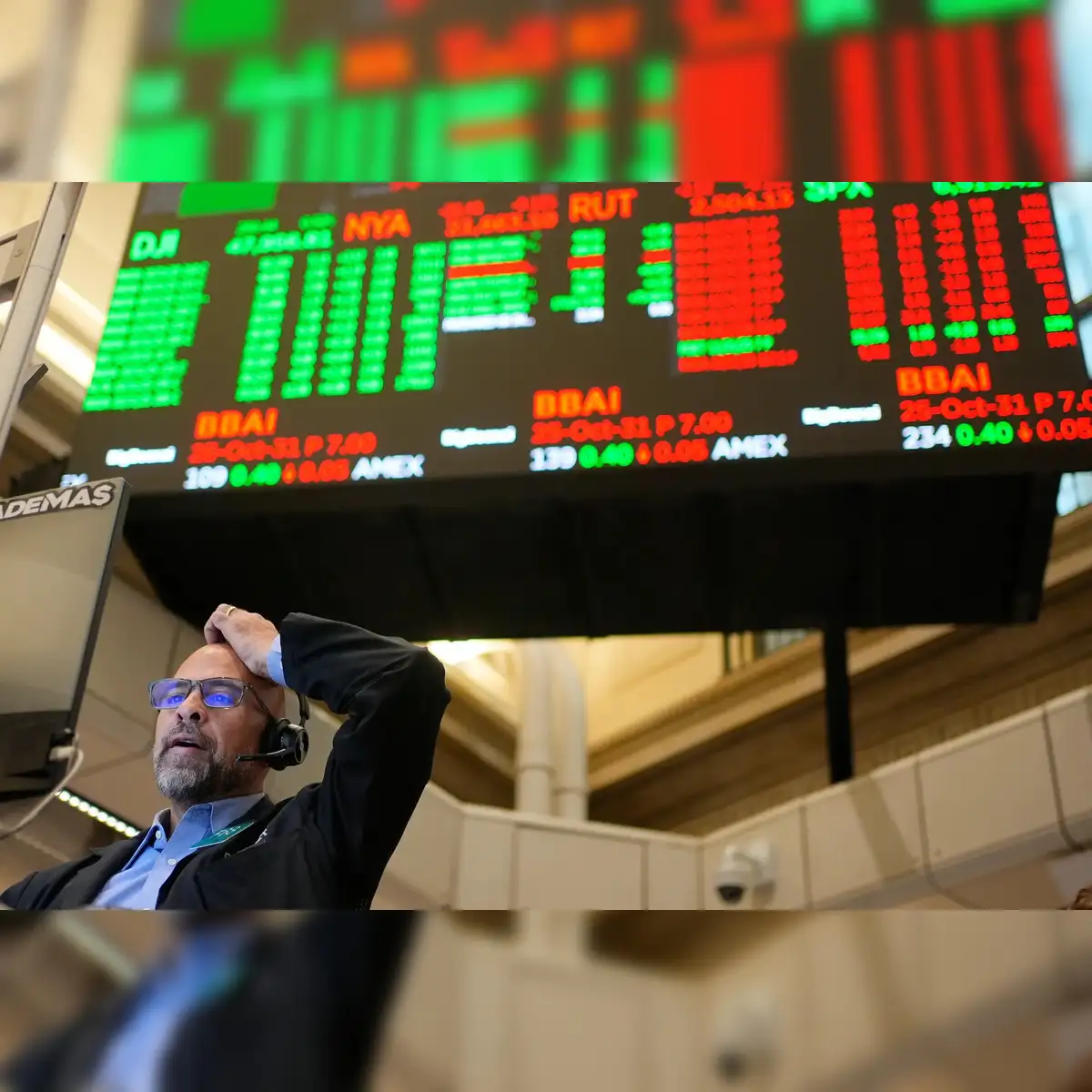
The US stock market is a complex ecosystem, a barometer of global economic health, and, at times, a source of significant frustration for investors. When the screens turn red and the major indices—the S&P 500, the Dow Jones Industrial Average, and the Nasdaq Composite—begin to slide, the immediate question is always: Why?
Market downturns are rarely the result of a single isolated event. Instead, they are typically the product of a convergence of macroeconomic data, corporate performance shifts, and psychological triggers. Understanding these drivers is essential for any investor looking to move beyond reactionary trading toward a strategy of informed wealth management. Today’s market movement reflects a broader narrative of an economy in transition, grappling with the long-tail effects of monetary policy and shifting global dynamics.

Macroeconomic Pressures: Inflation and the Federal Reserve’s Stance
The most potent driver of stock market performance in the current era is the relationship between inflation and the Federal Reserve’s monetary policy. For decades, investors enjoyed a “Goldilocks” economy—low inflation and low interest rates—but that paradigm has shifted.
The Persistence of Sticky Inflation
While the extreme inflationary peaks of the post-pandemic era have subsided, “sticky” inflation remains a primary concern for the markets. This refers to components of the Consumer Price Index (CPI), such as housing, services, and insurance, which do not respond quickly to interest rate hikes. When monthly inflation data comes in higher than anticipated, it signals to the market that the Federal Reserve’s job is not yet finished. For investors, high inflation erodes the purchasing power of future corporate earnings, making stocks less attractive today.
Interest Rate Expectations and the “Higher for Longer” Narrative
The stock market is essentially a forward-looking machine. Stock prices today are based on the discounted value of future cash flows. When the Federal Reserve maintains a “higher for longer” stance on interest rates, the “discount rate” used by analysts increases. This mathematically lowers the current value of those future profits. Whenever a Federal Reserve official suggests that rate cuts may be delayed or that further hikes are possible, the market reacts with a sell-off as it recalibrates the valuation of every listed company.
Impact on Yield Curves and Fixed Income Competition
As interest rates remain elevated, the yield on US Treasury bonds increases. This creates a “safe” alternative to the volatility of the stock market. When the 10-year Treasury yield spikes, institutional investors often shift capital out of equities and into fixed income. This migration of capital reduces demand for stocks, leading to the downward pressure seen in today’s trading session.
Corporate Earnings and Growth Deceleration
If the Federal Reserve provides the backdrop for the market, corporate earnings are the lead actors. The fundamental value of a stock is tied to a company’s ability to generate profit. When that ability is called into question, the market reacts swiftly.
Guidance Cuts in Key Sectors
It is often said that the market doesn’t hate bad news as much as it hates uncertainty. During earnings season, many companies may report strong “beats” on their current revenue and profit numbers, yet their stock prices fall regardless. This usually happens because management issues “soft guidance”—lowering their expectations for the coming quarters. If the leaders of the S&P 500 suggest that consumer spending is slowing or that input costs are rising, the market preemptively prices in a leaner future.
The Squeeze on Profit Margins
For several years, corporations were able to pass on increased costs to consumers through price hikes. However, we are reaching a point of “price fatigue.” As consumers tighten their belts, companies are finding it harder to maintain their high profit margins. Rising labor costs, increased energy prices, and the cost of servicing corporate debt are all eating into the bottom line. When margins shrink, the “Price-to-Earnings” (P/E) ratios that investors are willing to pay also tend to contract.
Tech Sector Valuation Corrections
The US market is heavily weighted toward a few massive technology companies. Because these firms have seen astronomical growth, they often trade at very high valuations. When there is a shift in sentiment—perhaps due to fears that the “AI revolution” is taking longer to monetize than expected—these tech giants can experience significant pullbacks. Given their massive market capitalization, a 2% or 3% drop in a few “Magnificent Seven” stocks can drag down the entire S&P 500.
Geopolitical Uncertainty and Global Supply Chains
The US stock market does not exist in a vacuum. It is deeply integrated into a global network of trade, energy, and politics. Geopolitical instability is a major catalyst for market volatility because it introduces risks that are difficult to quantify.
Regional Conflicts and Energy Prices
Tensions in oil-producing regions or critical shipping lanes (such as the Red Sea or the Strait of Hormuz) create immediate anxiety in the markets. A spike in crude oil prices acts like a “tax” on both corporations and consumers. It increases the cost of manufacturing and shipping goods while leaving consumers with less discretionary income to spend. When energy prices rise unexpectedly, the stock market often falls in anticipation of a broader economic slowdown.
Trade Policies and International Market Stability
Changes in trade relations between the US and major partners like China or the EU can have ripple effects across the tech, automotive, and agricultural sectors. The threat of new tariffs or export restrictions creates a “risk-off” environment where investors prefer to sit on the sidelines rather than bet on companies with significant international exposure. Today’s dip may be a reflection of shifting diplomatic tones or new regulatory hurdles in foreign markets.
Investor Psychology and Technical Market Indicators
While fundamentals like earnings and interest rates are the long-term drivers of price, the day-to-day fluctuations of the stock market are often driven by human emotion and technical triggers.
Fear, Greed, and the VIX Index
The CBOE Volatility Index, often called the “Fear Gauge,” measures the market’s expectation of 30-day volatility. When the VIX spikes, it indicates that investors are buying “puts” or insurance against a market drop. This fear can become a self-fulfilling prophecy; as prices fall, panic sets in, leading to more selling. Today’s downturn might simply be a manifestation of a “risk-off” sentiment where investors are prioritizing capital preservation over growth.
Algorithmic Trading and Sell-Off Triggers
A significant portion of daily trading volume is now handled by high-frequency trading algorithms. These programs are designed to sell automatically when certain “technical” levels are breached. If the S&P 500 falls below a key psychological level—such as its 50-day or 200-day moving average—these algorithms can trigger a cascade of sell orders. This can turn a minor pullback into a significant daily loss in a matter of minutes.
Rebalancing and Profit-Taking
Sometimes, the market is down simply because it has been up for too long. Institutional investors, such as pension funds and mutual funds, often have strict requirements for their “asset allocation” (e.g., 60% stocks and 40% bonds). If the stock market has a strong run, their portfolio might become 65% stocks. To rebalance, they must sell stocks to buy bonds. This systematic profit-taking can create downward pressure even in the absence of “bad” news.
Strategies for Investors During Market Pullbacks
For the individual investor, seeing a portfolio in the red can be unsettling. However, understanding the why behind the move is the first step in maintaining a disciplined financial strategy.
The Importance of Diversification
Market downturns highlight the danger of a concentrated portfolio. While tech stocks may be leading the decline today, other sectors like consumer staples, utilities, or healthcare may be holding steady. A well-diversified portfolio ensures that a downturn in one specific area of the “Money” world doesn’t derail your entire financial future.
Reassessing Risk Tolerance
A red day in the market is an excellent time for a “stress test.” If today’s decline is causing you significant personal stress or keeping you awake at night, it may be an indication that your portfolio is more aggressive than your true risk tolerance allows. Investing is a marathon, and the best strategy is the one you can stick with during both the highs and the lows.

Viewing Volatility as an Opportunity
Historically, the US stock market has recovered from every single downturn it has ever faced. For long-term investors, “down” days are often seen as “sales.” They provide an opportunity to utilize dollar-cost averaging—buying more shares at lower prices. By focusing on the underlying value of businesses rather than the daily noise of the tickers, investors can turn market volatility into a tool for long-term wealth creation.
In conclusion, the US stock market is down today due to a sophisticated interplay of high interest rates, cautious corporate outlooks, and technical selling. While the immediate numbers may look discouraging, these cycles of contraction and expansion are a natural part of the financial landscape. Staying informed and maintaining a long-term perspective remains the most effective way to navigate the complexities of the modern investment world.
aViewFromTheCave is a participant in the Amazon Services LLC Associates Program, an affiliate advertising program designed to provide a means for sites to earn advertising fees by advertising and linking to Amazon.com. Amazon, the Amazon logo, AmazonSupply, and the AmazonSupply logo are trademarks of Amazon.com, Inc. or its affiliates. As an Amazon Associate we earn affiliate commissions from qualifying purchases.