
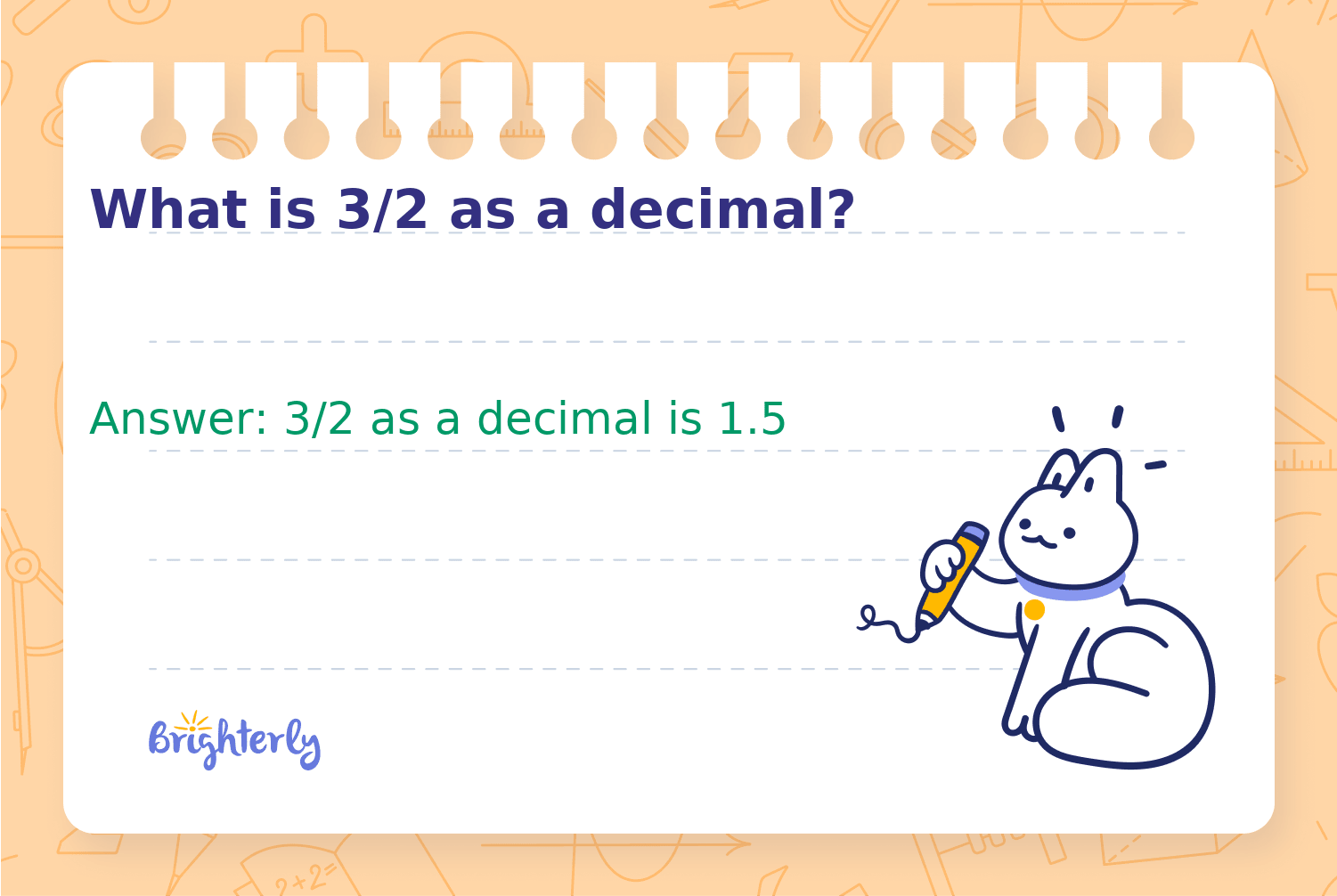
The mathematical conversion of the fraction 3/2 into a decimal is a straightforward calculation: 1.5. While this might seem like a basic elementary school arithmetic problem, the value of 1.5—represented as the 3:2 ratio—has become one of the most significant metrics in the modern technology landscape. From the silicon-level logic of floating-point arithmetic to the physical dimensions of the high-end laptops we use for work, the transition from “three-halves” to “one-point-five” governs how we interact with digital information.
In the realm of technology, 1.5 is more than a number; it is a philosophy of balance. It sits perfectly between the boxy 4:3 displays of the legacy computing era and the ultra-wide 16:9 cinematic screens that dominated the early 2010s. Today, understanding “what is 3/2 in a decimal” is the first step toward understanding why the tech industry is shifting its focus toward vertical real estate, optimized UI/UX design, and more precise computational logic.
The Evolution of Display Standards: Why 1.5 is the Productivity Sweet Spot
For decades, the technology industry was caught in a tug-of-war between two extremes of aspect ratios. On one side was the 4:3 ratio (1.33 decimal), the standard for CRT monitors and early television. On the other was the 16:9 ratio (1.77 decimal), driven by the rise of high-definition video and the consumer desire for a cinematic experience. However, as the digital economy shifted toward content creation rather than just consumption, both fell short.
From 4:3 to 16:9 and the Return to Verticality
The 16:9 ratio, while excellent for watching Netflix or playing immersive video games, proved restrictive for professional workflows. In a 16:9 environment, vertical space is sacrificed. For developers, writers, and data scientists, this meant constant scrolling. The tech industry realized that the “1.5” decimal—the 3:2 ratio—offered a “Goldilocks” solution. It is wide enough to allow for side-by-side multitasking but tall enough to display significantly more lines of code or rows in a spreadsheet.
Why the Decimal 1.5 Matters for Vertical Real Estate
When we convert 3/2 to 1.5, we are describing a screen that is 50% wider than it is tall. Compared to the 16:9 ratio (which is approximately 77% wider than it is tall), the 3:2 ratio provides roughly 18% more vertical screen space. In the tech world, this is referred to as “vertical real estate.” For a software engineer, those extra pixels mean seeing five to ten more lines of code without scrolling. For a UI designer, it means seeing a mobile app mockup at full scale alongside the toolbars of their design software.
Hardware Engineering and the Rise of 3:2 Devices
The shift toward the 1.5 decimal standard isn’t just a software preference; it has fundamentally changed how hardware is engineered. When a manufacturer decides to build a laptop around a 3:2 display, every internal component—from the motherboard layout to the thermal cooling system—must be reconsidered to fit a more “square” chassis.
Case Study: Microsoft Surface and the Productivity Paradigm
Microsoft was a pioneer in the “3/2 equals 1.5” movement. By implementing the 3:2 aspect ratio across the Surface Pro and Surface Laptop lines, they carved out a niche for “productivity-first” hardware. The decision was rooted in the idea that a tablet or laptop should mimic the dimensions of a physical sheet of A4 paper or a legal notepad. By adopting the 1.5 decimal ratio, the device feels more natural in portrait mode for reading and more efficient in landscape mode for writing.
Thermal Management and Internal Chassis Layouts
Engineering a 3:2 device presents unique challenges and opportunities. Because the chassis is deeper (top to bottom) than a traditional 16:9 laptop, engineers have more room to spread out heat-generating components. This allows for larger vapor chambers or more strategic battery placement. In high-performance ultrabooks, the 3:2 form factor often allows for a larger haptic trackpad, as there is more physical space below the keyboard. This synergy between mathematical ratio and physical utility is a hallmark of modern industrial design.
Software Development and UI/UX Design for 1.5 Aspect Ratios

As hardware adopts the 3/2 decimal standard, software developers must adapt. The “widescreen bias” that has dominated web and app design for fifteen years is being challenged by the resurgence of taller displays. Designing for 1.5 requires a more nuanced approach to responsive layouts.
Responsive Design Challenges: Moving Away from Widescreen Bias
Most web frameworks, like Bootstrap or Tailwind CSS, were built during the 16:9 era. On a 3:2 (1.5 decimal) screen, websites can sometimes look “stretched” or have awkward whitespace if not properly optimized. Modern tech tutorials now emphasize “Ratio-Agnostic Design.” This involves using CSS Grid and Flexbox to ensure that content scales vertically just as gracefully as it does horizontally. Developers must ensure that “above the fold” content remains meaningful on a screen that is taller than the industry average.
Productivity Apps and the Impact of Extra Pixels
In the world of SaaS (Software as a Service), the 1.5 ratio is a competitive advantage. Applications like Notion, Slack, and Trello are designed to be “information-dense.” On a 3:2 display, these apps can show deeper nested menus and more comprehensive project boards. Tech companies are increasingly testing their software on 3:2 displays to ensure that the user interface doesn’t feel cramped. When you have 1.5 times the width relative to height, the “sidebar + main content” layout becomes much more ergonomic, reducing ocular strain and improving the user’s flow state.
The Mathematical Precision of 3/2 in Coding and Data Science
Beyond the physical screen, the decimal value of 3/2—1.5—is a frequent point of discussion in computer science, specifically regarding how different programming languages handle division and data types.
Integer Division vs. Floating Point: The “1.5” Pitfall
For a software developer, “what is 3/2” can have two different answers depending on the language’s logic. In older versions of Python (Python 2) or in languages like C++ and Java, 3 divided by 2 often equals 1, not 1.5. This is because the system performs “integer division,” discarding the remainder.
In modern “Tech Logic” (like Python 3), 3/2 automatically returns 1.5. Understanding this distinction is critical for data security and financial algorithms. A bug that treats 1.5 as 1 could lead to massive errors in cloud scaling, interest calculations, or AI model weights. Engineers must explicitly define their variables as “floats” to ensure the decimal precision of 1.5 is maintained.
Data Visualization: Scaling Graphs for the 3:2 Display
In the field of Data Science, the 3:2 ratio is often considered the optimal “bounding box” for data visualization. When plotting graphs using libraries like Matplotlib or D3.js, the 1.5 aspect ratio provides the most readable view of time-series data. It allows the Y-axis (the vertical) enough room to show volatility without compressing the X-axis (the horizontal/time). By sticking to the 3:2 decimal standard, data scientists ensure that their insights are legible across a variety of professional-grade monitors.
The Future of the 1.5 Standard in the AI and Mobile Era
As we look toward the future of technology, the 3:2 ratio (1.5 decimal) is poised to expand beyond laptops and into the realm of foldable devices and AI-driven interfaces. Foldable phones, for instance, often strive to reach a 3:2 aspect ratio when fully unfolded, as it provides the perfect canvas for split-screen multitasking.
Furthermore, as AI tools like LLMs (Large Language Models) become the primary way we interact with computers, the “chat” interface—which is inherently vertical—benefits immensely from the 1.5 ratio. The more vertical space we have, the more context we can see in a conversation with an AI assistant.
In conclusion, “what is 3/2 in a decimal” is a question that starts in a math book but ends in the hands of every tech enthusiast. The value of 1.5 represents a shift in the digital world toward depth, productivity, and mathematical clarity. Whether it is the screen you are looking at, the code running in the background, or the way a website is styled, the 3:2 ratio is the silent engine driving the next generation of professional technology. By embracing this decimal standard, the tech industry is proving that sometimes, the best way to move forward is to look at the world with a little more height.
aViewFromTheCave is a participant in the Amazon Services LLC Associates Program, an affiliate advertising program designed to provide a means for sites to earn advertising fees by advertising and linking to Amazon.com. Amazon, the Amazon logo, AmazonSupply, and the AmazonSupply logo are trademarks of Amazon.com, Inc. or its affiliates. As an Amazon Associate we earn affiliate commissions from qualifying purchases.