
Investing in the stock market is often discussed in terms of the “buy” side—finding the next “moonshot,” identifying undervalued gems, or building a dividend fortress. However, for any investor looking to build long-term wealth, the “sell” side is equally, if not more, critical. Knowing how to sell stock on Robinhood is not just about clicking a button; it is about understanding market mechanics, managing tax liabilities, and executing a disciplined financial strategy.
Since its inception, Robinhood has democratized access to the financial markets with its commission-free model and intuitive interface. While the app makes it incredibly simple to liquidate a position, the financial implications of that action are far-reaching. This guide provides an in-depth look at the technical process of selling on Robinhood, the strategic nuances of different order types, and the tax considerations every investor must keep in mind.
Navigating the Robinhood Interface for a Successful Sale
The Robinhood user experience is designed for speed and clarity. When you decide it is time to exit a position—whether to lock in profits, cut losses, or rebalance your portfolio—the process begins within your digital portfolio.
Locating Your Assets and Initiating a Trade
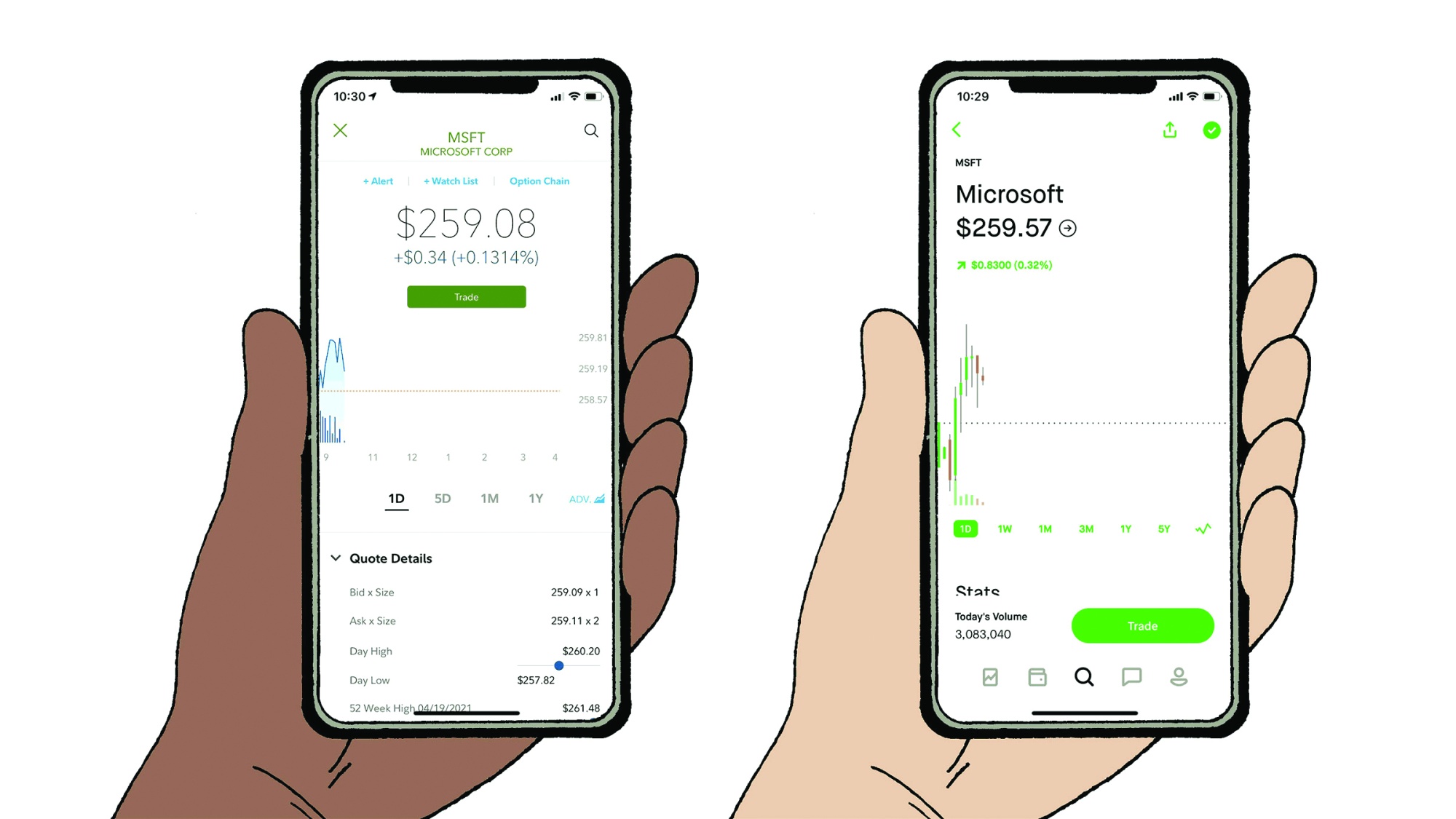
To begin, open the Robinhood app and navigate to the “Investing” tab, represented by the briefcase icon. Here, you will see a list of your current holdings. Selecting a specific stock will bring up its detailed page, including a real-time (or near real-time) price chart and your personal “Equity” in that position.
Once you are on the stock’s page, you will see a prominent “Trade” button (on mobile) or a “Sell” panel (on desktop). Clicking this initiates the selling workflow. Robinhood allows you to sell in terms of “Shares” or “Dollars.” If you choose dollars, you are engaging in fractional share selling—a feature that allows you to liquidate a specific dollar amount of a high-priced stock, even if it doesn’t equate to a whole share.
The Review and Confirmation Process
Before any trade is sent to the market, Robinhood provides a summary screen. This is a critical moment for the investor to pause. You must verify the number of shares being sold, the estimated price, and the total credit you expect to receive. In a fast-moving market, the “Estimated Credit” can fluctuate. Once you swipe up to submit (on mobile) or click “Confirm” (on desktop), the order is sent to the relevant exchanges or market makers for execution.
Understanding Order Types: Taking Control of Execution
One of the biggest mistakes novice investors make is relying solely on “Market Orders.” In the world of finance, the way you sell is often as important as what you sell. Robinhood offers several order types that allow you to dictate the terms of your exit.
Market Orders: Prioritizing Speed Over Price
A Market Order is an instruction to sell your stock immediately at the best available current price. While this guarantees that your order will be filled almost instantly, it does not guarantee the price. In volatile markets or for stocks with low liquidity, “slippage” can occur, meaning the price you actually receive is lower than the price you saw on your screen a second prior. Market orders are best used when you need to exit a position immediately and the stock has high trading volume.
Limit Orders: Precision and Profit Protection
For the disciplined investor, the Limit Order is a preferred tool. A Sell Limit Order allows you to set a minimum price at which you are willing to sell your shares. Your order will only execute if the stock reaches that price or higher. This prevents you from selling at an unexpectedly low price during a sudden dip. However, the risk is that if the stock never reaches your limit price, your order will remain unfilled, and you will continue to hold the asset as the price potentially drops further.
Stop-Loss and Stop-Limit Orders: Risk Management Tools
Stop orders are essential for protecting your capital. A “Stop-Loss” order acts as a trigger: if the stock drops to a specific price (the stop price), it automatically converts into a Market Order to sell. This is designed to “stop the loss” before it gets worse.
A “Stop-Limit” order is more complex; once the stop price is hit, it converts into a Limit Order. This ensures you don’t sell below a certain threshold, but it carries the risk that the stock could “gap down” past your limit price, leaving your order unexecuted while the stock continues to crash. Understanding these nuances is a hallmark of sophisticated personal finance management.

Tax Implications and Strategic Selling
In the “Money” niche, the most overlooked aspect of selling stock is the visit from the taxman. Every time you sell a stock for more than you paid for it, you trigger a taxable event. Robinhood tracks your “Cost Basis,” but it is your responsibility to understand how the timing of your sale affects your net return.
Short-Term vs. Long-Term Capital Gains
The duration for which you hold a stock significantly impacts your tax bill. If you sell a stock you have held for one year or less, the profit is considered a “Short-Term Capital Gain” and is taxed at your ordinary income tax rate, which can be as high as 37%.
If you hold the stock for more than one year, it qualifies for “Long-Term Capital Gains” tax rates, which are typically 0%, 15%, or 20% depending on your total income. Strategically waiting a few extra days to hit the one-year mark can save an investor thousands of dollars in taxes, effectively increasing the “real” return on investment.
Tax-Loss Harvesting and the Wash Sale Rule
Selling isn’t always about taking profits. “Tax-loss harvesting” is a strategy where you sell underperforming stocks at a loss to offset the gains you’ve made elsewhere in your portfolio. This can reduce your overall taxable income.
However, investors must be wary of the “Wash Sale Rule” enforced by the IRS. If you sell a stock at a loss and buy the same or a “substantially identical” security within 30 days before or after the sale, you cannot claim the tax loss. Robinhood’s interface will generally flag these if they occur within the platform, but the financial burden remains with the investor to track.
Post-Sale Management: Settlement and Reinvestment
The process does not end once the trade is executed. What happens to the money after the sale is a vital component of financial planning and cash flow management.
Navigating the T+1 Settlement Cycle
Recently, the financial industry shifted from a T+2 (Trade date plus two days) settlement cycle to a T+1 cycle. This means that when you sell a stock on Robinhood, the funds officially “settle” and become available for withdrawal to your bank account on the next business day.
However, Robinhood often provides “Instant Settlement” for its users. This allows you to use the proceeds from a sale to buy a different stock immediately. It is important to distinguish between “Buying Power” (money you can trade with) and “Withdrawable Cash” (money you can send back to your bank). Understanding this timeline is crucial for those who use their brokerage account for liquidity or as part of their emergency fund strategy.
Rebalancing and Compounding
A sale should rarely be an isolated event. It should be part of a broader rebalancing strategy. If one sector of your portfolio (e.g., Tech) has grown significantly, it may represent a larger percentage of your total wealth than you are comfortable with. Selling a portion of those winners to buy into underrepresented sectors (e.g., Energy or Consumer Staples) helps maintain your desired risk profile.
Furthermore, deciding whether to reinvest the proceeds or hold them in cash (where Robinhood might offer a competitive interest rate on uninvested brokerage cash) is a key decision. In a high-interest-rate environment, holding cash can be a strategic move while waiting for better market entries.
Conclusion: The Discipline of the Exit
Selling stock on Robinhood is a deceptively simple action that carries profound financial consequences. By moving beyond the “Market Order” and understanding the mechanics of limit orders, tax brackets, and settlement cycles, you transition from a casual user to a disciplined investor.
The goal of investing is not just to see “green” on a screen; it is to realize those gains in a way that maximizes your net worth after taxes and fees. Whether you are selling to fund a down payment on a house, to rebalance a retirement portfolio, or to cut ties with a failing company, doing so with a professional, strategic approach is what separates long-term success from short-term speculation. Remember, your exit strategy is just as vital as your entry point—plan it with the same level of care.
aViewFromTheCave is a participant in the Amazon Services LLC Associates Program, an affiliate advertising program designed to provide a means for sites to earn advertising fees by advertising and linking to Amazon.com. Amazon, the Amazon logo, AmazonSupply, and the AmazonSupply logo are trademarks of Amazon.com, Inc. or its affiliates. As an Amazon Associate we earn affiliate commissions from qualifying purchases.