
For many investors, opening a brokerage app to see a sea of red can be a visceral, unsettling experience. Whether you are a seasoned portfolio manager or a retail investor just starting your journey, the question “Why is the market down?” is often the first thing that comes to mind during a downturn. Market fluctuations are an inherent part of the financial ecosystem, yet the catalysts behind a sell-off are rarely singular. Instead, they are usually a complex web of macroeconomic shifts, psychological triggers, and fundamental re-evaluations.
Understanding why the market is declining is the first step toward maintaining emotional discipline and making informed financial decisions. This article explores the primary drivers of market downturns, from the influence of central banks to the subtle nuances of investor psychology, and how you can position your finances to weather the storm.
Macroeconomic Drivers: The Big Picture
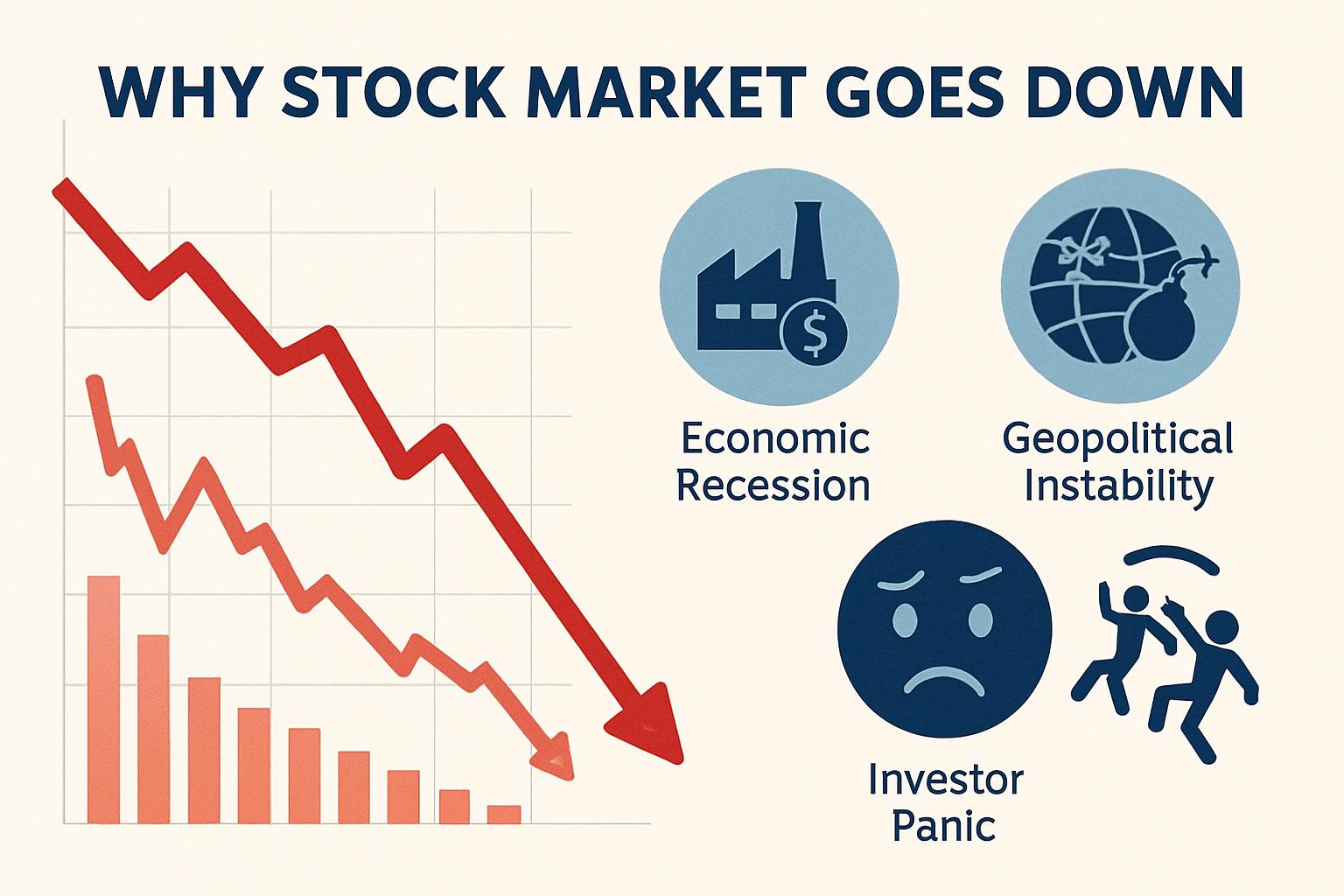
The most common reasons for a broad market decline are rooted in the “macro” environment—the large-scale economic factors that affect the entire financial system. When these pillars shift, the impact is felt across every asset class, from blue-chip stocks to emerging market bonds.
Interest Rates and Central Bank Monetary Policy
Perhaps the most significant driver of equity prices is the “cost of money,” which is determined by central banks like the Federal Reserve in the United States. When the Fed raises interest rates to combat inflation, it creates a ripple effect. Higher rates make borrowing more expensive for corporations, which can eat into profit margins and slow down expansion plans.
Furthermore, as interest rates rise, fixed-income assets like Treasury bonds become more attractive relative to stocks. Investors may rotate their capital out of “riskier” equities and into the safety of guaranteed yields, leading to a decrease in stock demand and a subsequent drop in prices.
Inflationary Pressures and Consumer Spending
Inflation is a double-edged sword for the market. While a small amount of inflation suggests a growing economy, runaway inflation erodes purchasing power. When the cost of raw materials, labor, and energy rises, companies face a choice: absorb the costs and see their margins shrink, or pass the costs to consumers. If consumers are also struggling with higher prices for essentials like housing and food, they often cut back on discretionary spending. This slowdown in consumer activity directly impacts the revenue of publicly traded companies, leading to downward pressure on their stock prices.
Geopolitical Instability and Global Supply Chains
Markets crave stability and predictability. Geopolitical tensions, such as trade wars, regional conflicts, or sudden shifts in foreign policy, introduce a high degree of uncertainty. These events can disrupt global supply chains, leading to shortages of critical components (like semiconductors or oil). When the flow of goods is interrupted, the global economy stutters. Investors typically react to this uncertainty by “de-risking”—selling off volatile assets in favor of cash or gold until the geopolitical landscape stabilizes.
Market Sentiment and the Psychology of Selling
While economic data provides the logic for market movements, human emotion often provides the momentum. The financial markets are not just driven by algorithms and spreadsheets; they are driven by the collective behavior of millions of individuals.
The Role of Fear and the Herd Mentality
Fear is a much more powerful motivator than greed in the short term. When a minor correction begins, it can quickly snowball into a significant downturn due to “herd mentality.” As prices drop, investors begin to fear further losses, leading them to sell their positions. This increased selling pressure drives prices even lower, triggering more fear and more selling. This feedback loop can cause the market to “overshoot” its intrinsic value, leading to periods where stocks are priced far below what their fundamentals would suggest.
Institutional De-leveraging and Margin Calls
Large-scale institutional investors, such as hedge funds and pension funds, often use “leverage”—borrowed money—to amplify their returns. When the market starts to decline, these institutions may face “margin calls,” where their lenders demand more collateral to cover the borrowed funds. If the institution doesn’t have enough cash on hand, they are forced to sell their most liquid assets (often high-quality stocks) to raise capital. This forced selling can lead to sudden, sharp drops in the market that seem disconnected from any specific news event.
The Impact of Algorithmic and High-Frequency Trading
In the modern financial era, a significant portion of trading volume is executed by computers. Many of these algorithms are programmed to sell automatically when certain technical levels are breached (such as the 200-day moving average). When these “sell triggers” are hit simultaneously across thousands of programs, it can cause a “flash crash” or an accelerated decline. While these moves are often temporary, they contribute to the overall feeling of a “down market” and can rattle the confidence of human investors.
Sector-Specific Weakness and Valuation Corrections
Sometimes, the market is down not because of a global crisis, but because certain sectors that were previously “overheated” are returning to reality. This is often referred to as a “valuation correction.”
The Tech Sector’s Sensitivity to Yields
In recent years, the technology sector has been a primary driver of market growth. However, many tech companies are valued based on their future earnings rather than their current profits. These are known as “long-duration” assets. When interest rates rise, the “discount rate” applied to those future earnings also rises, making those future dollars worth less in today’s terms. This explains why the Nasdaq often sells off more aggressively than the Dow Jones Industrial Average during periods of rising rates.
Earnings Misses and Guidance Revisions
Every quarter, publicly traded companies report their financial results. If a “bellwether” company (a leader in its industry, like Apple or Walmart) reports lower-than-expected earnings or, more importantly, issues “weak guidance” for the future, it can drag down the entire sector. Investors extrapolate the struggles of one leader onto the rest of the industry, leading to a broad sell-off. If multiple sectors report weakness simultaneously, it can pull the entire market index into the red.
Mean Reversion: When Markets Get Too Expensive
Financial markets tend to move in cycles. After a long “bull run” (a period of rising prices), stocks can become overvalued relative to their historical norms. Metrics like the Price-to-Earnings (P/E) ratio can reach levels that are unsustainable. In these instances, a “down market” is simply the market’s way of returning to its historical average—a process known as mean reversion. While painful, these corrections are often healthy for the long-term stability of the financial system, as they wash out “excessive exuberance.”
How to Protect and Manage Your Finances in a Downturn
When the market is down, the most important thing you can do is avoid making permanent decisions based on temporary emotions. Effective financial management during a downturn involves a mix of defensive positioning and mental fortitude.
The Power of Diversification
The oldest rule in investing remains the most effective: don’t put all your eggs in one basket. A well-diversified portfolio includes a mix of equities, bonds, real estate, and perhaps commodities or cash. While a market downturn might hit your stock holdings hard, your bond or cash positions may remain stable or even increase in value. Diversification doesn’t prevent losses, but it can significantly reduce the “volatility” of your portfolio, making it easier to stay the course.
Rebalancing: Selling High and Buying Low
A down market is an excellent time to rebalance your portfolio. If your target allocation was 70% stocks and 30% bonds, a stock market crash might leave you with 60% stocks and 40% bonds. To return to your target, you would sell some of your bonds (which have held their value) and buy more stocks (while they are “on sale”). This disciplined approach forces you to buy low and sell high, which is the fundamental goal of all investing.
Maintaining an Emergency Fund
The greatest risk during a market downturn is being forced to sell your investments at a loss because you need cash for living expenses. By maintaining a robust emergency fund—typically 3 to 6 months of living expenses in a high-yield savings account—you ensure that you never have to liquidate your long-term portfolio during a market bottom. This “cash buffer” provides the financial and psychological security needed to wait for the eventual recovery.
Identifying Opportunities in a Red Market
For the disciplined investor, a down market isn’t just a challenge—it’s an opportunity. While it feels counterintuitive to put money into a declining market, history shows that some of the best returns are generated by buying when others are fearful.
Dollar-Cost Averaging (DCA)
One of the most effective strategies for dealing with a down market is Dollar-Cost Averaging. This involves investing a fixed amount of money at regular intervals, regardless of the price. When the market is down, your fixed investment buys more shares. When the market is up, it buys fewer shares. Over time, this lowers your average cost per share and removes the stress of trying to “time the bottom,” which is notoriously difficult even for professionals.
Value Investing: Finding Quality at a Discount
Market sell-offs are often indiscriminate; good companies get sold off along with the bad ones. This creates a “buyer’s market” for value investors. By looking for companies with strong balance sheets, consistent cash flows, and competitive advantages that are trading at a discount to their intrinsic value, you can build a high-quality portfolio that is positioned for significant gains when the market sentiment shifts.
Tax-Loss Harvesting
In taxable accounts, a down market offers the opportunity for “tax-loss harvesting.” This involves selling investments that are currently at a loss to offset capital gains you may have realized elsewhere. These losses can also be used to offset up to $3,000 of ordinary income per year. By strategically realizing losses, you can lower your tax bill, effectively “subsidizing” some of your market losses through tax savings.
Conclusion
The market being “down” is an inevitable phase of the economic cycle. Whether caused by shifting interest rates, geopolitical tension, or a simple correction of overvalued stocks, downturns are the “price of admission” for the long-term returns that the financial markets provide. By understanding the macroeconomic and psychological factors at play, maintaining a diversified strategy, and viewing volatility as an opportunity rather than a threat, you can navigate the red days with confidence. Remember, the market has historically recovered from every single downturn it has ever faced. Success in the world of money is often less about predicting the next crash and more about how you behave once it arrives.
aViewFromTheCave is a participant in the Amazon Services LLC Associates Program, an affiliate advertising program designed to provide a means for sites to earn advertising fees by advertising and linking to Amazon.com. Amazon, the Amazon logo, AmazonSupply, and the AmazonSupply logo are trademarks of Amazon.com, Inc. or its affiliates. As an Amazon Associate we earn affiliate commissions from qualifying purchases.