
In the realm of finance, numbers are the fundamental language of communication. However, raw numbers—like a $500 profit or a $10,000 debt—rarely tell the whole story. To truly understand the health of a business, the performance of an investment, or the stability of a personal budget, one must master the art of the percentage. Learning how to find the percentage of something is not merely a mathematical exercise; it is a critical skill for making informed financial decisions. Whether you are calculating the interest on a loan, evaluating a dividend yield, or determining your company’s market share, percentages provide the necessary context to turn data into actionable intelligence.
The Core Mechanics of Percentage Calculations in Finance
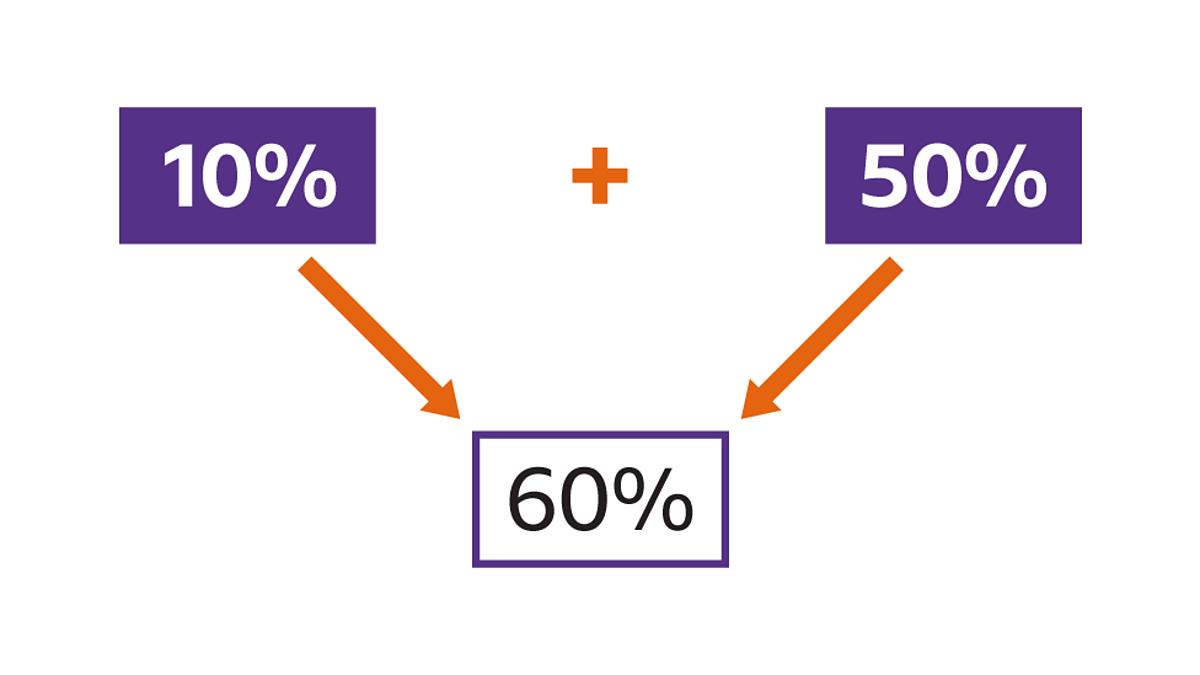
Before diving into complex financial models, one must have a rock-solid understanding of the basic percentage formula. At its simplest level, a percentage represents a fraction of 100. In finance, this allows us to compare disparate values on a level playing field.
Defining the Part vs. the Whole
To find the percentage of something, you must first identify two components: the “part” (the specific value you are investigating) and the “whole” (the total amount). The formula is:
(Part ÷ Whole) × 100 = Percentage
For example, if you have a total investment portfolio of $50,000 and you hold $10,000 in gold, you find the percentage of gold in your portfolio by dividing $10,000 by $50,000, which equals 0.20. Multiplying by 100 gives you 20%. In professional finance, this is known as “asset allocation,” and it is the primary driver of risk management. Understanding this basic ratio allows an investor to see if they are over-leveraged in a specific sector or asset class.
Mastering the Percentage Change Formula
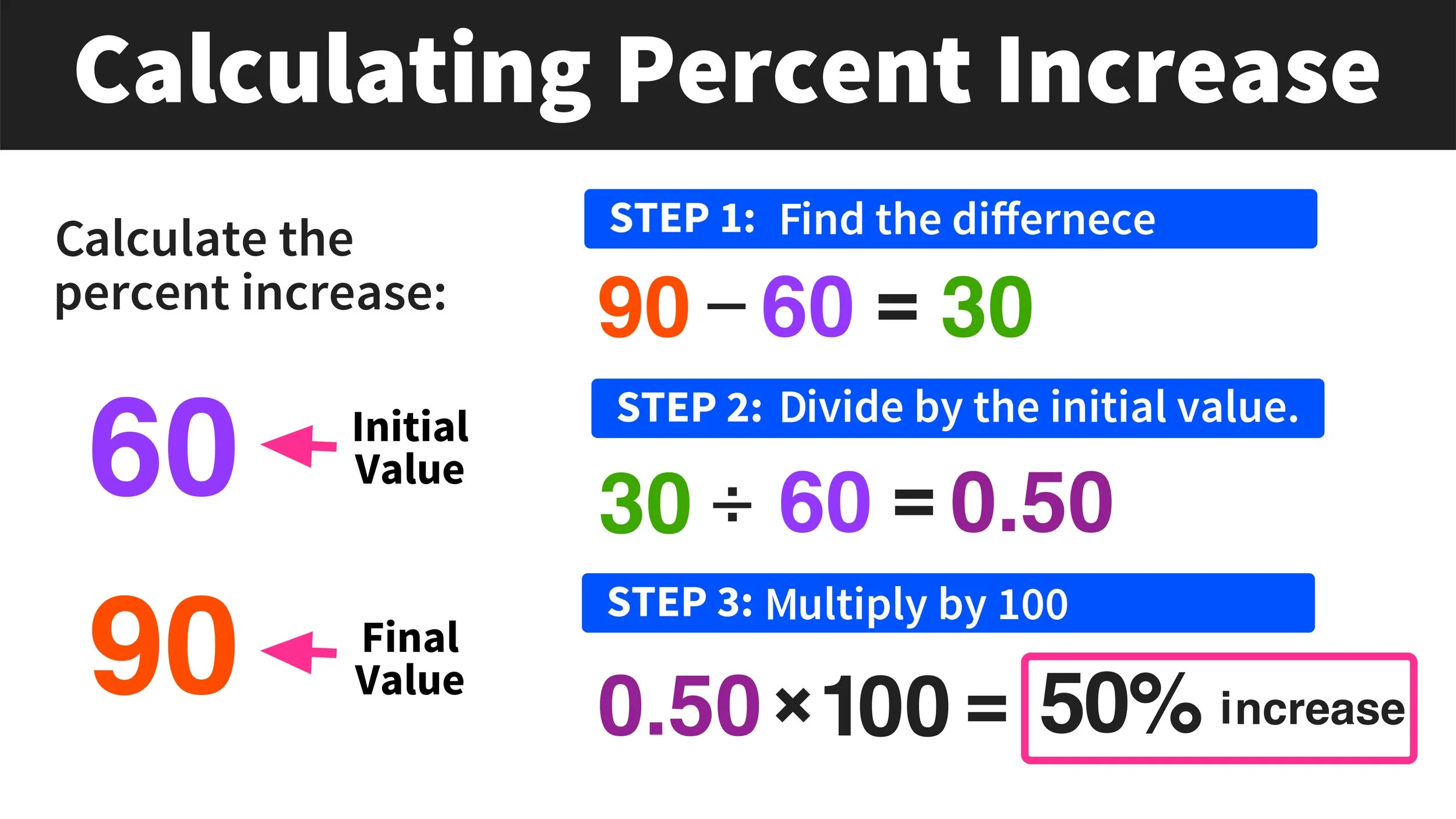
In the world of money, things are rarely static. Prices rise (inflation), stock values fluctuate, and revenues grow. To measure this movement, we use the percentage change formula:
[(New Value – Old Value) ÷ Old Value] × 100
This calculation is vital for assessing growth. If your side hustle earned $2,000 last month and $2,500 this month, your month-over-month growth is 25%. This metric is far more descriptive than simply saying you earned $500 more. It provides a standardized rate of growth that can be compared against previous years or industry benchmarks. Professional analysts use this to determine if a company’s trajectory is accelerating or slowing down, which directly impacts stock valuation.
Leveraging Percentages for Personal Finance and Budgeting
Personal finance is often less about the total amount of money you earn and more about the percentages of where that money goes. High earners can still face bankruptcy if their spending percentages are misaligned with their income. By applying percentage-based frameworks, individuals can create a sustainable path to wealth.
The Power of the 50/30/20 Rule
One of the most effective ways to manage personal cash flow is the 50/30/20 rule. This strategy suggests allocating your after-tax income into three percentage-based buckets:
- 50% for Needs: This includes essential costs like housing, groceries, utilities, and insurance.
- 30% for Wants: This covers discretionary spending such as dining out, hobbies, and travel.
- 20% for Savings and Debt Repayment: This is the “wealth-building” bucket.
By viewing a budget through the lens of percentages rather than fixed dollar amounts, the plan remains scalable. If you receive a raise, your lifestyle doesn’t automatically “creep” upward in a way that endangers your future; instead, the dollar amount in each bucket increases proportionally. If your “Needs” exceed 50%, it is a clear financial signal that you are living beyond your means, regardless of your absolute salary.
Analyzing Your Savings Rate and Debt-to-Income Ratio
Two of the most important percentages for financial health are the savings rate and the debt-to-income (DTI) ratio. Your savings rate is calculated by dividing your monthly savings by your gross monthly income. A “healthy” rate is generally considered 15% to 20% for retirement readiness.
Conversely, the DTI ratio is a metric used by lenders to determine your creditworthiness. It is calculated by dividing your total monthly debt payments by your gross monthly income. Most mortgage lenders look for a DTI of 36% or less. Understanding how to calculate this percentage yourself allows you to “pre-qualify” your own financial standing before ever stepping into a bank, giving you the leverage to negotiate better interest rates.

Percentage Metrics in Investing and Wealth Management
When it comes to building long-term wealth, percentages are the ultimate tool for comparison. They allow investors to weigh the risks and rewards of different asset classes, from high-yield bonds to volatile cryptocurrencies.
Measuring Return on Investment (ROI)
ROI is arguably the most important acronym in the world of money. It measures the efficiency of an investment. The formula is:
(Net Profit / Cost of Investment) × 100
If you invest $1,000 in a stock and sell it a year later for $1,200, your ROI is 20%. However, savvy investors also look at the “Annualized Return” or CAGR (Compound Annual Growth Rate). If that same $200 profit took five years to achieve, the annual percentage return is significantly lower. Calculating the percentage return allows you to compare a real estate flip to a stock market index fund to a high-yield savings account, ensuring that your capital is always working in the most efficient “percentage-generating” vehicle possible.
Understanding Portfolio Diversification Ratios
Modern Portfolio Theory suggests that an investor should never have 100% of their wealth in a single asset. Finding the percentage of your total net worth tied up in specific categories is essential for risk mitigation. For instance, a classic “60/40 portfolio” consists of 60% stocks and 40% bonds.
During a market downturn, an investor might find that their stock values have dropped so much that their portfolio is now 50% stocks and 50% bonds. This triggers a “rebalancing” event, where the investor sells bonds (the over-performing asset) to buy more stocks (the under-performing asset) to return to their target percentages. This disciplined approach—driven entirely by percentage targets—forces an investor to “buy low and sell high,” removing the emotional volatility that often leads to financial loss.
Applying Percentages to Business Growth and Profitability
For entrepreneurs and corporate leaders, percentages are the pulse of the organization. They reveal the difference between a high-revenue company that is failing and a low-revenue company that is thriving.
Calculating Profit Margins
Gross margin and net profit margin are the two primary percentages that dictate a company’s viability.
- Gross Margin: (Revenue – Cost of Goods Sold) / Revenue. This shows how efficiently a company produces its products.
- Net Profit Margin: (Total Revenue – Total Expenses) / Revenue. This is the “bottom line”—how much of every dollar earned actually stays in the company’s pocket.
A software company might have a gross margin of 90%, while a grocery store might have a gross margin of 20%. By understanding these percentage benchmarks within an industry, a business owner can identify if their operational costs are too high. If your net profit margin is shrinking while your revenue is growing, your business is becoming less efficient—a red flag that raw revenue numbers would otherwise hide.
Analyzing Year-over-Year (YoY) Growth and Market Share
In business finance, the “percentage of the market” a company controls is a primary indicator of its competitive strength. To find market share, you divide your company’s total sales by the total industry sales over the same period.
Furthermore, Year-over-Year (YoY) growth percentages allow stakeholders to see past seasonal fluctuations. A retail business might see a 500% increase in sales in December compared to November, but that is expected. The real question is: How does this December’s revenue compare as a percentage to last December’s? A 5% YoY increase might indicate stagnation, whereas a 25% YoY increase suggests a booming enterprise. These percentages are the primary data points used by venture capitalists and banks when deciding whether to fund a business expansion.
Conclusion: The Strategic Value of the Percentage
Mastering how to find the percentage of something is far more than a middle-school math requirement; it is a fundamental pillar of financial mastery. In personal finance, it provides the framework for a sustainable budget and debt management. In investing, it provides the metrics for comparing risk and reward across different asset classes. In business, it provides the vital signs necessary to diagnose inefficiency and measure growth.
By shifting your perspective from absolute numbers to percentage-based ratios, you gain a deeper, more professional insight into the movement of money. You stop asking “How much did I make?” and start asking “What was my margin?” and “What is my growth rate?” This analytical shift is the hallmark of financial literacy and the first step toward long-term economic success. Whether you are managing a household budget or a multi-million dollar corporate balance sheet, the percentage remains your most reliable tool for clarity, comparison, and control.
aViewFromTheCave is a participant in the Amazon Services LLC Associates Program, an affiliate advertising program designed to provide a means for sites to earn advertising fees by advertising and linking to Amazon.com. Amazon, the Amazon logo, AmazonSupply, and the AmazonSupply logo are trademarks of Amazon.com, Inc. or its affiliates. As an Amazon Associate we earn affiliate commissions from qualifying purchases.