
In an increasingly complex and interconnected digital world, the ability to predict, understand, and optimize systems that are inherently unpredictable is paramount. This is where stochastic modeling emerges as a cornerstone of modern technology. Far from the rigid confines of deterministic models that assume fixed outcomes given specific inputs, stochastic modeling embraces the inherent randomness and variability that defines many real-world phenomena. It is a sophisticated analytical approach that uses probability theory to model systems or processes where outcomes are not certain but rather follow a probabilistic distribution. For anyone deeply involved in software development, AI, cybersecurity, or data science, understanding stochastic modeling isn’t just an academic exercise—it’s a fundamental requirement for building resilient, intelligent, and adaptive technological solutions.
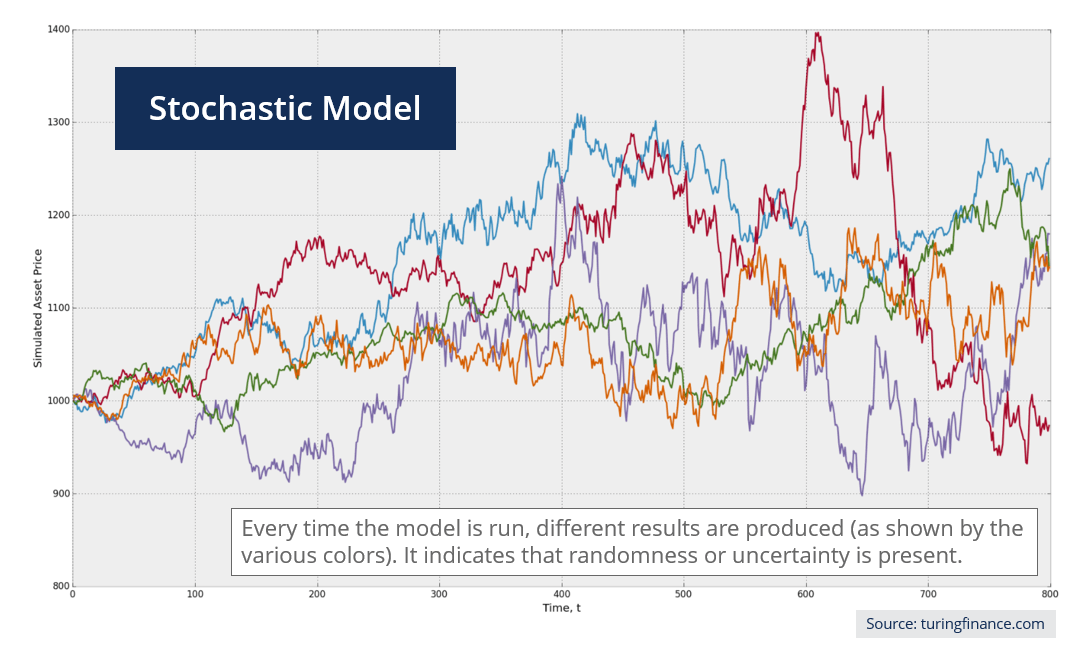
The Core Concept: Embracing Randomness in Systems
At its heart, stochastic modeling is about acknowledging and quantifying uncertainty. Instead of asking “what will happen?”, it asks “what are the probabilities of different things happening?”. This shift in perspective allows technologists to design systems that are robust against variability and to make informed decisions in the face of incomplete information.
Deterministic vs. Stochastic Models: A Fundamental Distinction
To fully appreciate stochastic modeling, it’s crucial to differentiate it from its deterministic counterpart. A deterministic model operates on the principle that given a specific set of inputs, the output will always be the same. Think of a simple calculator: 2 + 2 will always equal 4. These models are highly predictable and useful for systems where all variables are known and their interactions are fixed. Examples in tech include basic algorithms, encryption processes where a specific key always decrypts a message, or a circuit diagram where current flow is precisely calculated.
In contrast, a stochastic model incorporates randomness. Its outputs are not single, fixed values but rather a range of possible outcomes, each with an associated probability. Imagine predicting user traffic on a website; while there might be an average, the exact number of users at any given second is subject to random fluctuations. Stochastic models acknowledge this variability by using probability distributions, random variables, and stochastic processes to represent the unpredictable elements within a system. This distinction is critical in fields like AI, where systems must adapt to diverse, often noisy, real-world data, or in network security, where attack patterns can be sporadic and unpredictable.
Key Components: Probability, Random Variables, and Processes
The foundation of stochastic modeling rests on three interconnected mathematical concepts:
- Probability: The likelihood of an event occurring. In stochastic models, probabilities are used to describe the chances of different outcomes within a system. For instance, the probability of a server failing in a given hour, or the probability of a specific user clicking an ad.
- Random Variables: These are variables whose possible values are outcomes of a random phenomenon. They can be discrete (e.g., the number of errors in a software build) or continuous (e.g., the time until a network component fails). Stochastic models use random variables to represent the uncertain elements, allowing for numerical quantification of unpredictable events.
- Stochastic Processes: A collection of random variables indexed by time. Essentially, it’s a sequence of random variables that describe the evolution of a system over time. Examples include the fluctuating price of a cryptocurrency, the number of packets in a network queue, or the state changes of a machine learning model during training. Markov chains, Poisson processes, and Wiener processes are common types of stochastic processes frequently employed in tech.
The Power of Simulation: Mimicking Reality’s Unpredictability
One of the most powerful applications of stochastic modeling is simulation. Since direct analytical solutions for complex stochastic systems can be incredibly difficult or impossible to derive, simulations offer a practical alternative. By generating numerous random scenarios based on defined probability distributions and processes, simulations can mimic the behavior of a real-world system over time. This allows developers to “run” experiments on a virtual model, observe outcomes, test hypotheses, and gather data without the cost, risk, or time constraints of real-world trials. For instance, simulating user interactions with a new software feature, testing the resilience of a network under various load conditions, or evaluating the performance of an AI agent in a simulated environment.
Why Stochastic Modeling is Indispensable in Modern Technology
The digital realm is inherently dynamic, characterized by user behavior, system failures, data streams, and algorithmic complexities that defy simple deterministic analysis. Stochastic modeling provides the toolkit necessary to navigate this complexity, making it a critical discipline across many facets of technology.
Predictive Analytics and Machine Learning: Enhancing AI Capabilities
In the age of Artificial Intelligence and Big Data, stochastic modeling is the silent force behind many breakthrough innovations. Machine learning algorithms, particularly those dealing with uncertainty (like Bayesian networks, Hidden Markov Models, or Gaussian Processes), heavily rely on probabilistic frameworks derived from stochastic theory. These models enable AI systems to make predictions, classify data, and learn from patterns even when data is noisy, incomplete, or subject to random variations. For example, in natural language processing, stochastic models help predict the next word in a sentence or understand the probability of different interpretations. In reinforcement learning, agents often use stochastic policies to explore environments and learn optimal actions by accounting for random rewards and state transitions.
Risk Assessment and System Reliability: Fortifying Digital Infrastructure
For any technology company, understanding and mitigating risk is paramount. Stochastic modeling provides robust frameworks for assessing various risks, from software bugs and hardware failures to cybersecurity breaches and system downtime. By modeling the probability and impact of different failure modes, engineers can design more reliable systems, implement proactive maintenance schedules, and develop effective disaster recovery plans. For example, queuing theory, a branch of stochastic modeling, helps in optimizing server capacity and predicting wait times. Reliability engineering uses stochastic processes to model component lifetimes and predict system availability, ensuring critical infrastructure remains operational.
Optimization and Decision-Making: Guiding Software and Algorithm Design
Whether it’s optimizing network traffic, scheduling tasks in a cloud environment, or designing efficient search algorithms, stochastic models guide critical decision-making processes. They help in finding optimal strategies in situations where outcomes are uncertain. For instance, in dynamic programming and optimization problems, stochastic methods like Monte Carlo Tree Search (MCTS) are widely used in game AI and complex decision environments. By simulating various scenarios and their probabilistic outcomes, developers can evaluate different architectural choices, algorithm parameters, and operational strategies to maximize performance, minimize costs, or enhance user experience.
Applications Across the Tech Landscape
The versatility of stochastic modeling means its fingerprints are found across a wide array of technological domains, underpinning critical functions and enabling advanced capabilities.
Artificial Intelligence and Machine Learning: From Reinforcement Learning to Natural Language Processing
Stochastic modeling is a bedrock of modern AI. In Reinforcement Learning, agents learn optimal behaviors by interacting with an environment where rewards and state transitions are often stochastic. Probabilistic graphical models, such as Bayesian Networks and Hidden Markov Models (HMMs), are used for tasks like speech recognition, bioinformatics, and spam detection, modeling relationships between variables with inherent uncertainty. Monte Carlo methods power many AI simulations and sampling techniques, crucial for training complex models. Even in deep learning, concepts like dropout (a regularization technique) introduce stochasticity to improve model robustness.
Cybersecurity: Proactive Threat Detection and Response
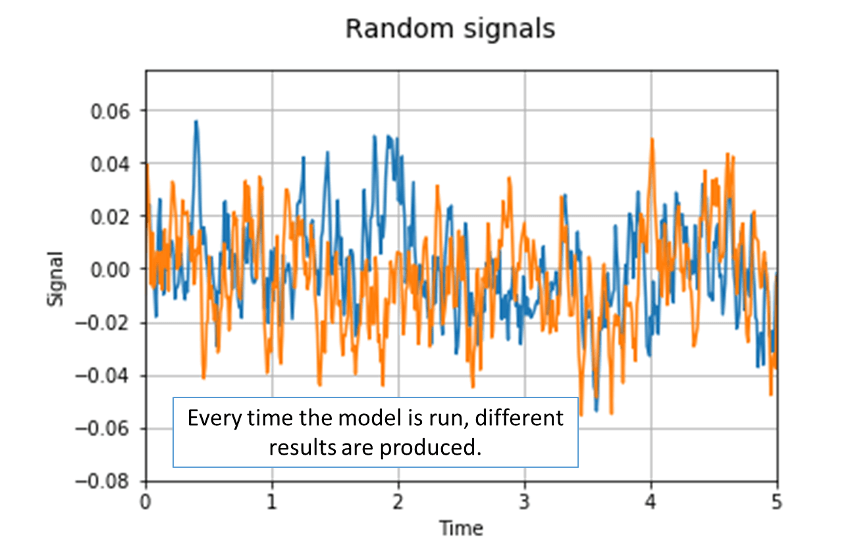
The unpredictable nature of cyber threats makes stochastic modeling an invaluable asset in digital security. Security professionals use stochastic models to:
- Predict attack patterns: Identifying the likelihood and type of future attacks based on historical data.
- Model network intrusion: Simulating the progression of an attack through a network to understand vulnerabilities and design countermeasures.
- Assess system resilience: Quantifying the probability of security breaches and their potential impact on critical systems.
- Develop anomaly detection systems: Using statistical process control and other stochastic methods to flag unusual network traffic or user behavior that might indicate an intrusion.
Software Development and Performance Engineering: Simulating Complex Interactions
In software engineering, stochastic modeling aids in numerous ways, from quality assurance to infrastructure planning:
- Performance testing and load balancing: Simulating millions of concurrent users or data requests to identify bottlenecks and optimize system architecture before deployment.
- Resource allocation: Using queuing models to determine optimal server capacities, thread pool sizes, and database connections to handle variable loads efficiently.
- Bug prediction and reliability engineering: Estimating the number of remaining bugs in a software release or predicting the mean time between failures for a software component.
- User behavior modeling: Creating synthetic user data to test UI/UX, evaluate A/B test outcomes, or train recommendation engines.
Network Optimization and Telecommunications: Managing Dynamic Systems
Telecommunication networks are prime examples of stochastic systems, with fluctuating traffic, potential packet loss, and varying latency. Stochastic modeling is essential for:
- Traffic engineering: Optimizing routing protocols and bandwidth allocation to minimize congestion and maximize throughput.
- Quality of Service (QoS) management: Ensuring guaranteed performance levels for critical applications by modeling network delays and packet delivery probabilities.
- Cellular network planning: Designing optimal base station placement and frequency allocation by simulating call demand and signal propagation in uncertain environments.
- IoT network management: Handling the massive, unpredictable data streams from billions of connected devices efficiently and reliably.
Methodologies and Tools: Building Stochastic Models
Implementing stochastic models requires a blend of theoretical understanding and practical computational tools. Several key methodologies and frameworks are commonly employed across tech.
Monte Carlo Simulations: The Workhorse of Stochastic Modeling
Perhaps the most widely known and applied stochastic method, Monte Carlo simulation involves running a large number of random experiments to approximate a numerical result. By drawing random samples from probability distributions and performing calculations, it can estimate expected values, probabilities, and system behaviors that are too complex for analytical solutions. It’s used in virtually every tech domain, from financial modeling for startups to training AI agents in complex environments and evaluating the reliability of hardware components.
Markov Chains and Hidden Markov Models: Understanding Sequential Dependencies
Markov Chains are stochastic processes that model sequences of events where the probability of transitioning to the next state depends only on the current state, not on the sequence of events that preceded it (the “memoryless” property). They are fundamental in modeling sequential data, such as network packet arrivals, user navigation paths, or state changes in an operating system. Hidden Markov Models (HMMs) extend this by allowing the underlying state to be unobservable (“hidden”), with only probabilistic observations available. HMMs are critical in speech recognition, natural language processing, and bioinformatics, inferring underlying patterns from observable data.
Time Series Models: ARIMA and GARCH for Dynamic Data
When dealing with data collected over time, Time Series Models are indispensable. Models like ARIMA (AutoRegressive Integrated Moving Average) are used for forecasting future values based on past observations, accounting for trends, seasonality, and random noise. They are common in predicting server load, network traffic, or even software project completion times. GARCH (Generalized Autoregressive Conditional Heteroskedasticity) models are particularly useful for modeling volatility, meaning how much a variable’s magnitude changes over time—crucial in areas like cybersecurity (predicting fluctuations in attack frequency) or resource management.
Computational Frameworks and Software Libraries: Powering Implementation
The practical application of stochastic modeling is heavily supported by a rich ecosystem of programming languages and libraries. Python, with libraries like SciPy, NumPy, TensorFlow, and PyTorch, offers extensive capabilities for statistical modeling, simulation, and machine learning. R is a powerhouse for statistical computing and graphics. Specialized libraries exist for specific types of stochastic processes, like SimPy for discrete-event simulation, or frameworks for building probabilistic graphical models. These tools empower engineers and data scientists to build, test, and deploy sophisticated stochastic models with relative ease.
The Future of Stochastic Modeling: AI, Big Data, and Beyond
As technology continues its rapid evolution, the role of stochastic modeling is set to expand and become even more integrated into advanced systems.
Integrating with Advanced AI: Hybrid Models and Explainable AI
The future will see tighter integration of traditional stochastic modeling techniques with deep learning and other advanced AI methods. This will lead to more powerful hybrid models that combine the data-driven power of neural networks with the interpretability and probabilistic rigor of stochastic processes. Furthermore, as AI systems become more autonomous and critical, the demand for Explainable AI (XAI) will grow. Stochastic models, with their emphasis on probability distributions and clear assumptions, can offer valuable insights into why an AI makes certain decisions, providing a level of transparency that pure black-box models often lack.
Handling Massive Datasets: Scalability and Real-Time Analysis
The explosion of Big Data presents both a challenge and an opportunity for stochastic modeling. Future advancements will focus on developing highly scalable stochastic algorithms that can process petabytes of data in near real-time. This includes innovations in distributed computing, parallel processing for simulations, and efficient sampling techniques that can derive meaningful insights from massive, high-velocity data streams, critical for applications in IoT, smart cities, and large-scale autonomous systems.
Ethical Considerations and Model Transparency in Autonomous Systems
As stochastic models increasingly power autonomous vehicles, automated decision-making systems, and critical infrastructure, ethical considerations and model transparency will come to the forefront. Ensuring that these models are fair, unbiased, and auditable will be paramount. Developers will need to carefully consider the societal implications of the random processes they model and the probabilistic outcomes they generate, building safeguards against unintended consequences and ensuring accountability in highly complex, probabilistic systems.

Conclusion
Stochastic modeling is far more than a niche academic discipline; it is an indispensable tool driving innovation across the technological landscape. By embracing randomness rather than shying away from it, it allows engineers, data scientists, and AI researchers to build more robust, intelligent, and predictive systems. From forecasting user behavior and bolstering cybersecurity defenses to optimizing complex networks and enabling advanced AI capabilities, the principles and methodologies of stochastic modeling are deeply embedded in the fabric of modern tech. As our digital world becomes even more intricate and dynamic, a solid understanding and application of stochastic modeling will continue to be a defining characteristic of cutting-edge technological development.
aViewFromTheCave is a participant in the Amazon Services LLC Associates Program, an affiliate advertising program designed to provide a means for sites to earn advertising fees by advertising and linking to Amazon.com. Amazon, the Amazon logo, AmazonSupply, and the AmazonSupply logo are trademarks of Amazon.com, Inc. or its affiliates. As an Amazon Associate we earn affiliate commissions from qualifying purchases.