
In the modern economic landscape, the ability to accept credit card payments is no longer a luxury—it is a financial necessity. Whether you are launching a boutique consulting firm, scaling an e-commerce side hustle, or managing a brick-and-mortar retail operation, your choice of payment processing directly impacts your liquidity, your overhead costs, and your ultimate profitability. For a business owner, “taking credit cards” is less about the hardware and more about the financial infrastructure that allows capital to flow from a customer’s pocket into your business bank account.

This guide explores the financial mechanics of credit card processing, the cost structures you must navigate, and the strategic selection of tools to optimize your business finance.
Understanding the Financial Infrastructure of Credit Card Processing
Before a single dollar reaches your account, it must travel through a complex web of financial institutions. Understanding this “money trail” is essential for any business owner looking to manage their finances effectively.
Merchant Accounts vs. Payment Aggregators
When you decide to take credit card payments, you generally have two paths: obtaining a dedicated merchant account or using a payment aggregator.
A dedicated merchant account is a specialized bank account established specifically for your business. It offers high levels of stability and often lower transaction fees for high-volume businesses, but it requires a more rigorous underwriting process. On the other hand, payment aggregators—such as Square, Stripe, or PayPal—group thousands of small merchants under one “master” merchant account. This allows for near-instant setup and simplified pricing, making it the preferred choice for startups and side hustles. However, aggregators often carry higher risks of account freezes if they detect unusual financial activity, as they are essentially “loaning” you their processing reputation.
The Role of Payment Gateways in Cash Flow
If the merchant account is where the money lands, the payment gateway is the digital tunnel that carries it there. In an online context, the gateway is the financial tool that authorizes the transaction, ensuring the customer has the funds and that the credit card is valid. From a financial management perspective, the gateway is where your data lives. High-quality gateways provide detailed financial reporting, allowing you to track sales trends, manage refunds, and forecast your cash flow with greater precision.
Navigating the Cost Structure: Fees, Rates, and Hidden Charges
The most critical aspect of taking credit card payments from a “Money” perspective is understanding how much it will cost you. Processing fees can eat into your margins if you don’t choose the right pricing model.
Interchange-Plus vs. Flat-Rate Pricing
There are two primary ways you will be charged for taking card payments.
- Interchange-Plus Pricing: This is widely considered the most transparent financial model. You pay the “Interchange” fee (the non-negotiable rate set by card networks like Visa and Mastercard) plus a small, fixed markup for the processor. This model is ideal for established businesses because it allows you to see exactly where every penny of your transaction fee is going.
- Flat-Rate Pricing: Common with aggregators, this model charges a simple percentage (e.g., 2.9% + $0.30) regardless of the card type. While easier for bookkeeping and financial forecasting, it is often more expensive for businesses that process a high volume of debit cards, which have much lower interchange rates.
Assessing Monthly Subscriptions and Hardware Costs
Beyond the transaction fees, you must account for “fixed” vs. “variable” costs. Some providers charge a monthly subscription fee in exchange for lower per-transaction rates. For a business processing $20,000 a month, a $50 monthly fee might be a wise financial investment to shave 0.5% off transaction costs. Conversely, for a low-volume side hustle, a “no monthly fee” model is superior for preserving capital. Additionally, hardware costs—such as card readers or POS terminals—should be viewed as a capital expenditure (CAPEX) that must be depreciated over time.
Choosing the Right Financial Tools for Your Business Model

Your specific business model dictates which financial tools are most efficient for taking payments. A mismatch here can lead to unnecessary fees or lost revenue.
Solutions for E-commerce and Online Side Hustles
For those operating in the digital space, the focus is on conversion and integration. Financial tools like Stripe or Shopify Payments are designed to sit within your existing website architecture. From a financial health standpoint, these tools offer “instant payouts” or “scheduled transfers,” which are vital for maintaining the liquidity needed to restock inventory or pay for digital advertising. When choosing an online tool, consider whether it supports “Vaulting”—the ability to securely store customer financial data for future purchases, which significantly increases the lifetime value (LTV) of your customers.
In-Person Solutions: POS Systems and Mobile Readers
If your business involves face-to-face transactions, your toolset shifts toward Point of Sale (POS) systems. Modern POS systems are more than just cash registers; they are comprehensive financial management hubs. They track inventory levels, manage employee payroll hours, and generate profit-and-loss (P&L) statements. For mobile businesses—such as contractors or food truck owners—mobile card readers that plug into a smartphone offer a low-cost entry point to accepting payments anywhere, ensuring you never miss a revenue opportunity due to a lack of cash on hand.
Optimizing Revenue and Managing Risk
Accepting credit cards introduces certain financial risks that must be managed to protect your bottom line.
Managing Chargebacks and Disputes
A chargeback occurs when a customer disputes a transaction through their bank rather than asking you for a refund. Financially, chargebacks are double-blows: you lose the revenue from the sale, and the bank charges you a “chargeback fee” (often ranging from $15 to $50). To protect your business finance, you must implement strict verification protocols, such as Address Verification Service (AVS) and Card Verification Value (CVV) checks. Maintaining a low chargeback ratio (typically under 1%) is essential for keeping your merchant account in good standing and avoiding the “high-risk” classification that leads to higher fees.
Ensuring Compliance and Financial Security
PCI DSS (Payment Card Industry Data Security Standard) compliance is a mandatory financial safeguard. Failing to maintain compliance can result in heavy fines from banks and the loss of your ability to process cards entirely. From a business finance perspective, investing in a processor that handles the bulk of compliance (known as “Level 1” providers) is a smart way to offload liability. Secure encryption and tokenization ensure that sensitive financial data never touches your local servers, reducing your risk profile and protecting your business from the catastrophic financial fallout of a data breach.
Scaling Your Business Income through Diversified Payments
Once you have mastered basic credit card acceptance, the next step is using payment technology to scale your revenue.
Subscription Billing and Recurring Revenue
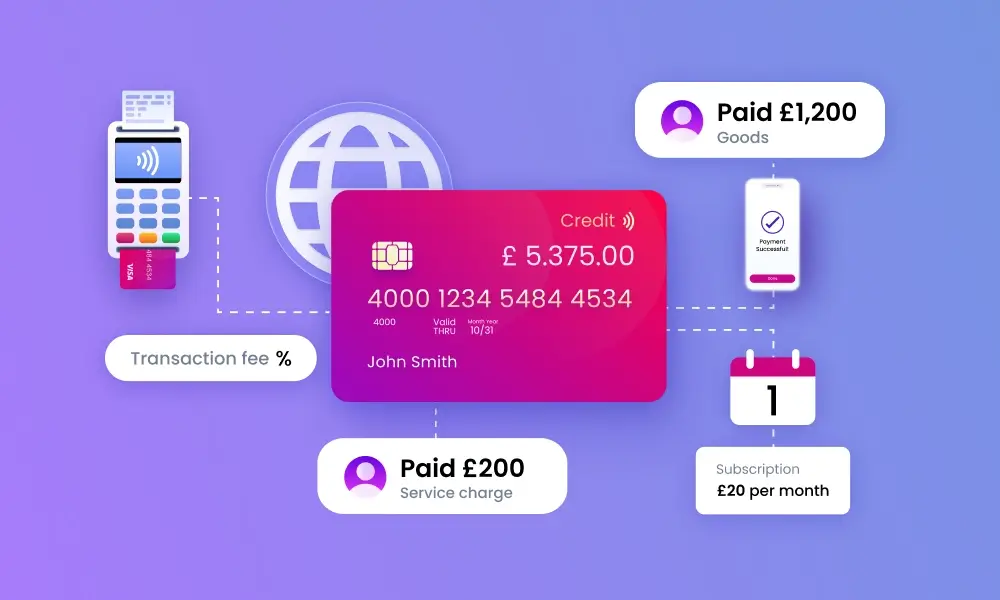
One of the most powerful ways to stabilize business cash flow is through recurring billing. Many modern payment processors allow you to set up subscription models, where a customer’s card is automatically charged on a set schedule. This creates predictable “Monthly Recurring Revenue” (MRR), which makes your business more attractive to investors and easier to manage from a budgeting perspective. Tools that offer “Account Updater” services—which automatically update a customer’s credit card info if it expires—are invaluable for preventing “involuntary churn” and protecting your income.
Global Payments and Currency Conversion
If you intend to scale internationally, you must consider how you will handle foreign transactions. Taking payments in multiple currencies requires a processor that supports “multi-currency settlement.” Be wary of the financial implications of “dynamic currency conversion” fees, which can frustrate international customers. By selecting a processor that allows you to accept local payment methods (such as SEPA in Europe or AliPay in China) alongside traditional credit cards, you can tap into global markets and significantly increase your top-line revenue.
In conclusion, taking credit card payments is the heartbeat of a modern business’s financial operations. By carefully selecting your merchant model, understanding the nuances of fee structures, and managing the risks associated with digital transactions, you can build a robust financial foundation that supports long-term growth and profitability. Credit card processing should not be viewed as an expense, but as a strategic tool for capital optimization.
aViewFromTheCave is a participant in the Amazon Services LLC Associates Program, an affiliate advertising program designed to provide a means for sites to earn advertising fees by advertising and linking to Amazon.com. Amazon, the Amazon logo, AmazonSupply, and the AmazonSupply logo are trademarks of Amazon.com, Inc. or its affiliates. As an Amazon Associate we earn affiliate commissions from qualifying purchases.